Pillow Materials
Memory foam, latex, down, buckwheat, silk: what each pillow material is, how it behaves overnight, and which one fits you. Every claim traced to specs or published research.

No single pillow wins for neck pain, because the evidence is mixed and mechanism matters more than brand. For dedicated...

Feather pillow labeling is genuinely misleading. A product sold as “goose down and feather” can legally contain 80% down and...

AI sleep app is a catch-all label covering four genuinely different tools: sound-based trackers, circadian coaches, biometric wearable platforms, and...

Pediatric guidance generally puts age 2 as the earliest safe starting point for a toddler pillow. Two other specs matter...

Down pillow shopping tends to focus on goose versus duck, but fill power is the number that actually predicts loft...

Choose by process, not brand. For dense, unyielding support, Dunlop wins, and the Avocado Molded is the pick here. For...
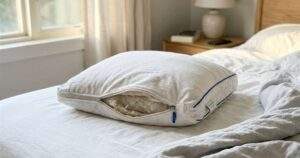
A Cochrane review of house dust mite avoidance measures found that impermeable bedding covers, used alone, are unlikely to meaningfully...

Every cooling pillow feels cold the moment your head lands on it, but few stay cool past hour one. Passive...

Five certifying bodies can appear on a pillow tag, and only two of the nine pillows below carry all five....

These seven differences cut through the marketing language and address what actually changes when you switch from down to kapok....

They are not really competing for the same buyer. Tuft & Needle is the longevity pick: foam that holds its...

Latex outlasts wool by roughly 5 years under normal use conditions. A natural latex pillow Talalay or Dunlop maintains its...