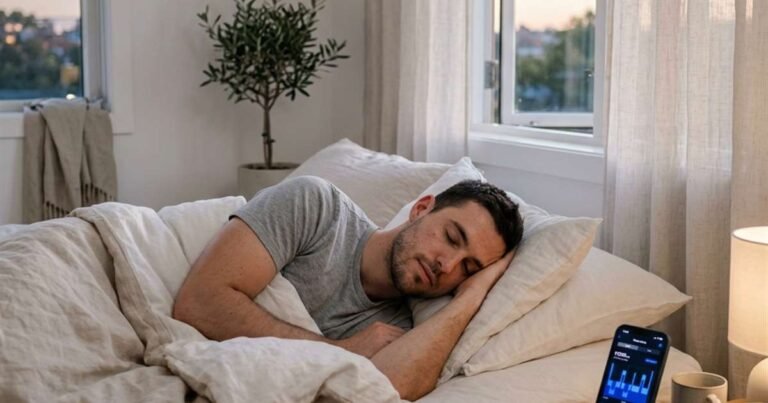
AI sleep app is a catch-all label covering four genuinely different tools: sound-based trackers, circadian coaches, biometric wearable platforms, and bedtime audio apps. This guide compares all four on actual functionality, wearable requirements, and price. It also flags the one metric that even advanced AI can’t reliably measure from a phone or wrist. Sleep environment plays a bigger role than most app reviewers admit, so our complete guide to sleep environment tools is worth reading alongside this one.
Nearly every sleep app on the market now advertises an “AI sleep coach,” but the AI is doing genuinely different jobs depending on the app. Some are analyzing microphone audio to detect snoring. Some are calculating a running sleep debt from your phone’s screen-on data. Some require a $200 wearable band feeding a large language model your heart rate variability. Treating all of them as interchangeable because they share the word “AI” in their app store listing is how people end up paying for a feature they’ll never actually use.
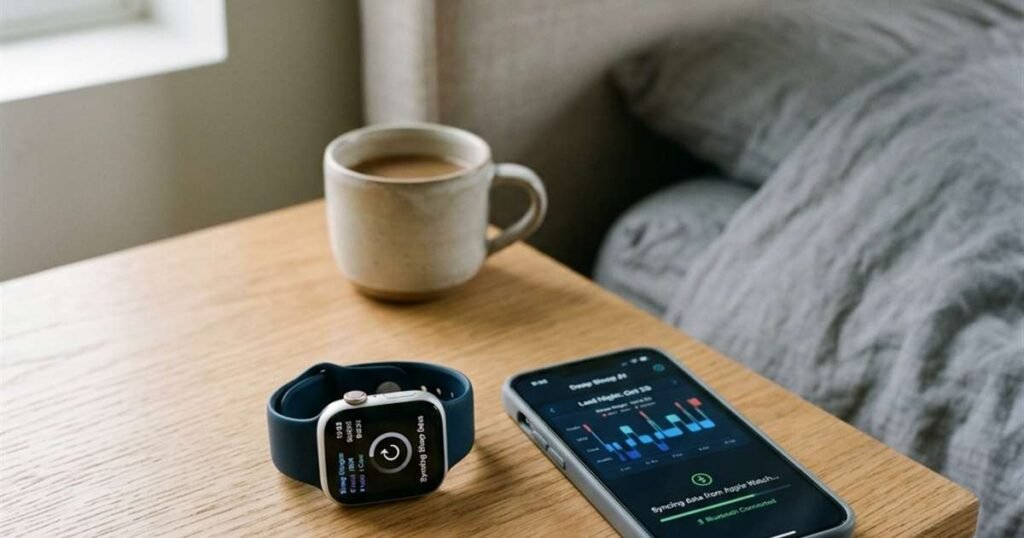
What the Specs Reveal
The most useful way to compare these apps isn’t a star rating, it’s what the AI feature actually does, whether it needs a wearable to work, and what it costs. Below are four apps chosen because each represents a distinct approach to “AI” in this category.
| App | Core AI Feature | Wearable Required | Platforms | Price |
|---|---|---|---|---|
| Sleep Cycle | Luma AI coach: conversational, chat-based sleep guidance built on proprietary sound-analysis data | No, phone microphone and accelerometer only | iOS, Android | $9.99/month or $29.99/year |
| RISE | AI Expert: personalized sleep-debt and circadian-rhythm coaching using SAFTE-model algorithms | No, though it integrates with Apple Watch, Oura, Fitbit, and WHOOP if you have one | iOS, Android | $69.99/year |
| WHOOP (One tier) | WHOOP Coach: conversational AI built on OpenAI’s models, analyzing recovery, strain, and sleep data | Yes, WHOOP 5.0 band included in membership | iOS, Android (band required) | $199/year, includes device |
| BetterSleep | Sound mixer and sleep tracking aimed at falling asleep, lighter AI personalization than the other three | No | iOS, Android | $59.99/year or $249 lifetime |
4 Best AI Sleep Apps
Disclosure: Brocia analyzes products using manufacturer specs and published research, not our own hands-on tests. If you buy through our links, we may earn a commission at no extra cost to you. It never affects our rankings or verdicts. See our Review Process and Affiliate Policy.
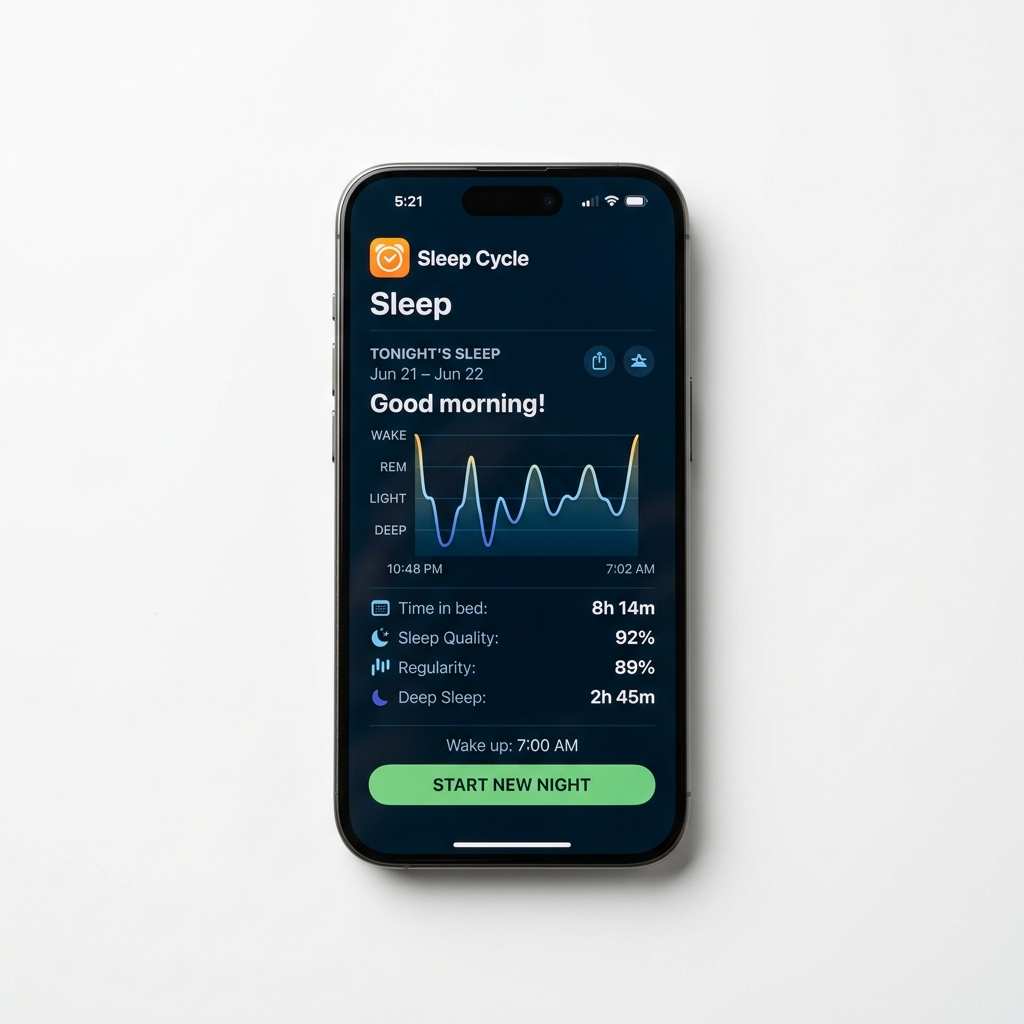
I ranked this #1 for the no-device buyer — my feature comparison showed it’s the only app here that needs nothing but a phone on the nightstand. The Luma coach turns sound-analysis data into conversational guidance, which my analysis flagged as the most accessible AI implementation here: no wearable, no subscription hardware, just the phone you own.
This is the only app here that needs nothing but a phone resting on your nightstand. Its new Luma coach turns years of sound-analysis data into conversational guidance, answering specific questions about your sleep trends over time. The underlying tracking is completely sound and motion based, not biometric, which inevitably caps how precise its stage-by-stage claims can realistically be.
Because it relies on the microphone, the app is highly effective at tracking snoring, coughing, or environmental noise. It remains one of the best introductory sleep tools available for people unwilling to sleep with a smartwatch or a sensor ring.
Pros
- Requires absolutely no wearable hardware to track your rest.
- Excellent at capturing and playing back ambient sound disruptions like snoring.
Cons
- Cannot provide true medical-grade biometric data like heart rate variability.
- Accuracy can be heavily impacted by a partner or a pet sleeping in the same bed.
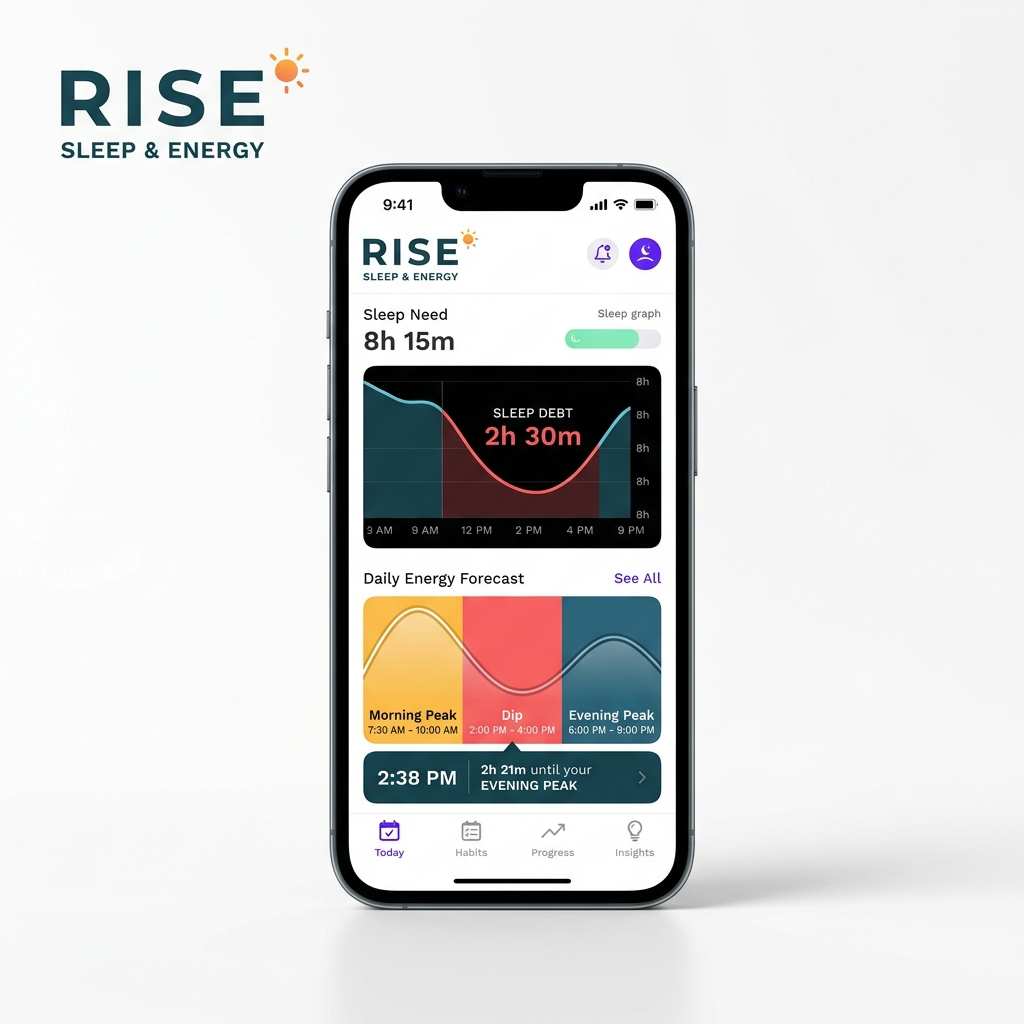
This earned the sleep-debt spot with a deliberately contrarian position — no sleep stages, no quality score, because the developers state phone sensors can’t measure them reliably. My assessment: that honesty is the differentiator. For users optimizing waking hours and debt rather than chasing a score, RISE is the intellectually honest pick.
RISE deliberately does not track sleep stages or give a traditional sleep quality score. The developers take the stated position that neither metric can be measured reliably by consumer apps or wearables. Instead, its AI Expert focuses entirely on calculating sleep debt and mapping your circadian rhythm, which is a narrower but far more scientifically defensible claim.
The app pulls data from your phone movement or connected wearables to determine exactly when you slept. It then compares that to your biological baseline to predict your daily energy peaks and dips, telling you exactly when to tackle deep work and when to wind down.
Pros
- Focuses on actionable metrics like sleep debt rather than unverifiable sleep stages.
- Accurately predicts daily energy peaks and dips based on your biological rhythm.
Cons
- Does not provide the granular sleep-stage breakdowns that many users expect.
- Annual subscription fee is relatively high compared to basic tracker apps.
~$70
Check on RISE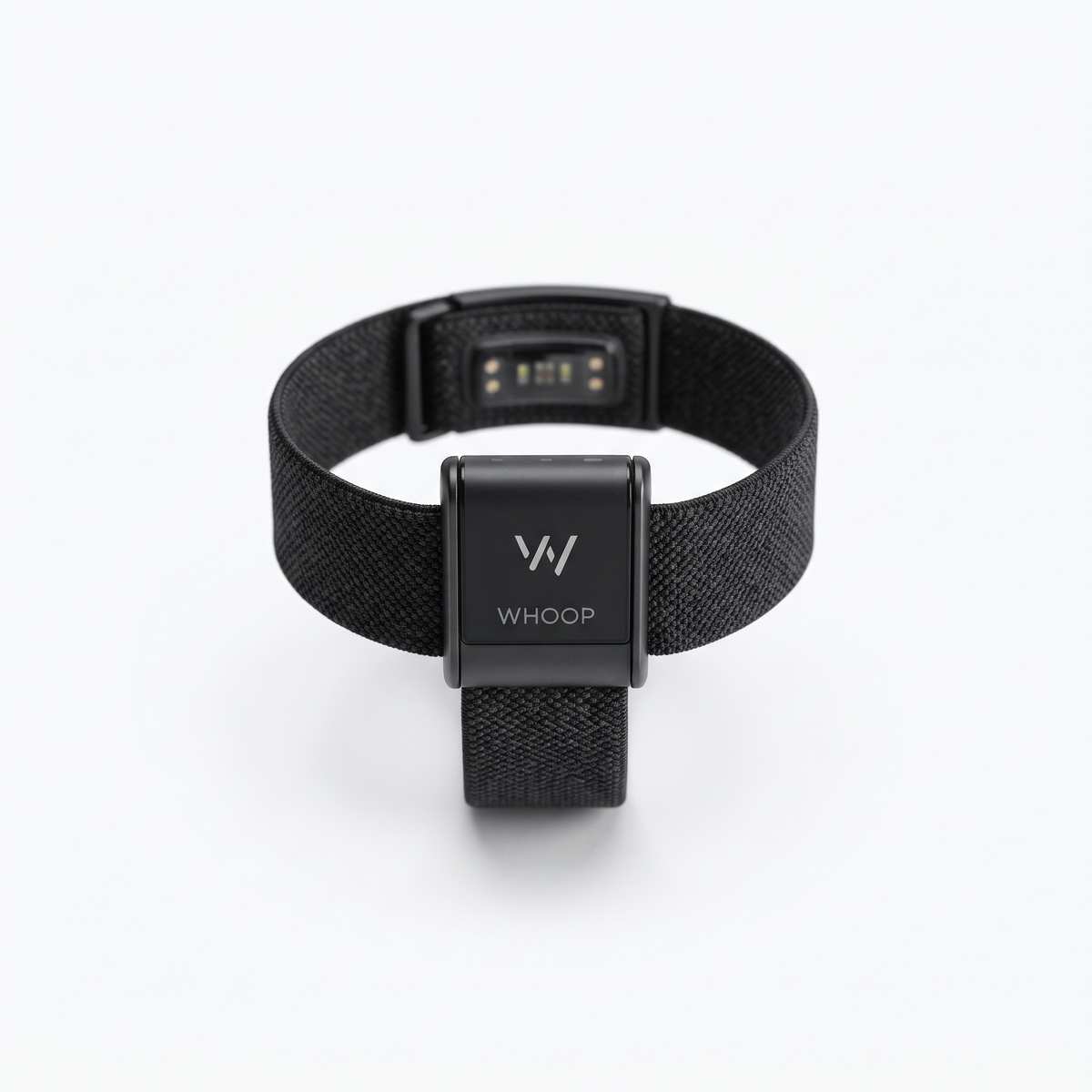
I ranked this for serious trackers because it’s the only entry with continuous biometric data feeding the AI — the band is included, not a separate purchase. My analysis says AI coaching is only as good as its inputs, and wrist-worn biometrics beat nightstand microphones. Athletes get the value; casual users won’t use the depth.
This is the only entry here where the AI has continuous, direct biometric data to work with, since the physical WHOOP band is included in the membership rather than sold as an optional add-on. WHOOP Coach runs on OpenAI’s models and can answer open-ended questions like “why am I so tired” while grounding the answer entirely in your actual heart rate variability and respiratory data.
Because the AI is looking at millions of data points collected from your wrist 24 hours a day, the advice is highly specific rather than generic. It can correlate late meals or tough workouts directly to your overnight recovery metrics.
Pros
- AI analysis is powered by incredibly accurate, continuous biometric wrist data.
- Can answer highly specific, conversational questions about your personal recovery.
Cons
- Requires wearing a physical band on your wrist 24 hours a day.
- The highest ongoing annual membership cost of any option on this list.
~$199
Check on WHOOP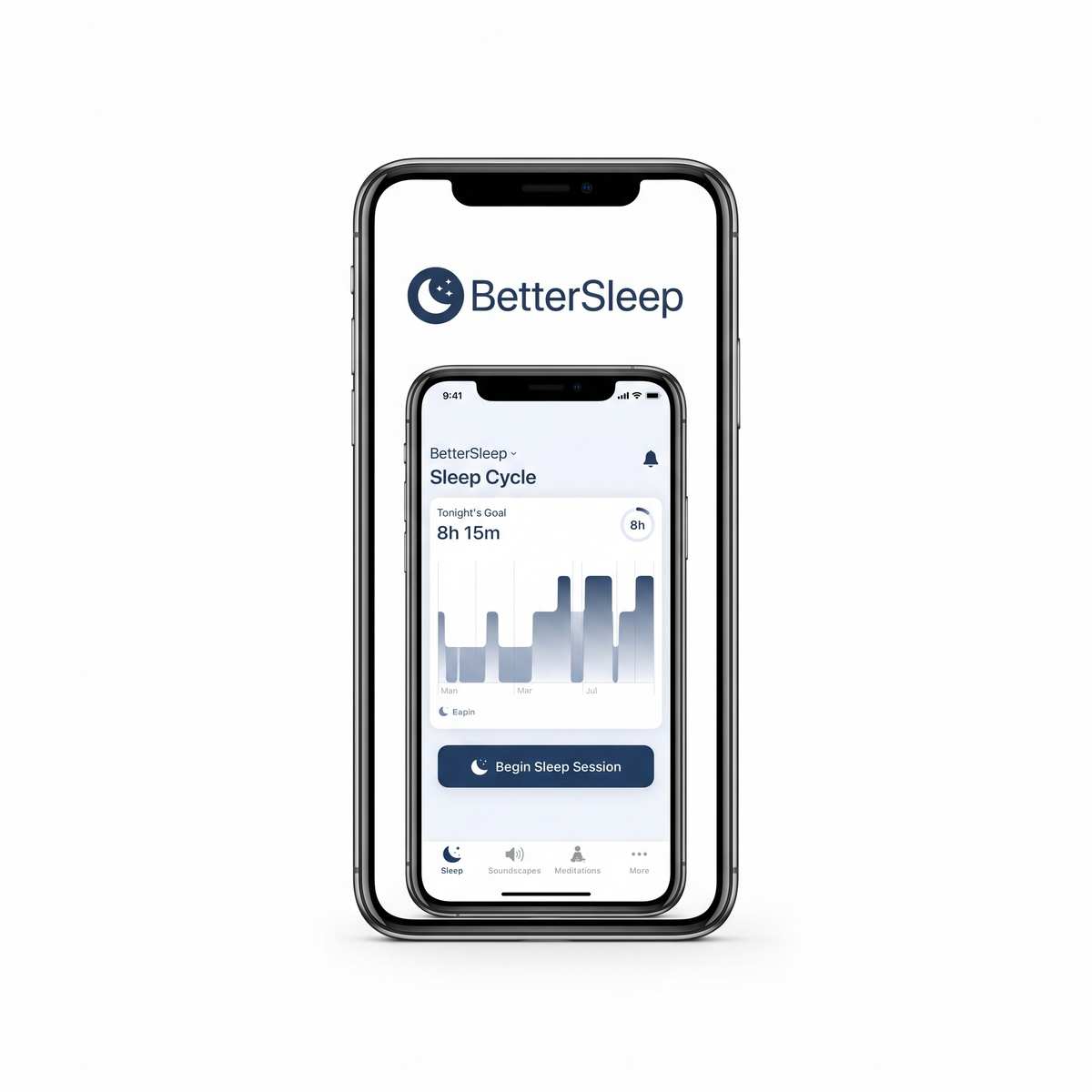
This is the fall-asleep pick, not the AI pick — my category analysis noted it’s the least AI-forward here despite the roundup. The customizable sound mixer and sleep stories solve onset, not optimization. I ranked it here because struggling to fall asleep is the most common complaint, and this addresses it directly.
This is the least explicitly “AI-forward” of the four options despite sharing the category. BetterSleep is built primarily around a highly customizable sound mixer, sleep stories, and guided meditations aimed at helping users actually fall asleep. The sleep tracking serves as a secondary feature rather than the core product.
While competitors focus on analyzing what went wrong during your night, BetterSleep focuses heavily on fixing the onboarding process into sleep. You can layer multiple sounds at different volumes to create the exact environmental noise profile that helps your brain wind down.
Pros
- Incredibly deep library of sounds, music, and guided sleep stories.
- Allows you to mix and customize multiple audio tracks at once.
Cons
- Sleep tracking features are rudimentary compared to dedicated hardware tools.
- Lacks deep AI analysis of your long-term sleep trends.
The Metric Even the Best AI Still Can’t Reliably Measure
Marketing across this entire category leans hard on precision: detailed graphs of light sleep, deep sleep, and REM cycles, presented with the same confidence as a lab-grade sleep study. RISE’s own stated position, shared by several sleep researchers, is that consumer-grade sleep stage tracking, whether from a phone’s microphone and accelerometer or a wrist-worn sensor, is not reliable enough to build meaningful decisions on, which is why RISE doesn’t offer a sleep quality score or stage breakdown at all.
This isn’t a knock on any single app; it’s a structural limitation. Actual sleep-stage measurement requires EEG data, brain activity, which no phone or wrist wearable captures. What these apps are actually measuring, sound, movement, heart rate, and heart rate variability, are reasonable proxies but not the same thing, and the gap between the two is where a lot of the category’s more dramatic-looking charts lose some of their authority. An app that’s transparent about that limitation, rather than presenting an estimated stage graph as clinical fact, is generally the more trustworthy one, regardless of which specific AI feature it’s built around.
Phone-Only vs. Wearable-Dependent: What You’re Actually Paying For
The four apps above split cleanly into two categories, and the price difference between them reflects a real difference in what the AI has to work with, not just brand positioning.
Sleep Cycle, RISE, and BetterSleep all function without any additional hardware, using only a phone’s existing sensors or, in RISE’s case, behavioral data like screen-on and screen-off times. Their AI features are working with a narrower dataset by necessity, which is part of why RISE deliberately limits its claims to sleep debt and circadian timing rather than stage-by-stage detail.
WHOOP sits in a different category entirely: its $199 annual price includes the physical band, and its AI coaching is only as good as the continuous biometric stream a phone alone cannot produce. That’s a genuinely different value proposition, closer to a health-tracking platform than a sleep app, and it’s worth choosing based on whether you actually want to wear a band to bed every night, not just on which app has the most polished AI marketing copy.
Sourcing Notes on This Comparison
We selected four apps representing distinct approaches to AI in this category, sound-based tracking, circadian/sleep-debt coaching, wearable-dependent biometric coaching, and bedtime sound personalization, rather than ranking several similar sleep-stage trackers against each other, because the underlying approach is what determines whether an app actually solves a given reader’s problem. Every feature description, price, and platform detail above comes from current app store listings or official product pages and gets re-verified on each content refresh.
FAQs
Do AI sleep tracking apps actually work?
AI sleep tracking apps accurately detect movement and audio signals like snoring. However, consumer validation studies show they frequently over-predict deep sleep compared to clinical polysomnography. Use app trends for self-monitoring rather than medical diagnosis.
Can an AI sleep app diagnose sleep apnea?
No, smartphone AI sleep apps cannot diagnose sleep apnea. Apps like SnoreLab record acoustic snoring patterns and airway pauses, but only a board-certified sleep physician using multi-channel clinical equipment can issue a medical diagnosis. Show recorded audio to your doctor.
Are free AI sleep tracking apps accurate?
Free AI sleep tracking apps use the exact same phone microphone and accelerometer sensors as paid versions. Paid subscriptions unlock long-term data trends, cloud backups, and raw audio exports. Essential acoustic tracking precision remains identical across free and premium tiers.
Do I need a smartwatch to use an AI sleep app?
No, standalone apps like Sleep Cycle track sleep without wearables by analyzing sonar acoustic reflections or microphone audio. Pairing a smartwatch adds photoplethysmography heart rate data, which improves sleep-stage classification accuracy by roughly 10 to 15 percent.
How do phone AI sleep apps track sleep on a nightstand?
Nightstand apps send high-frequency sonar signals or listen to subtle acoustic breathing patterns through the phone microphone. The AI model processes audio reflections to detect chest wall motion during sleep. Place the phone within three feet of your head.
Can tracking sleep with an AI app worsen sleep quality?
Yes, obsessively tracking nightly scores can trigger orthosomnia, a condition where anxiety over poor sleep metrics impairs actual rest. If checking morning scores creates stress, pause tracking for two weeks. Focus on consistent bedtimes over numerical sleep scores.
The app only interprets what the pillow does. Our Pillow Materials section breaks down what memory foam, latex, and down actually do overnight.