
Down pillow shopping tends to focus on goose versus duck, but fill power is the number that actually predicts loft retention and buoyancy. If you prefer a firmer core with more structural resistance than pure down clusters provide, explore our comparison of best feather pillows to evaluate exact feather-to-down blend ratios. Below, that distinction explained against three real down pillows-duck, a down-feather blend, and pure goose – checked against their disclosed fill power and construction rather than the goose-versus-duck framing alone.
What Fill Power Actually Measures
Fill power is a laboratory measurement of how many cubic inches one ounce of down occupies once fully lofted. It isn’t a vague measure of quality and it isn’t a proxy for which bird the down came from. A higher fill power means larger, fluffier down clusters that trap more air per ounce. This is why a 750-fill-power pillow can use less total down than a 550-fill-power model while still feeling loftier and more buoyant. That number is the single most important spec to check when shopping the high end of the market. Our best luxury pillows comparison breaks down exactly how fill power dictates pricing across the most expensive down options available.
Higher fill power isn’t automatically the right choice for every sleeper. Very high fill power (800+) skews toward extremely soft, low-structure loft that stomach and back sleepers often prefer. Side sleepers needing firmer support to bridge their shoulder gap may find those ultra-high fill powers under-structured regardless of how buoyant they feel.
Goose vs. Duck: A Real Difference, But Not the Deciding One
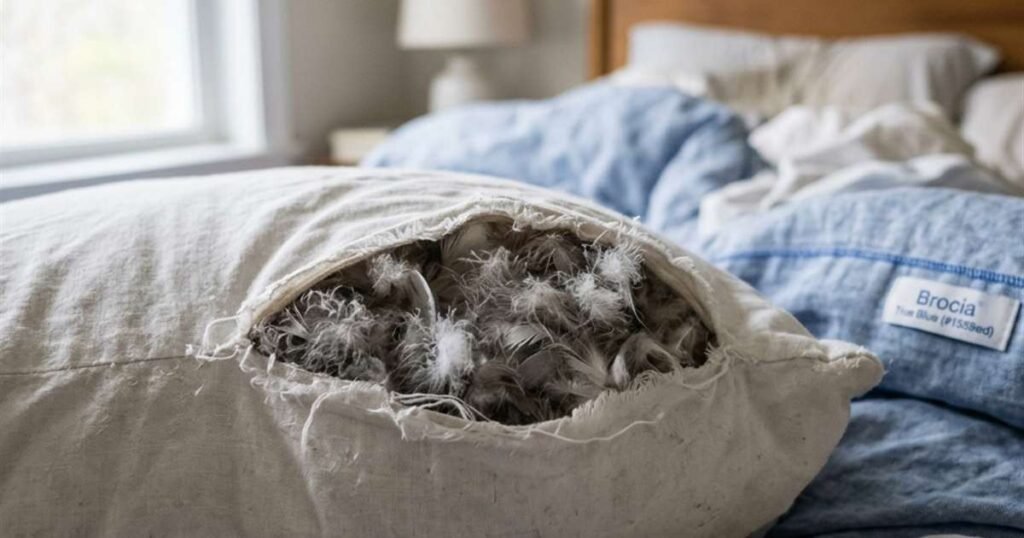
Geese are physically larger birds than ducks, which means goose down clusters average larger than duck down clusters – the structural reason goose down pillows tend toward higher fill power and command higher prices than duck down pillows at a comparable quality tier. That’s a real, physical difference, not marketing spin. But it’s a difference in typical fill power, not a guarantee: a well-sourced duck down pillow with a disclosed high fill power can outperform a poorly disclosed or low-fill-power goose down pillow on actual sleep performance. Treat “goose” and “duck” as an input to fill power rather than the deciding spec itself. For the fuller cost-versus-benefit breakdown of whether goose down’s price premium is worth it for a given sleeper.
Down Pillow Spec Comparison
| Pillow | Down Type | Key Spec | Cover | Certifications |
|---|---|---|---|---|
| Brooklinen Down Pillow | Canadian white duck down/feather | 400-thread-count shell, 3 firmness ratios (20/80 to 86/14) | 100% cotton sateen | OEKO-TEX, Ultra-Fresh antimicrobial |
| Parachute Down Pillow | 85% down / 15% down-feather blend | 750 fill power, 3.5-in gusset | Cotton | RDS, OEKO-TEX, Climate Neutral |
| Brinkhaus Premier Hungarian Goose Down | 90% Hungarian white goose down / 10% feather | Class I quality per DIN EN 12934, 380-thread-count shell | 100% Egyptian cotton | NOMITE, OEKO-TEX, DOWNPASS |
3 Best Down Pillows
Disclosure: Brocia analyzes products using manufacturer specs and published research, not our own hands-on tests. If you buy through our links, we may earn a commission at no extra cost to you. It never affects our rankings or verdicts. See our Review Process and Affiliate Policy.
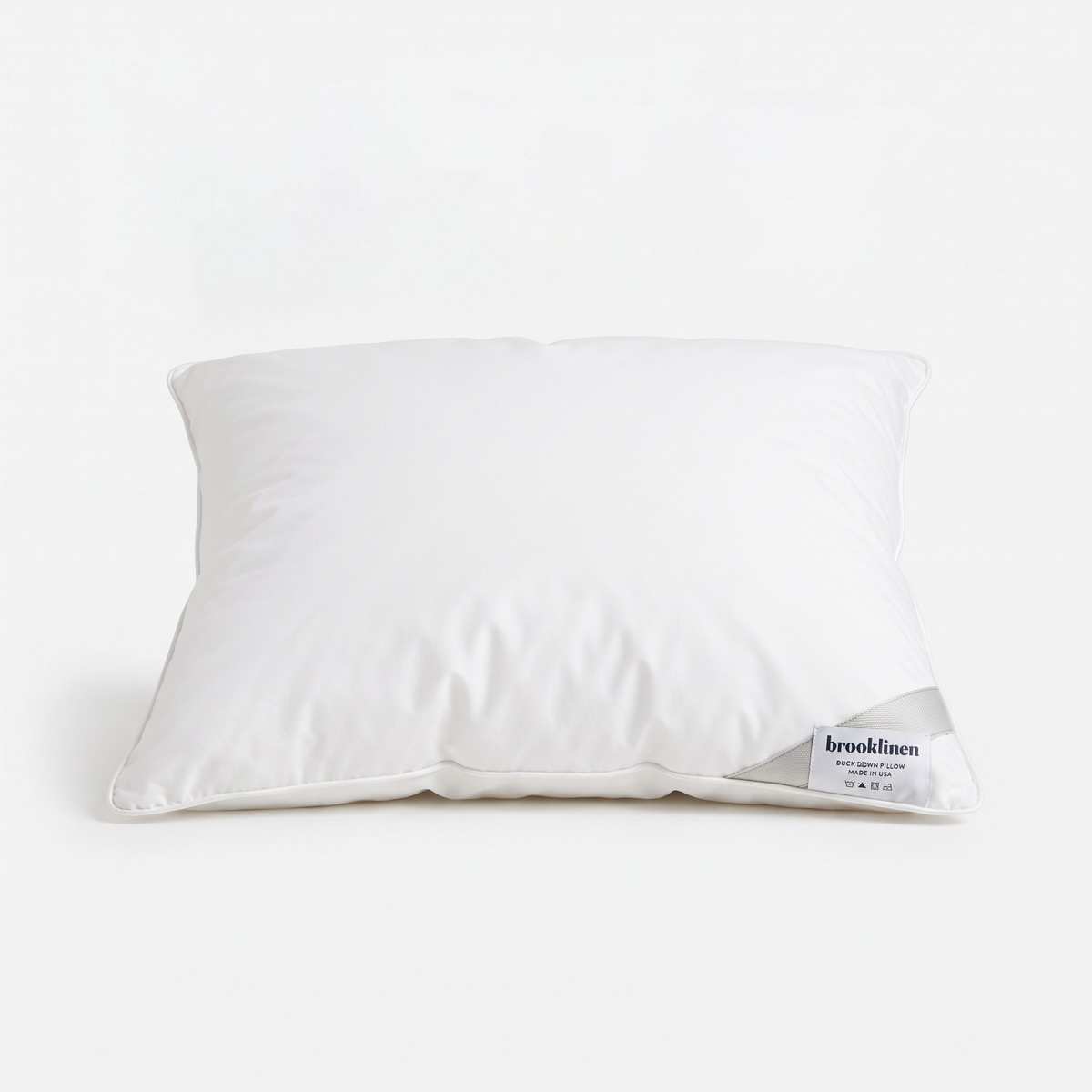
I ranked this #1 because transparent specs win in a category full of vague ‘premium down’ claims — my comparison showed Brooklinen discloses the duck-down blend and dual-core construction while competitors hide behind adjectives. The firmness-level choice is the practical advantage: you pick structure, not just softness.
The Brooklinen Down Pillow uses Canadian white duck down and feather in a dual-core construction. Instead of hiding behind vague marketing, the brand explicitly states the down-to-feather ratio across its three firmness options: 20/80 in the Mid-Plush, 86/14 in the Firm, and 100% down in the Plush model. This provides a far more directly useful metric for predicting feel than bird species alone.
Its 400-thread-count cotton sateen shell and OEKO-TEX certification round out a highly verifiable spec sheet. While duck down clusters run slightly smaller than premium goose down, this construction offers a meaningfully lower price point without sacrificing documented structural quality.
Pros
- Firmness tiers explicitly disclose their down-to-feather ratios.
- Dual-core construction in firmer models prevents the head from sinking flat to the mattress.
Cons
- Duck down requires slightly more frequent fluffing to maintain loft compared to goose down.
- The 100% down “Plush” option lacks the structural support needed for side sleepers.
~$109
Check on Brooklinen
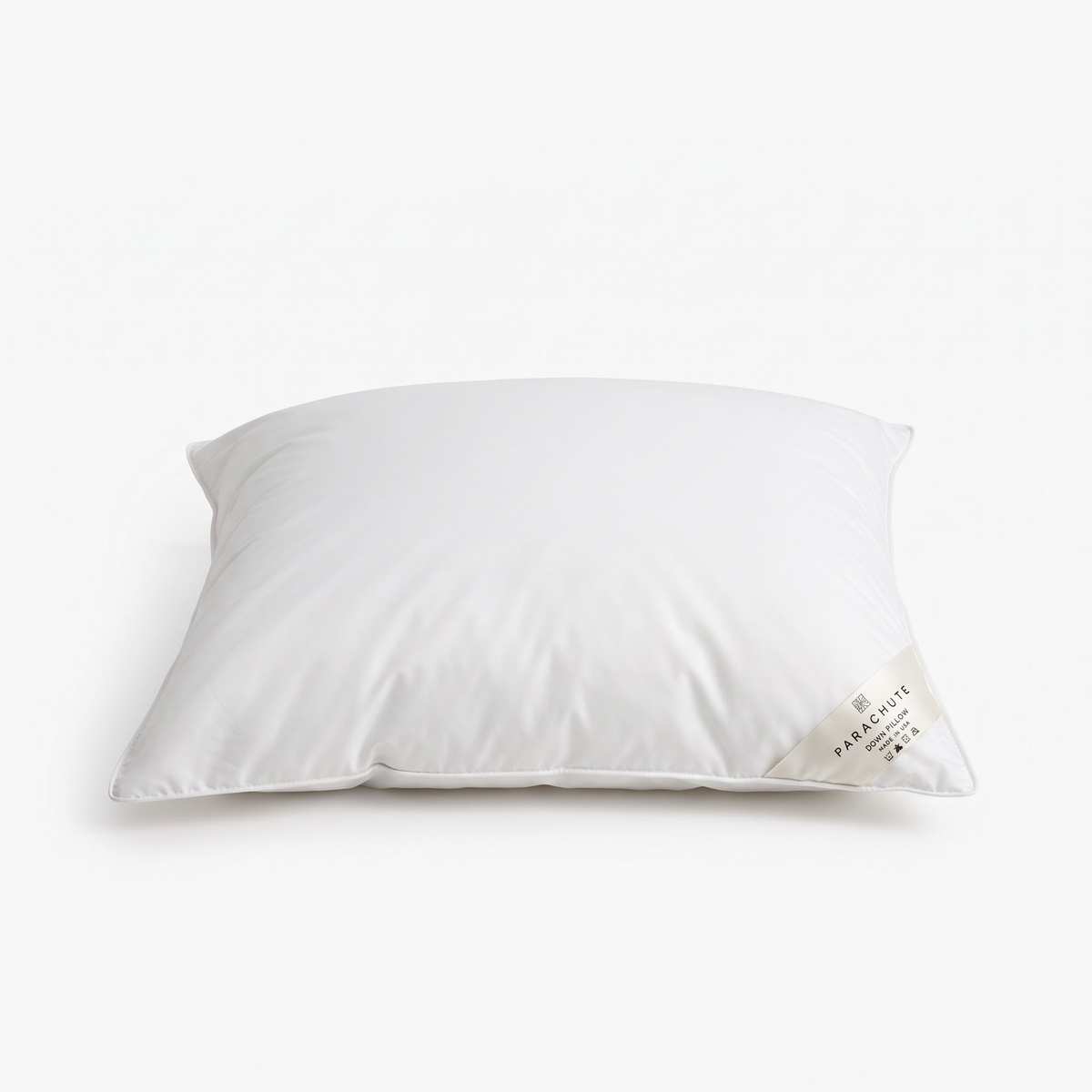
This earned #2 on verifiable numbers: 750 fill power and an 85/15 down-to-feather ratio, both disclosed and checkable. My spec audit found most down pillows publish neither. I ranked it here because fill power is the one objective quality metric in down, and Parachute is one of the few brands that puts it on the label.
The Parachute Down Pillow discloses both a specific fill power of 750 and a precise blend ratio of 85% down to 15% down and feather fibers. Providing these concrete, checkable numbers on one product page demonstrates a meaningfully higher disclosure standard than brands that rely on vague “premium fill” marketing. A 3.5-inch gusset adds lateral structure to help the pillow hold its height.
Crucially, this pillow carries the Responsible Down Standard (RDS) certification. This addresses ethical sourcing specifically, verifying through third-party audits that the down was not obtained through live-plucking or force-feeding practices.
Pros
- High 750 fill power ensures excellent loft and rapid shape recovery.
- Strict RDS certification guarantees ethical and traceable material sourcing.
Cons
- Gusseted edge design means it will not fit perfectly in tightly tailored standard pillowcases.
- Premium fill power pushes the price significantly higher than standard department store options.
~$130
Check on Parachute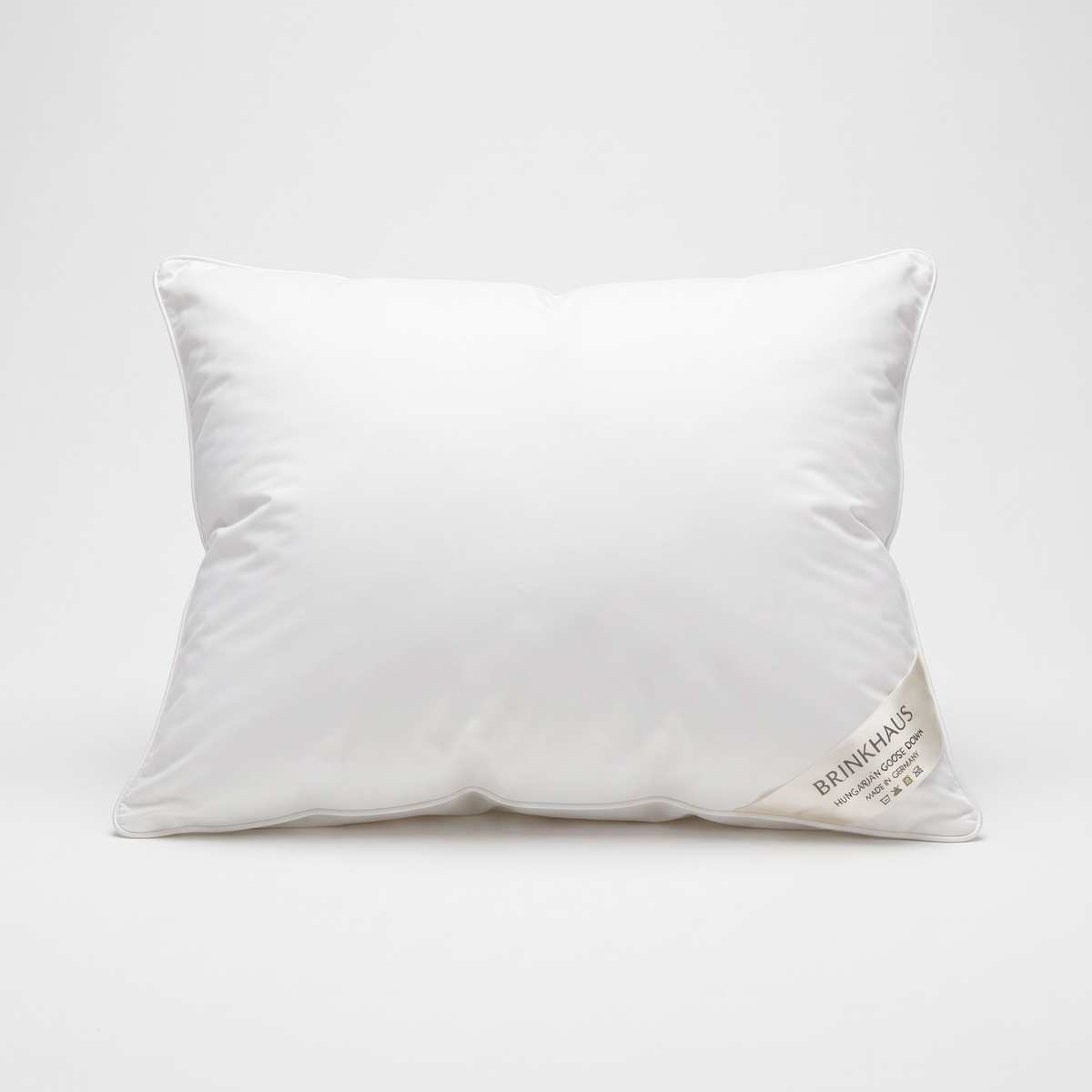
Hungarian Goose Down
DIN EN 12934 Class I
3. Brinkhaus Premier Hungarian Goose Down Pillow
✓ Spec-verified
I ranked this as the luxury certification pick — 90% Hungarian goose down with a Class I rating under DIN EN 12934, a formal European standard most American buyers never see. My analysis: the certification is the differentiator, not just the goose down. For buyers who want audited European sourcing, this is the paper trail the others lack.
The Brinkhaus Premier utilizes 90% white Hungarian goose down and 10% structural feather. Notably, it discloses a Class I rating under DIN EN 12934, a formal European down quality standard. This objective measurement is the clearest proof in this comparison of true goose down’s structural advantage, verifying the massive size and resilience of the Hungarian clusters inside.
The pillow is encased in a 380-thread-count Egyptian cotton shell. A suite of intensive third-party certifications including NOMITE, OEKO-TEX, and DOWNPASS firmly backs up its ultra-premium positioning with actual material science rather than just a luxury price tag.
Pros
- Massive Hungarian goose down clusters provide elite loft retention over time.
- Formally classified under DIN EN 12934 Class I for verified material quality.
Cons
- Priced at an extreme premium compared to domestic or blended duck down alternatives.
- Requires specialized care and professional cleaning to protect the Egyptian cotton shell.
~$330
Check on BrinkhausDown for Side Sleepers Specifically
The general fill-power and goose-versus-duck guidance above applies across sleep positions, but side sleepers have a narrower tolerance for low-loft or over-soft down pillows, since they need enough structure to fill the shoulder-to-neck gap without collapsing under sustained lateral pressure. For the dedicated roundup built around that specific requirement, see Best Pillows for Side Sleepers: Loft and Shoulder Gap Picks, which also feeds into the broader best pillows for side sleepers pillar published separately.
The Contrarian Reality: “Goose Down” Alone Is an Incomplete Spec
Most down pillow marketing treats “goose down” as a self-sufficient quality signal, printed prominently while the actual fill power, down-to-feather ratio, or quality classification goes undisclosed. As the Brooklinen and Brinkhaus comparison above shows, a well-documented duck-down or blended pillow with disclosed ratios and certifications can offer more genuinely checkable information than a “goose down” pillow that stops at the species claim. Fill power, disclosed blend ratio, and formal quality classifications like DIN EN 12934 are the specs that actually predict performance; “goose” by itself is an input to those numbers, not a substitute for them.
The Bottom Line
For sleepers prioritizing disclosed firmness options at a lower price, the Brooklinen Down Pillow’s transparent down-to-feather ratios across its three tiers deliver real value. For a high-fill-power option with verified ethical sourcing, the Parachute Down Pillow’s RDS certification and disclosed 750 fill power check the most boxes at once. And for sleepers specifically chasing the loft-retention advantage genuine goose down provides, the Brinkhaus Premier Hungarian Goose Down’s formal DIN EN 12934 Class I classification is the most rigorously verified goose-down claim in this comparison.
FAQs
What is the exact difference between down and feather pillows?
Down consists of the soft undercoating of waterfowl and has no hard quills. Feathers have rigid quills that can poke through the fabric shell. Pure down provides a highly moldable, soft feel with minimal structure. Most commercial pillows blend both materials to balance cost and firmness. If a label lacks a specific down percentage, it likely contains mostly feathers and those behave quite differently. Our best feather pillows guide covers the structural tradeoffs of high-feather blends in more detail.
Why does my down pillow feel flat after one night?
Down clusters naturally compress under the weight of your head. High-quality down lacks the structural resilience of materials like solid latex. You have to physically fluff a pure down pillow every morning to reintroduce air between the clusters. Side sleepers usually need a firmer core material like shredded latex underneath a down outer layer to maintain neck alignment.
What does fill power mean for a down pillow?
Fill power measures the amount of space one ounce of down occupies in cubic inches. A fill power of 600 or higher indicates larger and more durable down clusters. Higher fill power translates to a fluffier pillow that traps more air and lasts longer. A high fill power does not necessarily mean the pillow is firm.
Fill power only matters if the down is what the label claims. Our Pillow Materials section breaks down how to read fill specs.