
Five certifying bodies can appear on a pillow tag, and only two of the nine pillows below carry all five. If your main goal is reducing dust mite allergens and synthetic VOC exposure, read our research review on whether hypoallergenic pillows actually work alongside verified GOTS and GOLS certifications. Below, each pick is ranked by what its paperwork actually proves.
The Certification Gap Nobody Lists in a Table
Type “best organic pillows” into Google and you get nine near-identical listicles: a tester’s name, a first-person verdict, and a badge collage that reads GOTS, GOLS, OEKO-TEX in whatever order looks good next to the product photo. What none of them tell you is that those three certifications verify three completely different things, and a pillow can legally carry one, two, or all three depending on how much of the product the brand chose to submit for testing. That’s not a footnote. It’s the entire buying decision.
Global Organic Latex Standard (GOLS) certifies the latex. Global Organic Textile Standard (GOTS) certifies the finished textile product, cover and all, through third-party audits from farm to factory. OEKO-TEX Standard 100 certifies that the finished item tests below a chemical-residue threshold, which is a safety claim, not an organic-farming claim. A pillow can be OEKO-TEX certified and contain zero organic material. A pillow can have a GOTS-certified cover wrapped around a latex core with no GOLS certification at all. Read that way, “certified organic pillow” stops being a single checkbox and starts being a spec sheet you actually have to read.
That’s the ranking method below: not softness, not a five-night trial, but which certifications each pillow’s fill and cover actually hold, sourced from the brand’s own product page or law label, cross-checked against independent retailer listings where the brand’s own copy was vague.
What the Specs Reveal
Pull the law labels (the legally required material disclosure tag) on nine organic-marketed pillows and a pattern falls out fast. The brands that submit their finished pillow, not just the raw latex or raw cotton, for third-party audit tend to be the same brands that also publish exact material percentages by weight. Avocado, for instance, discloses its Green Pillow fill as 70% latex foam and 30% kapok fiber by weight, GOTS-audited as a finished product rather than just certifying the raw latex in isolation. That level of disclosure is rare. Most competing brands stop at “GOLS certified organic latex” on the fill and “organic cotton” on the cover, two separate and narrower claims stitched together into a single “organic pillow” headline.
The gap matters physiologically as much as ethically. A sleeping-micro-environment study published via the National Institutes of Health found that polyurethane foam bedding released measurably more volatile organic compounds under the heat and humidity generated during actual sleep than the same material tested at room temperature, meaning off-gassing risk from synthetic foam fill is highest exactly when your face is closest to it for eight hours. That’s the physiological argument for latex, wool, kapok, or down over polyurethane-based foam fills. It is not, on its own, an argument that any given latex pillow is organic. Those are two separate questions this list keeps separate.
The Myth: “Organic Cotton Cover” Means an Organic Pillow
Here’s the piece of standard buying advice worth calling out by name: the assumption that if a pillow’s cover is organic cotton, the pillow itself is organic. Latex For Less says as much on its own site, warning shoppers that some pillows marketed as organic have only an organic cotton outer layer wrapped around a conventional, uncertified fill. A GOTS-certified cover is a real, verifiable claim. It is a claim about roughly a third of the pillow’s mass, not the whole product.
The same confusion runs the other direction with the word “natural.” Natural latex and organic latex are not interchangeable, even though marketing copy treats them as synonyms. Natural latex means the sap came from a rubber tree rather than a petroleum refinery; it says nothing about how that tree was farmed. Organic, GOLS-certified latex requires the rubber plantation itself to meet organic agricultural standards, no synthetic pesticides, no prohibited fertilizers, audited the same way a certified organic strawberry farm would be. A pillow can be 100% natural latex and 0% organic latex, and still get marketed with the word “organic” somewhere on the product page. Two of the picks below (Parachute and Saatva) illustrate this gap directly: both use genuinely natural materials, RDS-sourced down and natural Talalay latex respectively, without the organic-agriculture certification that would justify an “organic pillow” headline.
Organic Pillow Certification at a Glance
| Certification | What It Actually Verifies | Covers the Whole Pillow? |
|---|---|---|
| GOTS (Global Organic Textile Standard) | Organic fiber content plus environmental and labor standards through the full supply chain | Yes, when applied at the finished-product level |
| GOLS (Global Organic Latex Standard) | Organic farming and processing standards for latex specifically | No, latex only, unless paired with GOTS on the cover |
| OEKO-TEX Standard 100 | Chemical residue limits in the finished textile | Yes, but this is a safety claim, not an organic-sourcing claim |
| RDS (Responsible Down Standard) | Ethical sourcing and animal welfare for down feathers | Applies to down fill only, not organic status |
| MADE SAFE | Screens for a list of chemicals of concern across the whole product | Yes, but again a safety screen, not an organic-farming claim |
Tier 1: Fully Certified at the Finished-Product Level
Disclosure: Brocia analyzes products using manufacturer specs and published research, not our own hands-on tests. If you buy through our links, we may earn a commission at no extra cost to you. It never affects our rankings or verdicts. See our Review Process and Affiliate Policy.
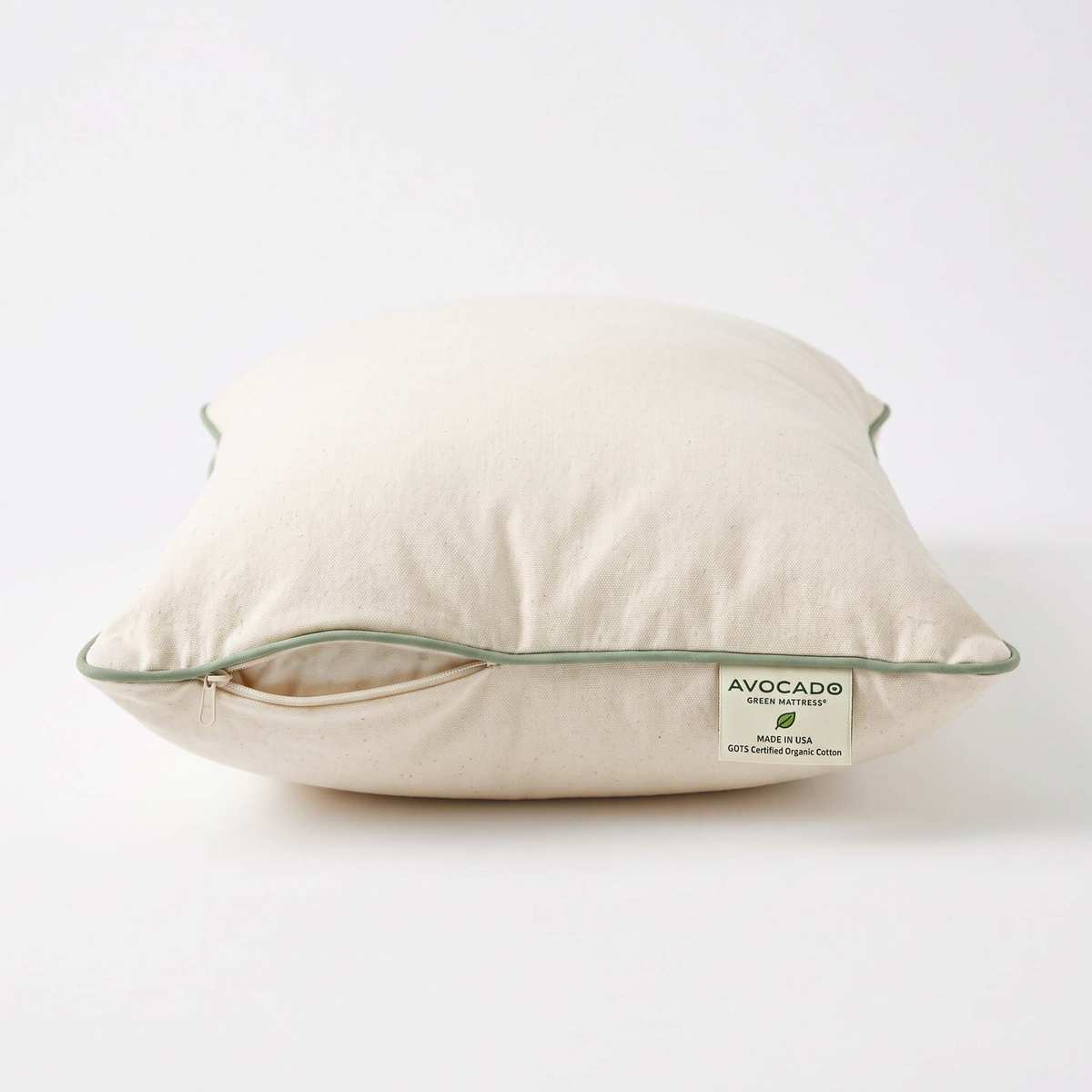
I ranked this #1 because it’s the only pillow here audited as organic at the finished-product level, not just material-by-material — my certification comparison showed that distinction matters. GOLS on the latex, GOTS on the kapok and cover, OEKO-TEX Class I, MADE SAFE. If certification depth is your buying criterion, nothing else on this list matches the paper trail.
The Avocado Green Pillow is the only pillow on this list independently audited as organic at the finished-product level rather than material-by-material. If certification depth is your primary deciding factor, this is the definitive pick.
It holds GOTS certification applied to the completed pillow, not just its raw latex or raw cotton, alongside GOLS-certified organic latex, GOTS-certified organic kapok, OEKO-TEX Standard 100 Class I, MADE SAFE, and GREENGUARD Gold certifications. Avocado even publishes the exact fill ratio (70% shredded latex to 30% kapok fiber) for total transparency.
Pros
- Carries the highest possible tier of complete, finished-product organic certification.
- Fully adjustable fill allows you to tune the loft to match your exact shoulder width.
Cons
- Extremely heavy and dense compared to traditional down or synthetic alternatives.
- Adjusting the shredded latex and kapok blend can be a messy process.
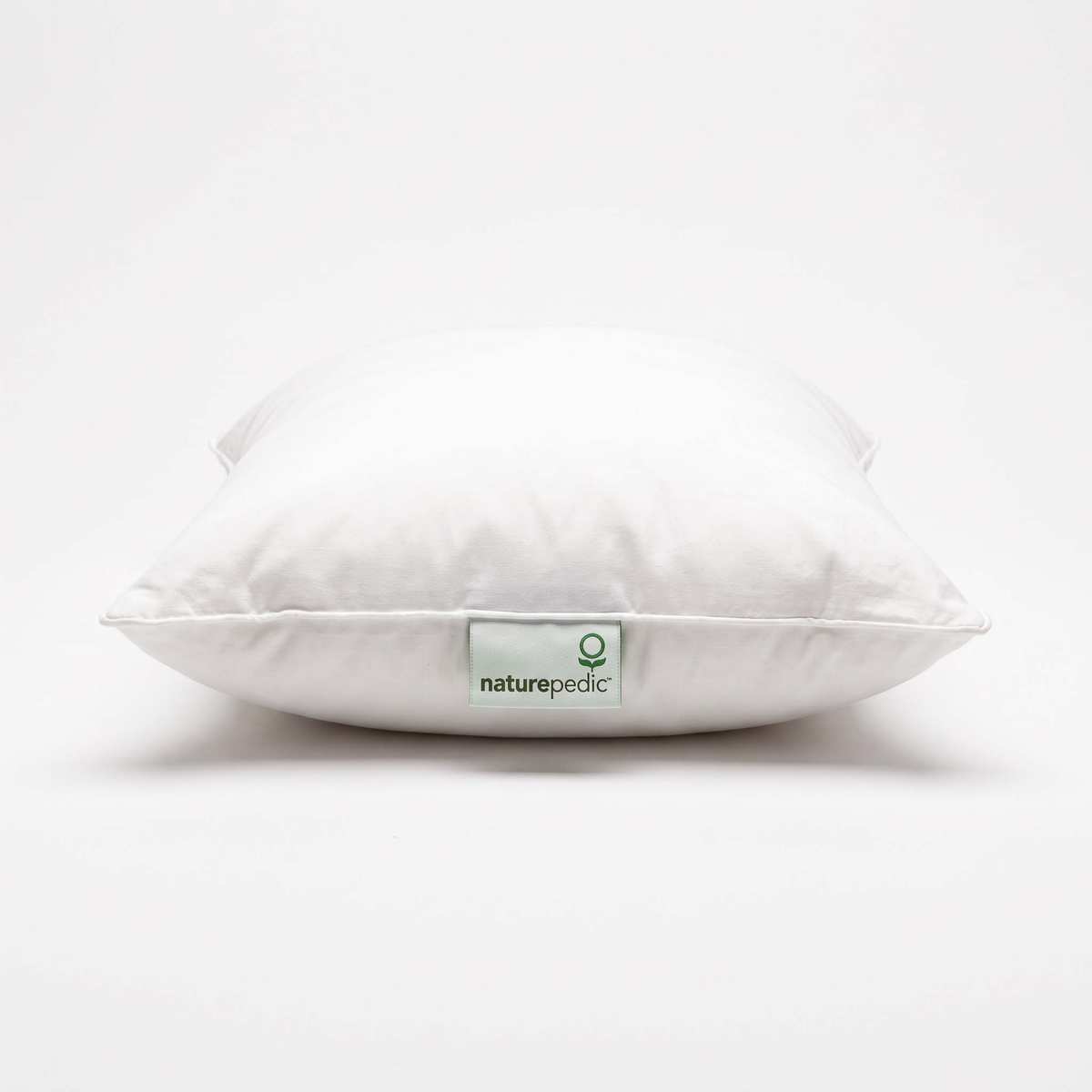
This earned #2 on certification depth with a genuinely useful adjustable mechanism. I ranked it here because the uniformly cut latex pieces solve the messiness complaint of shredded blends — my analysis says consistent texture matters for sleepers who found shredded fills lumpy. Close to Avocado on paper, different in hand.
Naturepedic sits as a close second on certification depth with a genuinely useful adjustable-fill mechanism. The pillow uses GOTS-certified organic cotton fabric paired with GOLS or FSC-certified latex. Instead of simply shredding the latex, the brand cuts it into small uniform pieces, which improves airflow and reduces the denser, clumpier feel that plain shredded latex often develops over time.
The pillow also carries GREENGUARD Gold and MADE SAFE certification. Naturepedic has been building certified organic bedding since 2003, providing real historical trust in a category where new entrants frequently launch before their supply chains are actually audited.
Pros
- Cut latex pieces offer better airflow and consistency than randomly shredded scrap foam.
- Backed by a brand with over two decades of verified organic manufacturing history.
Cons
- Buyers must manually verify if their specific unit ships with GOLS or FSC certification.
- Lacks the softening kapok fiber blend found in the Avocado alternative.
~$119
Check on Naturepedic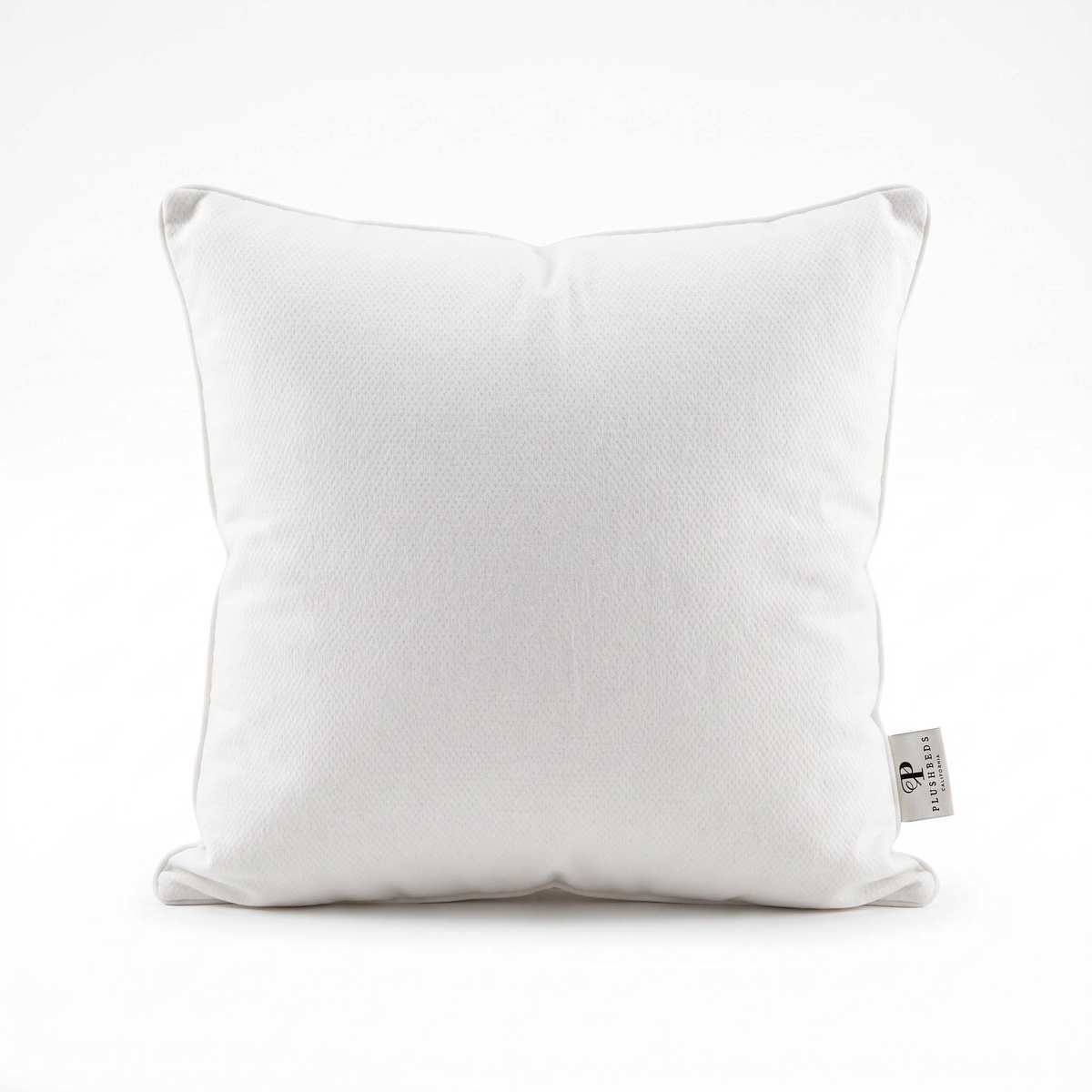
I ranked this as the mid-price certification leader — my comparison showed the heaviest certification stack available without crossing into premium pricing. The honest limitation I flag: the loft runs low for side sleepers out of the box. Back and stomach sleepers get the value; side sleepers need to supplement or look elsewhere.
This is the most heavily certified pillow available at a mid-range price point, though the loft runs significantly lower than most side sleepers will want out of the box. PlushBeds’ shredded latex pillow carries GOLS, GOTS, GREENGUARD Gold, and Eco-Institut certifications.
The standard size measures roughly a 4-inch loft, with queen and king sizing sitting at roughly 5 inches based on independent testing rather than brand marketing copy. While shredded organic latex provides excellent breathability, that lower fixed height restricts its usefulness strictly to sleepers who require a flatter profile.
Pros
- Carries an unusually dense and impressive certification stack for its price tier.
- Naturally cooling and hypoallergenic without relying on synthetic gels.
Cons
- Out-of-the-box loft is often too low to properly support broad-shouldered side sleepers.
- Lacks an adjustable zipper to fine-tune the internal volume.
~$115
Check on PlushBeds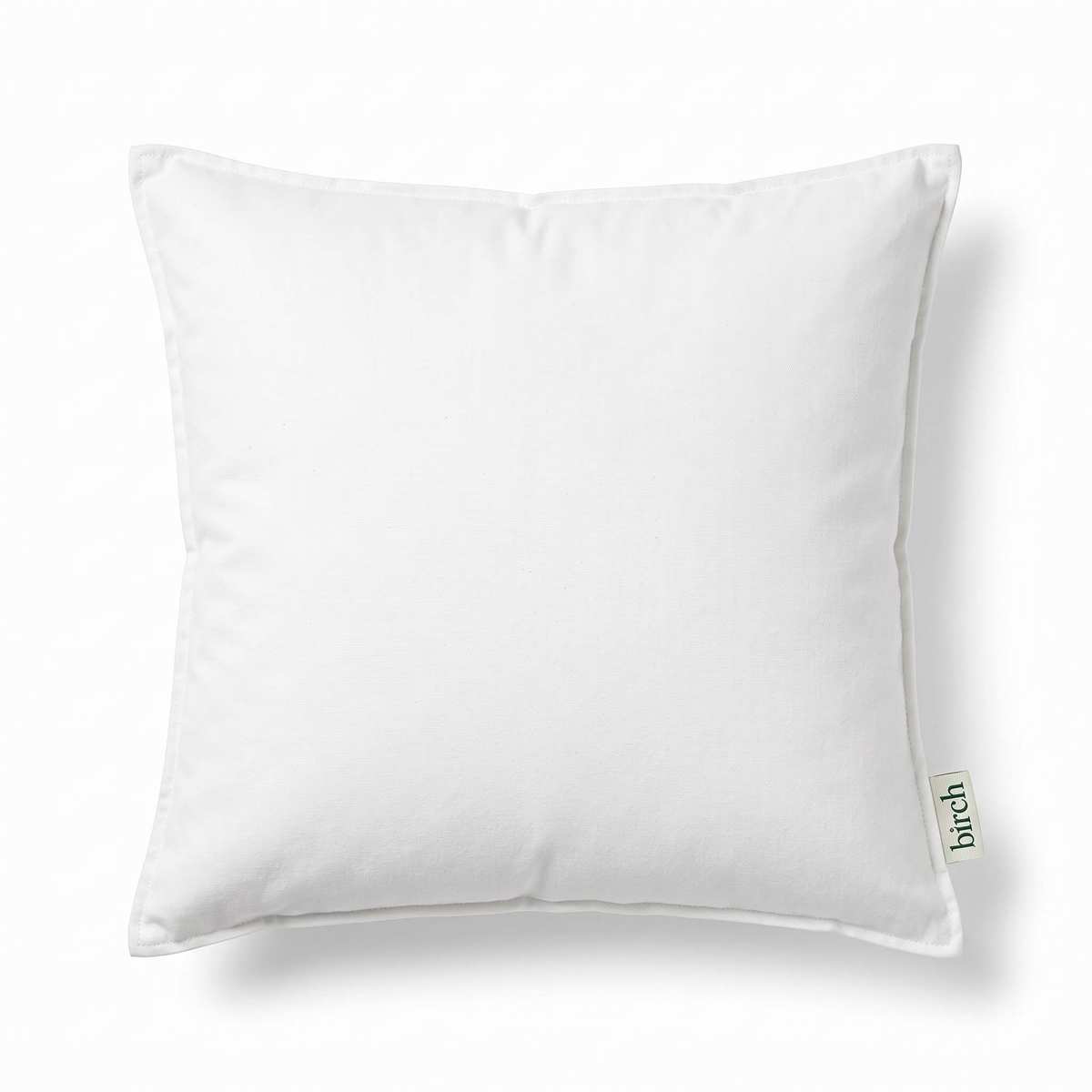
My analysis put this here for the wool-latex hybrid buyer: real material-level certifications on both components, plus wool’s moisture-wicking that pure latex can’t match. The caveat I state plainly — it’s not audited as a single finished organic product the way Avocado is. If that final audit matters to you, the ranking reflects it.
Birch offers a well-built wool and latex hybrid with real material-level certifications, though it is not audited as a single finished organic product the way Avocado is. Birch’s Organic Pillow layers GOLS-certified organic latex with organic New Zealand wool inside an organic cotton cover.
The finished pillow carries GREENGUARD Gold, eco-INSTITUT, Forest Stewardship Council, and Fair Trade certifications. Adding a wool layer provides exceptional moisture-wicking and temperature regulation on top of the latex core’s rigid structural support.
Pros
- Organic wool layer prevents the clammy feeling that solid latex can sometimes create.
- Fair Trade certification guarantees ethical labor practices alongside material safety.
Cons
- Wool padding compresses over time and requires fluffing to maintain its loft.
- Not fully certified at the finished-product level like Tier 1 competitors.
~$119
Check on Birch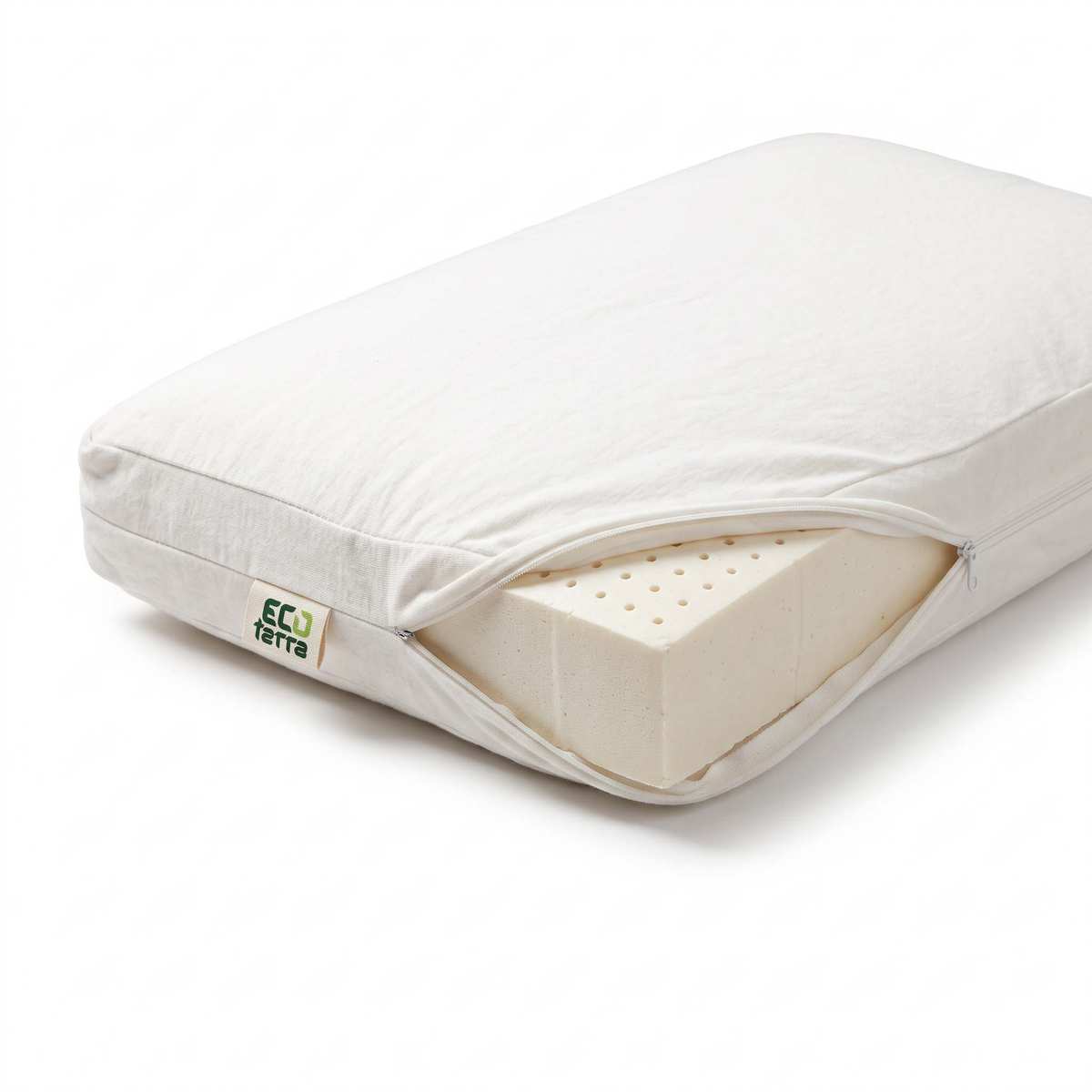
I ranked this as the value solid-block pick — GOLS-certified latex at one of the lowest prices on this list. My spec check confirmed the firmer traditional feel; it’s not the plush adjustable experience of the picks above. For budget shoppers who want verified organic latex in a simple, firm shape, the math works.
Eco Terra delivers genuinely certified organic materials at one of the lower price points on this list. It provides a firmer, more traditional latex feel than the kapok-blended options above. The pillow pairs GOLS-certified organic Dunlop latex with a GOTS-certified organic cotton cover.
Physical perforations punched directly into the latex core are designed to improve airflow beyond what solid, unperforated latex typically offers. Independent testing lists the standard size at a 4-inch loft, with queen and king sizing at roughly 5 inches.
Pros
- Provides verified GOLS and GOTS materials at a significantly lower price than premium brands.
- Solid Dunlop latex delivers highly responsive, bouncy support that never flattens out.
Cons
- Dunlop latex feels much denser and heavier than shredded alternatives.
- Fixed loft cannot be adjusted if the pillow is too high or low for your frame.
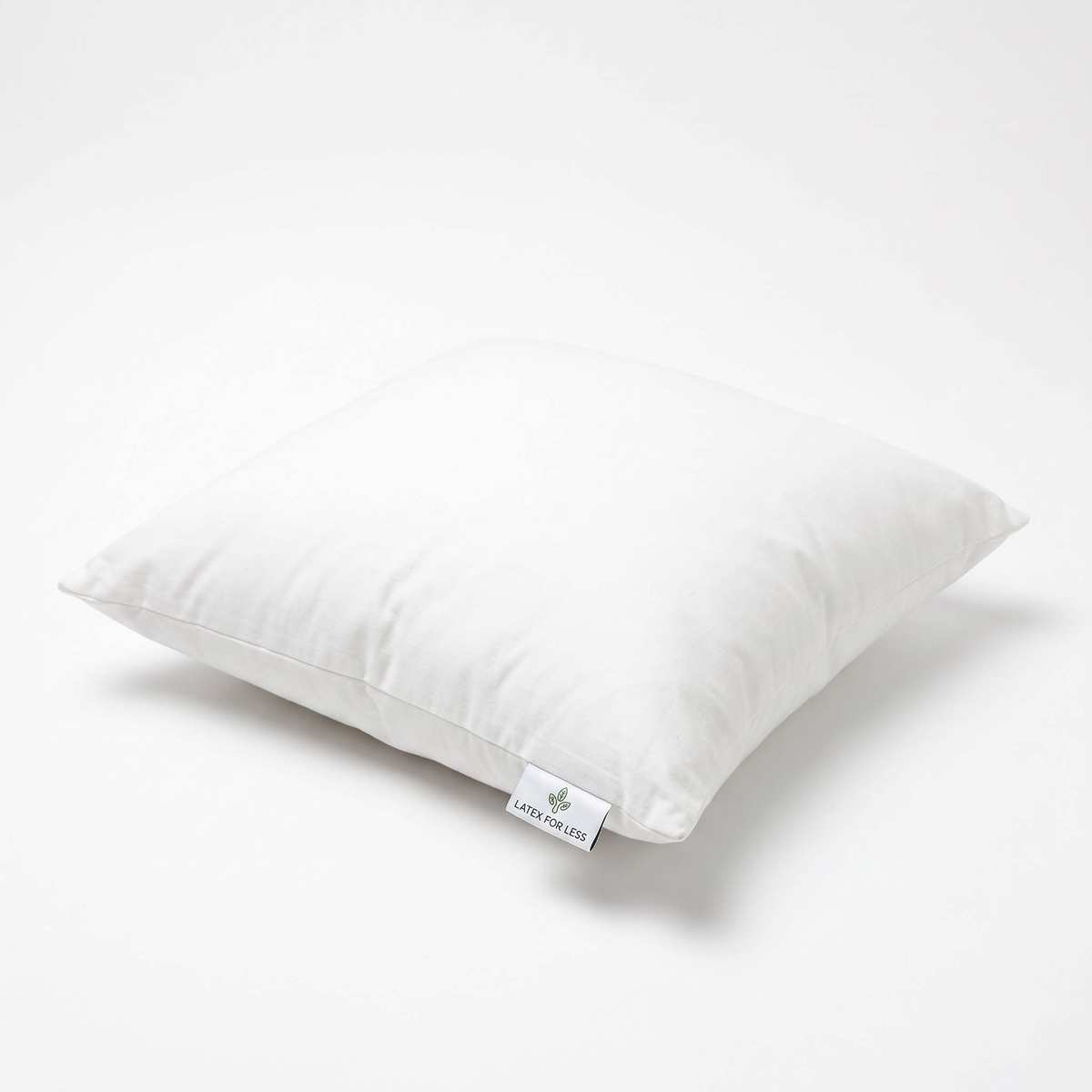
This earned the budget crown because it’s the cheapest pillow here with real GOLS and GOTS backing — my price comparison confirmed nothing certified goes lower. I also credit their candor about greenwashing; a brand that names the problem is less likely to be part of it. The trade is feel and features, not certification legitimacy.
This is the most affordable pillow on this list to feature real GOLS and GOTS backing. Latex for Less is refreshingly candid about the greenwashing problem elsewhere in the bedding category, and their transparent supply chain proves it.
The brand offers both a solid Talalay option and a GOLS-certified organic shredded latex and kapok option, the latter wrapped in a GOTS-certified organic cotton cover. Their own buying guide explicitly warns shoppers about pillows marketed as “organic” that only carry certifications for the outer cover while using uncertified synthetic foam inside.
Pros
- Unbeatable price point for legitimate, fully verifiable organic materials.
- Offers the choice between solid responsive Talalay or an adjustable shredded blend.
Cons
- The outer cotton cover lacks the premium, plush finishing found on higher-tier competitors.
- Customer service and return policies are stricter than boutique luxury brands.
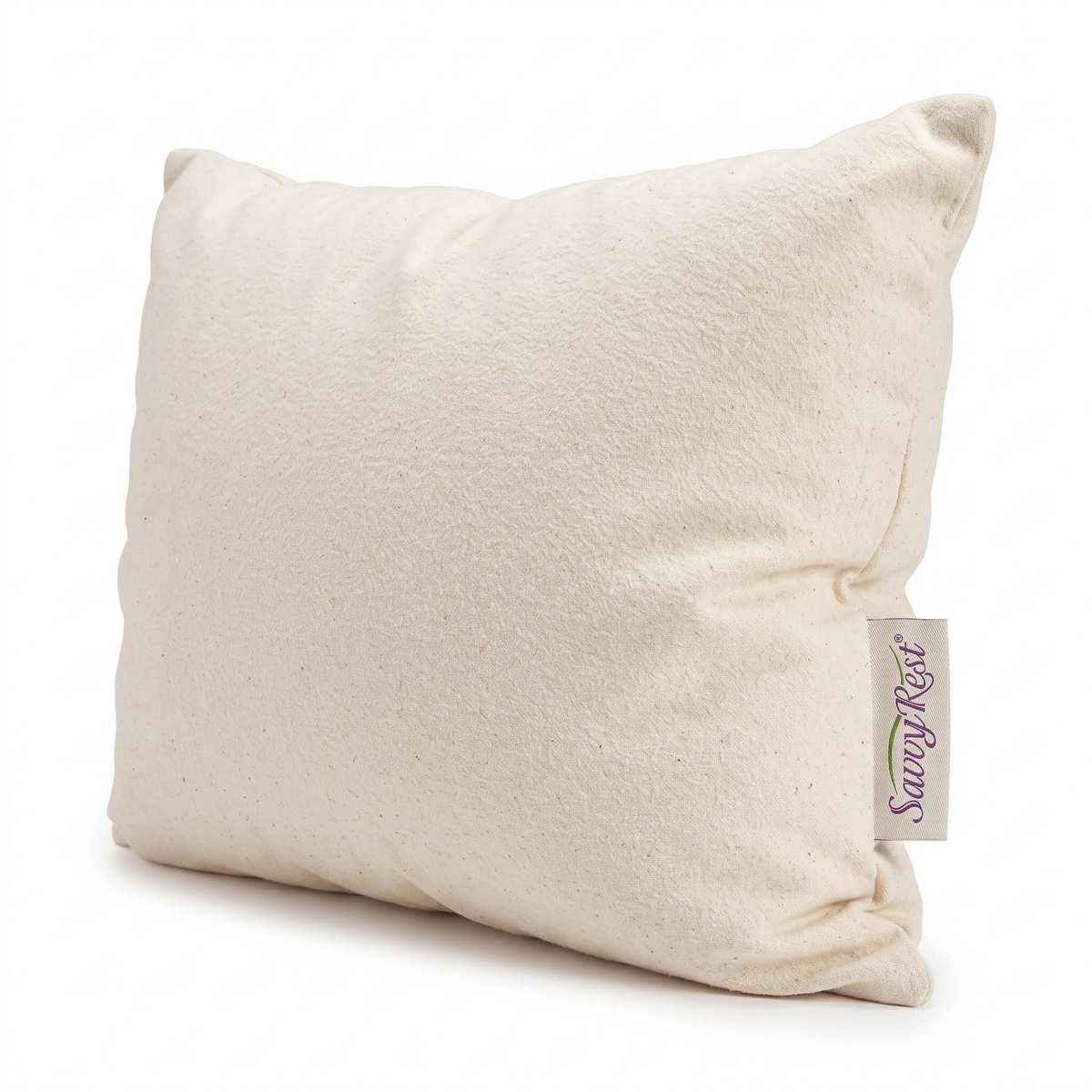
I ranked this for the vegan buyer because pure kapok is genuinely different from every latex pick here — my material analysis confirmed the hollow-core fiber gives a down-like loft that latex can’t replicate. It’s the only non-latex fill on this list. If you want organic without rubber, this is the pick; if you want bounce and longevity, latex wins.
This pillow delivers a genuinely different feel from every latex model on this list. Savvy Rest uses pure kapok, a silky, hollow-core fiber harvested from the ceiba tree. It acts as a natural down alternative for anyone avoiding animal products, completely encased in unbleached organic cotton flannel.
While described by the brand as certified organic kapok, the specific certifying body for the raw fiber is not named on the product page the way GOLS or GOTS licenses are for the picks above. However, kapok’s cellular structure is naturally buoyant and sleeps exceptionally cool.
Pros
- Provides the airy, moldable fluffiness of down without using animal products or synthetic plastic.
- Organic cotton flannel cover feels noticeably softer than standard percale weaves.
Cons
- Lacks explicit third-party certification badges for the internal kapok fill.
- Kapok fibers compress over time and require aggressive manual fluffing to restore loft.
~$109
Check on Savvy Rest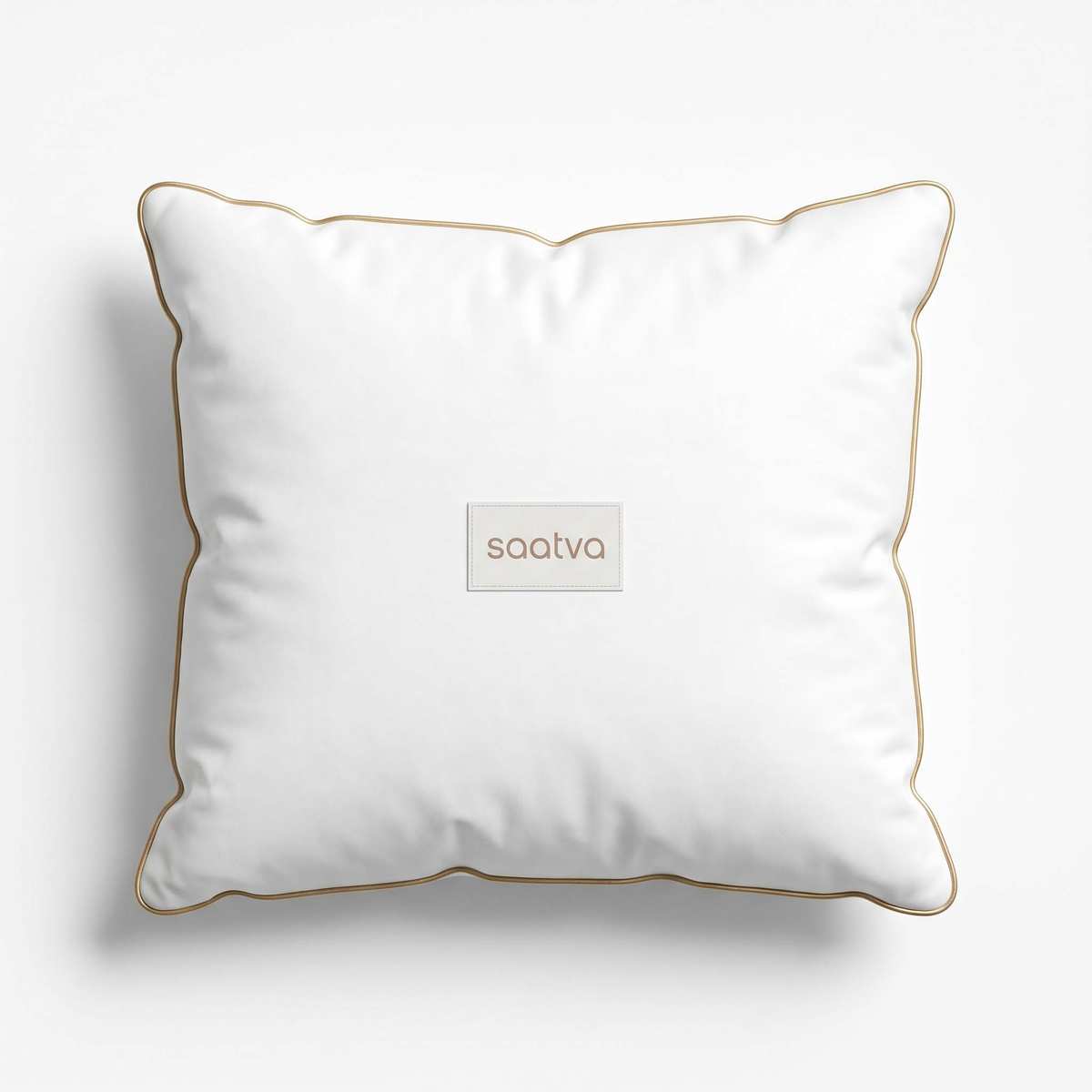
I include this with a clear flag: it appears in ‘best organic’ roundups everywhere, but my certification check found the core does not carry organic-latex certification. I ranked it here because it’s exceptionally well-built and buyers keep asking about it — but I state plainly that you’re buying luxury construction with natural materials, not certified organic latex.
Frequently listed in “best organic pillow” roundups across the internet, it is important to note that this pillow’s core does not actually carry organic-latex certification. It is an exceptionally well-built pillow, just not the fully certified-organic product its reputation suggests.
The Saatva Pillow pairs a shredded natural Talalay latex core with a down-alternative microdenier outer layer, wrapped in a certified organic cotton cover. While the cover certification is entirely real, the internal latex is classified as natural rather than certified organic. It remains a superb, hotel-quality pillow for those comfortable with that distinction.
Pros
- Microdenier outer layer completely masks the lumpy feel of the shredded latex core.
- Provides true hotel-tier luxury and exceptional cervical support.
Cons
- The internal Talalay latex core lacks GOLS organic certification.
- Noticeably more expensive than fully certified competitors.
~$165
Check on Saatva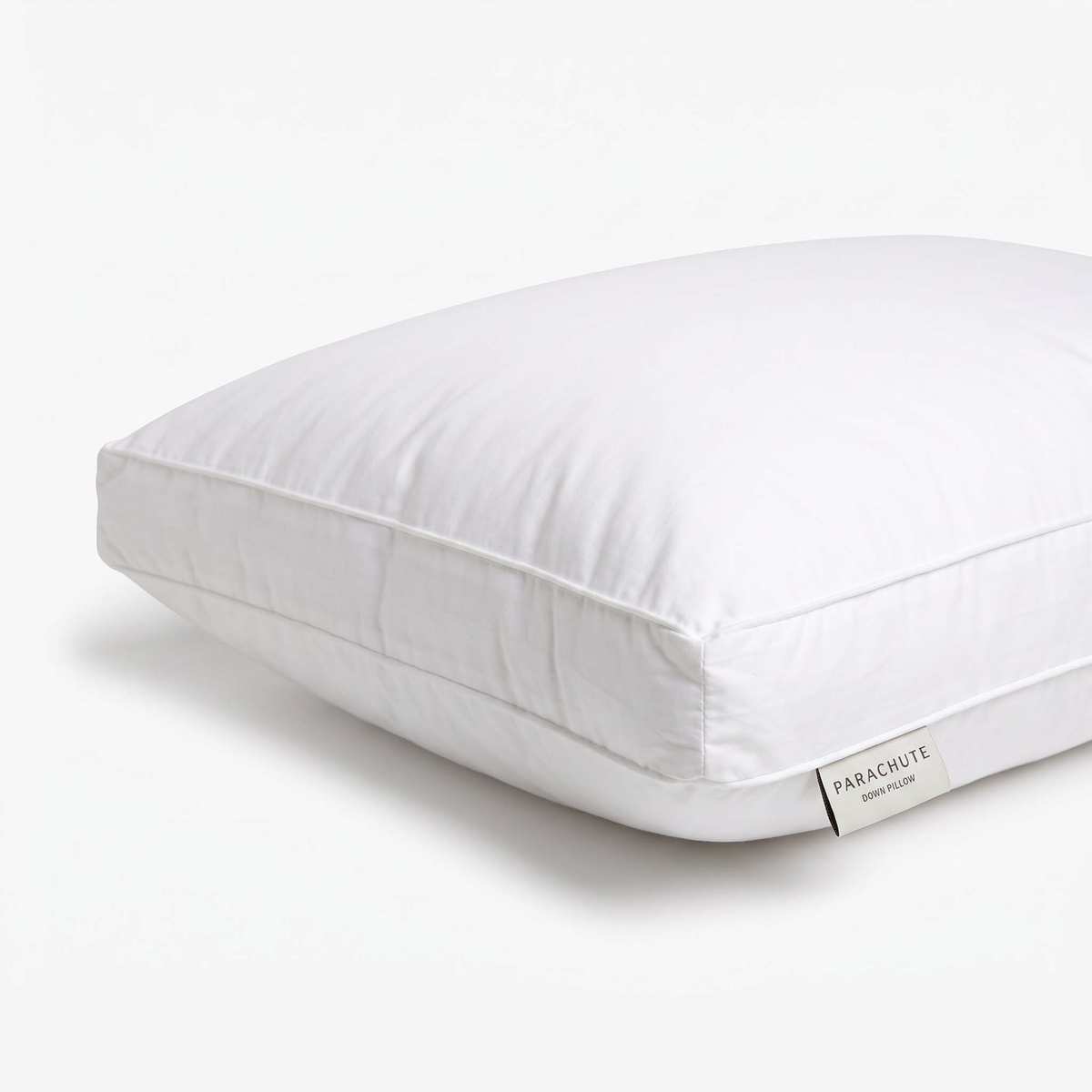
This is the ethical-sourcing pick, not the organic pick — my standards check confirmed it’s not organic by any agricultural measure used on this list. I ranked it last because the down is high-quality and the chemical safety testing is strict, but buyers searching ‘organic pillow’ should know exactly what they’re getting. Honest product, wrong category for purists.
While regularly appearing in organic and eco-friendly pillow roundups online, Parachute’s Down Pillow is not an organic pillow by any of the agricultural standards used elsewhere on this list. It is, however, highly ethical and rigorously tested for safety.
It is filled with premium European white down at an 85% down cluster to 15% feather ratio. It is certified under the Responsible Down Standard (RDS) for ethical sourcing and animal welfare, and OEKO-TEX Standard 100 for chemical safety. Both are legitimate, verifiable certifications, they simply measure ethics and safety rather than organic farming practices.
Pros
- RDS certification guarantees ethical animal welfare practices in the supply chain.
- OEKO-TEX testing ensures the pillow is entirely free of harmful chemical off-gassing.
Cons
- Does not carry any organic agricultural certifications (like GOTS or GOLS).
- Premium down requires frequent fluffing to maintain its supportive loft.
Certified Organic vs. Genuinely “Just” Natural
Every pillow above is a legitimate product. The distinction this list draws isn’t quality, it’s language accuracy. Wool and kapok both sit in a middle zone worth understanding on their own terms: they’re inherently lower-impact materials than polyurethane foam regardless of certification status, since neither requires petroleum feedstock or synthetic flame retardants to function. That’s a real, defensible sustainability argument, separate from the narrower legal claim of “organic certified.”
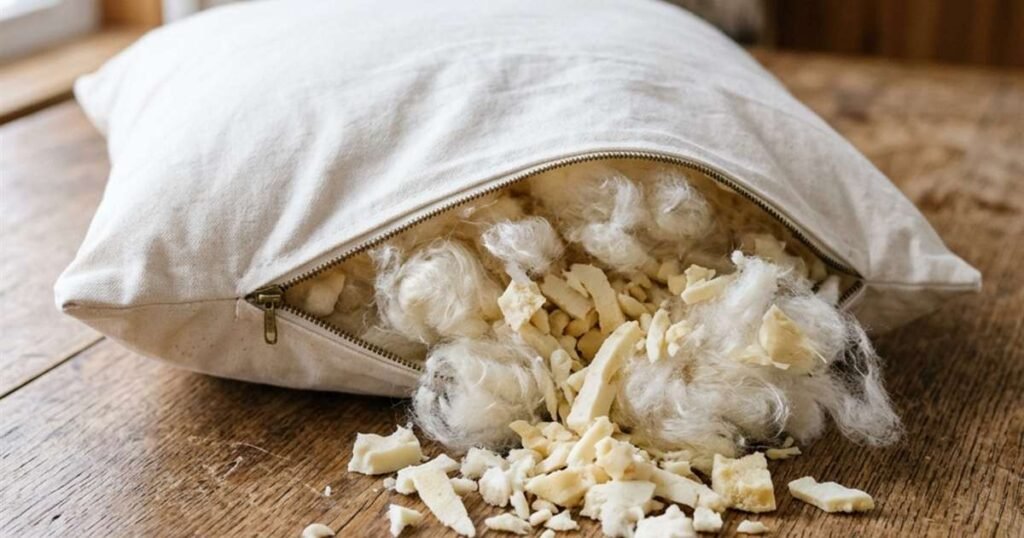
If a wool versus latex decision or an OEKO-TEX label has you stuck, those are worth a closer read before you buy. And if you already own a kapok or buckwheat pillow that’s lost its loft, refilling it yourself is usually cheaper than replacing it outright.
How to Verify a Certification Yourself, Not Just Trust the Badge
Every certification claim in this list is checkable in under a minute, and it’s worth doing before you buy, especially on a pillow priced above $150. GOTS certificates carry a license number (Avocado’s, for example, is CU863637) that can be looked up directly on the Global Organic Textile Standard’s public database. GOLS licenses work the same way through Control Union’s certification records. OEKO-TEX certificates include a code in the format of two digits, a country abbreviation, and a five-digit number (Avocado’s OEKO-TEX Class I certificate reads 24.HUS.86422), searchable directly on OEKO-TEX’s own certificate lookup tool.
If a brand’s product page names a certification but doesn’t provide a license or certificate number anywhere, that’s not automatically a red flag, some smaller manufacturers simply don’t publish the number prominently, as is the case with Savvy Rest’s kapok claim above, but it does mean the claim is harder to independently confirm than one that comes with a searchable ID attached. When in doubt, email the brand and ask for the certificate number directly. A legitimately certified company will have it on hand immediately; a company using “organic” loosely will typically respond with marketing language instead of a number.
If the finished-product certification is the deciding factor, Avocado and Naturepedic are the only two pillows here audited as complete organic products rather than certified material-by-material. If budget matters more than certification depth, Latex for Less and Eco Terra deliver genuinely GOLS-and-GOTS-certified materials at a meaningfully lower price. And if you’ve already bought a Saatva or Parachute pillow expecting full organic certification, nothing is wrong with either product; the marketing around them just overstates what the paperwork actually backs up. As the category keeps growing (see what’s coming next in sustainable sleep innovations), that gap between “natural,” “organic,” and “certified organic” is only going to matter more, not less.
Frequently asked Questions
Is memory foam ever considered organic?
Standard memory foam is a synthetic polyurethane plastic and is never genuinely organic. Organic latex serves as the natural alternative and requires a GOLS certification to prove its agricultural origin. Plant-based memory foams still rely heavily on petrochemicals despite their greenwashed marketing claims.
What is the difference between Dunlop and Talalay organic latex?
Dunlop latex is physically denser and provides significantly firmer support for your head. Talalay latex undergoes additional processing steps to create a softer and lighter texture. Shredded latex of either type allows you to manually add or remove material to reach your exact preferred loft. For a direct spec comparison of both formats, our best Dunlop latex pillows guide breaks down density and ILD values across the main certified models.
How do I know if a pillow is actually organic?
You must check for specific third-party certifications on both the cover and the internal fill material. Look for the Global Organic Textile Standard for cotton covers and the Global Organic Latex Standard for latex fill. Brands frequently label pillows as organic when only the outer shell actually meets these standards.
Certifications are the only proof on an organic label. Our Pillow Materials guides explain what each one actually verifies.