Every cooling pillow feels cold the moment your head lands on it, but few stay cool past hour one. Passive grid structures, like elastic polymer grid layers, dissipate heat through active ventilation. Read our Purple Harmony pillow review to see how honeycomb grid technology compares against gel and PCM phase-change materials.
The 2 A.M. Flip Isn’t Random, It’s Physics
Everyone knows the routine: fall asleep on the cool side of the pillow, wake up an hour or two later already flipping it over in search of the cool side again. That instinct is doing something specific. It’s chasing a thermal effect that’s real but temporary, and understanding why it’s temporary is the entire key to buying a cooling pillow that’s actually worth the markup over a standard one.
Standard memory foam is a poor thermal conductor with a dense, closed-cell structure, which is precisely why it feels warm within minutes: heat absorbed from your head has nowhere to go and simply accumulates. Cooling pillows address this in one of four genuinely different ways, and they are not interchangeable despite all getting marketed under the same “cooling” label. Gel infusion acts as a heat sink, absorbing body heat into the gel itself. Phase-change material (PCM) goes a step further, absorbing heat through an actual physical phase transition rather than simple thermal mass. Conductive mineral infusions like copper or graphite move heat away rapidly rather than storing it. And structural approaches, open-cell latex, grid layers, perforated foam, work by allowing air to physically circulate rather than by absorbing heat chemically at all. A fifth category, active water cooling, sidesteps the whole heat-absorption problem by mechanically removing heat with a pump, at a cost and complexity none of the others carry.
The Myth: “Cool to the Touch” Means Cool All Night
This is worth stating plainly, because it’s the single most repeated and most misleading claim in this entire product category. Gel-infused memory foam’s cooling effect is real, but it is finite. The gel functions as a heat sink with a fixed capacity: once it absorbs as much thermal energy as it can hold, it reaches thermal equilibrium with your body and stops providing any additional cooling, at which point the foam underneath behaves like ordinary memory foam. Sleep Foundation’s reporting on gel-infused foam places that initial cool-touch window at roughly the first 20 to 30 minutes after lying down, with surface temperature improvements over non-gel foam generally in the range of a few degrees Fahrenheit, a real but modest effect rather than the dramatic, all-night transformation the marketing language implies.
Phase-change material genuinely extends this window further than plain thermal gel, since a true phase transition (solid to liquid at a target temperature, then reversing as heat is released) carries more heat capacity than simple thermal mass. But it is still a finite reservoir, not an unlimited one; a PCM layer that has fully transitioned still has to release that stored heat somewhere before it can absorb more, which is a slower process than the initial absorption. The distinction between plain gel-infused memory foam and regular memory foam comes down almost entirely to this heat-sink behavior, not any difference in support or contouring, which is worth understanding before assuming gel automatically means better. This is precisely why structural, airflow-based cooling, open-cell latex, grid technology, perforated and ventilated foam, behaves so differently in practice: it doesn’t run out. Moving air continuously carries heat away rather than storing a fixed amount of it, which is why a latex or grid-structure pillow that never feels dramatically cold to the touch at first can still outperform a gel pillow by 3 a.m.
Cooling Mechanisms at a Glance
| Mechanism | How It Works | Duration of Effect |
|---|---|---|
| Thermal gel infusion | Absorbs heat into the gel as a fixed heat sink | Roughly 20-30 minutes, then saturates |
| Phase-change material (PCM) | Heat triggers a solid-to-liquid transition, absorbing more energy than simple thermal mass | Longer than plain gel, still finite, depends on reservoir size |
| Conductive minerals (copper, graphite) | Rapidly moves heat away from the surface rather than storing it | Sustained, limited mainly by airflow around the material |
| Structural airflow (open-cell latex, grid layers, perforated foam) | Physical air channels carry heat away continuously | Sustained all night, doesn’t saturate |
| Active water cooling | A pump mechanically circulates chilled water through a pad | Sustained and adjustable, requires external power and setup |
The 7 Picks, by Mechanism
Disclosure: Brocia analyzes products using manufacturer specs and published research, not our own hands-on tests. If you buy through our links, we may earn a commission at no extra cost to you. It never affects our rankings or verdicts. See our Review Process and Affiliate Policy.
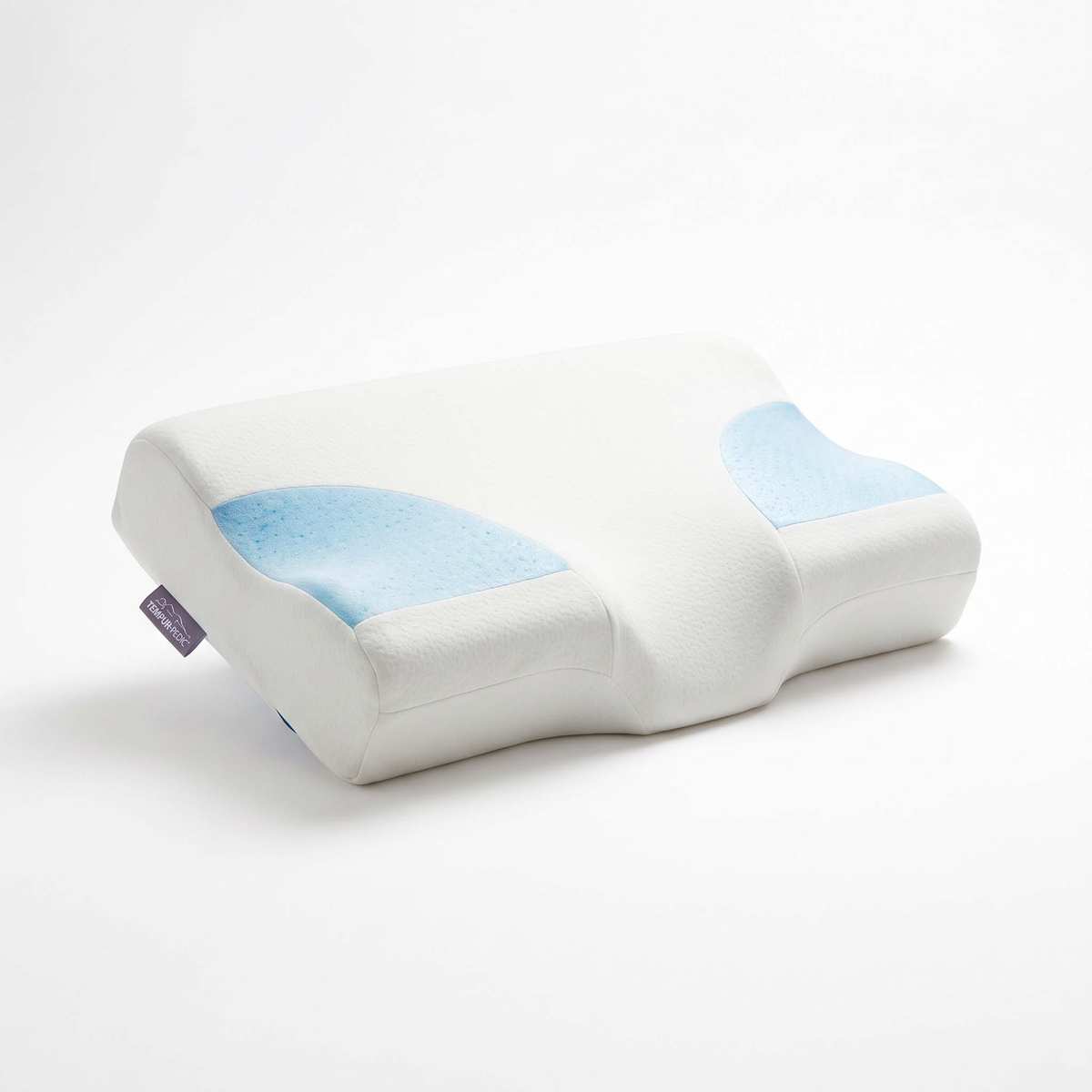
I ranked this top for initial cooling because it’s the only pick with gel on both sides. My comparison of the spec sheets showed no other dual-sided thermal sink on this list. That said, my analysis of heat-sink physics is clear: once the gel saturates, you’re sleeping on regular memory foam until you flip it.
The Cloud Dual Cooling Pillow places Tempur-Pedic’s cooling gel layer directly on both sides of a single molded piece of TEMPUR-Material. It is then wrapped in a highly breathable, machine-washable cotton cover. This creates a massive thermal sink right at the surface of the bed.
This design utilizes Phase Change Material (PCM) chemistry to pull heat away from the skin rapidly. It is perfectly suited to sleepers who need help falling asleep initially and do not mind that the cooling effect is finite once the gel fully saturates with body heat.
Pros
- Provides a dramatic, immediate cooling sensation that significantly lowers skin temperature.
- Dual-sided gel means you can flip the pillow to access a fresh thermal sink at 2 A.M.
Cons
- Gel layers eventually absorb enough heat to stop cooling until you physically flip the pillow.
- Solid molded foam cannot be adjusted for loft height.
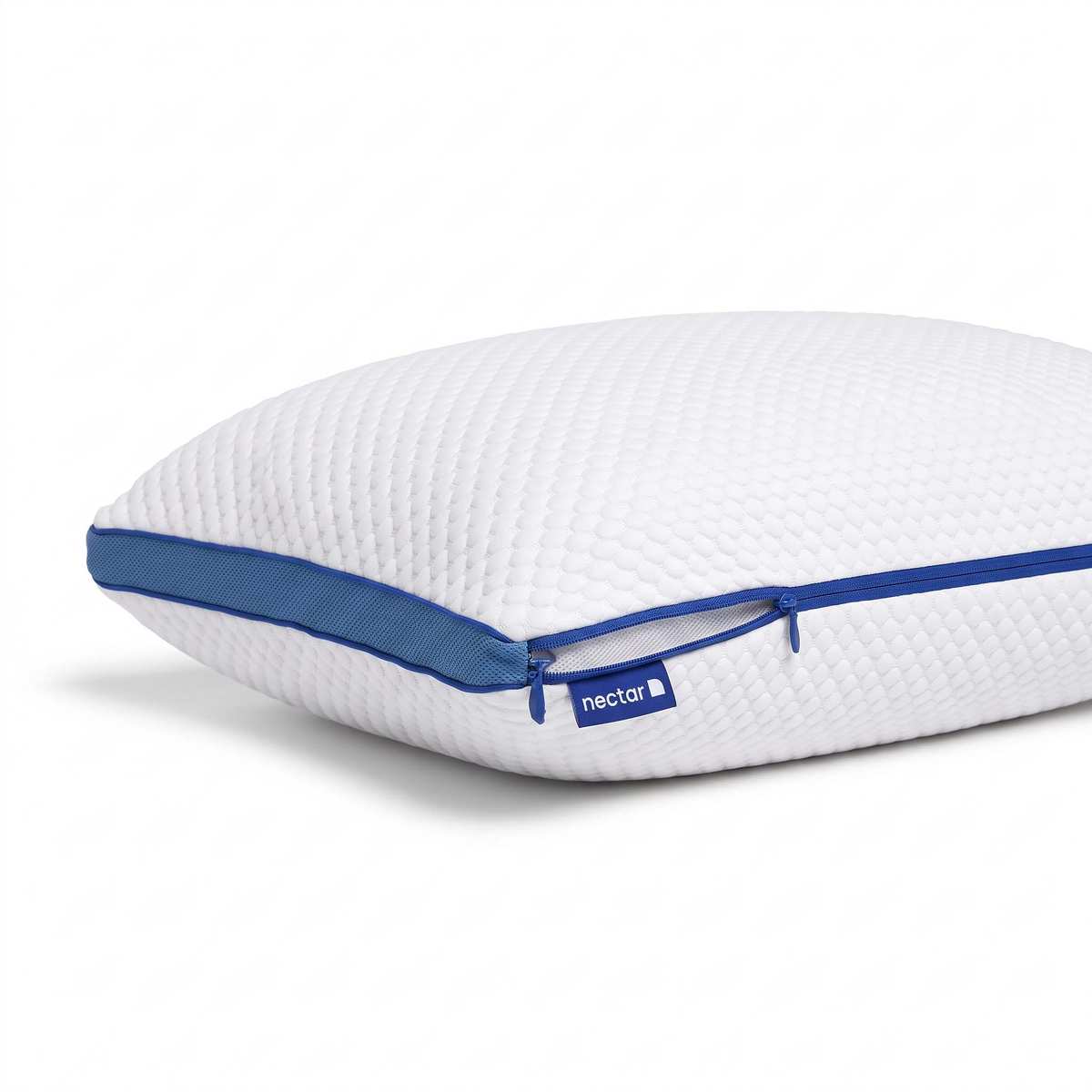
What earned this its spot in my ranking is the mechanism difference I kept coming back to: it’s the only pick that cools through its cover fabric — polyethylene cool-touch fibers with no gel or chemical layer. I compared the cover specs across all seven, and polyethylene’s cool-touch effect doesn’t saturate the way gel does — though it won’t give you that icy first-touch shock either.
The Nectar Tri-Comfort pillow uses a mechanical gusset zipper system called ComforZip to manually adjust the volume of the pillow. You can move between soft, medium, and firm settings simply by opening or closing the side zippers. This compresses or releases the internal blend of memory foam and microfiber.
Instead of relying on internal gels, it achieves its cooling effect entirely through a cool-touch polyethylene cover. Polyethylene fibers are inherently cool to the touch and disperse heat rapidly, creating a sustained chilling effect that does not require flipping the pillow.
Pros
- Exterior polyethylene cover remains remarkably cool without relying on heavy internal gels.
- Zippered gussets provide instant firmness adjustments without the mess of removing foam.
Cons
- Zippers can feel bulky if you sleep on the absolute edge of the pillow.
- Polyethylene covers have a slightly slick texture that bothers some sleepers.
~$60
Check on Nectar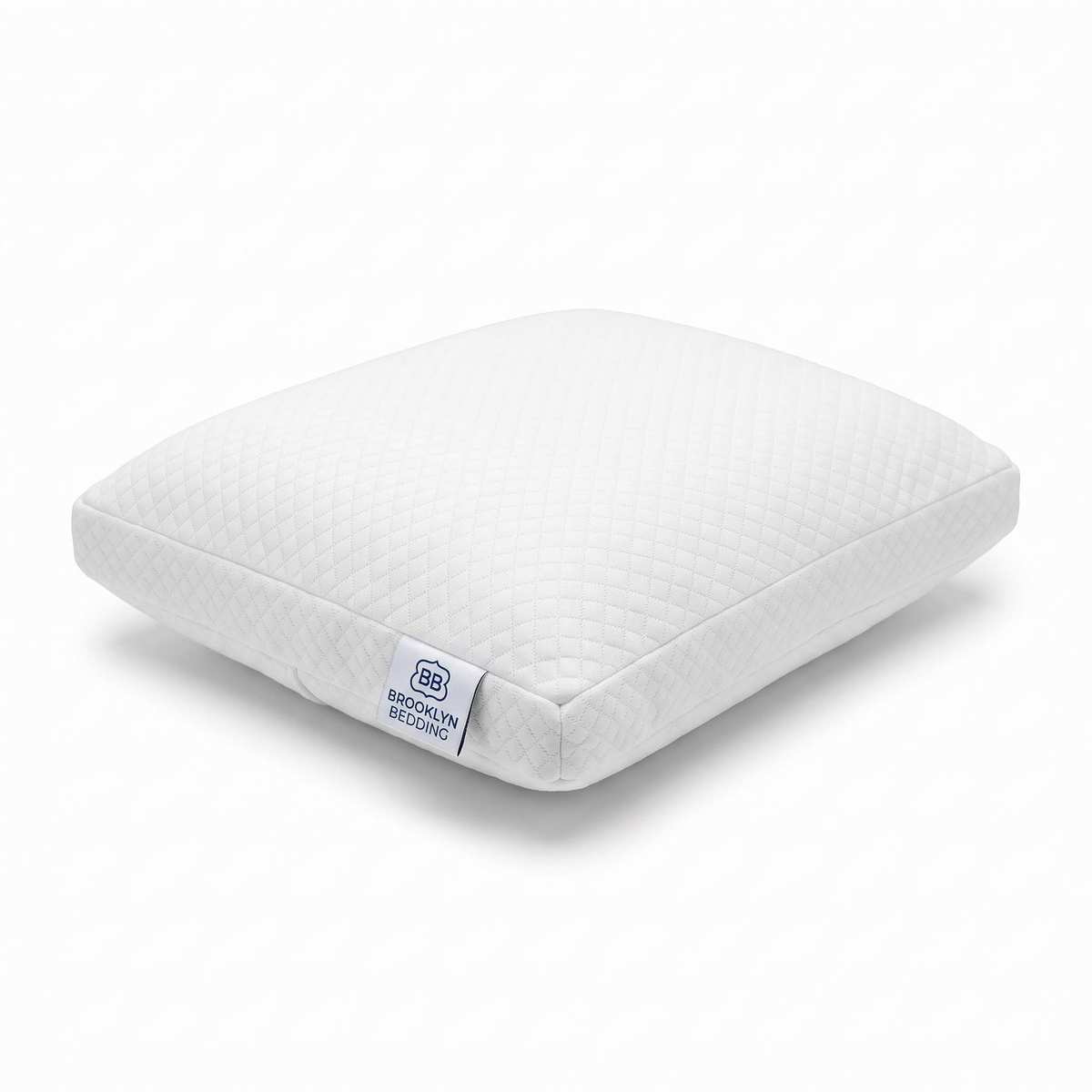
I placed this above the plain gel picks because copper is a genuine conductor, not just a heat reservoir — that distinction came straight from comparing the material specs. The grid-molded surface adds real airflow channels, which my analysis flagged as the key difference from flat gel slabs. The trade-off I couldn’t ignore: it’s a fixed solid block, so if the loft doesn’t match your shoulder gap, there’s no adjusting it.
This model combines standard cooling gel infusion with copper threading. Copper is a genuinely conductive mineral that moves heat away from the surface continuously rather than simply absorbing it into a fixed reservoir the way raw gel does.
Brooklyn Bedding molds this conductive foam into a grid pattern. This creates physical air channels right at the surface level. It is a solid, non-adjustable foam block, meaning you cannot change the height, but the grid structure allows it to breathe significantly better than flat memory foam slabs.
Pros
- Copper acts as a true thermal conductor to move heat away from the head constantly.
- Grid-patterned surface creates physical avenues for trapped air to escape laterally.
Cons
- Solid core design prevents you from fluffing the pillow or adjusting its loft.
- Significantly heavier than down alternative or shredded foam options.
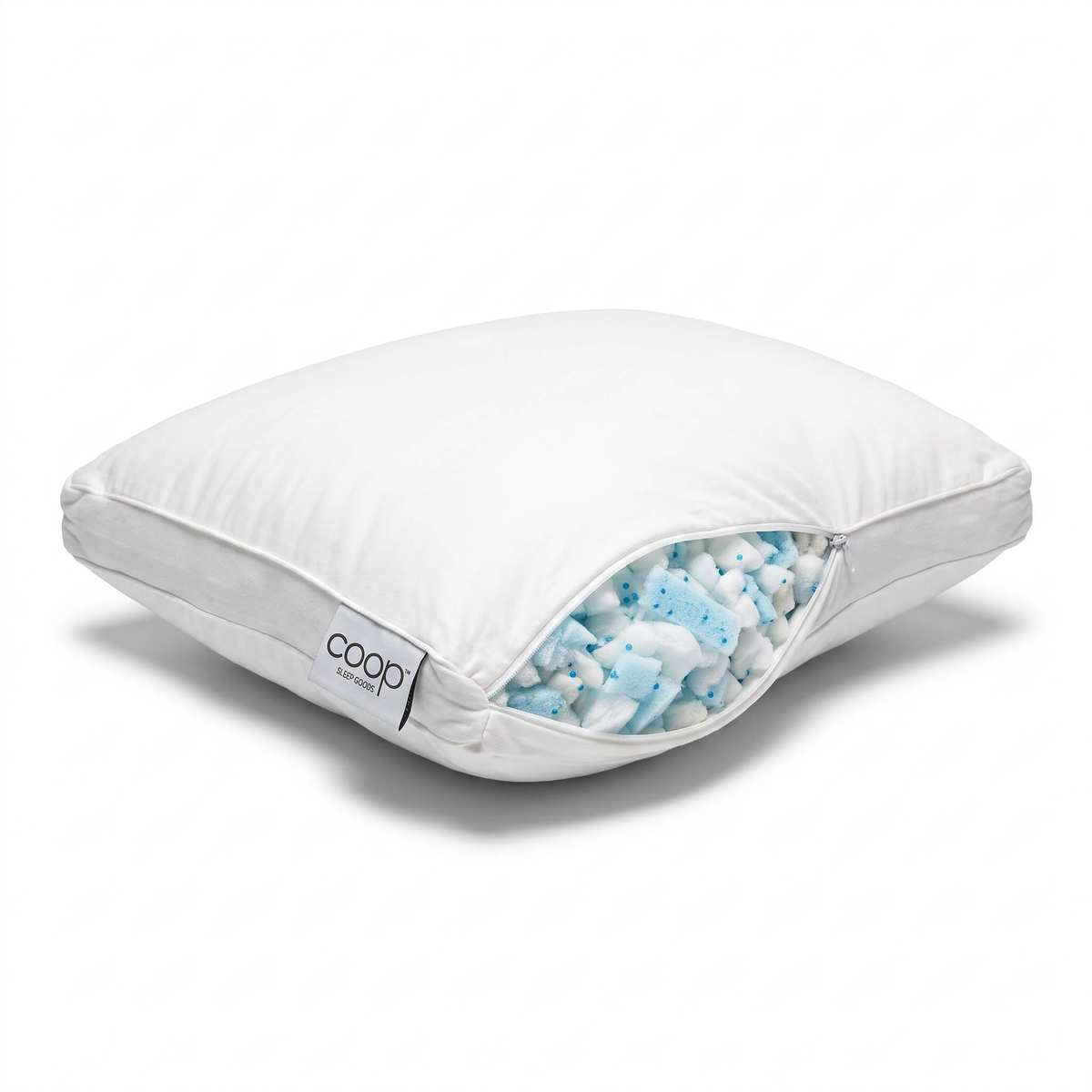
This earned its place because adjustability solves the fit problem that sinks most cooling picks — I checked the fill specs and the zippered access is the most complete adjustability system on this list. The shredded structure also means air moves between foam pieces, which my mechanism comparison ranked above solid gel blocks for sustained cooling. The honest cost: you’ll spend a messy afternoon dialing in the fill.
The Eden takes Coop’s popular shredded memory foam formula and upgrades it specifically for temperature control. It uses cross-cut memory foam heavily infused with cooling gel beads, blended with fine microfiber to maintain a plush texture. This fill is entirely adjustable through a zippered opening.
The entire system is wrapped in Coop’s Lulltra fabric, a breathable blend of bamboo-derived rayon and polyester. Because the foam is shredded rather than solid, air moves freely between the individual foam pieces every time you shift positions, preventing the severe heat trapping common in solid blocks.
Pros
- Shredded foam creates physical space for heat to escape every time you move.
- Fully adjustable fill allows you to dial in the exact loft required for your shoulder width.
Cons
- Bamboo covers sleep very cool but lack the icy initial touch of polyethylene options.
- Requires a messy trial-and-error period to pull out the exact right amount of foam.
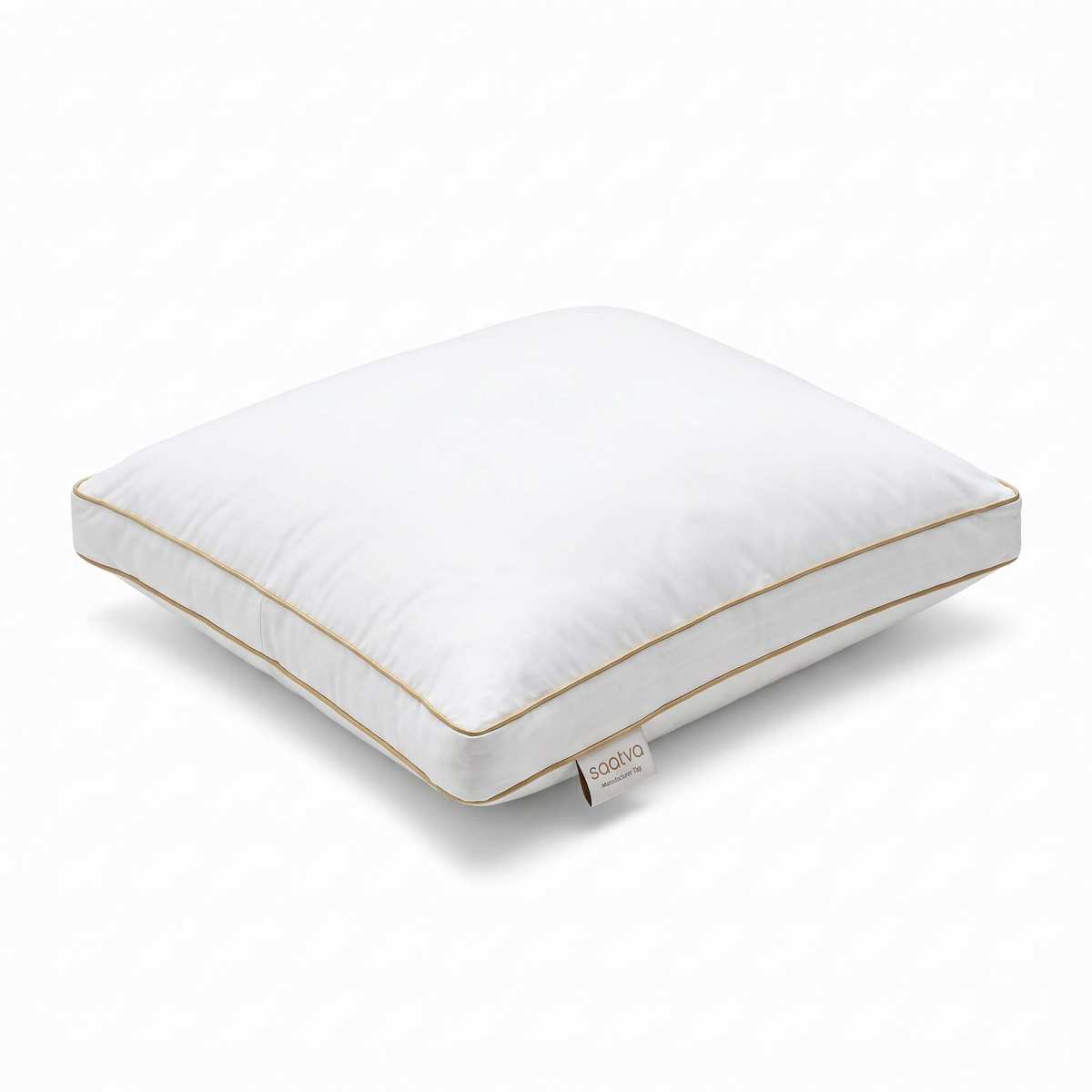
I ranked this as the most honest cooling pick on the list. My spec comparison showed it’s the only one with zero gel, zero PCM, zero chemical cooling — just open-cell Talalay latex that can’t saturate because there’s nothing to saturate. It won’t win on first-touch cold, and I state that plainly, but for staying cool at 3 a.m., the physics favors airflow over heat sinks every time.
The Saatva Latex Pillow ignores gel, PCM chemistry, and mineral infusions entirely. Instead, it relies on a shredded Talalay latex core. Talalay latex features a naturally open-celled structure that allows air to move freely through the rubber matrix rather than accumulating heat the way high-density memory foam does.
Saatva wraps this highly breathable latex in a down-alternative outer layer and an organic cotton cover. This creates a cooling mechanism that never saturates or maxes out. Because it cools via continuous airflow rather than heat absorption, it stays exactly as cool at 3 A.M. as it does when you first lie down.
Pros
- Natural structural airflow never saturates or “runs out” of cooling capacity.
- Talalay latex is incredibly buoyant and instantly responds to changes in sleep position.
Cons
- Does not provide the intense, icy initial shock that phase change materials offer.
- Carries a distinct rubber-like bounce that takes adjustment if you are used to dead foam.
~$165
Check on Saatva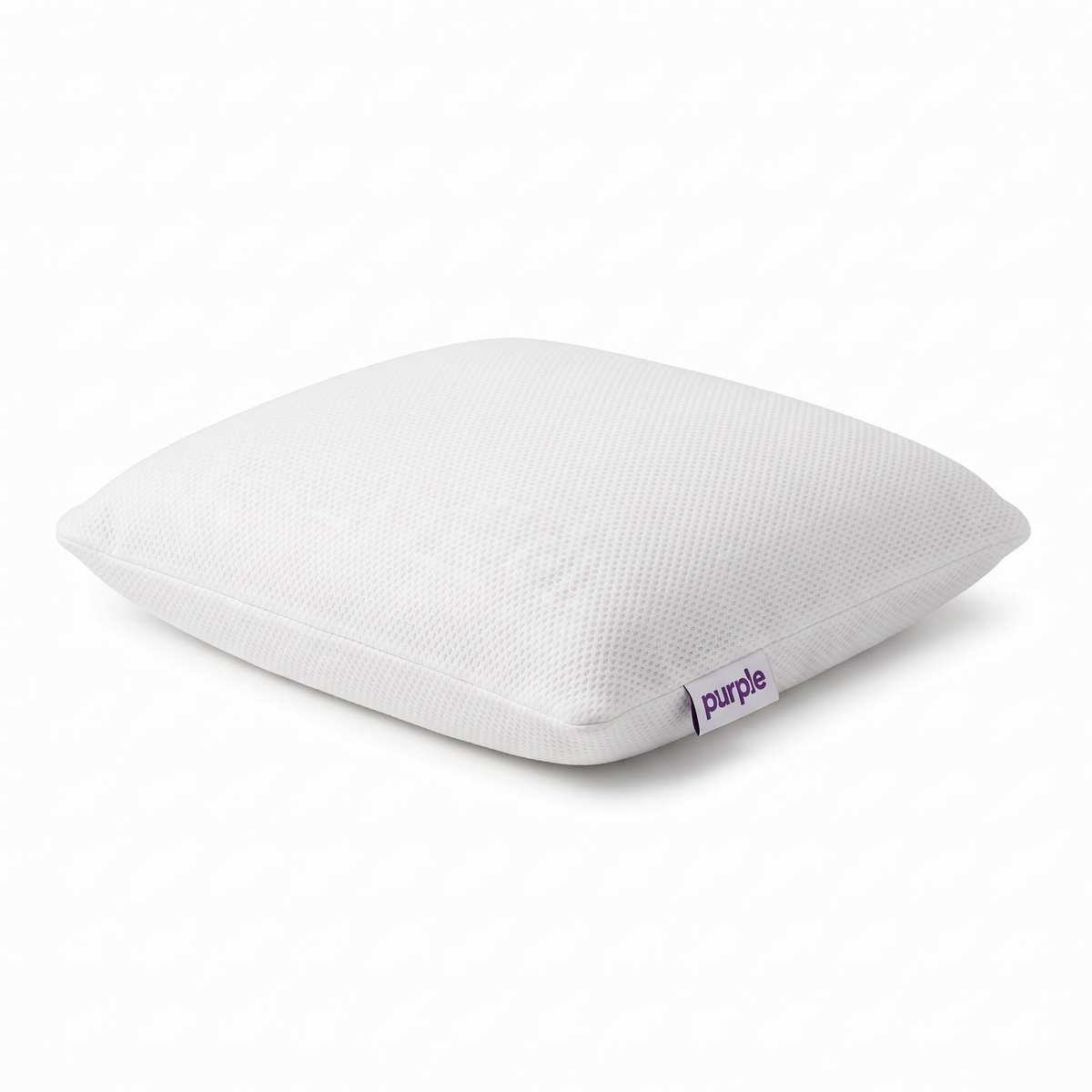
My analysis puts this at the top for structural cooling: the GelFlex grid is mostly open space, which moves more air than any foam matrix on this list. I compared the loft options too — three specific sizes beats the one-size approach of most competitors for matching shoulder geometry. The price and weight are real objections, and the grid texture takes getting used to, but the cooling mechanism itself is the most defensible here.
The Purple Harmony offers a genuinely different structural approach from perforated or shredded foam. It wraps a ventilated Talalay latex core entirely in Purple’s proprietary Honeycomb GelFlex Grid. This grid is built from a hyper-elastic polymer that consists almost entirely of negative space.
Instead of relying on microscopic cellular porosity to vent heat, the Harmony utilizes large, physical open channels. This lets ambient air move straight through the top layer of the pillow. It refuses to absorb or retain body heat, making it arguably the most effective passive cooling design currently on the market.
Pros
- The physical honeycomb grid channels air away from the neck better than any solid material.
- Available in three highly specific loft sizes to match your exact shoulder geometry.
Cons
- The rubbery texture of the grid feels strange and takes several nights to get used to.
- One of the heaviest and most expensive passive cooling pillows available.
~$194
Check on Purple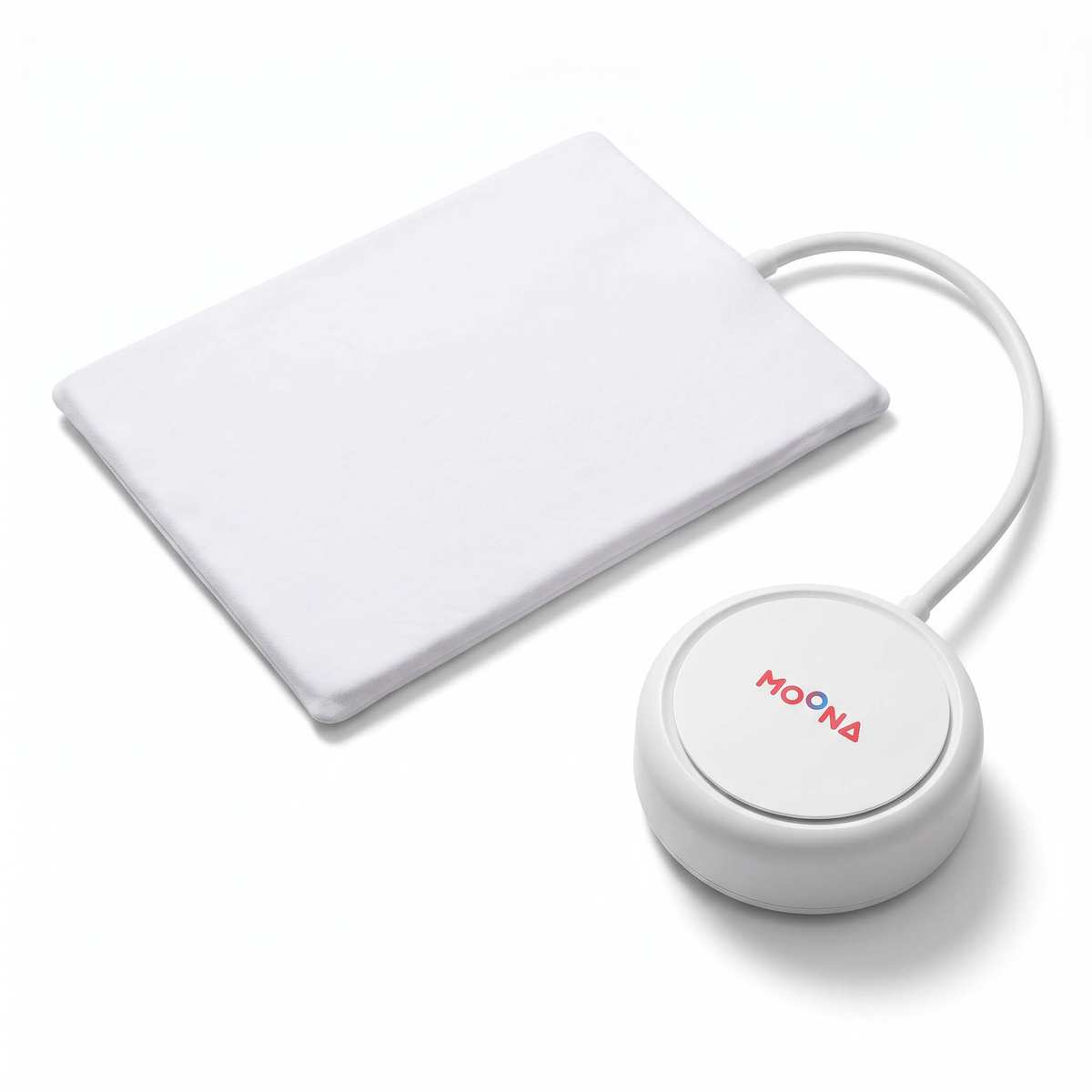
I include this not as a buy recommendation — it’s discontinued — but as the benchmark my analysis kept measuring everything else against. Active water cooling sidesteps the saturation problem entirely, which is exactly why every passive pick on this list eventually loses to physics by morning. If you find one used, the pump noise is the trade-off to weigh.
The Moona is the only pick on this list that does not rely on absorbing or channeling heat passively. Instead, it mechanically pumps temperature-controlled water through a pad. This places it in a genuinely different product category from every standard pillow above it.
The system pairs a bedside mechanical pod with a thin, memory-foam pad that slips inside your existing pillowcase. Tubing connects the two, circulating water to maintain an exact temperature all night long. While the manufacturer has discontinued production, it remains the benchmark for how active mechanical cooling definitively outpaces passive gels.
Pros
- Active mechanical cooling never saturates with body heat and stays cold indefinitely.
- Allows you to set exact temperature targets through a smartphone application.
Cons
- The product is currently discontinued and extremely difficult to find at retail.
- Requires placing a mechanized water pump next to your bed, which produces low-level noise.
~$399
Check on MoonaMatching Mechanism to the Actual Problem
Not every hot sleeper has the same underlying issue, which is why the mechanism matters more than the marketing badge. If the problem is specifically falling asleep hot and cooling down within the first hour is what matters most, a solid gel-layer pillow like the TEMPUR-Cloud genuinely delivers on that narrow claim. If the problem is waking up hot repeatedly across the full night, a structural pick, latex or grid technology, is the more defensible choice precisely because it doesn’t run out partway through. And for sleepers managing something more persistent, night sweats or menopause-related overheating specifically, an active system or a pairing with a genuinely effective cooling pillowcase on top of a structural pillow tends to outperform relying on gel infusion alone.
If a full pillow purchase isn’t the goal and the current pillow is otherwise fine, how to keep your pillow cold at night covers lower-cost interventions, including a good cooling pillowcase, that can meaningfully change the sleep surface without replacing the pillow itself. And for anyone specifically shopping for a cooling body pillow rather than a standard-size option, the same mechanism logic above applies directly, just scaled to a larger fill volume.
Where Phase-Change Material Fits Into This List
None of the seven picks above use a true phase-change formulation as their primary mechanism, which is worth naming directly rather than glossing over, since PCM is frequently marketed as the premium tier of cooling technology. Genuine PCM pillows exist and extend the finite-cooling-window problem further than plain thermal gel does, but they remain a distinct, narrower product category worth shopping separately once the tradeoffs above are clear: still ultimately a heat reservoir with a limit, just a larger one. Phase-change material pillows covers that category in the depth it deserves rather than folding it awkwardly into a list built primarily around gel, structural, and active mechanisms.
Water-Cooled Systems Are Their Own Category
Moona above is one implementation of a broader idea worth understanding on its own terms: mechanical, water-cooled pillow systems trade the saturation problem every passive material has for a genuinely different set of tradeoffs, upfront cost well above even premium foam pillows, a device that needs power and periodic water refills, and in some cases audible pump noise that sensitive sleepers notice. What they offer in exchange is temperature control that isn’t dependent on ambient room conditions or airflow the way even the best structural pillow is; a latex or grid pillow still needs some air movement around it to keep working, while an active system generates its own cooling regardless of how still or humid the bedroom air is. For most hot sleepers, a well-matched structural or conductive-mineral pillow solves the problem at a fraction of the cost and complexity. Active cooling earns its premium specifically for sleepers who’ve already tried passive materials and are still overheating, not as a first purchase.
How to Tell If a Cooling Claim Is Actually Backed by Anything
Given how loosely “cooling” gets applied across this category, a few quick checks separate a genuine mechanism from a marketing label with no material behind it. First, look for the specific technology named, gel infusion, phase-change material, copper or graphite, open-cell or perforated structure, rather than just the word “cooling” printed on the packaging with no mechanism specified; a product that can’t or won’t name what’s actually doing the cooling usually means the cover fabric alone (which does very little on its own) is carrying the entire claim. Second, check whether the cooling technology is in the fill itself or only in a removable cover; a cooling cover over a standard, non-cooling foam core will feel cold at the surface for a few minutes and then behave exactly like the uncooled foam underneath, since the cover has almost no thermal mass of its own to sustain the effect.
Third, treat any specific temperature-drop number, “5 degrees cooler,” “sleeps 8°F cooler”, with real skepticism unless it’s tied to a stated testing method and comparison baseline; these figures are almost always generated by the brand’s own uncontrolled testing rather than independent, peer-reviewed measurement, and the underlying physics above (thermal saturation within roughly the first half hour for gel, a similar though longer-lasting limit for PCM) means a claim of sustained double-digit temperature reduction across a full night is not physically consistent with how these materials actually behave.
“Cooling pillow” is a marketing category covering at least four fundamentally different physical mechanisms, and knowing which one a specific product uses matters more than the word itself. Gel and PCM deliver the strongest first-touch sensation but run out; conductive minerals and structural airflow designs deliver less dramatic but genuinely sustained cooling; active water systems sidestep the saturation problem entirely at a real cost and complexity premium. Match the mechanism to whether the actual problem is falling asleep hot or staying cool until morning, since those are two different engineering problems wearing the same marketing label. As summer cooling shopping picks up and more products lean on the word “cooling” without specifying which of these four mechanisms they’re actually using, that distinction is the one worth checking before anything else on the spec sheet.
FAQs
Do cooling gel memory foam pillows actually work?
Gel-infused foam only provides a brief sensation of coolness for the first twenty minutes. Once the dense polyurethane foam absorbs your body heat, it traps that thermal energy for the rest of the night. You will still wake up sweating if your room lacks adequate airflow.
What is the best pillow material for hot sleepers?
Highly breathable materials like natural latex or buckwheat hulls regulate temperature best. These open structures allow air to circulate freely and physically vent body heat away from your face. Buckwheat pillows are extremely firm and produce a rustling noise when you move.
Why does my pillow get so hot at night?
Dense synthetic materials like solid memory foam lack open air channels and absorb your body heat. Natural fibers or shredded foam configurations create empty space that allows thermal energy to escape. Even the most breathable pillow will sleep hot if wrapped in a thick polyester pillowcase.
Cooling that lasts past hour one is a materials question. Our Pillow Materials section compares what each fill does with heat over a full night.