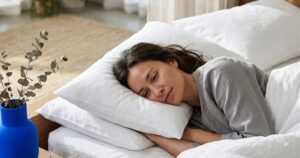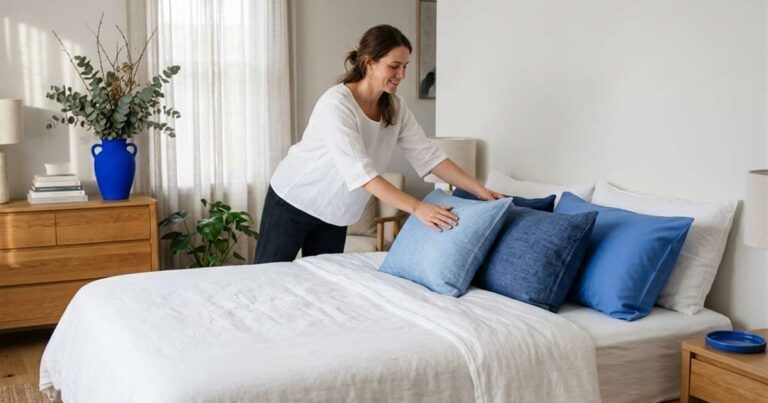
Bamboo viscose has a higher q-max than almost every mainstream pillowcase fabric on the market. Q-max, the rate of heat transfer from skin to textile at the moment of contact, is the measurable property behind what marketers call cool to the touch. Higher q-max means heat leaves your skin faster. Cotton percale sits in the moderate range. Polyester microfiber, regardless of what the packaging promises, sits at the bottom. The cooling pillowcase market is thick with exactly that kind of polyester: synthetic knits labeled arctic, glacial, or ice cool that feel briefly cold and then trap heat within minutes of contact. This guide covers the full pillowcase accessory and cuts through to five fabric types that the material science actually supports for all-night temperature management.
One important framing note before the picks: no pillowcase actively refrigerates your head. What separates a genuinely cooling pillowcase from a standard one is its ability to conduct heat away from the skin, handle moisture from perspiration, and avoid trapping a warm air layer between the fabric and your face. Those are passive thermal properties rooted in fiber structure and weave. The products below each earn their place on those three criteria, with manufacturer-disclosed specs and cited research behind every claim.
The complete technical breakdown of the best cooling pillows covers how pillow fill materials interact with pillowcase choice, a genuinely breathable pillowcase can be canceled out by a dense, heat-trapping pillow shell beneath it.
Why Thread Count Is the Wrong Spec for Hot Sleepers
Thread count measures how many threads run vertically and horizontally through one square inch of fabric. For cotton, it has a loose relationship to softness at the lower end of the range. But above roughly 400, manufacturers achieve higher numbers by twisting multiple thin yarns together into a single thread, creating a denser, heavier fabric that traps heat rather than releasing it. A 1,000-thread-count cotton sheet is not more breathable than a 300-thread-count percale. It is measurably less breathable, because the tight weave restricts airflow.
For non-cotton fabrics, bamboo viscose, TENCEL lyocell, linen, thread count is nearly meaningless as a quality signal. Bamboo lyocell at 300 thread count delivers cooling performance that high-thread-count cotton cannot approach, because the difference comes from fiber structure, not weave density. The specs that matter for a cooling pillowcase are: fiber type, GSM (grams per square meter, the fabric weight), and weave construction. A lighter GSM in the 90-145 range signals more breathable fabric. A percale or open sateen weave allows more airflow than a high-count sateen.
Keep that framework in mind for every pick below.
How These 5 Fabric Types Were Evaluated
No hands-on testing was conducted for this guide. Each fabric category is evaluated against three disclosed, verifiable criteria:
| Criterion | What It Measures | Why It Matters |
|---|---|---|
| Q-max value | Heat transfer rate at first contact | Determines the “cool touch” sensation |
| Moisture management | Wicking speed and release rate | Determines all-night performance during night sweats |
| Thermal conductivity | Rate of passive heat dissipation | Determines whether heat builds up against the skin |
Research grounding: a 2019 review published in Frontiers in Neuroscience confirmed that sleep onset coincides with a drop in core body temperature and that disrupting that thermal decline, by trapping heat against the skin, suppresses NREM sleep stages. The Sleep Foundation identifies a room temperature around 65°F as optimal for most adults, but that ambient target is undermined if the sleep surface itself retains body heat. A pillowcase sits in direct contact with the face and scalp, the areas where thermoregulatory heat dissipation is highest, which makes fabric choice here more consequential than it is for sheets covering the torso.
The 5 Cooling Pillowcase Types That Hold Up
Disclosure: Brocia analyzes products using manufacturer specs and published research, not our own hands-on tests. If you buy through our links, we may earn a commission at no extra cost to you. It never affects our rankings or verdicts. See our Review Process and Affiliate Policy.
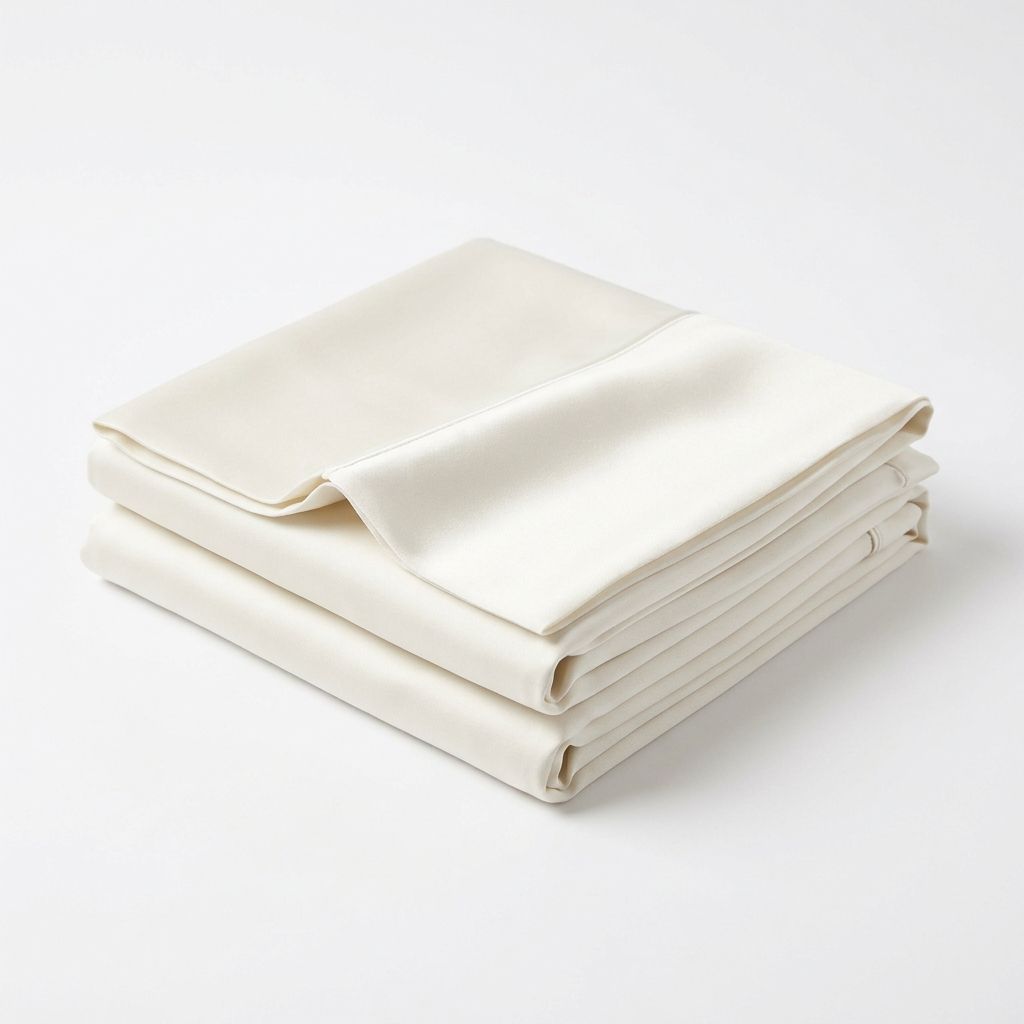
Pros
- Highest first-contact cooling (q-max) in the mainstream category.
- Hollow fiber structure wicks and releases moisture faster than cotton.
Cons
- Needs gentle care to hold fiber integrity over time.
- Unwashed cases accumulate perspiration residue.
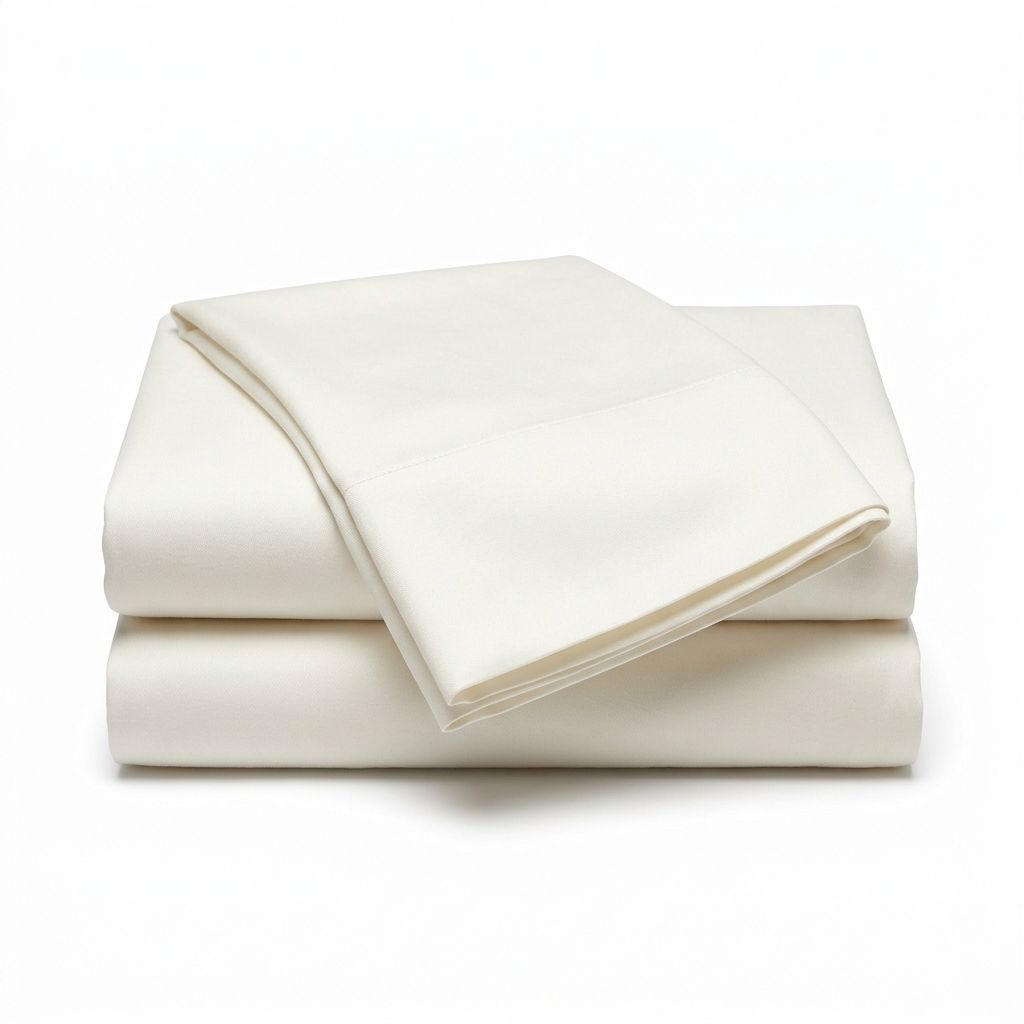
Pros
- Strongest sustained moisture release over the full sleep cycle.
- High thermal conductivity (0.24 W/mK) dissipates body heat rapidly.
Cons
- First-contact cold sensation is slightly lower than bamboo viscose.
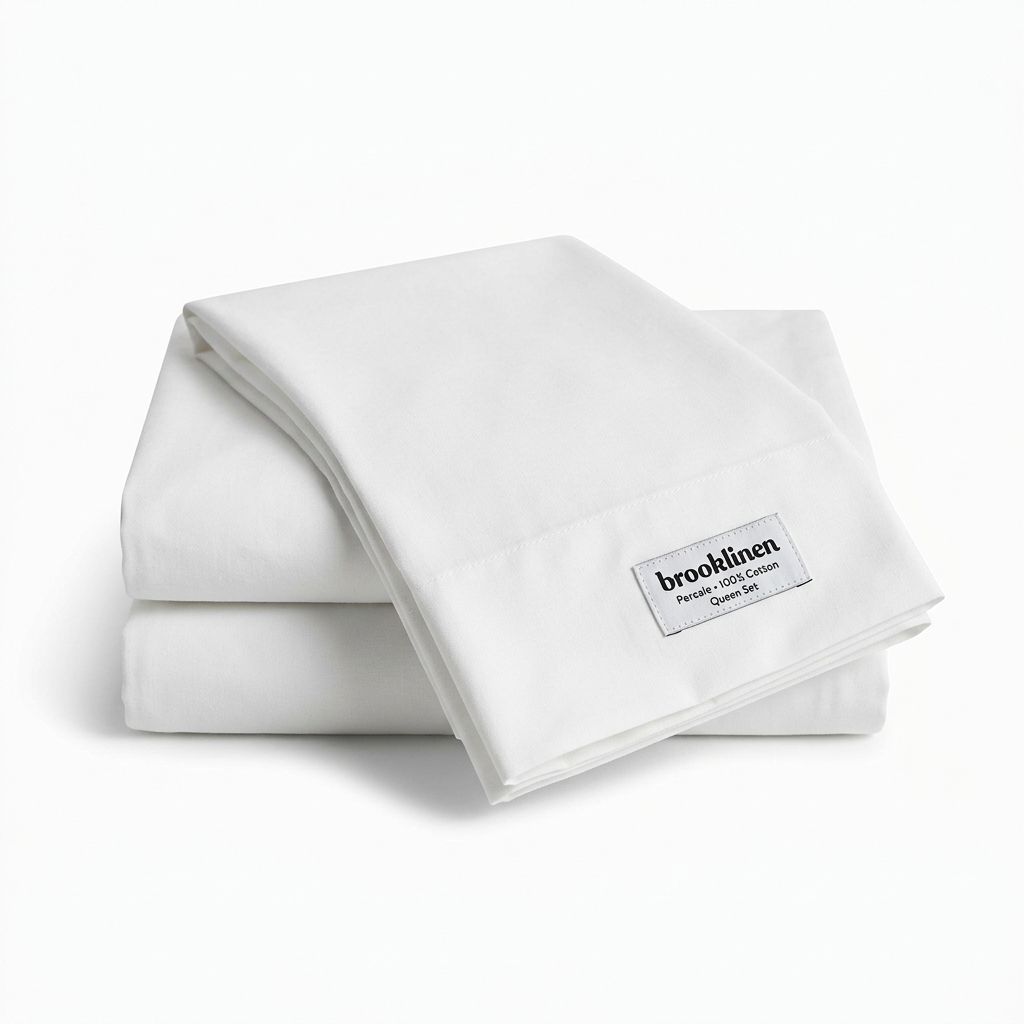
Pros
- One-over-one-under plain weave creates excellent passive airflow.
- Long-staple cotton ensures long-term structural durability.
Cons
- Poor moisture handling in humid conditions without A/C.
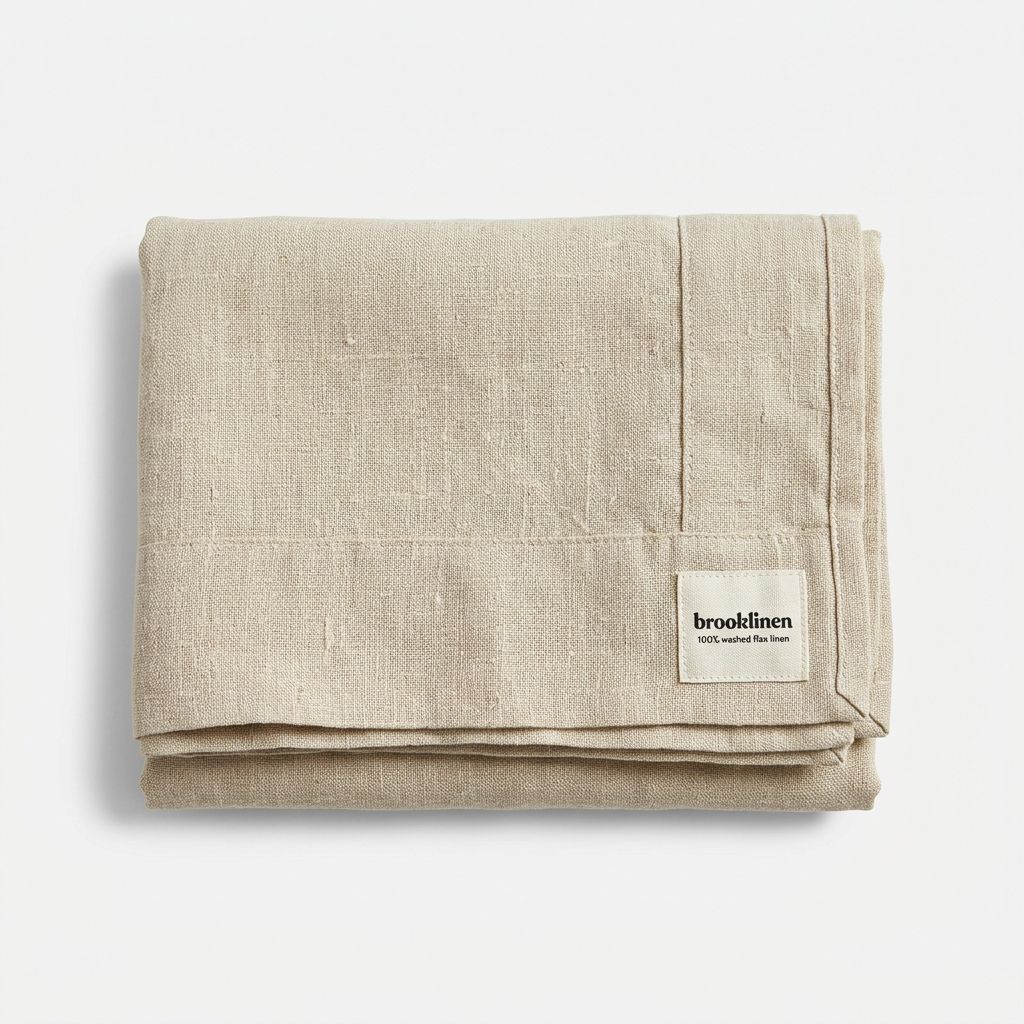
Pros
- Highest continuous airflow volume due to hollow flax fibers.
- Outlasts all other fabrics in this guide and softens with every wash.
Cons
- Reaches moisture absorption limit in humid conditions.
- Highly textured feel isn’t for everyone.
Pros
- Provides active heat absorption at phase transition (33-35°C).
- Excellent for severe night sweats or menopause-related hot flashes.
Cons
- Cooling capacity exhausts after roughly 4-8 hours and requires daytime reset.
- Highest maintenance fabric; sensitive to washing errors.
The Contrarian Take: Cooling Polyester Is a Marketing Label, Not a Fabric Property
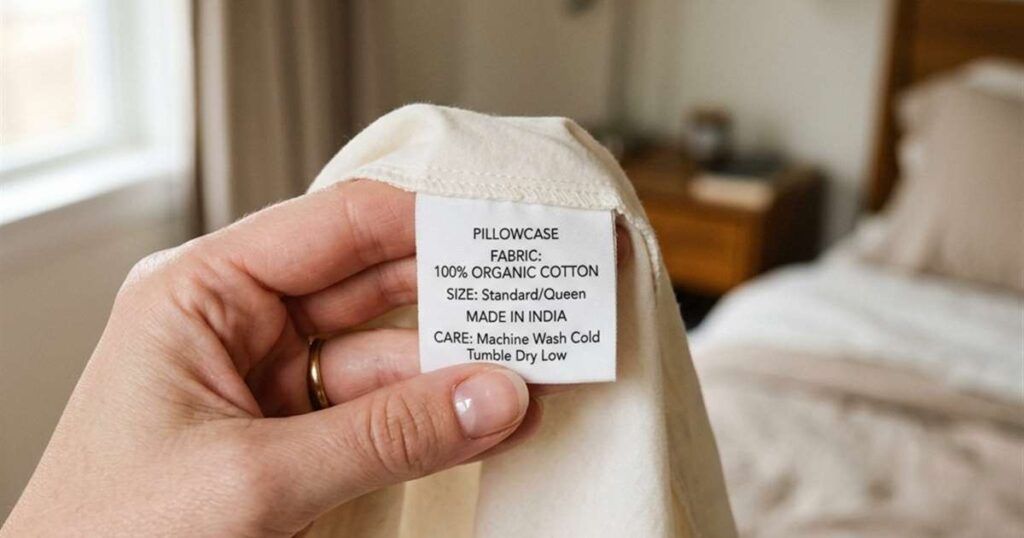
The most common mistake hot sleepers make is buying “cooling” pillowcases that are synthetic. Polyester microfiber labeled arctic, chill, ice touch or similar has the lowest q-max of any common pillowcase material in standardized testing. It feels briefly cold from the ambient room temperature when you first lie down, but polyester does not conduct heat away from the skin. It holds it. Within 10-15 minutes of contact, a polyester surface reaches body temperature and stays there, because the fiber has no moisture management mechanism and no thermal conductivity advantage over skin.
The same applies to cooling polyester blends that aren’t all-natural fibers. Bamboo viscose blended with polyester loses the fiber’s hollow-core moisture management. TENCEL blended with polyester loses the sustained wicking advantage. If a pillowcase does not disclose 100% fiber content, bamboo lyocell, TENCEL lyocell, linen, or cotton, the word “cooling” on the label is not backed by fiber physics.
The check is simple: read the fiber content label before you read the product name.
Spec Comparison at a Glance
| Fabric | First-Contact Cooling | All-Night Performance | Moisture Wicking | Best Room Conditions | Price Range |
|---|---|---|---|---|---|
| Bamboo Viscose | Highest q-max | Strong | Superior | Any | $15-$30 per case |
| TENCEL Lyocell | High | Strongest sustained | Best in class | Any | $20-$35 per case |
| Cotton Percale 200-300 TC | Moderate | Good (dry conditions) | Moderate | Cool, dry room | $15-$30 per case |
| Linen | Moderate | Strong (dry conditions) | Moderate | Warm, dry climate | $20-$35 per case |
| PCM Fabric | Active regulation | 4-8 hours then passive | N/A, absorbs heat | Any, especially warm rooms | $30-$50 per case |
Frequently Asked Questions
Do synthetic cooling pillowcases actually stay cold all night?
Synthetic cooling pillowcases do not stay cold all night. Cases made from nylon or polyester blends feel cool to the touch initially, but they quickly absorb and trap your body heat. Because these materials lack natural breathability, they can actually cause you to wake up sweating. You are much better off choosing a naturally breathable fabric that allows heat to escape.
What is the best pillowcase material for hot sleepers?
Percale cotton is the best pillowcase material for hot sleepers. The crisp, lightweight weave is highly breathable and allows your body heat to dissipate naturally instead of pooling around your face. Tencel and linen are also excellent alternatives for moisture-wicking. Keep in mind that a breathable pillowcase will not help much if your actual pillow is made from heat-trapping solid memory foam. Pairing it with one of the best cooling pillows makes a bigger difference than the pillowcase alone.
Why does my cooling pillowcase make me sweat?
Your cooling pillowcase makes you sweat because it is likely made of a synthetic microfiber or polyester blend. These fabrics are often treated to feel cold initially, but they create a non-breathable barrier over your pillow. Your body heat gets trapped against your skin instead of venting outward. Switching to a looser weave like linen will provide much better temperature regulation.
Is a higher thread count better for a cooling pillowcase?
No. Above 300-350 single-ply thread count, thread count in any fabric class becomes a marketing number rather than a performance indicator. Manufacturers achieve high counts by twisting multiple thin yarns, which creates a denser, heavier fabric with less airflow. For hot sleepers, a 250-300 thread count single-ply fabric outperforms a 600-thread-count multi-ply fabric in every measurable cooling metric.
Bamboo vs. eucalyptus pillowcase. Which is cooler?
At first contact, bamboo viscose has a slightly higher q-max and feels colder. Over the course of a full night, TENCEL lyocell (eucalyptus-derived) releases moisture more efficiently and maintains its cooling performance longer. The difference in real-world sleep is small, both outperform cotton significantly. If you sweat heavily, TENCEL’s sustained wicking edge matters more. If first-contact sensation is your priority, bamboo viscose wins.
Does pillowcase material affect cooling pillow performance?
Yes, directly. A genuinely cooling pillow (gel-infused foam, latex, or buckwheat) relies on the pillowcase allowing heat and moisture to pass through. A thick cotton sateen or polyester pillowcase creates an insulating layer that blocks the pillow’s cooling properties from reaching your face. The same logic applies to whatever sits between pillow and pillowcase. A non-breathable pillow protector will trap heat just as effectively as the wrong pillowcase. For pairing pillowcase to cooling pillow fill, the fabric should be lower GSM than 150 and either bamboo lyocell or TENCEL.
A cooling case only works if the weave stays open. Our Pillow Guides explain washing fabrics like bamboo viscose without clogging them.