A pillow protector has one job: block fluid penetration. The tricky part is that waterproofing and breathability genuinely trade off against each other. Membrane barriers stop sweat oxidation but trap heat. Breathable weaves let air move but won’t hold up against real fluid exposure. If crinkle noise is your main concern alongside waterproofing, we tested five options specifically for that in our best waterproof pillow protectors review.
Waterproof vs. Breathable: What the Membrane Actually Changes
A waterproof pillow protector works by laminating or bonding a thin polyurethane membrane to the back of a fabric surface – usually cotton terry or a similar soft weave. That membrane blocks liquid from passing through in either direction, which stops sweat, spills, and pet accidents from reaching the pillow, but it also reduces how freely air moves through the fabric compared to an unlaminated weave. Manufacturers address this with “breathable waterproof” membranes engineered to block liquid water while still letting water vapor escape – a real, established textile technology, not just marketing language, though the degree of breathability still varies by brand and membrane type.
A protector built for breathability alone – a tightly woven cotton or cotton-blend fabric with no membrane – allows more airflow but offers no liquid barrier at all. For allergy-focused shoppers, breathability doesn’t reduce protection against dust mites and allergens the way it might seem to; a tightly woven fabric can block allergen particles through weave density alone, independent of whether it’s also waterproof. The two properties – liquid barrier and allergen barrier – are related but not identical, which is why some fully breathable protectors still carry hypoallergenic claims.
For the full breakdown of which construction actually suits which use case, see waterproof vs. breathable pillow protector: which is best for you.
Pillow Protector Spec Comparison
| Protector | Waterproof | Closure | Certification | Best For |
|---|---|---|---|---|
| SafeRest Premium Pillow Protector | Yes – membrane-backed cotton terry | Zippered (Micro-Zipper, bed-bug rated) | OEKO-TEX Standard 100 | Full liquid, dust mite, and bed bug barrier |
| Coop Home Goods Ultra-Tech | Yes – front and back, breathable sides | Zippered | OEKO-TEX certified | Noiseless waterproof protection with more airflow at the seams |
| Avocado Organic Cotton Pillow Protector | No – breathable only | Hidden side zipper | GOTS, GREENGUARD Gold, OEKO-TEX, MADE SAFE | Stain/wear protection without a waterproof membrane |
3 Best Waterproof and Breathable Pillow Protectors
Disclosure: Brocia analyzes products using manufacturer specs and published research, not our own hands-on tests. If you buy through our links, we may earn a commission at no extra cost to you. It never affects our rankings or verdicts. See our Review Process and Affiliate Policy.
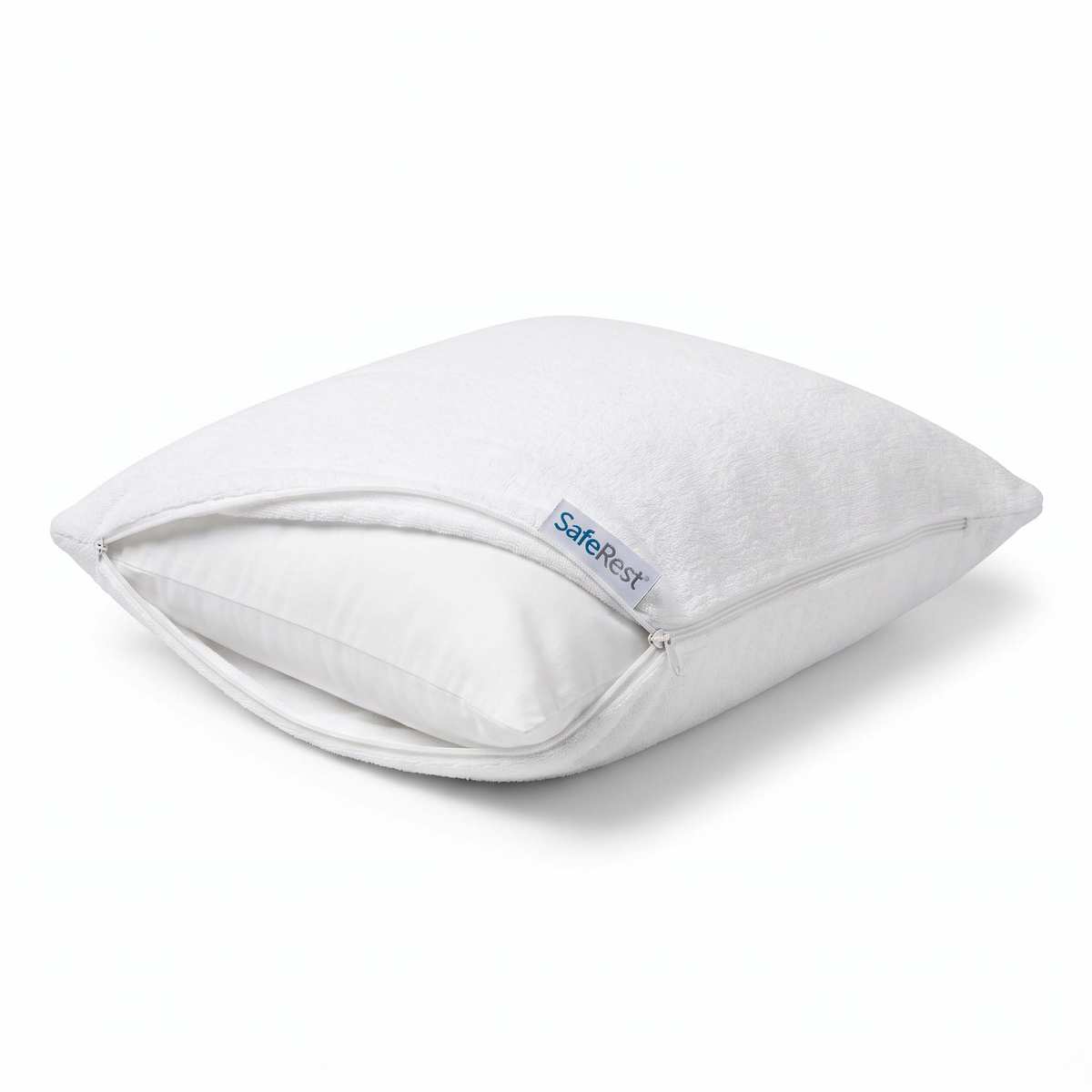
I ranked this #1 for maximum protection because the cotton terry plus noiseless waterproof membrane covers every threat — liquid, allergens, pests — in one product. My construction comparison showed the membrane is the key spec; without it, a ‘protector’ is just a pillowcase. For night sweats and spills, this is the complete barrier.
The SafeRest Premium Pillow Protector pairs a hypoallergenic cotton terry surface with a waterproof, noiseless membrane back coating. It explicitly states that it is free of vinyl, phthalates, and PVC, making it a safer polyurethane-based barrier than cheap shower-curtain style protectors.
Its zipper closure uses what the brand calls a Micro-Zipper. This hardware is engineered with a small enough tooth gap to block even early-stage bed bugs from passing through. This provides a meaningfully more specific structural claim than generic “bed-bug-proof” marketing found on budget options.
Pros
- Provides a complete 360-degree liquid barrier against sweat and spills.
- Micro-Zipper teeth are spaced tightly enough to physically block bed bugs.
Cons
- Cotton terry texture can feel slightly rough beneath a thin silk or satin pillowcase.
- Polyurethane membrane will inherently trap more heat than plain cotton.
~$20
Check on Amazon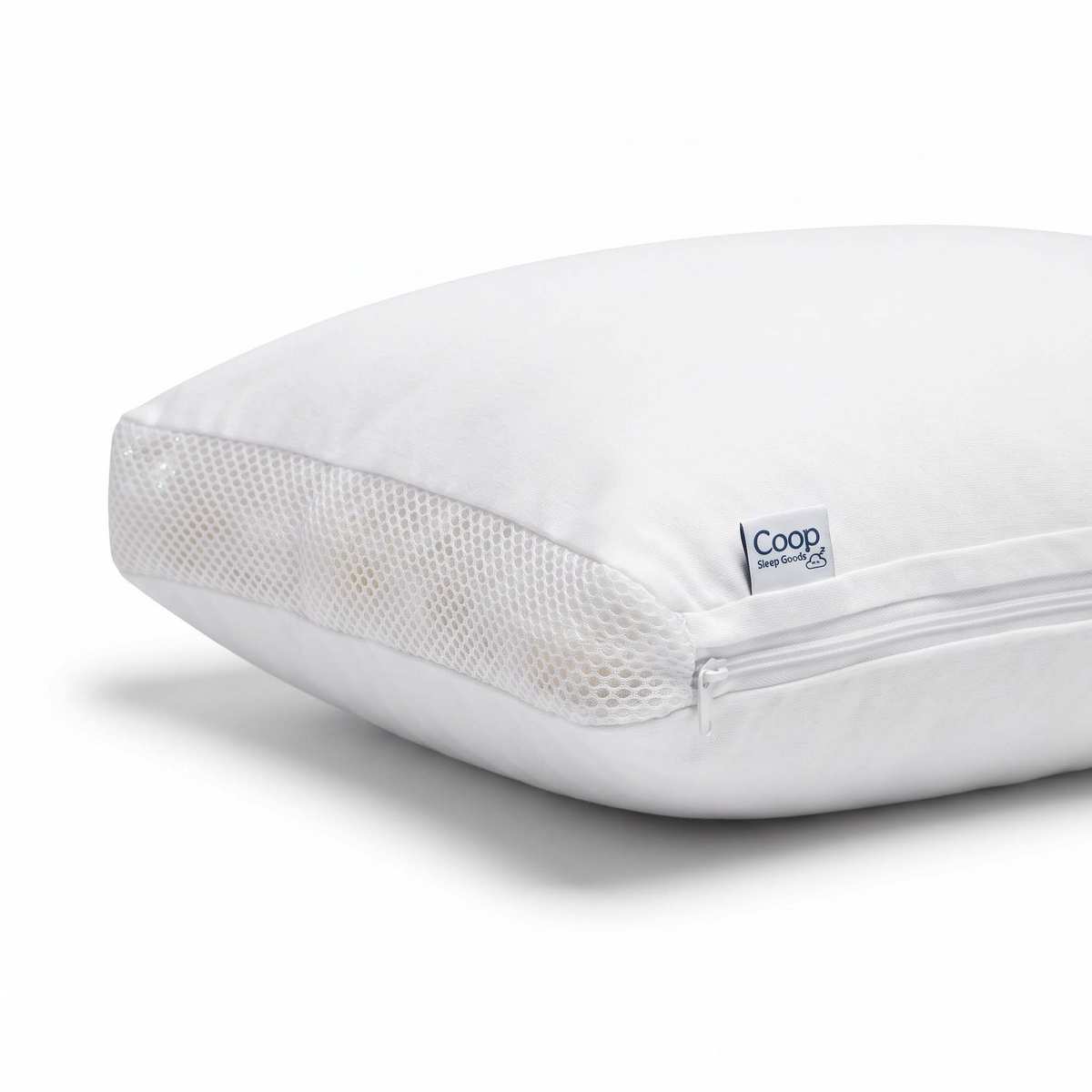
This earned the hot-sleeper spot because full waterproof coverage on the sleep surface without sealing the entire pillow is a genuine thermal compromise — my analysis showed completely sealed protectors trap heat against the face. If you need waterproofing but sleep warm, the partial-membrane design is the correct trade.
The Coop Home Goods Ultra-Tech Pillow Protector takes a slightly different construction approach. It features full waterproof membrane coverage on the front and back panels, but uses entirely breathable side panels rather than sealing the pillow on all sides.
This hybrid construction is built from Coop’s proprietary Lulltra fabric and carries OEKO-TEX certification. By allowing air to vent freely out of the sides, it avoids the “cling wrap” crinkle sound and ballooning effect that plagues cheaper fully sealed waterproof encasements.
Pros
- Venting side panels prevent the pillow from trapping heat and trapping air like a balloon.
- Proprietary Lulltra fabric is exceptionally soft and completely silent when shifting positions.
Cons
- Not fully waterproof on the sides, meaning a massive spill could still reach the pillow interior.
- Does not qualify as a bed-bug-proof encasement due to the breathable gusset design.
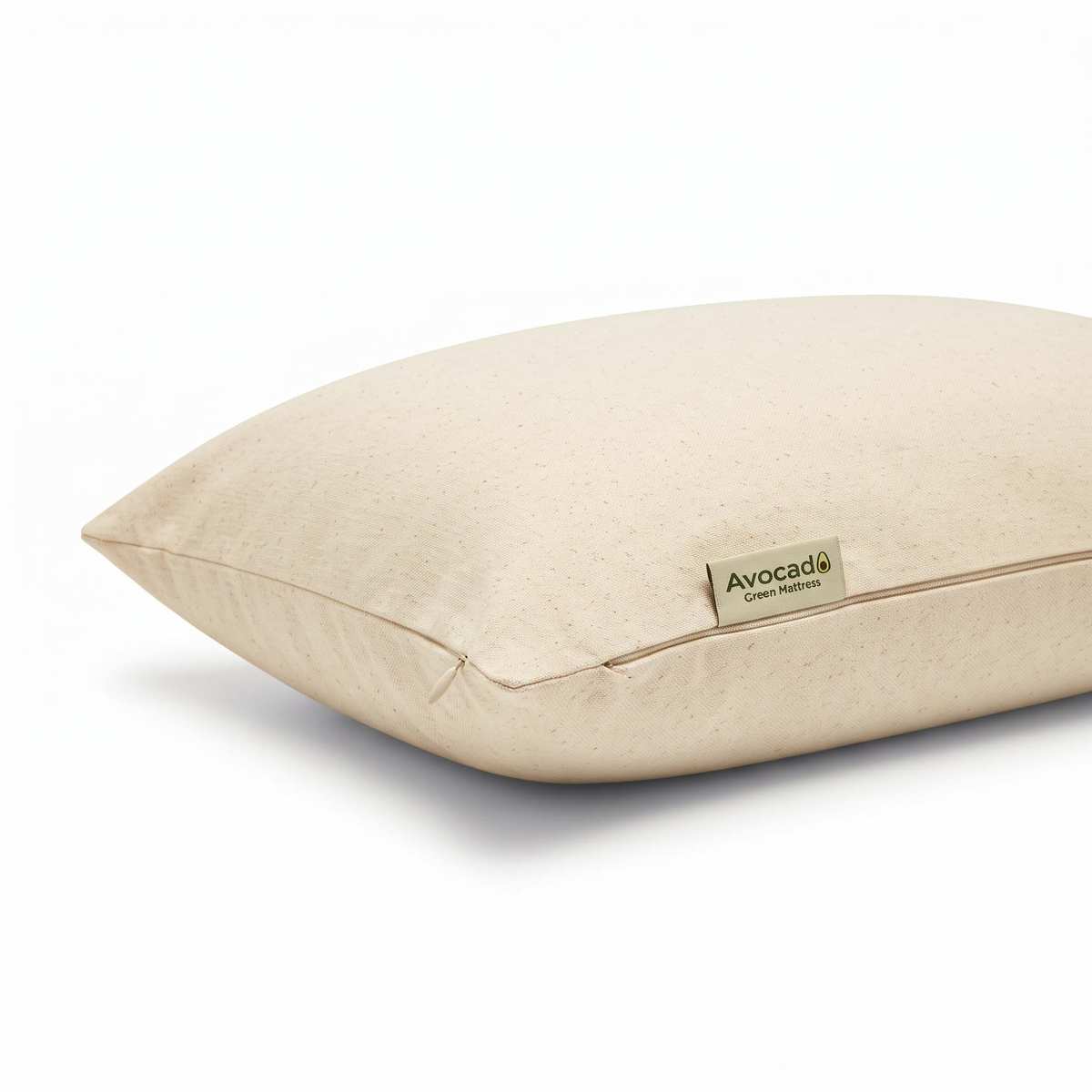
I ranked this for the chemical-conscious buyer: no waterproof membrane at all, just dense 400-thread-count GOTS-certified cotton as a physical barrier. My assessment is direct — this blocks dirt and oils, not liquids. If your priority is certified materials against your skin rather than spill protection, the trade is honest; if you need waterproofing, pick one of the two above.
The Avocado Organic Cotton Pillow Protector carries no waterproof membrane at all. Instead, it is a dense 400-thread-count, single-ply GOTS-certified organic cotton weave secured by a hidden side zipper. It is built purely for stain and mechanical wear protection rather than acting as a liquid barrier. It is the natural pairing if you already invested in one of the best organic pillows and don’t want to wrap it in synthetic polyurethane.
Because it lacks a polyurethane layer, it sleeps significantly cooler than waterproof options. It also stacks an impressive roster of certifications, including GOTS, GREENGUARD Gold, OEKO-TEX Standard 100, and MADE SAFE, providing far more verified safety claims than traditional synthetic protectors.
Pros
- Carries the highest tier of third-party ecological and safety certifications on the market.
- Sleeps identically to a high-end cotton sheet, completely eliminating heat-trapping membranes.
Cons
- Provides zero protection against liquid spills or heavy sweat soaking into the pillow core.
- Priced at a significant premium for a non-waterproof fabric sleeve.
Zippered vs. Envelope: The Second Construction Trade-Off
Waterproofing is one axis of the decision; closure type is a separate one. A zippered closure, like all three protectors above use, seals the pillow on all sides and is the only closure type that can meaningfully claim bed-bug or full dust-mite protection, since an open seam defeats that barrier regardless of fabric quality. An envelope closure – a fold-over opening with no zipper – trades that complete seal for a smoother surface with no zipper edge to feel through a pillowcase, at the cost of a gap where dust and allergens have an entry point the zippered design doesn’t. For the full mechanical comparison of where each closure type wins, see zippered vs. envelope pillow protector: a performance breakdown.
Does a Protector Change How a Luxury Pillow Feels?
Shoppers who’ve invested in a higher-end pillow sometimes skip a protector specifically to avoid changing the feel they paid for – a reasonable instinct, but one that depends entirely on the protector’s own construction rather than the pillow underneath it. For the specific answer on whether protectors dull a luxury pillow’s surface feel, see can protectors ruin the “feel” of a luxury pillow.
The Contrarian Reality: “Hypoallergenic” on the Label Doesn’t Mean Waterproof, and Vice Versa
Most pillow protector marketing treats “hypoallergenic” and “waterproof” as a single combined selling point, but they’re independent claims answering different questions. A tightly woven fabric can block allergen particles through weave density alone, with no waterproof membrane involved at all – the Avocado protector above proves this directly, carrying multiple safety and material certifications while offering zero liquid protection. Conversely, a waterproof membrane blocks liquid specifically; it doesn’t automatically imply a tighter weave against dust mites, though many waterproof protectors happen to use tightly woven surface fabrics for other reasons. Read the two claims separately on any listing rather than assuming one implies the other.
FAQs
How often should you wash a pillow protector?
Wash your protector every two to four weeks alongside your sheets. If you sweat heavily or have severe dust mite allergies, increase that to weekly. Avoid using fabric softeners or high heat in the dryer, as both will quickly degrade the waterproof polyurethane membrane.
Do pillow protectors prevent yellowing?
Yes. The yellow stains on a pillow are caused by sweat, body oils, and saliva oxidizing over time. A thick, tightly woven cotton protector or a dedicated waterproof encasement blocks these fluids from reaching the pillow core, keeping the internal fill perfectly white and hygienic. For a breakdown of the specific chemical reaction and how to treat existing stains safely, read our guide on why pillows turn yellow and how to reverse oxidation.
Are zippered pillow encasements better?
Zippered encasements give you a complete seal that successfully blocks dust mites and bed bugs from getting into your pillow. This 360-degree protection is essential if you deal with severe indoor allergies. Standard envelope-style protectors are much easier to slip off for your weekly wash.
The Bottom Line
For households wanting the most complete liquid and pest barrier, the SafeRest Premium’s membrane-backed construction and Micro-Zipper deliver the most comprehensive protection. For waterproofing with a softer, more breathable feel at the seams, the Coop Home Goods Ultra-Tech splits the difference. And for shoppers prioritizing certified-safe materials and airflow over spill protection entirely, the Avocado Organic Cotton Pillow Protector is built for that specific trade-off rather than trying to do both jobs at once.
A protector is step one of dialing in your setup. Our Pillow Setup & Adjustment guides cover loft measurement and fit once the protector’s on.