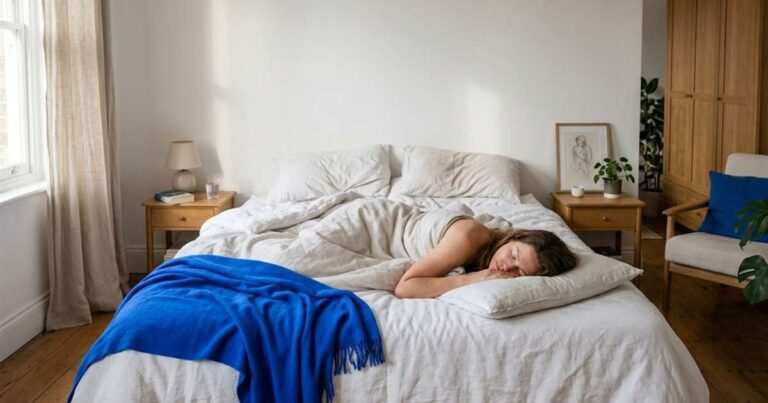
Stomach sleepers are the only group for whom sleeping without a head pillow is a structurally defensible choice. For side sleepers and back sleepers, removing the head pillow creates immediate biomechanical problems: the head drops below the spine line, the cervical muscles activate to compensate, and the result is exactly the stiffness you were trying to avoid. Stomach sleepers are different. And the reason is geometric.
When you lie face-down, you cannot breathe with your face pressed flat, so your head rotates to one side. That rotation puts the cervical spine into 45-90 degrees of lateral twist, which it will hold for the duration of the night. A pillow under that turned head does not correct the rotation. It cannot. What it does is add elevation to an already-rotated neck, forcing additional lateral flexion on top of the rotational load. The higher the pillow, the worse the compounding. A 2016 study published in PeerJ measured cranio-cervical pressure and cervical angle across four pillow heights in the supine position, finding that each increment of pillow height raised the cervical angle by 66.4% and cranial pressure by approximately 30%. While that study measured the supine position, the direction of the relationship is consistent with biomechanical consensus for all positions: more loft means more cervical load.
So: no pillow reduces that compounded load. A very thin pillow at 1.5-2.5 inches of functional loft provides face cushioning without meaningful elevation. A standard pillow at 4-6 inches makes the cervical situation measurably worse.
If you have persistent neck pain, worsening shoulder stiffness, or suspect a cervical condition, consult a physiotherapist or physician before adjusting your pillow setup alone. The full thin pillow guide for stomach sleepers covers specific product picks and the loft calibration framework in detail.
My contrarian verdict: the position is the problem, the pillow is damage control. I treat stomach sleeping as the one position where less pillow is more — 1.5–2.5 inches functional loft maximum, and no pillow is a legitimate option. If you must sleep prone, the thinnest pillow that keeps your neck out of hyperextension wins; everything else is marketing.
Why Only Stomach Sleepers Benefit From No Pillow
Roughly 7% of adults sleep primarily on their stomachs, according to consistently reported population data. A small group relative to the 54% who favor their sides. For that 7%, the pillow question inverts completely compared to every other sleep position.
In side sleeping, a pillow fills the shoulder-to-head gap. Remove it, and the head sags laterally and the lateral cervical muscles hold the gap all night. In back sleeping, a pillow supports the cervical lordosis. Remove it, and the neck flattens against the mattress and the curve collapses. In both cases, no pillow means more muscular work and more compressive load on cervical structures.
In prone (stomach) sleeping, the head has already turned 45-90 degrees to clear the mattress for breathing. The pillow is not filling a neutral gap. It is elevating an already-rotated position. The Sleep Foundation states this directly: “The exception is stomach sleepers, for whom sleeping with a very thin pillow or none at all can level the head and neck with the rest of the spine, helping to reduce pain and tension.”
That said, no pillow is not the universal answer for stomach sleepers. Two factors make a very thin pillow the better choice for most:
Face cushioning. Sleeping face-down on a flat mattress without any pillow places direct compression pressure on cheekbone, jaw, and periorbital tissue across 7-8 hours. For most people, this produces discomfort, residual facial pressure marks, and restricted airflow in some positions. A thin, soft pillow at under 2.5 inches of functional loft provides the cushioning without meaningful cervical elevation.
Mattress firmness interaction. On a soft mattress, the face sinks into the surface even without a pillow, which can create the elevation effect a pillow would add on a firm mattress. On a firm mattress, the face has no sink at all, and no pillow may be the correct choice. The right answer depends on your mattress, not a blanket rule.
The Two-Part Answer: Head and Hips
The head pillow question is only half the story for stomach sleepers. The more structurally significant intervention is the pelvic pillow, and most stomach sleepers have never tried it.
When you lie prone, your hips and abdomen bear the heaviest load. On most mattresses, the hips sink lower than the shoulders, which tilts the pelvis and forces the lumbar spine into hyperextension. The arched-back position that produces the lower back ache many stomach sleepers wake with. Placing a thin, firm pillow under the pelvis (not under the stomach) reduces that posterior lumbar arch and shifts the pelvis closer to neutral.
Physiotherapy guidance consistently identifies pelvic support as the higher-priority intervention for prone sleepers with lower back pain. A pillow under the pelvis costs nothing and requires no product purchase. A folded firm blanket at roughly 1-1.5 inches of height under the hip bones produces measurable reduction in lumbar extension.
The practical setup for most stomach sleepers who cannot change position:
- Head: no pillow, or a soft pillow at under 2.5 inches functional loft
- Pelvis: a flat firm pillow or folded blanket under the hip bones, not the stomach
- Mattress: medium-firm or firm, a soft mattress compounds hip sinkage and makes both interventions less effective
When a Thick Pillow Actively Makes Things Worse
A standard pillow, down, down alternative, or memory foam at 4-6 inches of stated loft, under a prone sleeper’s turned head compounds two problems simultaneously.
First, it adds elevation to the already-rotated position. The neck is already at its lateral rotation limit to allow breathing. Adding upward elevation forces the neck into lateral flexion on top of that rotation. The posterior cervical muscles on the compressed side are sustaining this combined load for hours.
Second, it changes the angle of the face-to-mattress contact. As the pillow elevates the head, the cheek and jaw press into the surface at a different angle, sometimes creating additional pressure on the ear or jaw joint (temporomandibular joint). TMJ discomfort on waking is a reported symptom for stomach sleepers using thick pillows.
This is the mechanism behind the Appendix A FAQ answer: “thick pillow, bends neck backward.” The combination of rotation and elevation is the worst geometric outcome available to a prone sleeper. A standard pillow does not mitigate the rotational load; it adds a second insult.
The Thinnest Acceptable Pillow: 1.5-2.5 Inches Functional Loft
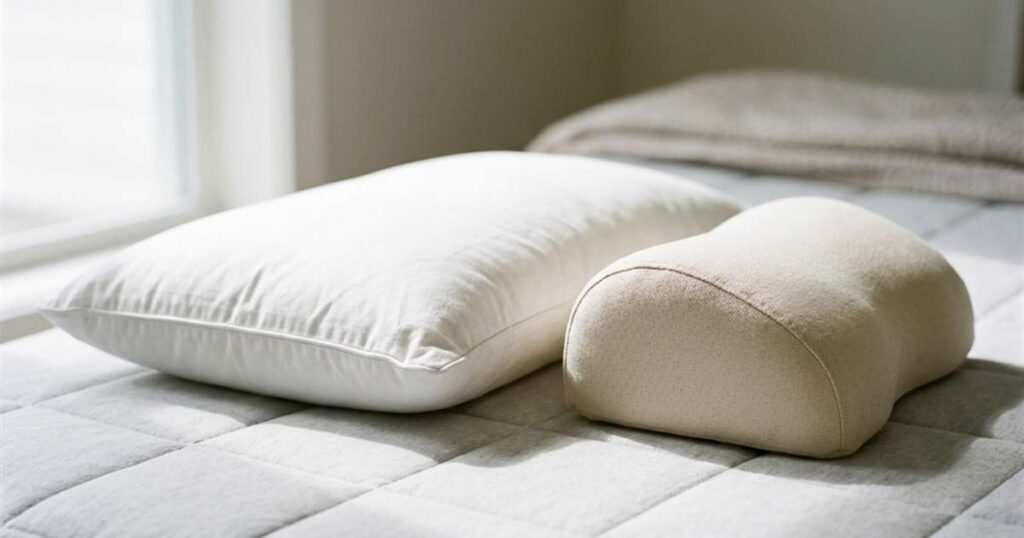
If no pillow is uncomfortable for face cushioning or feels disorienting during sleep onset, the workable alternative is a pillow with a functional loft of 1.5-2.5 inches under actual head weight. Functional loft is what matters, not stated loft on the packaging.
Soft down or down-alternative fill compresses readily under head weight and typically reaches functional loft well below its stated height. A stated 3-inch down pillow may deliver a functional 1.5 inches under an average head. Solid memory foam at 2.6 inches (like the Blissbury stomach sleeper pillow) delivers closer to its stated height because foam does not compress as dramatically under head weight.
What About Acid Reflux?
Stomach sleeping worsens acid reflux for a reason separate from the pillow question. When lying prone, the weight of the torso compresses the abdomen, which increases intra-abdominal pressure and can push stomach contents toward the lower esophageal sphincter. A pillowcase does not change this pressure dynamic.
For stomach sleepers with acid reflux, the position itself, not the pillow, is the primary problem. Left-side sleeping is the evidence-supported alternative: it keeps the stomach below the esophageal junction, reducing the gravitational pathway for reflux. If position change is not possible, the pelvic pillow described above slightly reduces abdominal compression by tilting the pelvis rather than adding weight directly over the stomach.
A pillow under the head does not address acid reflux in the prone position. Adding head elevation in a prone position changes only the cervical angle, not the abdominal pressure that drives reflux.
The Contrarian Point: The Position Is the Problem, the Pillow Is Damage Control
Every pillow adjustment available to a stomach sleeper, no pillow, thin pillow, pelvic pillow, is a harm-reduction measure, not a solution. The biomechanical problem is the prone position itself: there is no neutral cervical position available when the head must rotate 45-90 degrees to breathe. No pillow choice eliminates the rotational load. The best available pillow strategy reduces it from severe to moderate.
Physiotherapists and sleep ergonomics researchers consistently recommend transitioning away from stomach sleeping as the definitive intervention. Side sleeping with a body pillow prevents rolling, keeps the spine closer to neutral, and eliminates the cervical rotation entirely. If that transition is feasible, it addresses what no pillow adjustment can.
For those who have genuinely tried and cannot change position, no pillow or a 1.5-2.5-inch functional-loft soft pillow under the head, paired with a thin firm pelvic pillow, on a medium-firm or firm mattress is the most evidence-consistent setup currently available.
Frequently Asked Questions
Is it healthier to sleep without a pillow if you’re a stomach sleeper?
For stomach sleepers specifically, no pillow reduces the combined cervical load from the rotation-plus-elevation problem that a standard pillow creates. Whether it is healthier than a very thin pillow depends on your mattress firmness and facial comfort needs. On a firm mattress with no sinkage, no pillow is a reasonable choice. On a soft mattress where the face sinks into the surface regardless, a 1.5-2.5-inch thin pillow often provides cushioning without meaningful additional elevation.
Why do I wake up with a stiff neck from stomach sleeping?
Because the head has been held in 45-90 degrees of lateral rotation for the duration of sleep. That sustained rotation loads the posterior cervical muscles and facet joints on the compressed side. A standard pillow makes this worse by adding elevation on top of the rotation. The only interventions that reduce the load are lowering or eliminating the head pillow, adding pelvic support to reduce lumbar hyperextension, and ultimately transitioning to a different sleep position.
What is the thinnest pillow for a stomach sleeper?
The thinnest functional options are solid memory foam pillows designed specifically for prone sleeping, available in stated lofts of 1.75-2.75 inches. Solid foam at those heights delivers a functional loft close to the stated figure, which is useful for those who want a precise, predictable geometry. Soft down fill compresses more unpredictably. Useful for those who prefer very soft cushioning.
Does a pillow under the stomach help?
A pillow placed under the pelvis, specifically under the hip bones, not under the stomach, reduces lumbar hyperextension in the prone position. This is the standard physiotherapy recommendation for prone sleepers with lower back pain. A pillow placed under the stomach itself raises the abdomen, which can increase abdominal pressure and worsen both lumbar extension and any reflux tendency.
Can stomach sleeping cause acid reflux?
The prone position increases intra-abdominal pressure by placing the torso’s weight directly over the digestive tract. This can push against the lower esophageal sphincter and increase the likelihood of acid reaching the esophagus. The pillow under the head does not address this mechanism. Left-side sleeping is the evidence-supported alternative for those with reflux who want a position that uses gravity to keep stomach acid away from the esophageal junction.
Stomach sleeping is the edge case of pillow fitting. Our Pillows by Sleep Position guides cover the thinnest options that still work.