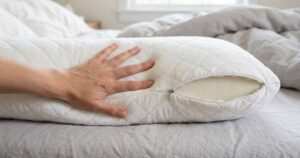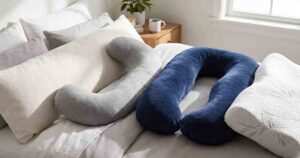
The average person sweats roughly 0.5 to 1 liter of moisture per night, and a meaningful portion goes directly into the pillow. That figure alone explains most yellow pillows. Sweat is only part of it, though. Saliva, skin oils, and hair product residue each carry their own oxidizing compounds. Over weeks of nightly contact, those compounds react with the fill and casing fabric to produce the yellow-to-brown discoloration most people blame on “dirt.” It’s not dirt. It’s a predictable chemical process. A barrier between your skin and the fill is the most direct way to slow it down, and our guide on whether pillow protectors actually prevent yellowing covers which protector materials stop the oxidation process and which ones don’t.
This article is the chemical breakdown behind the stain and a practical whitening protocol that works without bleach. For the full maintenance schedule across all pillow types, the guide to washing a memory foam pillow covers washing, drying, and storage in one place.
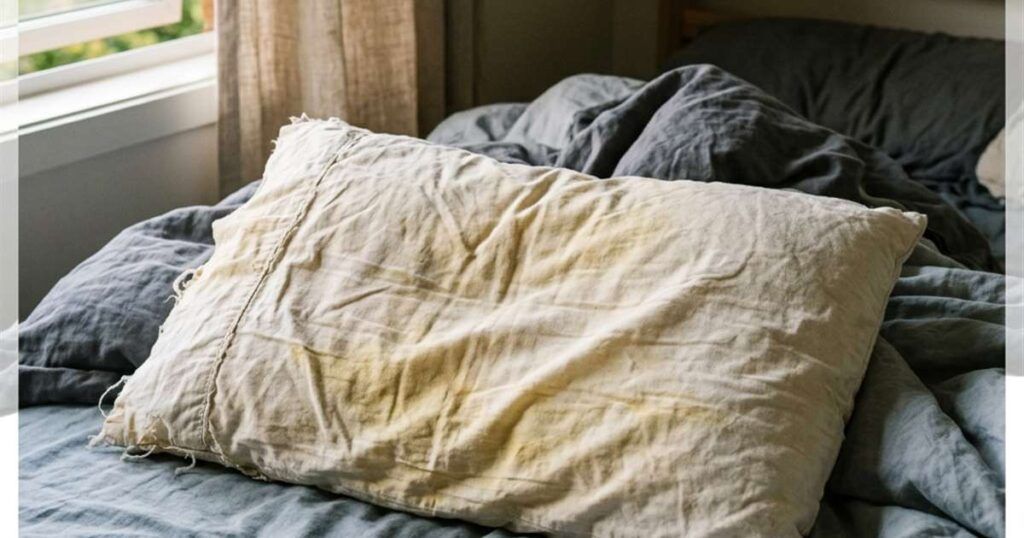
The Four Sources of Yellow Staining, Ranked by Contribution
Not all yellow stains come from the same place. The color, location, and pattern of discoloration usually identify the primary source. Here is what the chemistry shows.
Sweat (primary cause for most sleepers)
Sweat is mostly water, but it carries dissolved proteins, urea, and salts. When sweat saturates a pillow and the moisture evaporates, those proteins remain inside the fill and the casing fabric. Proteins oxidize on contact with air over time, producing yellow-to-brown pigments. This is the same chemistry behind the yellowing of old cotton shirts at the collar and underarms. The staining concentrates wherever the head rests longest, typically the center of the pillow, and deepens with each sleep cycle that is not followed by washing.
Saliva (primary cause for side and stomach sleepers)
Saliva contains amylase and other digestive enzymes. Those enzymes are proteins too, and they oxidize by the same mechanism as sweat. Drool-related staining tends to appear as a patch on the lower-center or edge of the pillow (wherever the mouth contacts fabric during sleep) and often has a slightly more yellow-orange cast than sweat staining because salivary proteins oxidize at a somewhat different rate.
Skin oils and sebum
The skin produces sebum continuously. During sleep, sebum transfers from the face, scalp, and neck onto the pillowcase and, over time, migrates through the casing into the fill. Sebum is a lipid, not a protein, but it oxidizes by a related mechanism (lipid peroxidation) and produces similar yellow pigmentation. Sebum staining tends to be diffuse rather than patchy, a general yellowing across the pillow surface rather than a concentrated spot.
Hair and skincare products
Leave-in conditioners, serums, and night creams often contain carrier oils, silicones, and active compounds that transfer to the pillow during sleep. Many of these ingredients oxidize or react with the fill fibers over time. Product staining is the hardest to predict (it depends on the specific formulation) but tends to be concentrated on one side of the pillow. The side that contacts treated hair or skin.
| Staining source | Location on pillow | Color cast | Oxidizing compound |
|---|---|---|---|
| Sweat | Center, diffuse | Yellow to tan | Proteins, urea |
| Saliva / drool | Lower center, edge | Yellow-orange | Salivary enzymes |
| Sebum / skin oils | Diffuse across surface | Yellow | Lipid peroxidation |
| Hair and skincare products | One-sided, irregular | Variable | Depends on formulation |
Is It Safe to Sleep on a Yellow Pillow?
Yellow discoloration alone does not make a pillow unsafe. The staining is a surface and shallow-fill phenomenon. Oxidized proteins and lipids left behind after moisture evaporates. They are not acutely harmful.
The real concern is secondary: the same organic residue that causes yellowing also provides a food source for dust mites and creates conditions where bacterial populations can grow faster. A pillow that has never been washed and is heavily yellow carries a higher microbial load than a clean one. While it’s safe to sleep on in the short term, the buildup warrants washing rather than ignoring. If the pillow smells sour or musty alongside the discoloration, bacterial activity is already established. A persistent smell that survives washing is one of the clearest signs you need a new pillow rather than another cleaning cycle.
What Everyone Gets Wrong About Bleach
Bleach is the instinctive choice for yellowing. It is also the wrong one for pillow fill. Chlorine bleach (sodium hypochlorite) breaks down protein and lipid stains through oxidation, which sounds like exactly what is needed. The problem is that it applies that same oxidative chemistry to the fill fibers themselves.
For down and feather fills, bleach strips the oils that keep clusters supple and causes brittleness and clumping. For polyester fiberfill, it degrades the polymer chains and accelerates loft loss. For memory foam (spot-treat only. Never submerge), bleach leaves residue that off-gasses and irritates skin on contact. The stain may lighten, but the pillow’s structural performance degrades. There are better oxidizing agents that target the organic stain compounds without attacking the fill.
How to Whiten Yellowed Pillows Without Bleach
The following method works on polyester, down, down-alternative, and cotton fills. Memory foam pillows require spot treatment only. See the section below.
What you need:
- 1 cup baking soda
- 1 cup white distilled vinegar
- 2 tablespoons mild liquid detergent (fragrance-free)
- Hot water (highest temperature safe per the care label, typically 60°C / 140°F for synthetic fills)
Method:
- Check the care label. Most standard synthetic and down pillows are machine washable. Wash two at a time to balance the drum.
- Load the pillows and set the machine to the hottest permitted cycle. Hot water accelerates the breakdown of oxidized proteins and sebum. Cold water will not adequately dissolve them.
- Add your regular laundry detergent plus the baking soda directly to the drum (not the dispenser). Baking soda raises the wash pH slightly and improves protein stain removal at the same time.
- Add the white vinegar to the fabric softener compartment. It releases during the rinse cycle, neutralises detergent residue, and acts as a mild fabric brightener without damaging fill fibers.
- Run a second rinse cycle after the main wash. Residual detergent left in the fill degrades more slowly over time but does attract new soiling faster. The second rinse eliminates that.
- Dry thoroughly before use. Most standard pillows require 2-3 dryer cycles on medium heat to dry completely through the fill. Adding two or three clean dry towels to the load speeds moisture absorption. The pillow is dry when it no longer feels cool or dense at the center when pressed.
For stubborn set-in yellowing: Pre-treat before washing. Mix oxygen-based cleaner (OxiClean or equivalent) with warm water per package directions and apply directly to the stained area. Allow 20-30 minutes of contact time, then wash as above. Oxygen-based cleaners release hydrogen peroxide, which targets the oxidized organic compounds specifically and does not attack fill fiber structure the way chlorine bleach does.
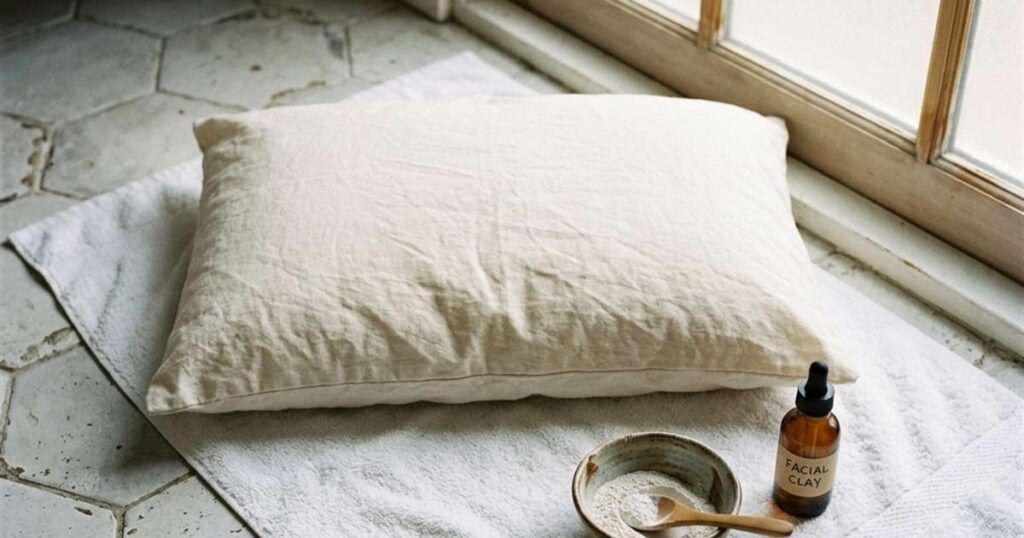
Memory Foam: Spot-Treat Only
Memory foam cannot be submerged or machine washed. The open-cell polymer matrix absorbs water readily but releases it slowly. And mechanical agitation in a saturated state shears the cell walls and causes permanent structural damage. Yellow staining on memory foam pillows requires spot treatment only.
Dampen a clean cloth with a solution of mild detergent and cold water (half a teaspoon of detergent per cup of water). Dab the stained area without rubbing. Follow with a damp cloth to lift detergent residue, then press a dry towel against the area to absorb moisture. Allow 12-24 hours of air drying before replacing the cover. For odor without visible staining, sprinkle baking soda across the foam surface, leave for 4-6 hours, and vacuum off with an upholstery attachment.
Preventing Yellowing Before It Starts
Washing reverses yellowing. Prevention delays it significantly and reduces how often a full wash is needed.
A waterproof or tightly woven pillow protector is the single most effective prevention measure. It sits between the pillow and the pillowcase, blocking sweat, saliva, and oils from reaching the fill at all. The protector washes weekly with the pillowcase; the pillow itself needs washing far less often. For a full comparison of protector types and what the weave density data shows about barrier effectiveness, the guide on pillow protectors and encasements goes into the material-level detail.
Beyond the protector, the factors with the most impact on yellowing rate are: how much you sweat (higher body temperature and humidity accelerate it), whether you apply skincare products before bed (most transfer to the pillow), and whether you shower before sleeping (cleaner skin and hair means less sebum and product residue transferred overnight).
| Prevention method | Effectiveness | Notes |
|---|---|---|
| Pillow protector (waterproof) | High | Blocks sweat, saliva, and oils at source |
| Weekly pillowcase wash | Moderate | Reduces surface buildup but does not block fill penetration |
| Showering before bed | Moderate | Removes sebum and product residue before they transfer |
| Avoiding pillow use of skincare products | Moderate | Most effective for product-staining specifically |
| Sleeping in a cooler room | Low-moderate | Reduces sweat volume; benefit depends on individual |
How often you need to replace your pillow is partly driven by how well you slow yellowing in the first place. For the data on when washing stops reversing the damage, the guide on how often to replace your pillow covers the lifespan benchmarks by fill type.
Frequently Asked Questions
Is it safe to sleep on a yellow pillow?
Yes, in the short term. Yellow discoloration is oxidized protein and lipid residue, not an acute hazard. Over time the same buildup that causes the staining also elevates dust mite activity and bacterial load inside the fill, which makes washing the correct response rather than ignoring the color.
What causes pillows to turn yellow?
The main causes are sweat proteins, saliva enzymes, skin oils, and hair and skincare products. All of these transfer onto the pillow during sleep and oxidize over time, producing yellow to brown pigmentation. Sweat is typically the largest contributor.
How do I whiten pillows without bleach?
A combination of baking soda in the drum, white vinegar in the softener compartment, and the hottest safe wash cycle removes most yellowing from synthetic and down fills. For stubborn staining, pre-treating with an oxygen-based cleaner before washing improves results. Bleach degrades fill fiber structure and should be avoided.
Does drool make pillows yellow?
Yes. Saliva contains digestive enzymes (primarily amylase) that are proteins. When saliva dries inside the pillow fill and casing, those proteins oxidize and produce a yellow-orange stain. Side and stomach sleepers see this pattern most often, concentrated at the edge or lower center of the pillow.
Can you wash a memory foam pillow to remove yellowing?
Memory foam cannot be submerged or machine washed. The open-cell polymer matrix absorbs water readily but releases it slowly, and mechanical agitation in a saturated state shears the cell walls, causing permanent structural damage. Because of this, yellow staining on memory foam requires careful spot treatment rather than a trip through the washing machine.
Half a liter of sweat a night demands a system. Our Pillow Setup & Adjustment guides build the protector-plus-wash routine.