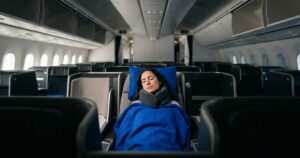
You unzip your pack at camp and remember you forgot a pillow again. These 5 weigh less than a Granola Bar For thru-hikers, the NEMO fillo elite is the pick labelled best hybrid for thru-hikers: 2.8 oz and packs to the size of a lemon. The first-listed Therm-a-Rest Compressible Pillow Cinch is the comfort pick, but at 8.6 oz for the regular it is not a thru-hiker’s choice. The bundled-jacket pillow stops working around mile 40. That is when you need the jacket for warmth and the pillow for sleep, and one garment cannot do both jobs. The real answer is a structured pillow that holds its shape all night, not a lump of spare clothes.
Compressible backpacking pillows add 2.5 to 9 ounces and pack down to the size of a lemon or a soda can. This guide stays focused on packs where every ounce and every cubic inch counts, and ranks five pillows by fill type and sleep position. For car camping and base camp options where weight matters less, see the best camping pillows.
What “Compressible” Actually Means
In backpacking pillow marketing, “compressible” has been applied to everything from solid memory foam blocks to inflatable TPU bladders. For this article, it means a pillow with a fill material that compresses to a fraction of its loft under packing pressure and springs back to usable height when unpacked. Three fill categories qualify:
Foam-fill compressible: Loose foam pieces or cut foam blocks inside a shell. Compresses under cinch or roll pressure; recovers by expanding. Therm-a-Rest’s scrap foam fill is the benchmark. Heaviest category per comfort unit, but the closest tactile match to a home pillow.
Hybrid compressible (foam/down over inflatable): An air bladder provides the structural loft; a thin layer of PrimaLoft or down insulation on the exterior surface adds softness and eliminates the balloon-and-crinkle feel. NEMO’s Fillo lineup is the primary example. Lightest category that still provides genuine cushioning.
Down-topped inflatable: An inflatable TPU bladder with a layer of duck or goose down sewn on the outer face. Sea to Summit’s Aeros Down is the standard. Packs as small as an inflatable, sleeps noticeably softer than a bare bladder, and weighs 2.5-3.5 oz in smaller sizes.
A stuffed jacket technically compresses. The problem with it, and the reason the “use your extra clothes” advice fails in practice, is that loose clothing clumps under head weight rather than maintaining a uniform loft profile. A pillow fill is engineered to resist clumping under sustained pressure; clothing is not.
The 5 Picks: Weigh less than a Granola Bar For thru-hikers
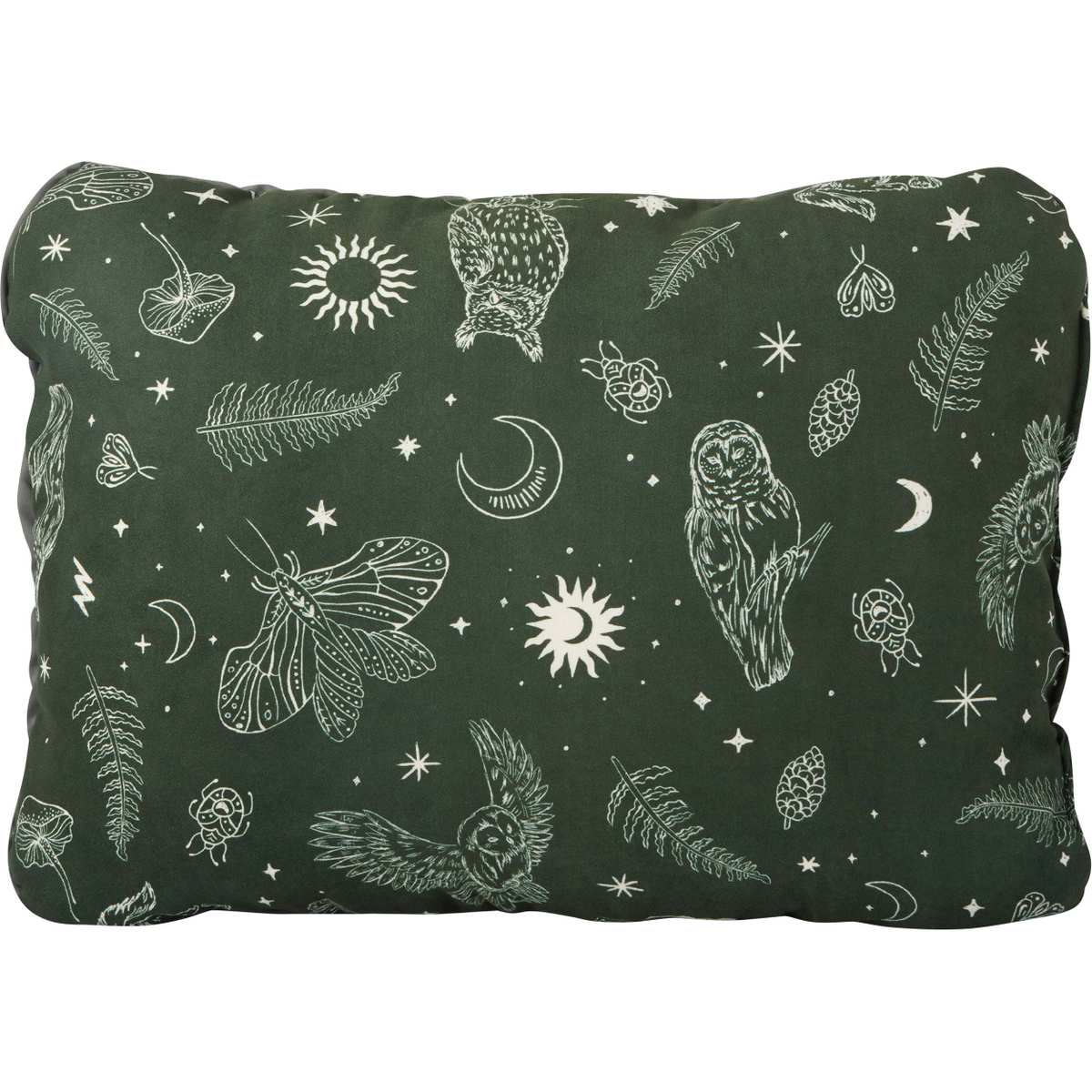
I compared the Cinch against every hybrid and inflatable on this list, and my analysis keeps coming back to the fill. The upcycled foam from Therm-a-Rest’s pad production gives it a home-pillow feel that no air bladder can match. The cinch cord lets you dial firmness, and the 2.6-liter packed size is the trade-off. For weekend trips where comfort outranks ounces, it’s the clear leader. The machine-washable build is a practical edge over every inflatable here.
| Spec | Value |
|---|---|
| Weight (Regular) | 8.6 oz |
| Dimensions expanded (Regular) | 18 × 13 × 6 in |
| Dimensions expanded (Large) | 22 × 15 × 7 in |
| Fill | Upcycled scrap foam from sleeping pad production |
| Shell | 60% recycled polyester, micro-fleece pillow top |
| Unique feature | Cinch cord to adjust firmness and loft |
| Packed size | 2.6 liters (Regular) |
| Washable | Machine washable |
| Price | $32-$47 |
Pros
- Upcycled foam fill feels closest to a home pillow of any compressible on this list.
- Cinch cord dials firmness and loft to personal preference.
- Machine washable for easy cleaning after trips.
Cons
- At 8.6 oz, the heaviest pillow here by a wide margin.
- 2.6-liter packed size eats significant pack volume.
- Not suitable for thru-hikes where every ounce counts.
$32-$47
Check Price on Therm-a-Rest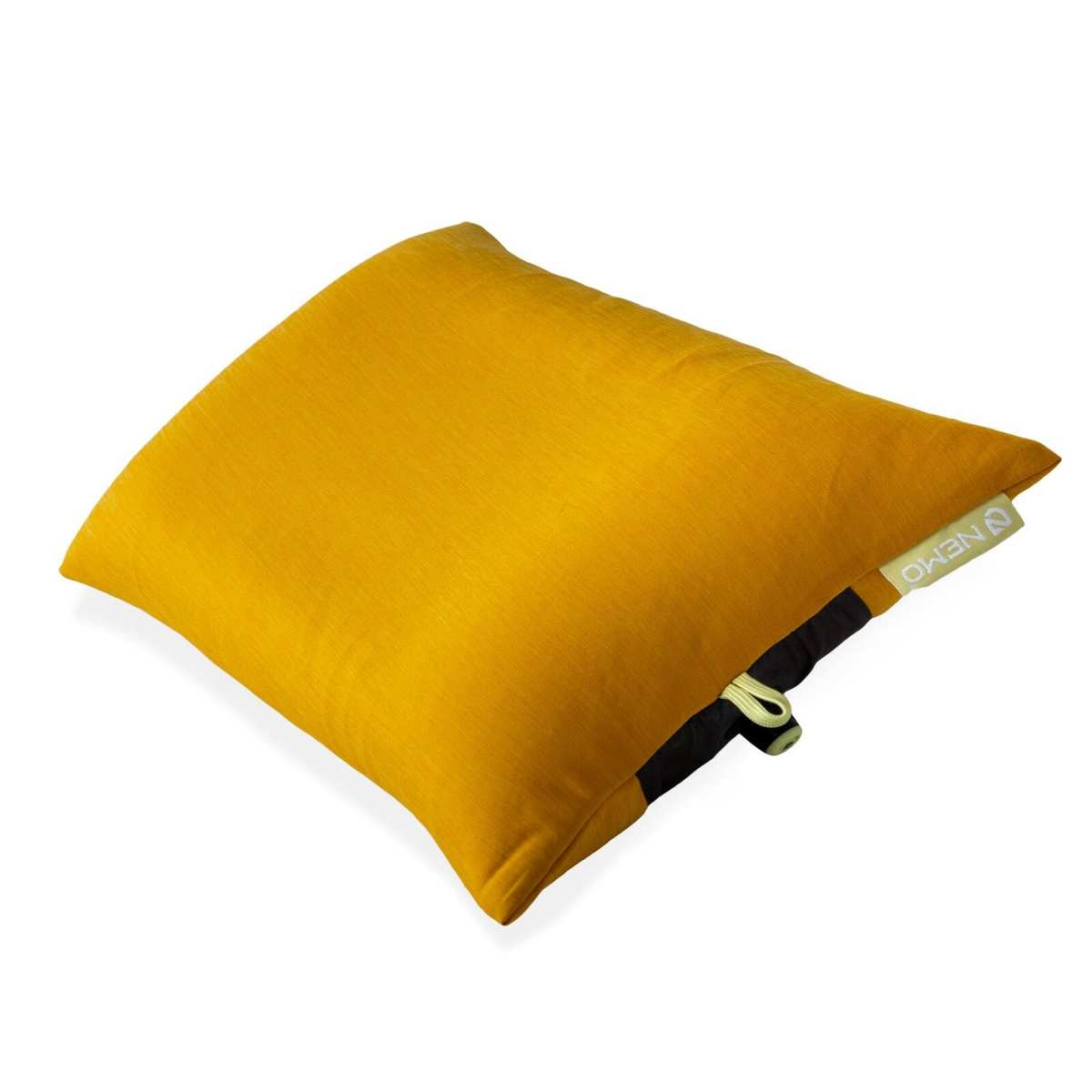
My analysis of the Fillo Elite starts with the hybrid construction. The I-beam baffled air bladder provides structural loft, while the PrimaLoft insulation layer eliminates the crinkle and cold-surface feel of a bare inflatable. At 2.8 oz packin
| Spec | Value |
|---|---|
| Weight | 2.8 oz / 80g |
| Dimensions expanded | 15 × 11 × 3 in |
| Fill | I-beam baffled air bladder + PrimaLoft insulation layer |
| Cover | Soft polyester jersey, removable, machine washable |
| Packed size | Lime-sized (integrated stuff sack) |
| Valve | Twist-lock, micro-adjustable |
| Price | ~$50 |
Pros
- 2.8 oz weight is ideal for thru-hiking.
- PrimaLoft layer eliminates crinkle and cold feel.
- Packs to lemon size with integrated stuff sack.
Cons
- 3-inch loft suits back sleepers, not side sleepers.
- Twist-lock valve requires practice to micro-adjust.
- Higher price than bare inflatables.
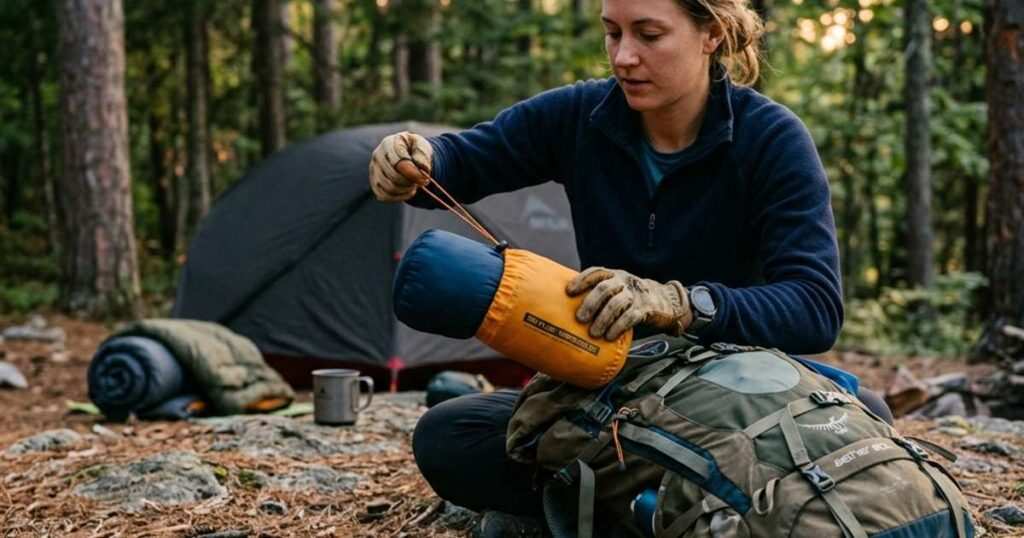
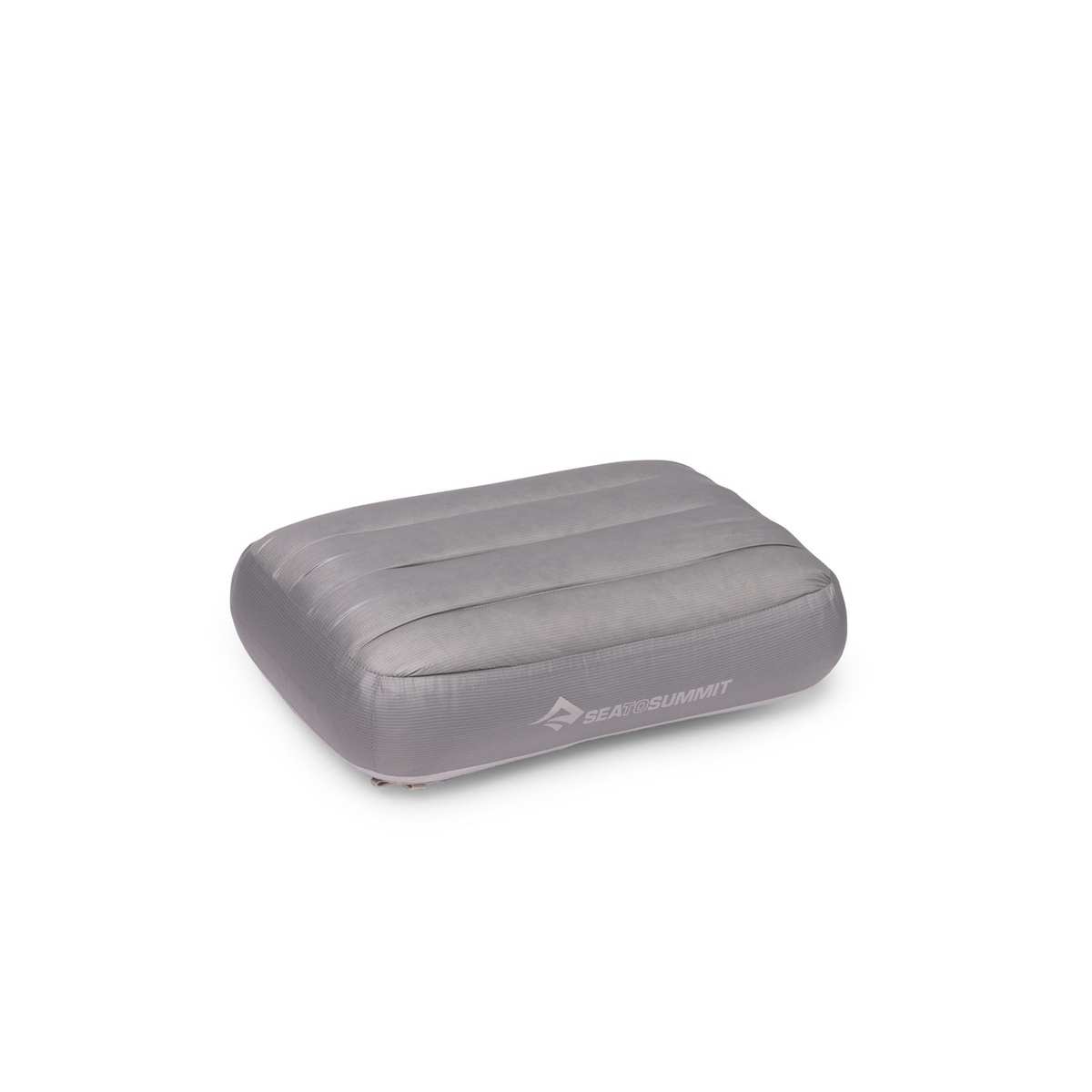
Examining the down-topped category, my analysis focuses on the baffle design.
| Spec | Value |
|---|---|
| Weight (Regular) | 2.5 oz |
| Weight (Large) | 3.5 oz |
| Dimensions (Regular expanded) | 13.4 × 9.4 × 4.3 in |
| Fill | TPU air bladder + horizontally baffled duck down top |
| Pillow case | 10D nylon (down side), 20D nylon (base) |
| Packed size (Regular) | ~3.2 × 2.6 in cylinder |
| Valve | Multi-function XPRESS valve |
| Price | ~$79.95 (Regular) |
Pros
- 2.5 oz is the lightest down-surface option here.
- Horizontal baffles prevent down migration.
- Packs to half a soda can.
Cons
- Highest price on this list at $79.95.
- Down requires careful washing and drying.
- 4.3-inch loft may feel high for stomach sleepers.
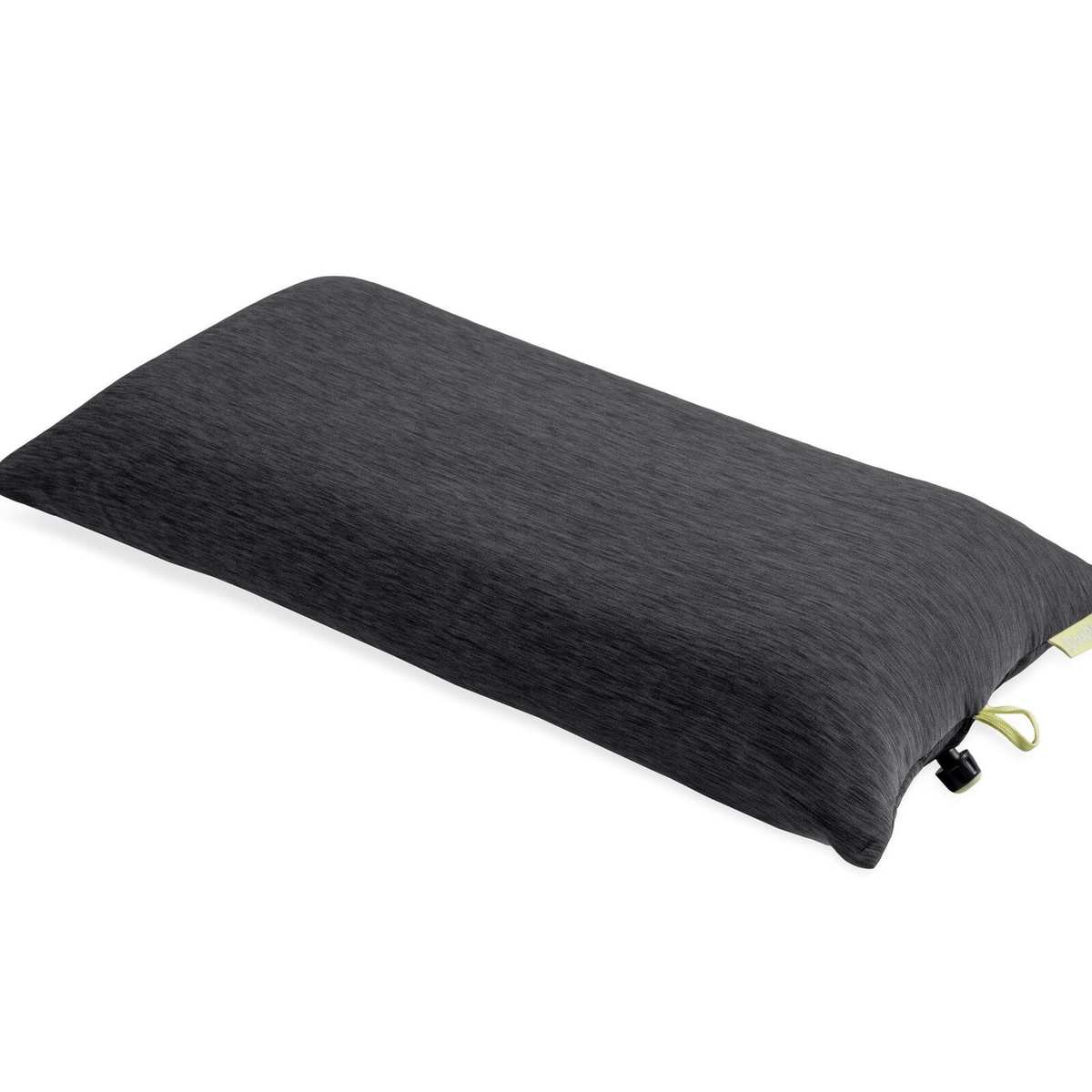
For side sleepers, the specification that matters most is surface area, and that is where my analysis of the Wide version begins. The 1.4 oz penalty over the standard Fillo Elite buys extra width that keeps the head centered through position changes rather than sliding off the edge. The I-beam baffled bladder and Zerofiber insulation layer carry over from the standard model, so the cushion-like feel is unchanged. At 4.2 oz with soda-can packing and 3-inch loft, my analysis puts it as the best hybrid option for anyone sleeping on their side.
| Spec | Value |
|---|---|
| Weight | 4.2 oz |
| Dimensions expanded | Wider than standard Fillo Elite |
| Fill | I-beam baffled air bladder + recycled Zerofiber insulation |
| Cover | Removable, machine washable recycled fabric |
| Packed size | Soda-can sized (integrated stuff sack) |
| Valve | Micro-adjustable |
| Price | ~$60 |
Pros
- Extra width keeps the head centered for side sleepers.
- 4.2 oz remains light for a wider hybrid pillow.
- Zerofiber insulation layer uses 100% post-consumer recycled content.
Cons
- 1.4 oz heavier than the standard Fillo Elite.
- Overkill for back sleepers who fit the standard size.
- Wider shape takes more pack space than the standard.
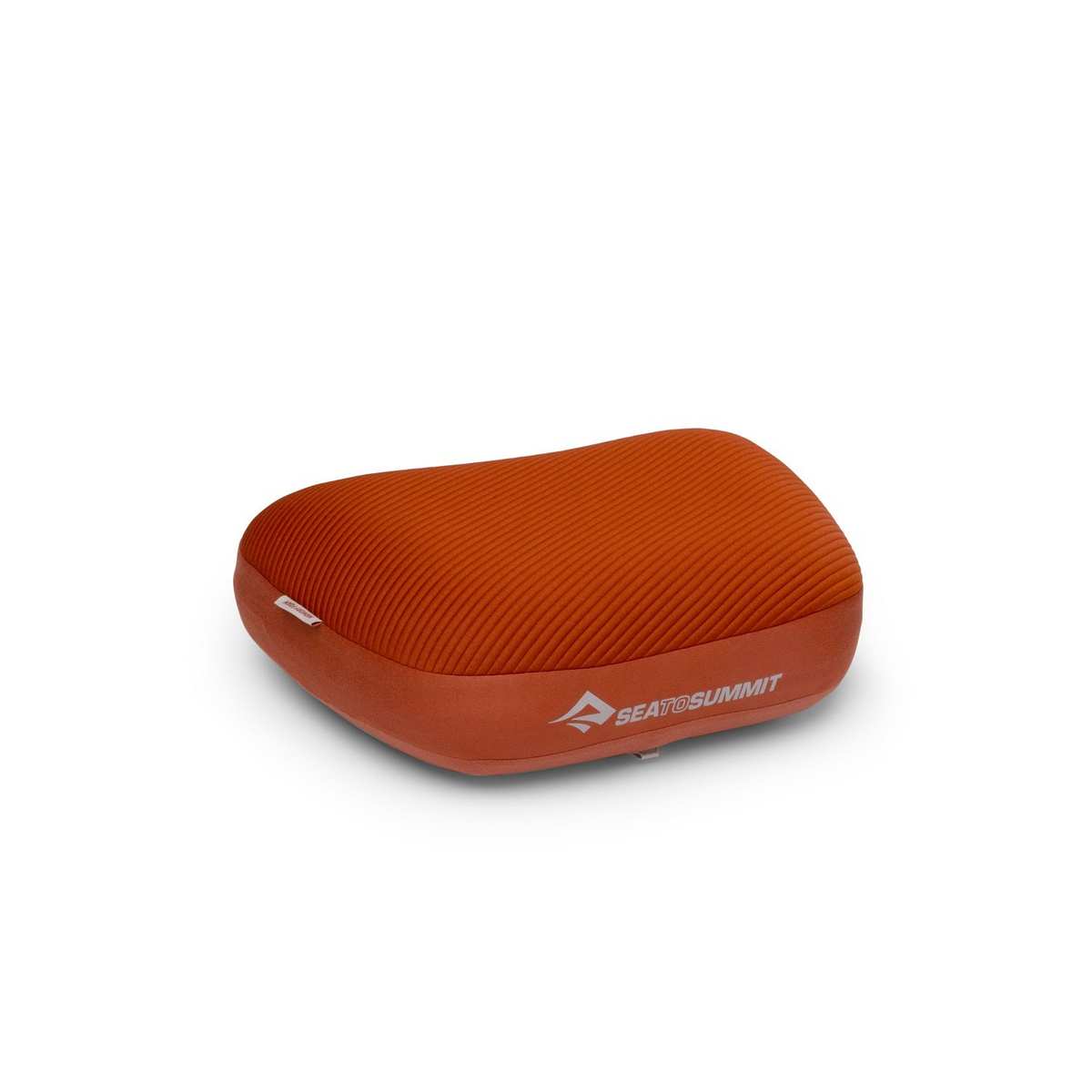
Looking at the bare inflatable end of the spectrum, my analysis of the Premium starts with what it leaves out. There is no insulation layer, just a TPU bladder with curved internal baffles and a scalloped base, wrapped in a brushed stretch-knit polyester cover that feels softer than raw TPU. At 2.7 oz packing to a large lime, it is the lightest non-down option here. The curved baffles create a head-cradle shape and the scalloped base adds pad stability that flat bladders lack. My analysis puts it as the best bare inflatable for ultralight minimalists who prioritise weight over plushness.
| Spec | Value |
|---|---|
| Weight (Regular) | 2.7-2.8 oz |
| Weight (Large) | 4.0 oz |
| Dimensions (Regular expanded) | 13.4 × 9.4 × 4.3 in |
| Fill | TPU air bladder, curved internal baffles |
| Surface | 50-denier brushed stretch-knit polyester (softer than raw TPU) |
| Base | Scalloped edge for pad stability |
| Packed size | Large-lime sized |
| Price | ~$49.95 (Regular) |
Pros
- Curved baffles and scalloped base add stability on the pad.
- Brushed stretch-knit surface feels softer than raw TPU.
- 2.7 oz packs to large-lime size for ultralight kits.
Cons
- No insulation layer means a colder sleep surface.
- Less plush than down-topped or hybrid options.
- Large size jumps to 4.0 oz for minimal loft gain.
Head-to-Head Comparison
| Pillow | Fill Type | Weight | Packed Size | Loft | Best For | Price |
|---|---|---|---|---|---|---|
| Therm-a-Rest Cinch | Upcycled foam | 8.6 oz | 2.6 liters | 6 in | Comfort-first weekend trips | $32-$47 |
| NEMO Fillo Elite | Hybrid (air + PrimaLoft) | 2.8 oz | Lime | 3 in | Thru-hiking, back sleepers | ~$50 |
| Sea to Summit Aeros Down | Down-topped inflatable | 2.5 oz | Half soda can | 4.3 in | Ultralight, down surface | ~$79.95 |
| NEMO Fillo Elite Wide | Hybrid (air + Zerofiber) | 4.2 oz | Soda can | 3 in | Side sleepers, ultralight | ~$60 |
| Sea to Summit Aeros Premium | Bare inflatable | 2.7-2.8 oz | Large lime | 4.3 in | UL minimalists, 3-season | ~$49.95 |
The Contrarian Take: The Bundled-Jacket Pillow Works Until It Doesn’t
Every ultralight guide includes a section on using a stuffed jacket as a pillow. It is not wrong advice for a one-night bivy or a warm trip where you sleep in your jacket. It is wrong advice for multi-night trips, cold weather, or anyone who actually needs their jacket for insulation at 3 a.m.
The structural problem is what filling does under sustained head weight. A purpose-built pillow fill , whether foam, PrimaLoft, or down , is engineered to resist compression and maintain loft under a defined load. A bundled jacket is insulation fill structured for thermal performance, not mechanical resistance to head weight. It clumps. The clump migrates to the edges of the stuff sack overnight, and by hour three the head is resting on an inch of shell fabric over empty void.
The NEMO Fillo Elite at 2.8 oz and lime-sized packed represents the point at which the “just use your jacket” argument loses its weight-saving rationale. The penalty for carrying a purpose-built compressible pillow on a multi-night trip is under 3 oz and roughly the volume of a piece of fruit. The comfort and sleep-quality return on that investment is measurable across the duration of the trip. A poor night of sleep at mile 20 compounds through the remaining miles; a good night compounds the other way.
How to Clean a Compressible Backpacking Pillow
Foam-fill compressibles (Therm-a-Rest Cinch): machine wash on gentle cycle, cold water, then tumble dry on low. The foam fill benefits from drying at low heat . It restores loft that compresses during the wash. Do not use high heat; polyurethane foam degrades faster at sustained high temperatures.
Hybrid compressibles with removable covers (NEMO Fillo Elite, Fillo Elite Wide): remove the cover and wash it on gentle cycle. The bladder itself should be spot-cleaned with a damp cloth and dried fully before storage . Any moisture trapped in the bladder after storage promotes mildew inside the TPU shell.
Down-topped inflatables (Sea to Summit Aeros Down): the down-face layer can be spot-cleaned or hand-washed with a mild down-specific soap. Do not machine wash the full pillow , the TPU bladder and down layer require separate care that a machine agitation cycle damages. Air dry fully before deflating and packing.
Bare inflatables (Sea to Summit Aeros Premium): wipe the exterior with a damp cloth. The TPU bladder interior should never have water introduced , deflate fully, leave the valve open, and store with moisture excluded.
Frequently Asked Questions
What is a compressible backpacking pillow?
A pillow filled with foam, synthetic insulation, or down that compresses under packing pressure and expands back to usable loft when unpacked. The category excludes bare inflatables (no fill layer) and solid memory foam blocks (too dense to compress meaningfully). Compressible backpacking pillows run 2.5-9 oz and pack into integrated stuff sacks ranging from lime-sized to fist-sized.
How much should a backpacking pillow weigh?
For multi-night backpacking and thru-hiking, 2-4 oz is the practical range. Under 2 oz means a bare inflatable with no fill layer. Above 5 oz means either a comfort-focused foam-fill pillow (Therm-a-Rest Cinch at 8.6 oz) or a car-camping design that does not belong in a backpacking pack. The 2-4 oz window covers the hybrid and down-topped options that provide genuine sleep quality.
Are compressible pillows better than inflatables for backpacking?
Better for comfort; heavier for pack weight. A bare inflatable (Sea to Summit Aeros Ultralight at 2.1 oz) is the lightest option available, but the absence of a cushion layer means the head rests directly on a TPU bladder. Cold at altitude, noisy when repositioning. A hybrid compressible adds 1-2 oz for a PrimaLoft or down exterior layer that eliminates both problems. The trade-off is real; which side wins depends on how cold your camping temperature is and how sensitive you are to sleep surface texture and sound.
Can you machine wash a compressible backpacking pillow?
Foam-fill compressibles like the Therm-a-Rest Cinch: yes, gentle cycle, tumble dry low. Hybrid compressibles with removable covers: wash the cover only; spot-clean the bladder. Down-topped inflatables: hand wash or spot-clean with mild down soap; do not machine wash. Bare inflatables: wipe with damp cloth only.
Why not just use extra clothes as a pillow?
Clothing fill clumps under sustained head weight and migrates toward the edges of the stuff sack, so the head ends up on a thin layer of shell fabric over void by hour two. Purpose-built fill materials. Foam, PrimaLoft, baffled down, resist compression and maintain their loft profile through the night. At 2.5-2.8 oz for the lightest compressibles on this list, the weight argument for the jacket-pillow workaround has narrowed to the point where the practical case for a dedicated pillow wins on most multi-night trips.