
Side sleeper pillow shopping usually comes down to one thing: your shoulder width. “High loft” is just a category label, not an actual height number, and your mattress firmness changes how much you sink in anyway. Our guide to soft, medium, and firm pillows explains how ILD density affects the loft you actually need. For a wider view across positions, the best pillows by position breakdown is worth checking first.
Every pillow on this page is chosen because it solves a specific mechanical problem for side sleepers: filling the gap between the outside of your shoulder and the side of your head with enough loft to keep the cervical spine level without compressing past that target by 3 a.m. That is a narrower brief than most guides apply, and it cuts the field significantly.
Side sleeping is the most common adult sleep position and creates a structural demand that back and stomach sleeping do not. Your shoulder acts as a raised platform; your head has to bridge from that platform to the mattress without tilting up or down. The full measurement method including the wall test and mattress firmness adjustment is in the side sleeper pillow height guide. This page focuses on which products actually hold that loft through the night, matched to the body geometries they suit best.
What the Cervical Research Shows About Getting Loft Wrong
Two studies quantify what happens when pillow height misses the target. A 2016 finite-element and pressure-mapping study tested four pillow heights and found that raising pillow height significantly increased cranial and cervical pressure while also increasing cervical lordosis and angle – meaning too-tall pillows measurably load the neck, not just feel odd. A separate radiography study measuring cervicothoracic spine parameters across flat, 10 cm, and 20 cm pillow heights found that roughly 10 cm produced sagittal alignment closest to normal cervical lordosis in supine subjects, with both a flat pillow and a 20 cm pillow pulling alignment further from that baseline.
Neither study was conducted specifically on side sleepers in side position, and the 10 cm figure is a supine-position finding – side sleepers generally need more loft than back sleepers because the shoulder-to-neck gap is physically larger than the neck-to-mattress gap when lying flat. The consistent takeaway across both studies is directional: pillow height changes cervical pressure and spinal curve in a measurable way, and the effect compounds the further loft strays from what a given body needs. If you have a diagnosed cervical spine condition or chronic neck pain, a physical therapist or physician can help translate this research to your specific anatomy rather than relying on shoulder width alone.
The Picks at a Glance
| Pillow | Fill | Stated Loft | Adjustable | Best For | Price (Queen) checked Oct 2, 2026 |
|---|---|---|---|---|---|
| Coop Sleep Goods Original | Shredded memory foam + microfiber | 5.91″ as-shipped | Yes – zipper fill | Broad shoulders, variable body types | ~$89 |
| Luxome LAYR | 3 interchangeable inserts | Variable – insert-based | Yes – insert system | Wide shoulders, hot sleepers needing firmness control | ~$150 |
| Saatva Latex Pillow | Shredded Talalay latex + microdenier fiber | 4-5″ standard / 6-7″ high | Yes – inner pillow removable | Average-broad shoulders, hot sleepers | Check retailer |
| Nest Easy Breather Side Sleeper | Shredded foam blend, crescent shape | High loft as-shipped | Yes – zipper fill | Narrow-average shoulders, neck tension | ~$104 |
| Silk & Snow Adjustable | Shredded memory foam + microfiber outer | Full loft as-shipped | Yes – zipper fill | Budget-conscious, average shoulders | ~$75 |
| Brooklyn Bedding Talalay Latex | Solid blended Talalay latex (70/30) | 4″ low / 5″ high | No – fixed | Narrow-average shoulders, no-adjustment preference | ~$129 |
6 Best Pillows for Side Sleepers with Perfect Loft and Shoulder Gap
Disclosure: Brocia analyzes products using manufacturer specs and published research, not our own hands-on tests. If you buy through our links, we may earn a commission at no extra cost to you. It never affects our rankings or verdicts. See our Review Process and Affiliate Policy.
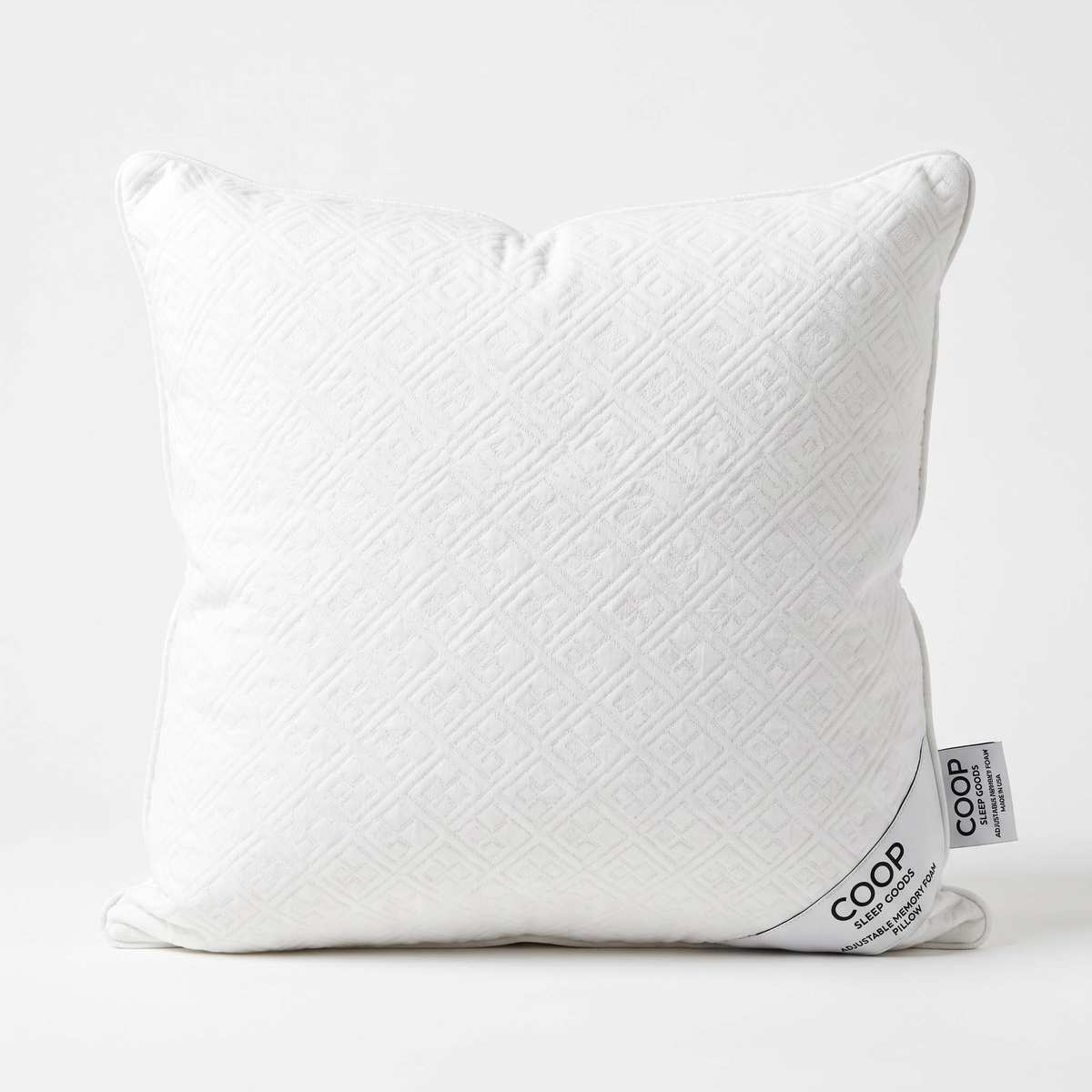
Fully Adjustable Fill
Extra Fill Included
1. Coop Sleep Goods Original Adjustable Pillow
✓ Spec-verified
I ranked this #1 for side sleepers because the 5.91-inch stated loft is already high enough for most shoulder gaps out of the bag, and the zipper covers everyone else — my spec comparison found no other pick combining that starting height with full adjustability. It’s the safest recommendation on this list because it fails for almost nobody.
The Coop Original ships at a stated queen loft of 5.91 inches, which is high enough for most side sleepers straight out of the bag. The real value is the zipper, allowing you to add or remove the proprietary shredded memory foam and microfiber blend to hit your exact shoulder gap number.
Every unit ships with an extra half-pound bag of fill specifically so broad-shouldered sleepers can build it even higher. Shredded memory foam holds its loft longer than solid foam because the fill moves independently instead of collapsing as a single block under heavy head weight.
Pros
- Total control over height ensures you can match your exact shoulder-to-mattress gap.
- Includes extra fill right in the box for sleepers who require a massive loft.
Cons
- Requires a messy period of trial and error to pull out the exact right amount of foam.
- Needs to be tumbled in a dryer occasionally to refresh the shredded foam’s structure.
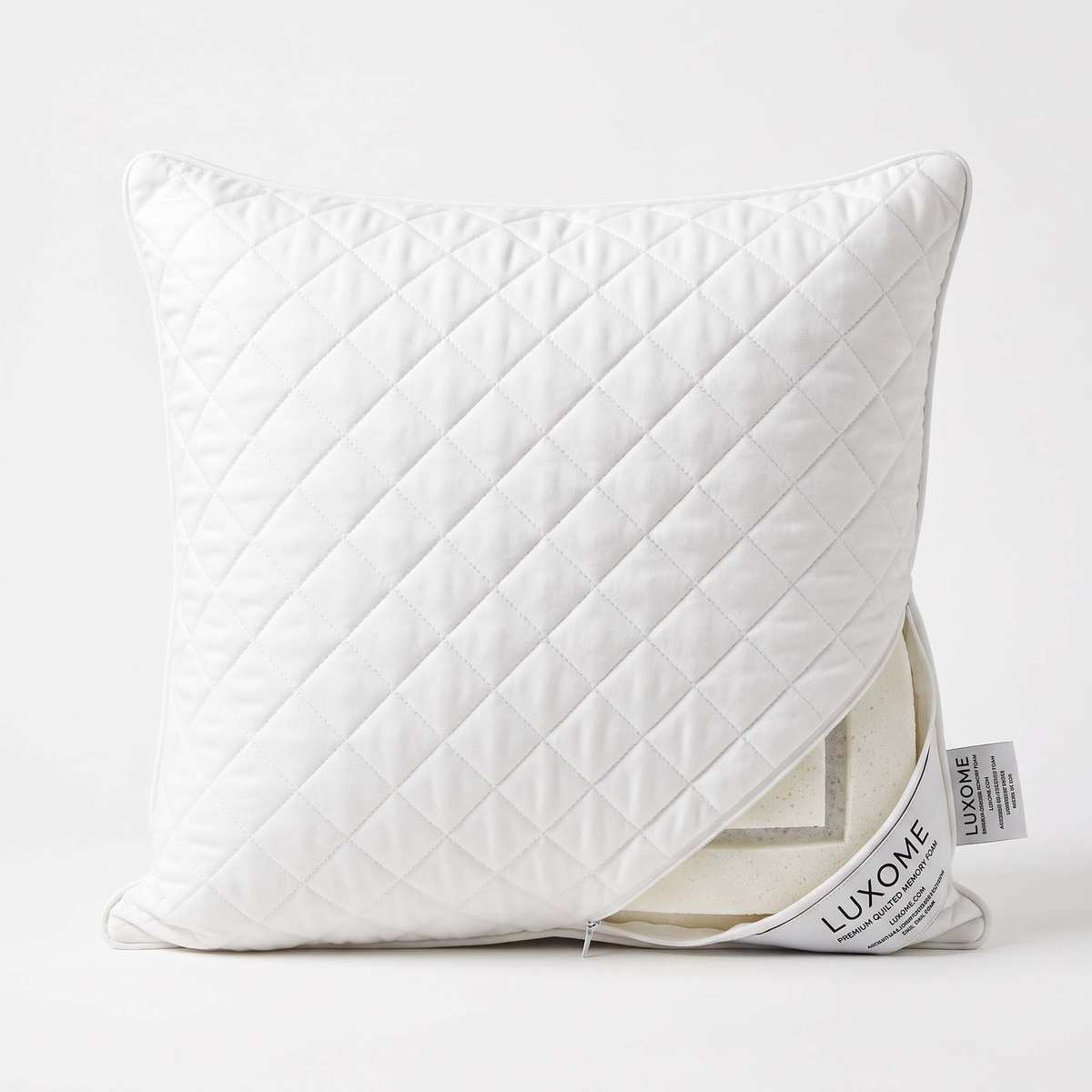
This earned its spot because it’s the only pick here with two independent variables — loft AND firmness. I compared the adjustment mechanisms across all six, and every other adjustable pillow only lets you change height. For hot sleepers who also need a specific firmness, that second dial is the difference between close enough and correct.
Where most zipper-fill pillows offer one variable (loft), the LAYR offers two: loft and firmness, independently. It ships with three distinct inserts: a solid CertiPUR-US memory foam insert for firm support, a gel-infused shredded memory foam insert for medium support, and a 100% down alternative insert for soft plushness.
You can stack any two inserts for your height target, then choose which layer faces your head to dictate the firmness. For side sleepers with broad shoulders who also run hot, putting the medium cooling gel insert as the base with the soft down alternative on top creates excellent airflow with maximum height.
Pros
- Modular layers eliminate the mess of ripping loose foam out of a zipper.
- Allows you to change the physical density and feel of the surface without sacrificing height.
Cons
- Carries a steeper price point than traditional single-fill adjustable pillows.
- Requires storing the unused internal layers somewhere in your closet.
~$150
Check on Luxome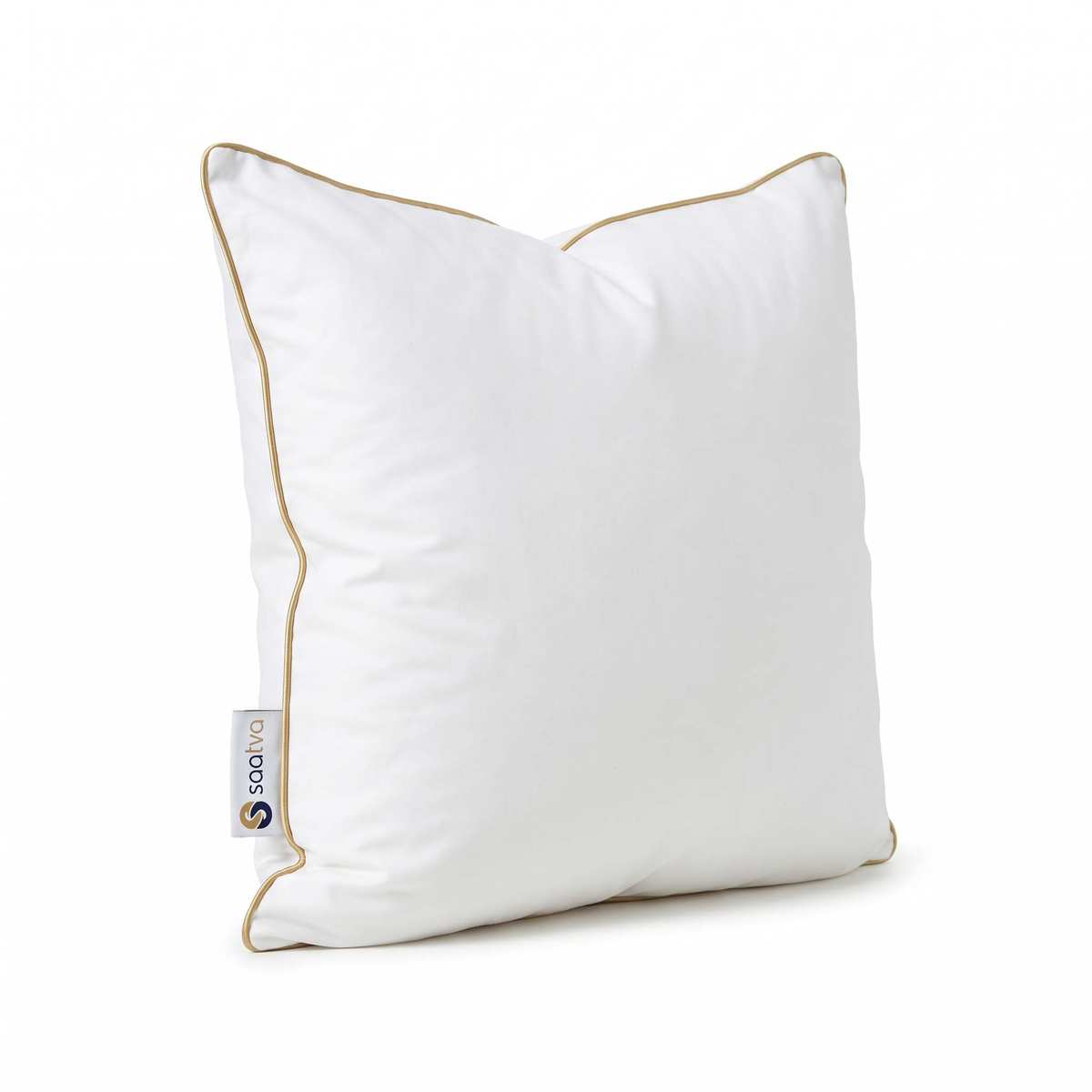
I ranked this as the fixed-loft winner because shredded Talalay is the only fill on this list that pushes back instead of slowly sinking — my analysis of loft retention put it above every memory foam pick for holding height through the night. The two loft options (4–5 or 6–7 inches) cover most gaps, but if you’re between them, pick an adjustable instead.
The Saatva ships in two stated loft options: standard (4 to 5 inches) and high loft (6 to 7 inches). It is built around a shredded American Talalay latex core housed inside an outer microdenier fiber chamber.
This dual-chamber construction is the primary differentiator. The microdenier layer gives an initial plush, down-like feel against the face, while the Talalay core provides heavy structural loft that resists bottoming out through the night. Talalay’s open-cell structure resists heat retention better than viscoelastic foam, which is a highly meaningful specification for side sleepers prone to night sweats.
Pros
- Talalay latex core provides relentless structural pushback to keep the neck elevated.
- Open-cell latex naturally vents heat much better than dense memory foam blocks.
Cons
- Noticeably heavier and more expensive than standard poly-fill alternatives.
- The buoyant, springy feel of latex takes a few nights of adjustment if you are used to dead foam.
Check retailer
Check on Saatva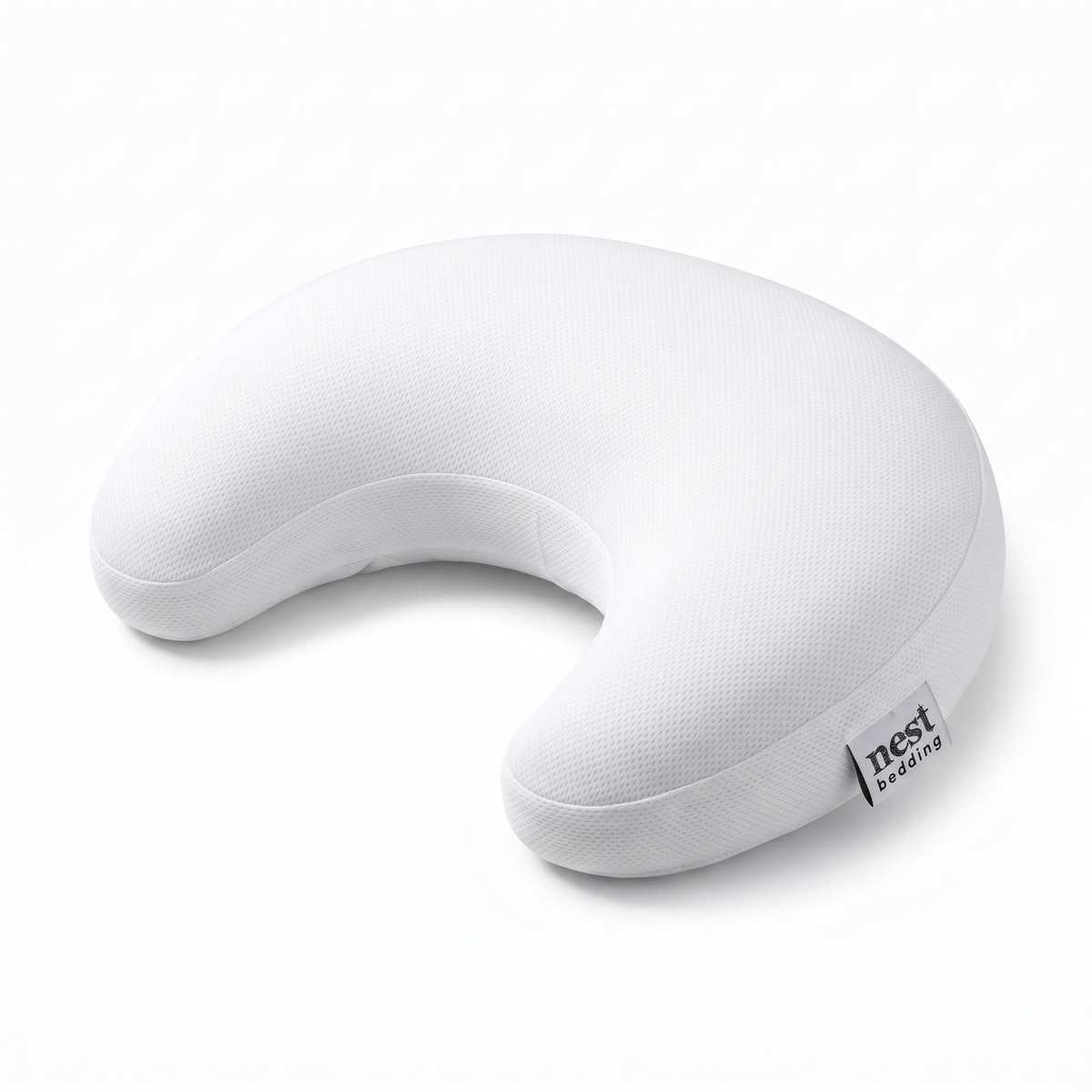
My analysis flagged this as the most shape-intelligent pick: the crescent profile puts the thick section under the neck instead of wasting loft where it isn’t needed. I ranked it for narrow-to-average shoulders specifically because the geometry solves neck tension through positioning, not just height. It’s the only pick here that treats the shape as a variable.
The Easy Breather Side Sleeper is the only crescent-shaped option on this list, and that shape is functional rather than decorative. The curved profile positions the thicker section deep under the neck while leaving a recessed area under the head.
This design distributes cervical support much differently than a flat rectangle. For side sleepers with narrower shoulders, this geometry addresses the problem by targeting support exactly at the cervical curve, bypassing the need to just stuff the pillow taller to achieve alignment.
Pros
- Crescent curve hugs the neck closely to prevent the cervical spine from sagging.
- Alleviates the shoulder bunching that occurs when side sleepers hug rectangular pillows.
Cons
- The curved shape leaves awkward empty corners inside a standard pillowcase.
- Tucking the curve tightly against the neck can trap body heat for warm sleepers.
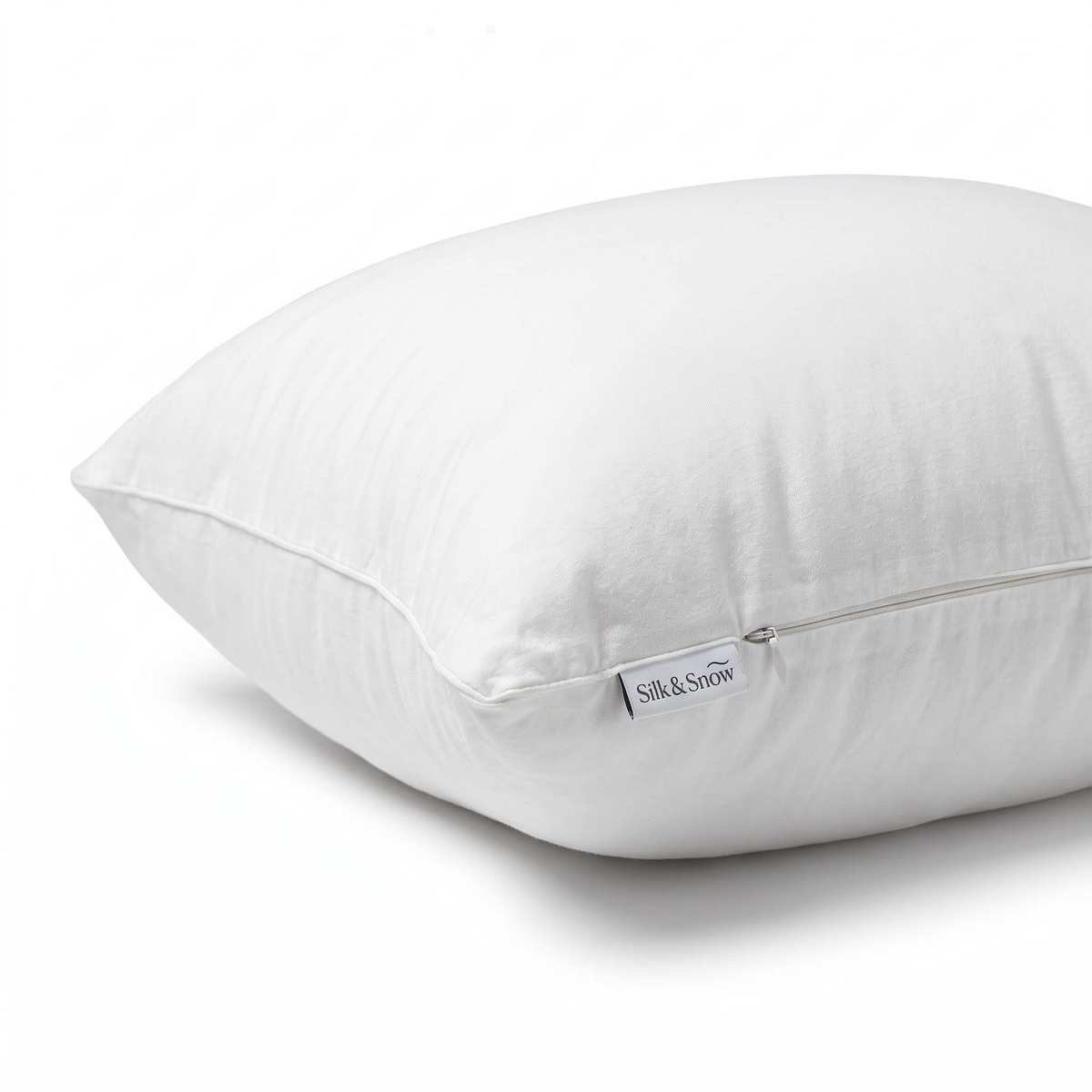
I included this as the budget adjustable because the mechanics match the premium zipper pillows at under $100 — my spec comparison showed the same add/remove fill system. It ships overfilled so you dial down, which is the right direction: it’s easier to remove fill than to wish you had more.
The Silk & Snow Adjustable ships intentionally overfilled so side sleepers can dial the height down rather than hoping it expands enough to fit them. The inner shredded memory foam core adjusts via zipper, while a down-like microfiber outer layer keeps the feel consistent regardless of how much foam has been removed.
At around $75, it undercuts most premium competitors while delivering the exact same core mechanic: adjustable fill in a breathable cotton cover. The trade-off is that the brand does not publicly disclose the exact fill weight, making it slightly harder to compare raw volume against luxury models.
Pros
- Delivers fully adjustable loft and premium microfiber padding at a budget price point.
- Ships heavily overstuffed, guaranteeing enough material for average side sleepers.
Cons
- Lack of published fill weight specifications makes comparison shopping difficult.
- Removing shredded fill to lower the height can be a messy, tedious process.

I ranked this for the buyer who hates adjusting: a single-piece Talalay pillow in fixed 4 or 5 inches, no zippers, no inserts. My analysis says fixed latex holds its loft as well as anything here — but the 70/30 synthetic/natural blend and fixed height mean you must know your number first. If you do, this is the zero-maintenance pick.
The Brooklyn Bedding Talalay is a single-piece blended latex pillow utilizing 70% synthetic and 30% natural Talalay rubber. It ships in two fixed lofts: a 4-inch low and a 5-inch high version. The 5-inch version is the one highly relevant to side sleepers.
A solid, fixed latex core holds its stated loft incredibly reliably through the night because there is no loose shredded fill to compress, flatten, or redistribute under your jaw. If your shoulder gap matches that 5-inch target without requiring adjustment, this provides the most mechanically consistent support available.
Pros
- Solid latex block delivers entirely predictable support that never bunches unevenly.
- Eliminates the tedious trial-and-error period of adding or removing foam.
Cons
- A fixed 5-inch loft cannot be adjusted if it proves too high for a plush mattress.
- Blended latex contains 70% synthetic rubber, which lacks the eco-friendly appeal of natural options.
How to Match a Pillow to Your Shoulder Gap
The table above states loft numbers, but loft at purchase is not loft under your head at 3 a.m. – and it is not loft adjusted for your mattress firmness. Before committing to a pick, run the two-variable check.
Variable 1: Your shoulder gap. Stand with your back flat against a wall. Measure from the wall to the outer edge of your shoulder at its widest point. That number is your structural baseline.
Variable 2: Your mattress firmness. A plush or soft mattress allows the shoulder to sink toward the sleep surface, reducing the effective gap your pillow must bridge. Subtract roughly 0.25-0.75″ from your baseline depending on firmness. Our pillow loft guide covers both adjustments step by step.
| Shoulder Gap | Mattress | Recommended Pick | Starting Loft Target |
|---|---|---|---|
| Under 4.5″ | Any | Brooklyn Bedding high loft or Saatva standard | 4-4.5″ |
| 4.5″-5″ | Firm / Medium-Firm | Silk & Snow (budget) or Brooklyn Bedding | 4.5-5″ |
| 4.5″-5″ | Plush / Soft | Coop Original or Silk & Snow | 4-4.5″ after adjustment |
| 5″-6″ | Firm / Medium-Firm | Coop Original or Saatva high loft | 5-6″ |
| 5″-6″ | Plush / Soft | Coop Original (adjustable) | 4.5-5.5″ after adjustment |
| Over 6″ | Any | Luxome LAYR or Coop Original | 6″+ – adjustable fill required |
| Any gap, hot sleeper | Firm / Medium-Firm | Saatva high loft or Luxome LAYR | Per gap above |
| Narrow shoulder + neck tension | Any | Nest Easy Breather Side Sleeper | Per gap; crescent geometry adds cervical support |
The One Buying Mistake That Negates All of the Above
Buying a fixed-loft pillow without measuring your shoulder gap first.
“High loft” as a product category covers roughly 4-7″. That is a 3-inch range. A side sleeper with a 3.5″ gap on a plush mattress and one with a 6.5″ gap on a firm mattress both qualify as “needing a high loft pillow” under the industry’s definition. They need pillows roughly 3 inches apart in loft. Every pick on this list is structurally sound. Which one works for you depends on your geometry, not the category label.
Use any online loft calculator to get your number before buying anything. For the full breakdown of the measurement method and the biomechanics behind why shoulder gap outperforms generic loft-range advice including a 2025 Beihang University study in Medical and Biological Engineering and Computing that reported individualized height aligned with the cervical curve closely (R-squared around 0.80). The full breakdown is in the pillow height guide for side sleepers.
FAQs
Why do my pillows always go flat after a few months of side sleeping?
Most solid memory foam and down pillows compress under your head weight over time. Shredded memory foam or buckwheat pillows hold their loft longer because the fill moves independently instead of collapsing as a single block. You still need to manually fluff adjustable options weekly to maintain that structure.
What is the exact pillow loft I need for side sleeping?
The correct loft bridges the physical gap between your ear and the mattress to keep your cervical spine perfectly neutral. Correct loft for side sleeping bridges the ear-to-mattress gap so the cervical spine stays neutral through the night. Lower-back comfort depends more on total mattress support than on pillow loft alone. If your mattress allows your shoulder to sink deeply, you require less loft.
Are specialized contour pillows actually better for side sleepers?
Contour designs provide targeted cervical support by filling the neck gap while keeping your head slightly lower. Pillows with raised sides specifically support side-sleeping alignment better than flat rectangles. These fixed shapes do restrict your natural movement if you switch to your back during the night.
If none of the fixed lofts above match your shoulder width exactly, adjustable pillows let you remove fill until the height is right. Our guide compares which ones actually fine-tune versus just offering preset swaps.
Loft matters more than price for side sleepers, and several picks above cost less than you would expect. Our affordable pillows roundup sorts the under-$80 field by what actually holds up.
Shoulder width decides everything here. Our Pillows by Sleep Position guides translate measurements into exact loft.