The corner-cutting in budget pillows is real, but checkable before purchase. If you are comparing top-selling brands under $80, read our detailed comparison of Tuft & Needle vs. Casper pillow to evaluate solid adaptive foam against pillow-in-a-pillow fiberfill before deciding.
Being affordable and being poorly made aren’t the same thing, but budget pillow listings rarely make that distinction easy. This guide covers the buying guides hub for readers who want value without guesswork.
What Actually Goes Wrong in Sub-$50 Pillows
Three specific failure modes explain most bad budget-pillow purchases, and each one is checkable from a product listing before you buy.
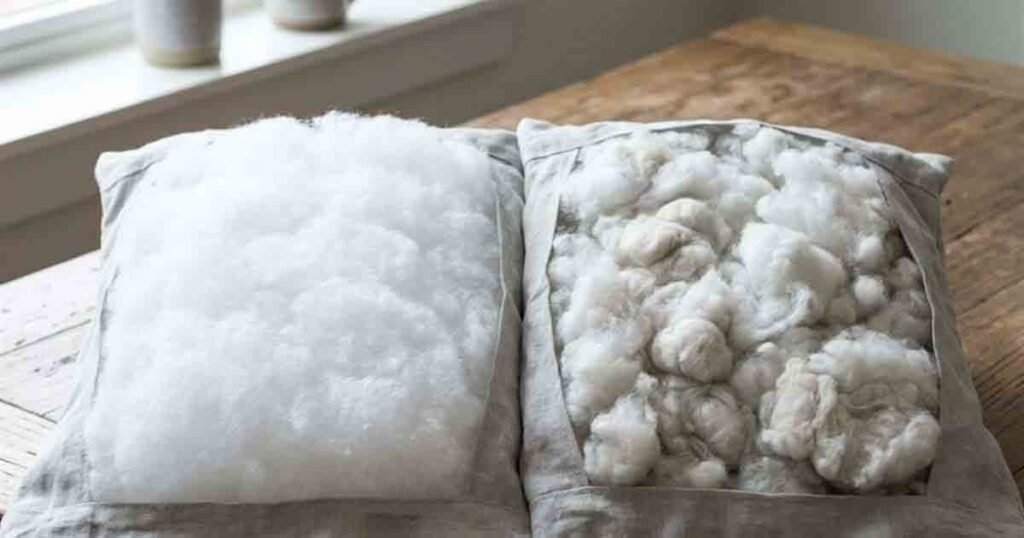
Reclaimed or scrap foam. Some of the cheapest shredded memory foam pillows use foam offcuts from mattress manufacturing rather than foam produced specifically for pillow fill. This shows up as visible lumpiness, inconsistent piece size, and foam that feels stiff or has a discolored “rind” rather than a uniform slow-compression feel. There’s no certification that directly confirms “fresh foam,” but CertiPUR-US certification at minimum confirms the foam was tested for chemical content and meets defined physical performance standards – it’s a floor, not a guarantee of feel, but a listing with no CertiPUR-US mention on a foam pillow is a bigger red flag than one that has it.
Feather-heavy “down” fill. Down and feather are different structures – down clusters trap air for loft, while feathers have a rigid quill that can poke through a low-thread-count cover. Budget “down” pillows sometimes use a fill blend weighted more toward feathers than actual down clusters, without disclosing the ratio. If a listing doesn’t state a down-to-feather percentage or doesn’t specify “down alternative” (a synthetic fiber, not real down at all), assume a feather-heavy blend and check the thread count – a cover under roughly 230 threads per square inch is more likely to let quills through.
Underfilled cores. Less fill means a flatter pillow out of the box and a faster collapse under nightly weight. Total fill weight isn’t always published, but loft-in-inches usually is – a stated loft under about 4 inches on a pillow marketed for side or back sleeping is worth treating with suspicion, since it suggests less material than the category typically needs.
Budget Pillow Spec Comparison
| Pillow | Fill | Key Spec | Certification | Price |
|---|---|---|---|---|
| Beckham Hotel Collection Original | 100% polyester down alternative | 250-thread-count cotton cover, ~8-in loft once fluffed | OEKO-TEX Standard 100 | ~$20-30 per pillow (2-pack) |
| Novaform ComfortGrande Plus | Cooling gel memory foam, single piece | Medium support, antimicrobial-treated washable cover | CertiPUR-US | ~$40-44 |
| IKEA ROSENSKÄRM / KLUBBSPORRE | Polyester fiber (varies by model) | Low-to-medium and high-loft options across the two models | Varies by model – check listing | Under $15 |
3 Best Affordable Pillows under $50
Disclosure: Brocia analyzes products using manufacturer specs and published research, not our own hands-on tests. If you buy through our links, we may earn a commission at no extra cost to you. It never affects our rankings or verdicts. See our Review Process and Affiliate Policy.
Polyester Down Alternative
250 Thread Count
1. Beckham Hotel Collection Original Pillow
✓ Spec-verified
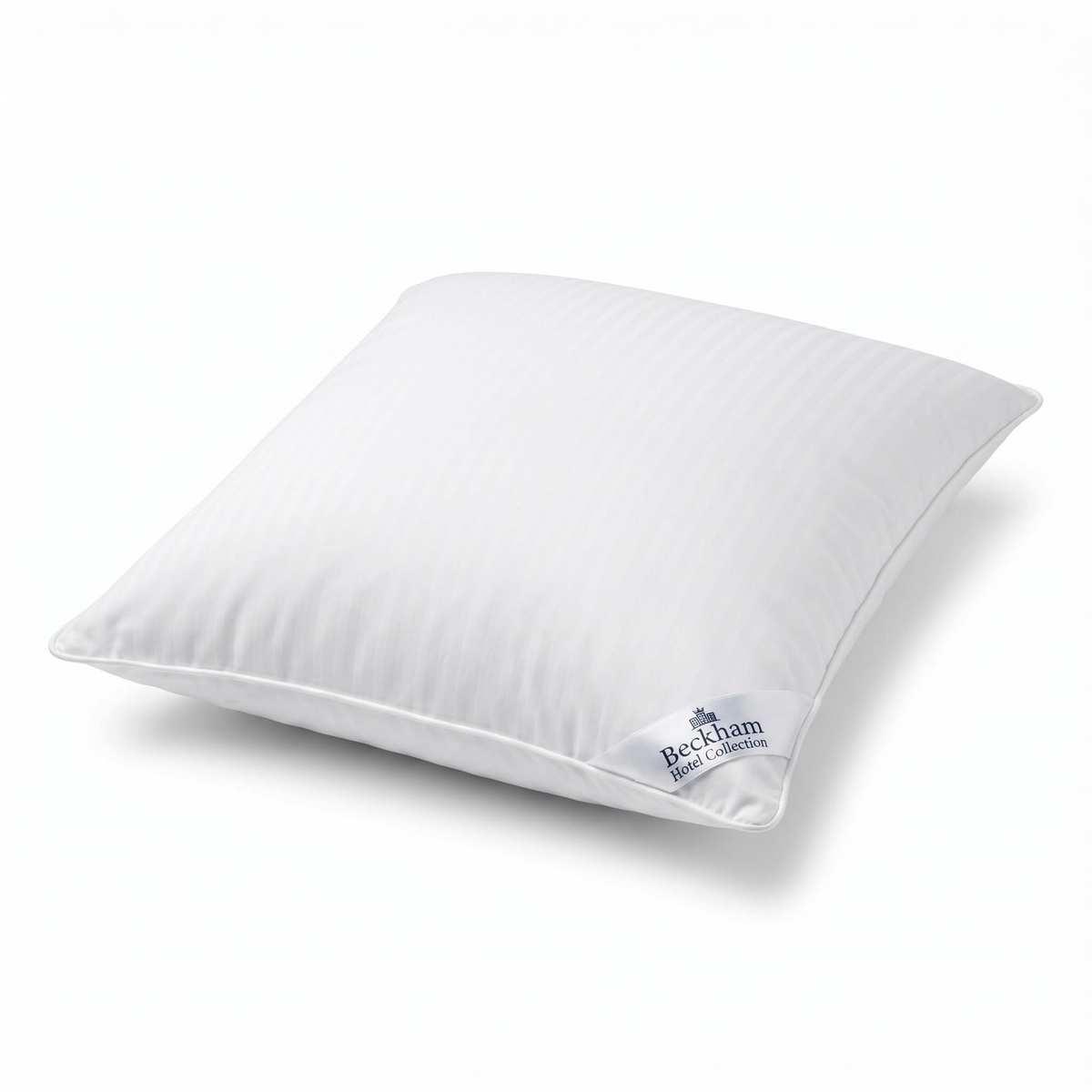
I ranked this #1 on budget because the 250-thread-count cotton cover with OEKO-TEX certification is unusual at this price — my spec check found most sub-$50 pillows cut exactly these corners. The polyester down-alternative won’t last like foam, but for fluffy and moldable right now, the value math works.
The Beckham Hotel Collection Original uses a 100% polyester down-alternative fill encased in a 250-thread-count cotton cover. It carries OEKO-TEX Standard 100 certification, which guarantees the finished product is free from harmful levels of over 100 known toxic substances.
While a 250 thread count is on the low end compared to the 400+ counts seen on luxury down pillows, it remains high enough to contain the polyester fiberfill tightly. Because down-alternative lacks rigid feather quills, there is zero risk of the fill piercing through this standard weave, making it an excellent budget compromise.
Pros
- Provides a soft, highly moldable feel that mimics real down for a fraction of the cost.
- Fully machine washable without the risk of mildew associated with natural feathers.
Cons
- Polyester fill naturally traps more body heat than natural cotton or real down clusters.
- Requires constant re-fluffing because the synthetic fibers compress quickly overnight.
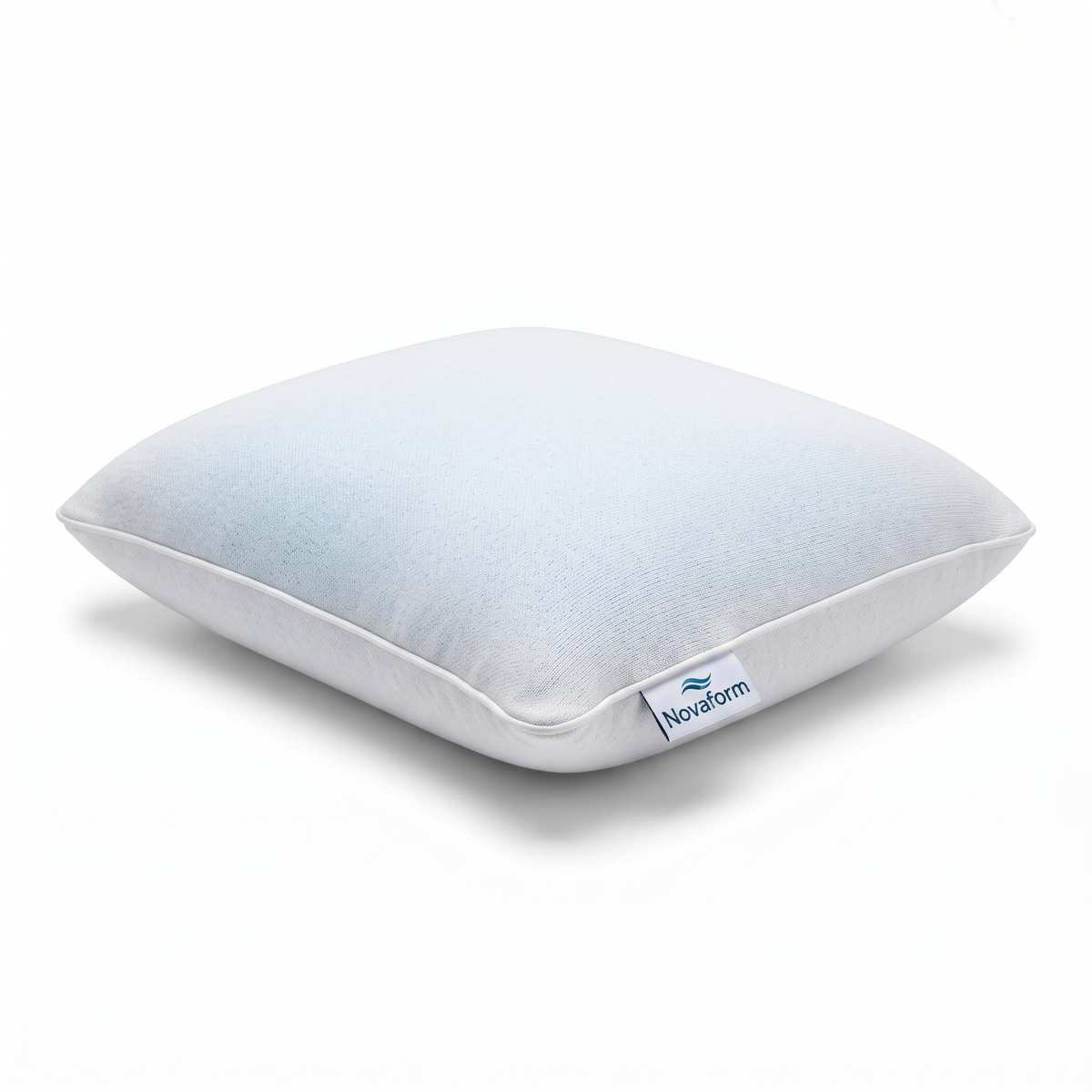
This earned the structured-foam budget spot: a single molded cooling-gel memory foam piece under $50, mostly through Costco. My comparison showed the antimicrobial washable cover is a genuine practical advantage at this tier. It’s the pick for buyers who want foam support without the foam price.
The Novaform ComfortGrande Plus, sold primarily through Costco, is built from a single molded piece of cooling gel memory foam. It features an antimicrobial-treated, machine-washable cover and includes a five-year limited warranty.
The most important structural checkpoint here is its CertiPUR-US certification. This confirms the budget foam was tested for volatile chemical content and physical durability performance. This provides a meaningfully different guarantee than uncertified discount pillows, which frequently rely on scrap foam offcuts reclaimed from cheap mattress manufacturing lines.
Pros
- CertiPUR-US certification guarantees chemical safety at a price point where that is rare.
- Single-piece molded construction prevents the lumpiness associated with cheap shredded foam.
Cons
- Cannot be customized or adjusted for loft height like shredded memory foam options.
- Noticeably heavier than fiberfill pillows and can be difficult to reposition during the night.
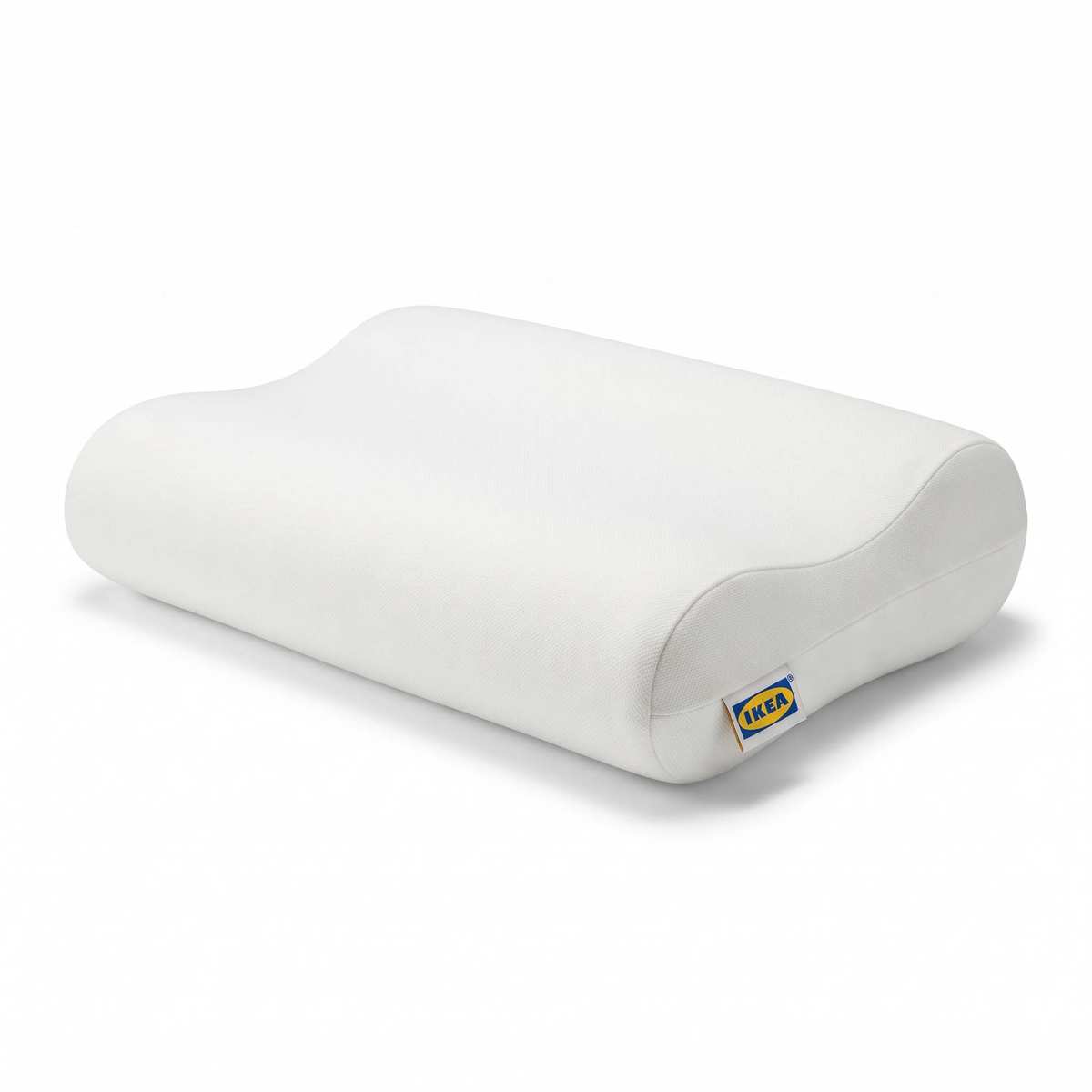
I include this for the extreme budget — under $15 — with eyes open. My analysis: at this price you’re buying a guest-room pillow, not a nightly driver, and I state that plainly. The value is real for the use case; expecting premium durability at $15 is not.
IKEA’s ROSENSKÄRM sits entirely below the $50 tier that most of this guide covers, regularly retailing for under $15. At this extreme budget price point, verifying structural quality matters even more because the manufacturer has virtually no margin to use premium internal materials.
Despite the incredibly low cost, IKEA still offers varied loft profiles to accommodate different shoulder widths. Just keep in mind that at this tier, materials like cheap polyester fiber fill or budget foam will flatten out and degrade significantly faster than the options priced closer to $50, meaning you will likely replace them much sooner.
Pros
- Incredibly accessible price point that accommodates even the strictest budgets.
- Offers different loft options to match basic ergonomic needs despite the low cost.
Cons
- Degrades and flattens out much faster than mid-tier pillows, requiring quicker replacement.
- Lacks the advanced cooling covers and specialized certifications of the $40 competitors.
~$15
Check on IKEADoes “Under $40” Mean the Same Thing as “Under $50”?
Not structurally, but close enough that the same certification checks apply. For a comparison specifically built around the $40 ceiling rather than $50, see 5 best cheap pillows that don’t go flat, under $40, which applies these same fill-quality and certification checks to a slightly tighter budget tier.
The Contrarian Reality: Price Floor, Not Price Ceiling, Predicts Quality
Most “best budget pillow” content implies that spending more within the sub-$50 range reliably buys more quality – a $45 pillow beats a $25 one because it costs more. That’s not consistently true. The variables that actually predict durability – certification, disclosed fill ratio, disclosed loft – don’t scale linearly with price inside this tier. A $22 down-alternative pillow with OEKO-TEX certification and a stated loft can outperform a $45 pillow that discloses neither. Inside the sub-$50 category specifically, what a listing tells you matters more than the number on the price tag.
The Bottom Line
For allergy-conscious shoppers and anyone wanting the most hotel-like plushness for the price, the Beckham Hotel Collection Original’s disclosed 250-thread-count cover and OEKO-TEX certification make it the safer bet. For cooling and predictable long-term durability, the Novaform ComfortGrande Plus’s CertiPUR-US-certified gel foam does the job at a genuinely low price point. And if your budget sits under $15 rather than $50, IKEA’s line is worth checking against the same fill-quality standards before assuming lower price means lower quality across the board.
Frequently Asked Questions
Why do cheap pillows go flat so quickly?
Inexpensive pillows are typically stuffed with low-grade polyester fiberfill. Under the weight of your head (around 10 to 12 pounds), this cheap synthetic material quickly compresses and loses its ability to rebound. That is why a $10 pillow often goes completely flat and requires replacement in under 6 months.
Is a budget memory foam pillow worth buying?
It depends on the foam density. Budget memory foam (under 3 lbs/ft3) degrades very quickly and sleeps significantly hotter because it lacks advanced cooling channels. If you are on a strict budget, you will generally get much better longevity from an affordable shredded foam pillow than a cheap solid block.
Can a cheap pillow cause neck pain?
Yes. When a low-cost pillow loses its loft, your head drops below neutral spinal alignment. For side sleepers, this forces the cervical spine to bend downward for 8 hours a night, which is a primary trigger for muscle tension and cervicogenic headaches.
Budget pillows need more maintenance, not less. Our Pillow Guides walk through fluffing, washing, and the replacement signs that matter most under $80.