If you have diagnosed sleep apnea, snoring that disrupts sleep quality significantly, or suspect obstructive sleep apnea, consult a physician before relying on a pillow change alone. This article covers positional snoring and product guidance, not medical treatment.
Clinical monitoring data show that back sleepers experience at least twice as many airway blockages per night as side sleepers. And the blockages last longer and produce more severe oxygen desaturation. The mechanism is straightforward: in the supine position, gravity pulls the tongue, soft palate, and surrounding pharyngeal tissues downward and posteriorly. A 2021 biomechanical analysis published in PMC confirmed through finite element modeling that gravity’s effect on the soft palate in supine sleep creates a one-way valve effect. The retropalatal area collapses during inhalation, vibrates under airflow, and produces snoring. The same model showed that the tissues return toward a more open configuration in non-supine positions.
This is why every anti-snoring recommendation starts with “sleep on your side.” But committed back sleepers exist, and the clinical literature does offer a secondary option: reduce the gravitational load by elevating the head and maintaining neutral cervical alignment. A 2025 multicenter observational study published in PubMed measured apnea-hypopnea index (AHI) in 60 participants, 30 with obstructive sleep apnea, 30 controls, across supine, 30-degree head-of-bed elevation, and lateral positions. AHI in the OSA group dropped from 25.7 events per hour (supine) to 17.8 events per hour at 30-degree elevation. A mean reduction of 31%. Lateral position produced the greatest improvement, but elevation was a meaningful secondary intervention.
The pillow’s job for a back sleeper with snoring is to do one or both of two things:
Elevate the head and torso to reduce gravitational collapse of pharyngeal tissue, or Hold the head in a neutral cervical position, not flexed forward, not extended, so the airway remains as open as the anatomy allows. Pillows that do neither, regardless of how “orthopedic” the label claims, are just soft objects. The five below do one or both with disclosed specs.
Why the Pillow Type Dictates the Mechanism
Two distinct approaches govern all anti-snoring pillows for back sleepers.
The first is elevation. Inclined positioning reduces the hydrostatic effect of gravity on the pharynx. A wedge pillow elevates the entire upper torso on a gradual slope, shifting the resting position of pharyngeal tissue upward and forward relative to flat supine. This reduces the range over which the tongue and soft palate can fall backward into the airway. The 2025 PubMed study above quantified this at 30 degrees: the improvement was real but partial. Elevation works best for individuals whose snoring is fully or predominantly positional, that is, far worse on the back than on the side.
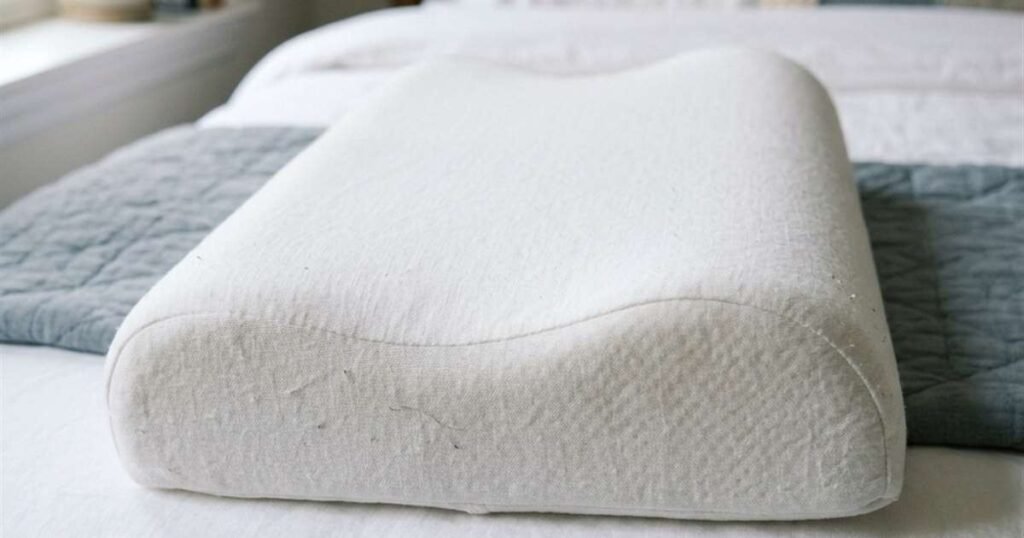
The second is cervical alignment. When the head is in slight cervical flexion (chin tilted toward the chest), the pharyngeal airway narrows. A pillow that is too high, too soft, or that allows the head to fall forward pushes the chin toward the sternum and reduces the anteroposterior dimension of the airway. A contour pillow with a cervical roll supports the natural lordosis of the neck without pushing the head forward, holding the airway in its most patent position for a back sleeper. Memory foam is particularly effective for this because it holds position under sustained load, resisting the gradual forward drift that occurs with softer fills through the night.
Both approaches address positional snoring. Snoring that is significantly worse in one sleep position than another. Neither replaces CPAP therapy for documented obstructive sleep apnea. A 2015 study published in PMC (Scientific Reports) using a head-positioning pillow for mild-to-moderate positional OSAS confirmed that positional therapy reduced subjective snoring severity and objective snoring index over three nights. The effect was clinically meaningful for this population but the study authors note it applies specifically to positional OSAS (AHI supine at least twice the AHI non-supine), not to all snorers equally.

The 5 Best Pillows for Snoring Back Sleepers
| Pillow | Mechanism | Fill | Loft | Certifications | Price (approx.) |
|---|---|---|---|---|---|
| Tempur-Pedic TEMPUR-Neck | Cervical contour, holds neutral alignment | Proprietary TEMPUR foam | Sm 3.5 in / Med 4 in / Lg 4.75 in (at highest point) | None disclosed | $119–$159 |
| Helix Wedge Pillow | Elevation, reduces gravitational pharyngeal collapse | 1.5 in gel memory foam + high-density polyurethane | 10 in (24° angle, manufacturer confirmed) | CertiPUR-US | ~$100 |
| Saatva Latex Pillow (Standard Loft) | Cervical alignment, responsive loft maintenance through the night | Shredded natural latex | 4–5 in | CertiPUR-US | ~$165 |
| Coisum Cervical Contour Pillow | Cervical alignment, head cradle prevents chin-drop | 60D slow-rebound memory foam | Roughly 3.5–4.5 in (cradle zone; manufacturer does not disclose exact height) | Not disclosed | ~$40–$55 |
| Saatva Graphite Memory Foam (Standard Loft) | Cervical alignment, medium loft, heat-managed foam | Graphite-infused shredded memory foam + latex | 4–5 in (Standard Loft) | CertiPUR-US | ~$165 |
ILD is not disclosed by any manufacturer above. Coisum discloses foam density as 60D (approximately 3.74 lbs/ft³ per their Amazon listing), which is notably higher than the typical 3.0-3.5 lbs/ft³ range for standard consumer memory foam, a meaningful durability indicator. The other brands do not disclose density figures.
5 Best Pillows for Snoring Back Sleepers
Disclosure: Brocia analyzes products using manufacturer specs and published research, not our own hands-on tests. If you buy through our links, we may earn a commission at no extra cost to you. It never affects our rankings or verdicts. See our Review Process and Affiliate Policy.
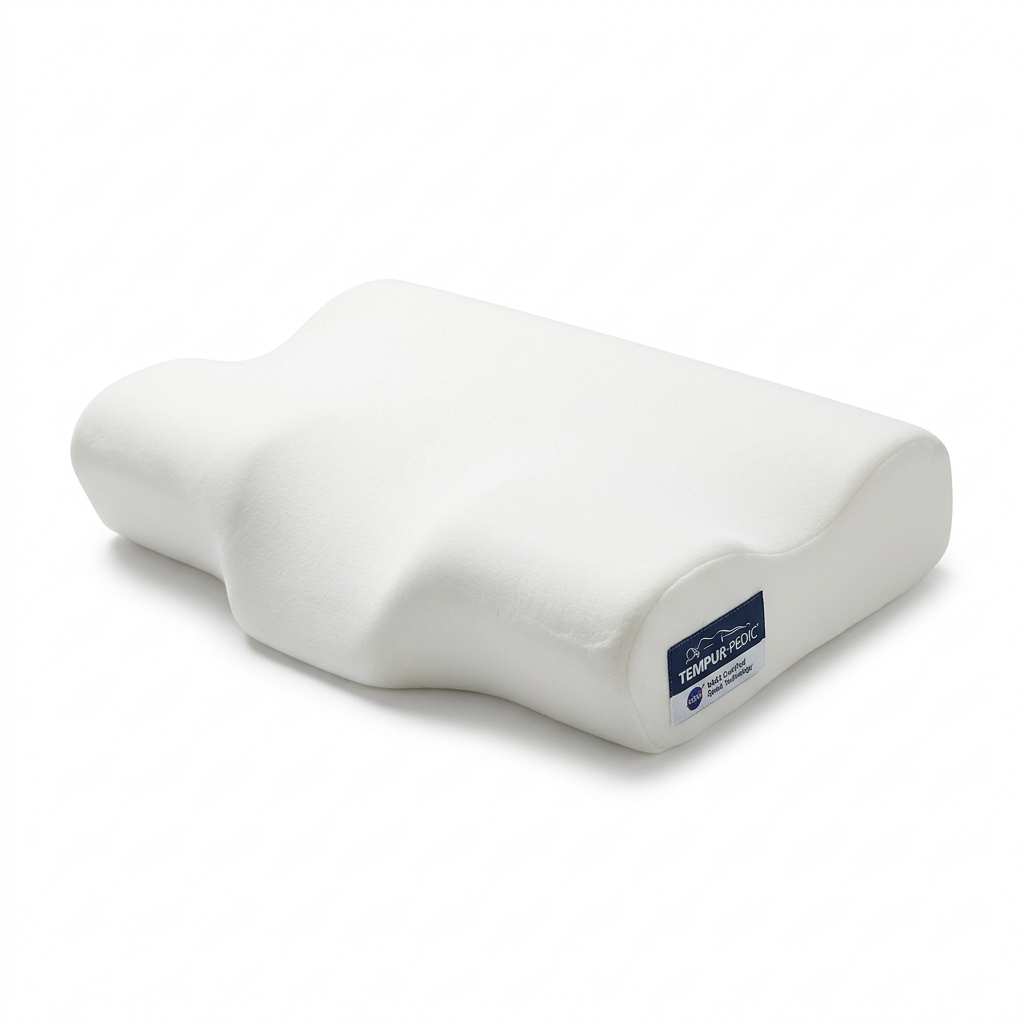
Pros
- Ergonomic contour physically tilts the chin back to open restricted airways.
- Sized by body measurement (Small, Medium, Large) to ensure exact neck alignment.
Cons
- Extremely firm feel requires an adjustment period if you are used to plush down.
- Cannot be used comfortably by strict stomach sleepers.
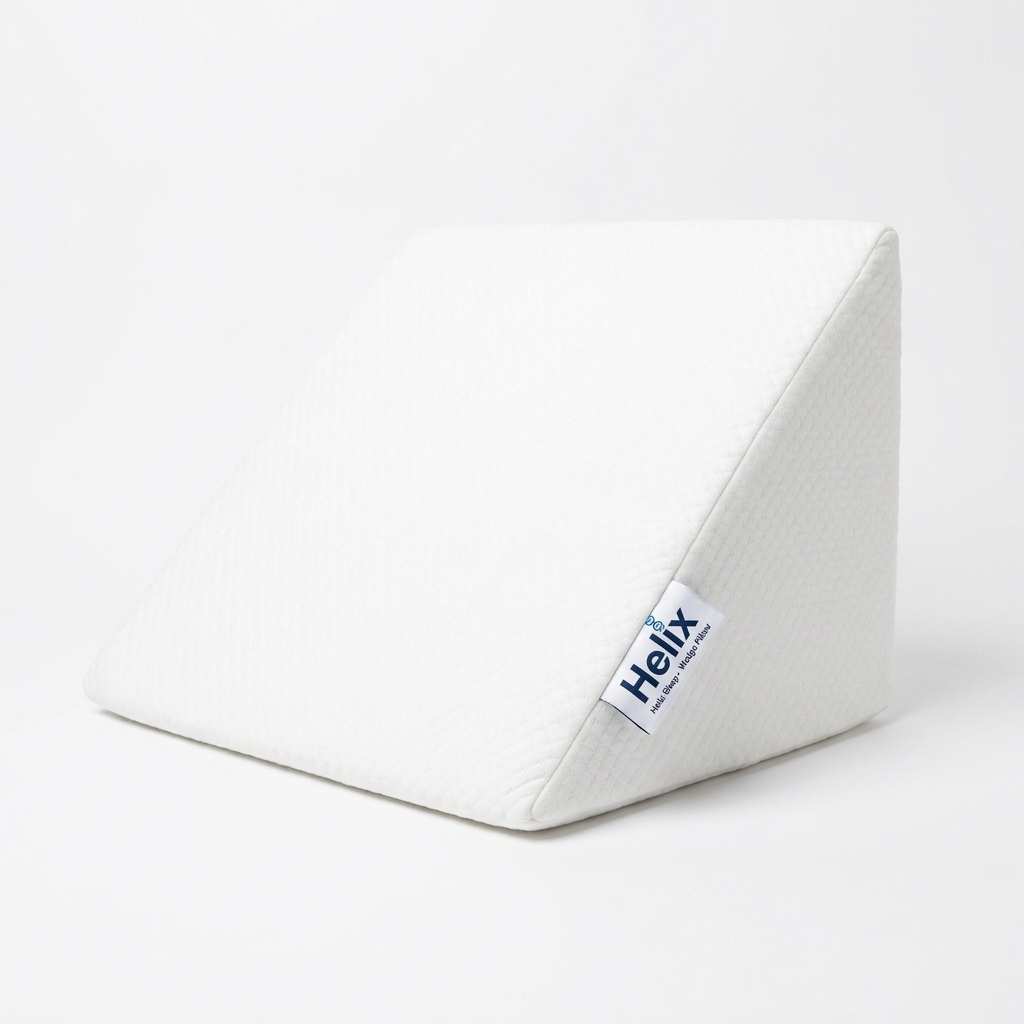
Pros
- Uses gravity to effectively prevent throat tissue collapse and acid reflux simultaneously.
- Gel memory foam comfort layer prevents the wedge from feeling overly rigid.
Cons
- Takes up a massive footprint on the bed.
- Tends to cause sleepers to gradually slide down the incline during the night.
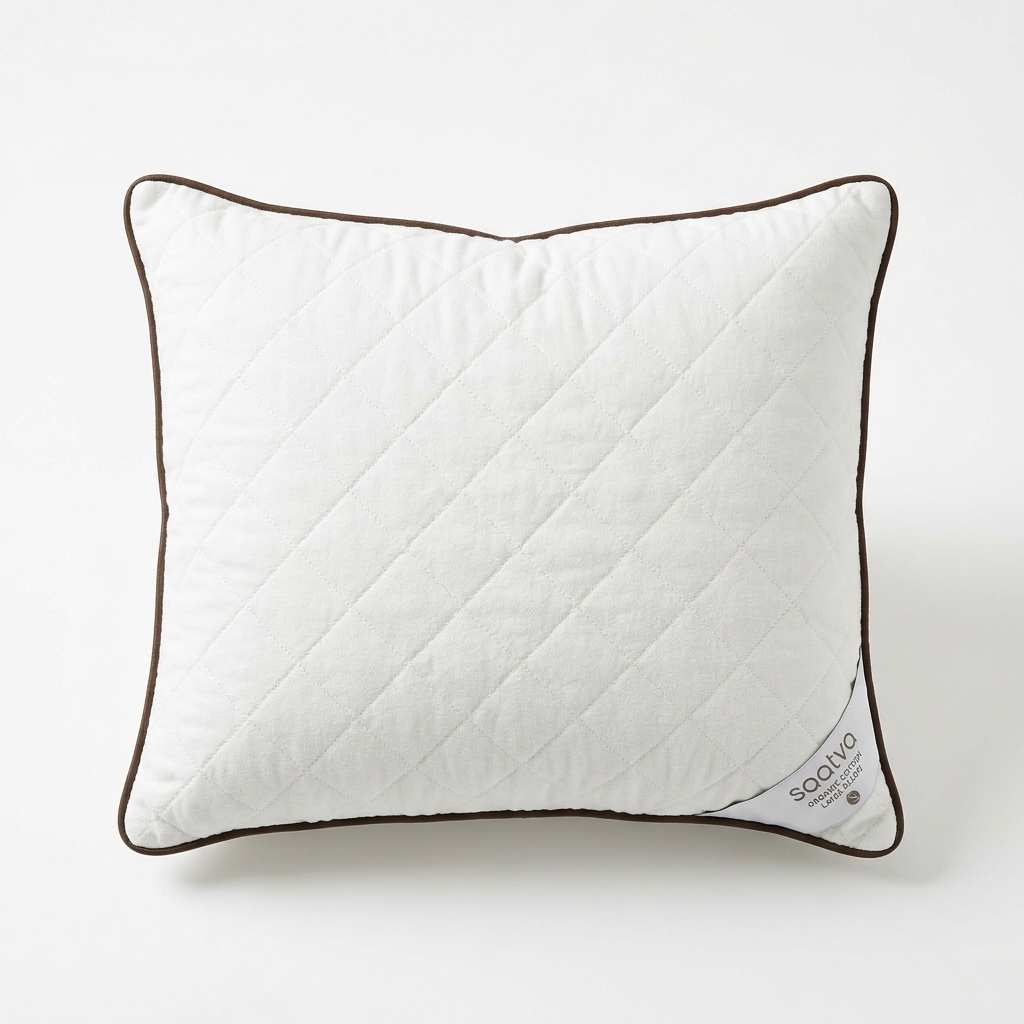
Pros
- Talalay latex core provides responsive support that keeps the head elevated and airway clear.
- Microdenier outer layer masks the rubbery feel of the latex core.
Cons
- Premium organic materials drive up the price significantly.
- Heavier than a standard polyester or down pillow.
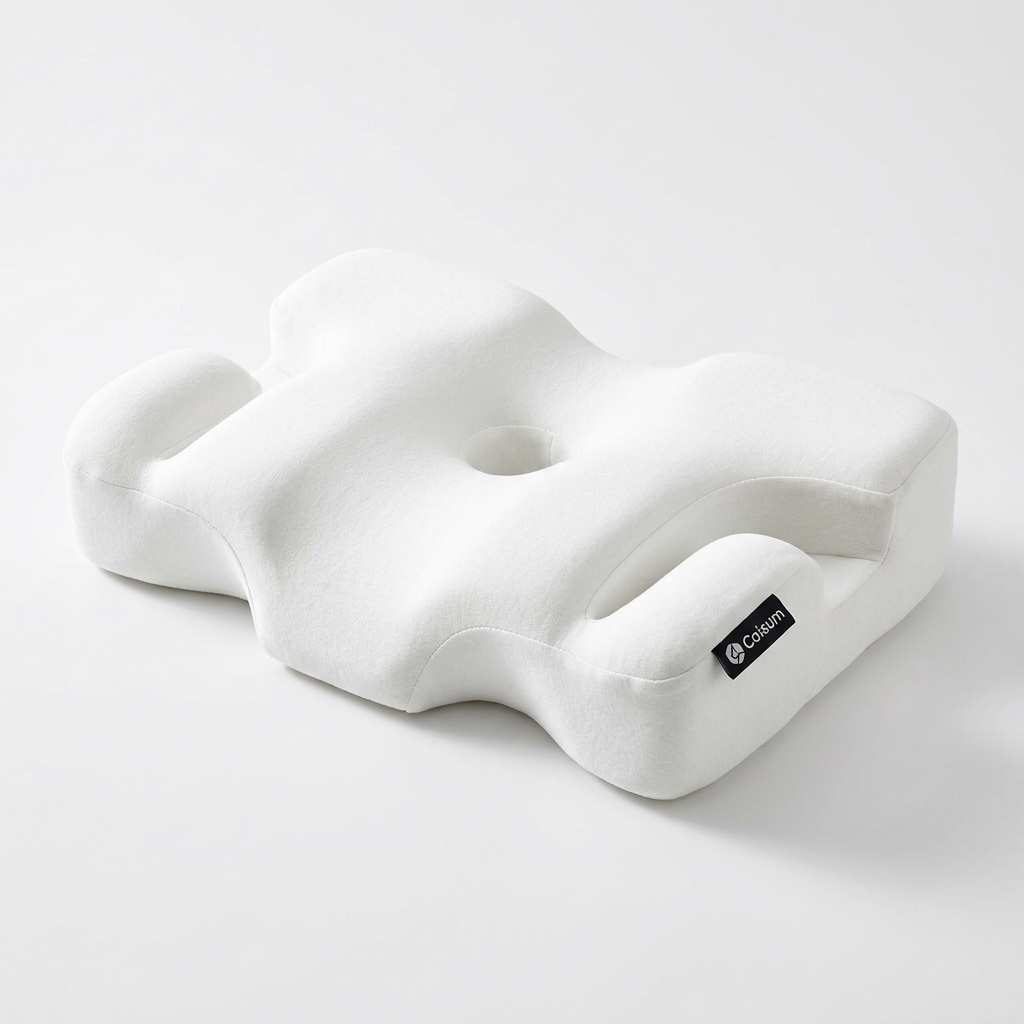
Pros
- Center crater explicitly locks the head into a neutral, airway-opening posture.
- Highly accessible price point for a specialized orthopedic design.
Cons
- The rigid foam and extreme shape make rolling over in your sleep difficult.
- Standard memory foam retains heat and sleeps warmer than latex options.
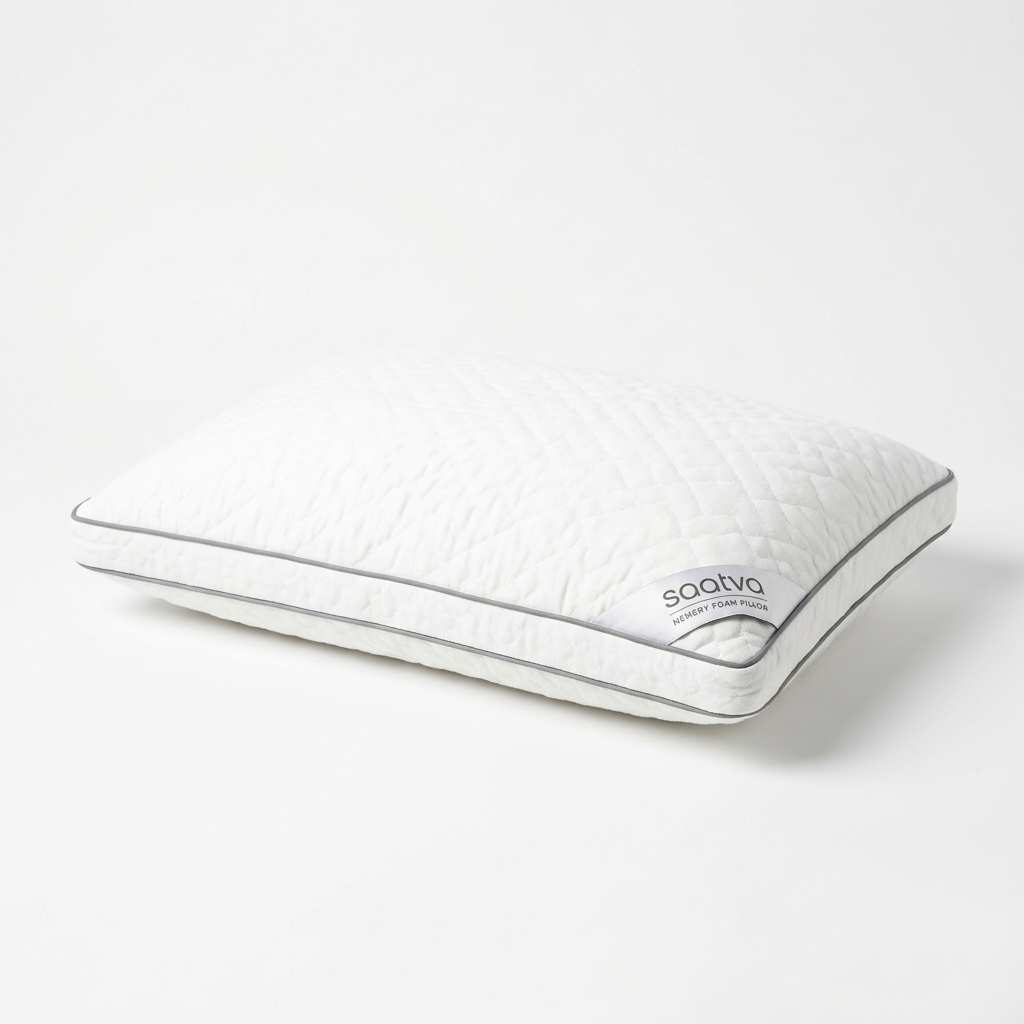
Pros
- Graphite infusion provides measurable cooling compared to traditional solid foam.
- Solid core structure prevents the mid-night flattening that compresses the throat.
Cons
- A very heavy pillow that cannot be scrunched or folded.
- The standard loft may still push the chin slightly forward if you have a very short neck.
The Spec That Most Buyers Ignore: Loft Under Load vs. Stated Loft
Every pillow listed above has a stated height. None of them perform at that stated height under the weight of a head for eight hours. The gap between stated height and effective sustained height through the night is the most important unpublished specification in this category.
Slow-response memory foam softens near body temperature and compresses under sustained load. A 5-inch memory foam pillow in standard density often loses noticeable sustained loft within a night as the foam warms and softens under load. This drop pushes the head toward chin-drop alignment for a back sleeper. This is not snoring mythology; it is a mechanical consequence of viscoelastic foam behavior. The Coisum’s 60D foam resists this better than standard 50D to 55D foam. The Saatva Latex holds its height better than either because shredded latex does not soften at body temperature the way polyurethane-based foams do.
The contour pillow designs (TEMPUR-Neck, Coisum) sidestep part of this problem by using a depression: even when the foam softens slightly, the head remains in the cradle and the relative positioning stays consistent. The flat pillow designs (Saatva Latex, Saatva Graphite) rely on fill resistance to maintain height through the night.
For back sleeper snoring, a pillow that loses 1 to 2 inches of effective loft between midnight and 5 a.m. is not the same pillow you tested on the first night. Material selection, latex over soft memory foam, higher foam density, or contour geometry, is the only structural solution to this problem.
Full Spec Reference
| Pillow | Mechanism | Loft (stated) | Fill | Certifications | Trial / Return |
|---|---|---|---|---|---|
| Tempur-Pedic TEMPUR-Neck | Contour, cervical alignment | Sm 3.5 in / Med 4 in / Lg 4.75 in | Proprietary TEMPUR foam | None disclosed | No trial; 5-yr warranty; no returns |
| Helix Wedge (10 in) | Elevation, 24° incline | 10 in | 1.5 in gel memory foam + polyurethane base | CertiPUR-US | 30 nights |
| Saatva Latex Standard Loft | Neutral alignment, loft maintained | 4–5 in | Shredded natural latex + microdenier fiber | CertiPUR-US | 45 nights |
| Coisum Cervical Contour | Contour, head cradle, chin-drop prevention | ~3.5–4.5 in (estimated in cradle zone) | 60D slow-rebound memory foam (3.74 lb/ft³) | Not disclosed | 30 days (Amazon) |
| Saatva Graphite Standard Loft | Neutral alignment, heat-managed loft | 4–5 in | Graphite-infused shredded memory foam + latex | CertiPUR-US | 45 nights |
Frequently Asked Questions
Do anti-snore pillows actually work?
For positional snoring, where snoring is significantly worse when lying on the back compared to the side, yes. Clinical evidence supports both head-of-bed elevation and cervical contour approaches for reducing airway vibration during supine sleep. A 2015 clinical study in Scientific Reports showed a head-positioning pillow reduced snoring index and subjective snoring severity in mild-to-moderate positional OSAS over three nights. The effect size is meaningful for positional snorers; it is smaller for non-positional snorers whose snoring occurs in all sleep positions equally.
Does elevation stop snoring?
For back sleepers with positional snoring, a gradual head and torso elevation shifts the resting position of pharyngeal tissue upward and forward, reducing the range over which soft tissue can fall into the airway during inhalation. The 2025 PubMed multicenter study showed a 31% reduction in AHI at 30-degree elevation in OSA patients. Elevation addresses the gravitational component of airway collapse; it does not address anatomical obstruction from enlarged tonsils, deviated septum, or other structural factors.
Do back sleepers snore more?
Yes, In the supine position, gravity pulls the tongue base, soft palate, and surrounding pharyngeal tissue downward and posteriorly, narrowing the airway and creating the conditions for vibration during inhalation. Clinical data show back sleepers experience at least twice as many blockages per night as side sleepers, and those blockages are longer and associated with greater oxygen desaturation.
What does an anti-snore contour pillow do?
A contoured cervical pillow keeps the head in a neutral position. Neither flexed forward (chin toward chest) nor extended (chin up and back). Both extreme positions narrow the pharyngeal airway. The contour’s raised cervical roll supports the neck curve and prevents the head from drifting into forward flexion as the neck muscles relax through the night. Cervical contour pillows work best for back sleepers whose snoring is worsened by chin-drop alignment, not for those whose snoring is position-independent.
Can memory foam stop snoring?
Memory foam holds the head in whatever position it initially conforms to, which is its mechanical advantage for back sleeper snoring. A contour memory foam pillow maintains head position as neck muscles relax during deeper sleep stages, preventing the gradual forward drift that softer fills allow. The limitation: slow-response memory foam softens with body heat, which can reduce effective loft over the course of the night. Higher-density memory foam (the Coisum’s 60D specification) and graphite-infused foam (the Saatva Graphite) address this limitation partially, though neither eliminates it entirely. For maximum loft consistency, shredded natural latex outperforms memory foam.
Airway claims need measurement, not marketing. Our Sleep Measurements & Tracking guides cover what sleep data actually shows.