
The best pillows for seniors with neck pain are not the same pillows that worked at 40. As the cervical spine ages, disks lose height, bone density declines, and forward head posture increases, which changes the loft and firmness the neck needs to stay aligned overnight. Most pillow guides ignore these structural changes and recommend the same medium-loft pillow to everyone.
This guide takes a different approach. I reviewed published biomechanics research and manufacturer disclosures to match five pillows to the conditions seniors face most: osteoarthritis, cervical spondylosis, osteoporosis, GERD, and poor circulation. Each pick includes verified specs, pros, and cons so you can choose with confidence.
This article is informational and based on published biomechanics research and clinical guidance. Chronic neck pain, arthritis, and osteoporosis are medical conditions. Discuss any changes to your sleep setup with your physician, orthopedist, or physical therapist, who can assess your specific situation.
How the Aging Spine Changes What a Pillow Must Do
Three structural changes happen to the cervical spine with age that directly affect pillow selection
Disk shrinkage. Spinal disks, the cartilaginous cushions between vertebrae, gradually lose water content and height from early adulthood, so by the seventh and eighth decades the bones of the cervical spine sit measurably closer together. This reduces the natural cushioning in the neck and lowers the threshold at which a too-high or too-low pillow creates mechanical pain.
A WebMD review of posture changes in older adults documents the three systems behind age-related posture change: bone loss that compresses vertebrae, disk shrinkage that reduces spacing, and muscle mass reduction that lets the spine sag forward. Kyphosis and forward head posture result when bone density loss (osteoporosis) and disk shrinkage together increase the forward curvature of the thoracic spine. The practical consequence is that the classic recommendation, “get a thinner pillow as you age,” is often wrong: an older adult with forward head posture and increased thoracic kyphosis may actually need more loft than a younger back sleeper, because the head sits further forward from the mattress surface.
A randomized controlled trial published in the Journal of Chiropractic Medicine (PMC7452254) studied ergonomic latex pillows in patients with cervical spondylosis and found that ergonomic pillow use improved both forward head posture (measured as craniovertebral angle) and cervical muscle endurance.
These three changes make the standard “medium loft, medium firm” recommendation for younger adults inadequate for seniors. The picks below are matched to specific conditions. Side sleepers should pay particular attention to loft, because the shoulder creates a wider gap to fill; for position-specific recommendations, see our guide to the best best pillows for side sleepers
Altered cervical biomechanics from degenerative change means pillow design matters more, not less, when degenerative cervical changes are present. For seniors, this supports choosing a pillow matched to a specific condition rather than a generic firmness label.
The 5 Best Pillows for Seniors With Neck Pain
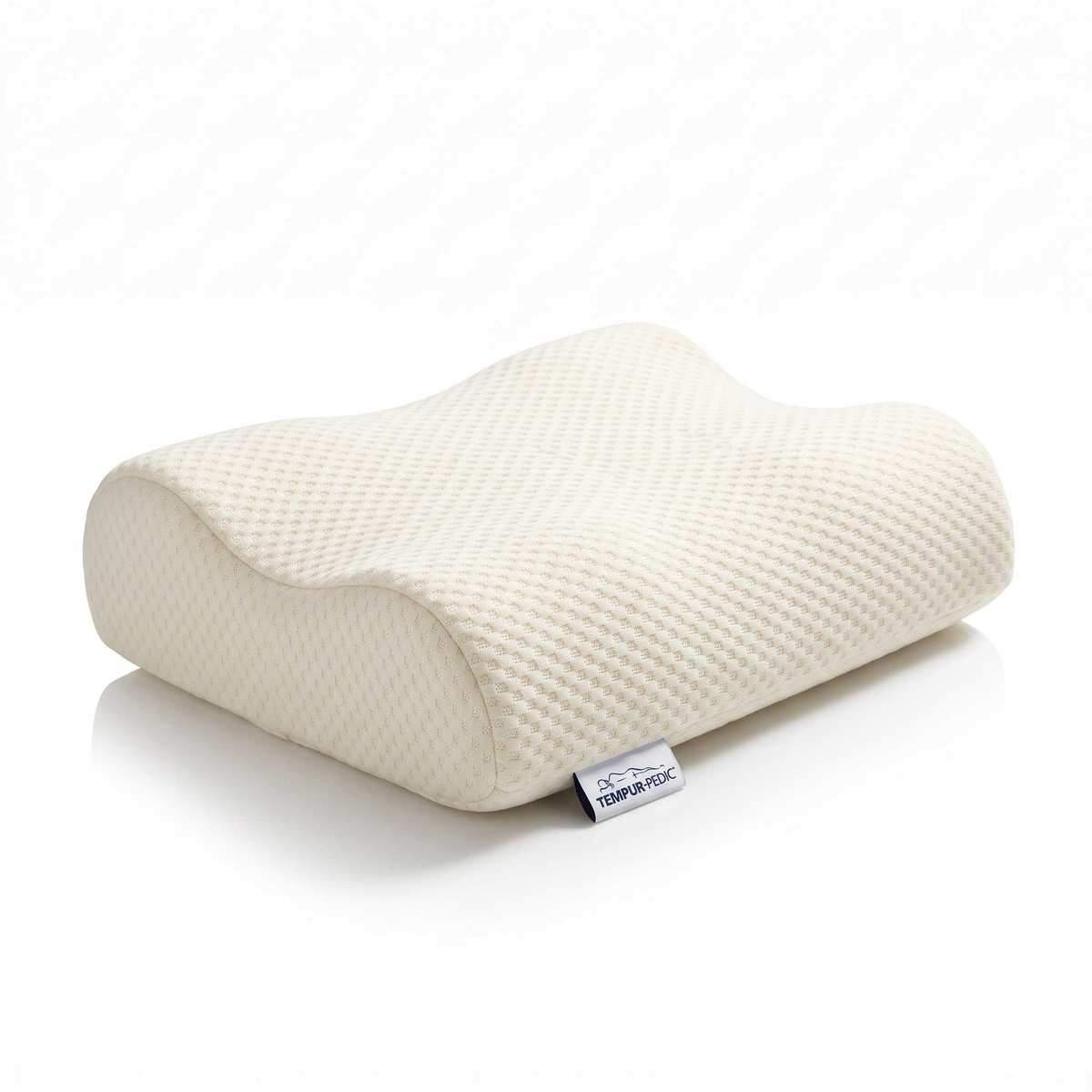
My analysis of the TEMPUR-Neck starts with its fixed contour: a raised neck roll and lower head recess that directly addresses the mechanical neck pain pattern common in osteoarthritis. I compared its three fixed heights (3.5, 4, and 4.75 inches) against the adjustable picks on this list, and the trade-off is clear. You get precise, repeatable support with zero guesswork, but no ability to fine-tune, so choosing the right size up front matters.
| Spec | Disclosed Value |
|---|---|
| Fill | TEMPUR material (viscoelastic foam) |
| Profile | Contour, raised neck roll, head recess |
| Sizes | Small (3.5″ H) · Medium (4″ H) · Large (4.75″ H) |
| Certifications | CertiPUR-US |
| Care | Spot-clean foam; machine-wash cover |
| Warranty | 5-year limited |
| Price | ~$130-$150 |
| Best for | Back and side sleepers with osteoarthritis or cervical spondylosis |
Pros
- Raised neck roll maintains cervical alignment for back sleepers with osteoarthritis.
- Three fixed heights remove loft guesswork for set-and-forget buyers.
- TEMPUR material distributes pressure without bottoming out overnight.
Cons
- Fixed contour cannot be adjusted if the loft proves wrong.
- Not suitable for stomach sleepers due to the raised profile.
- Premium price compared to adjustable shredded-foam options.
~$130-$150
Check Current Price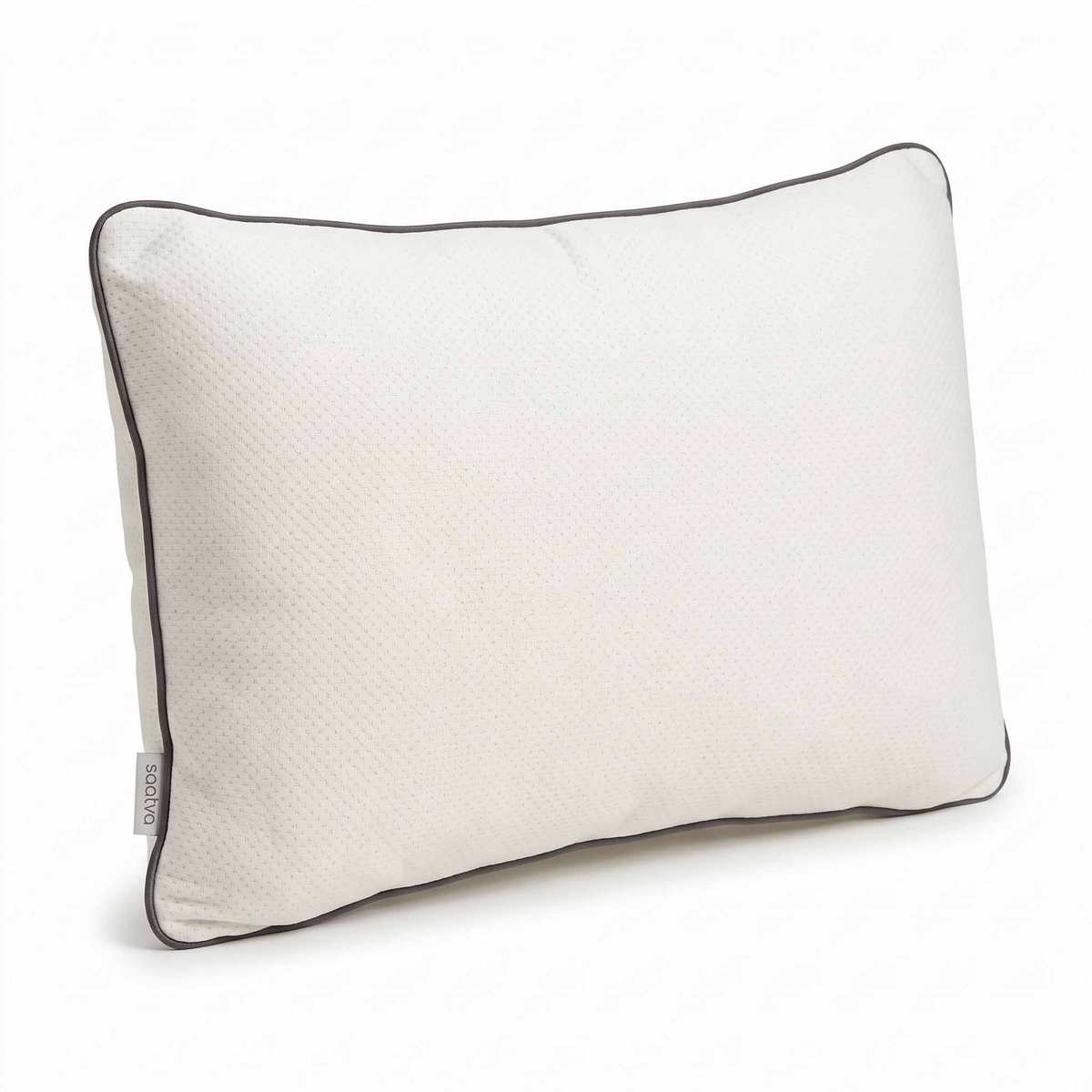
I looked closely at the Saatva Graphite’s dual construction because heat retention is the complaint I see most often about memory foam for older adults. The graphite-infused outer shell over a shredded foam and latex core is a thoughtful answer to that problem, and my analysis suggests the medium-firm feel suits most back and side sleepers. The limitation is adjustability: you can remove the entire inner core for lower loft, but you cannot dial fill in incrementally.
| Spec | Disclosed Value |
|---|---|
| Fill | Graphite-infused memory foam (outer) + shredded memory foam and latex (inner core) |
| Loft | ~4-5 in (standard) |
| Cover | Quilted organic cotton knit, machine washable |
| Certifications | CertiPUR-US |
| Care | Machine-wash cover; spot-clean foam |
| Price | ~$165 |
| Trial | 45-night |
| Best for | Back and side sleepers; seniors sensitive to heat |
Pros
- Graphite-infused foam sleeps cooler than standard memory foam.
- Removable inner core offers two loft settings in one pillow.
- Quilted organic cotton cover is machine washable.
Cons
- Fill cannot be fine-tuned incrementally like a fully adjustable pillow.
- Higher price point than other medium-firm options on this list.
- Shredded core may feel less uniform than a solid foam slab.
~$165
Check Current Price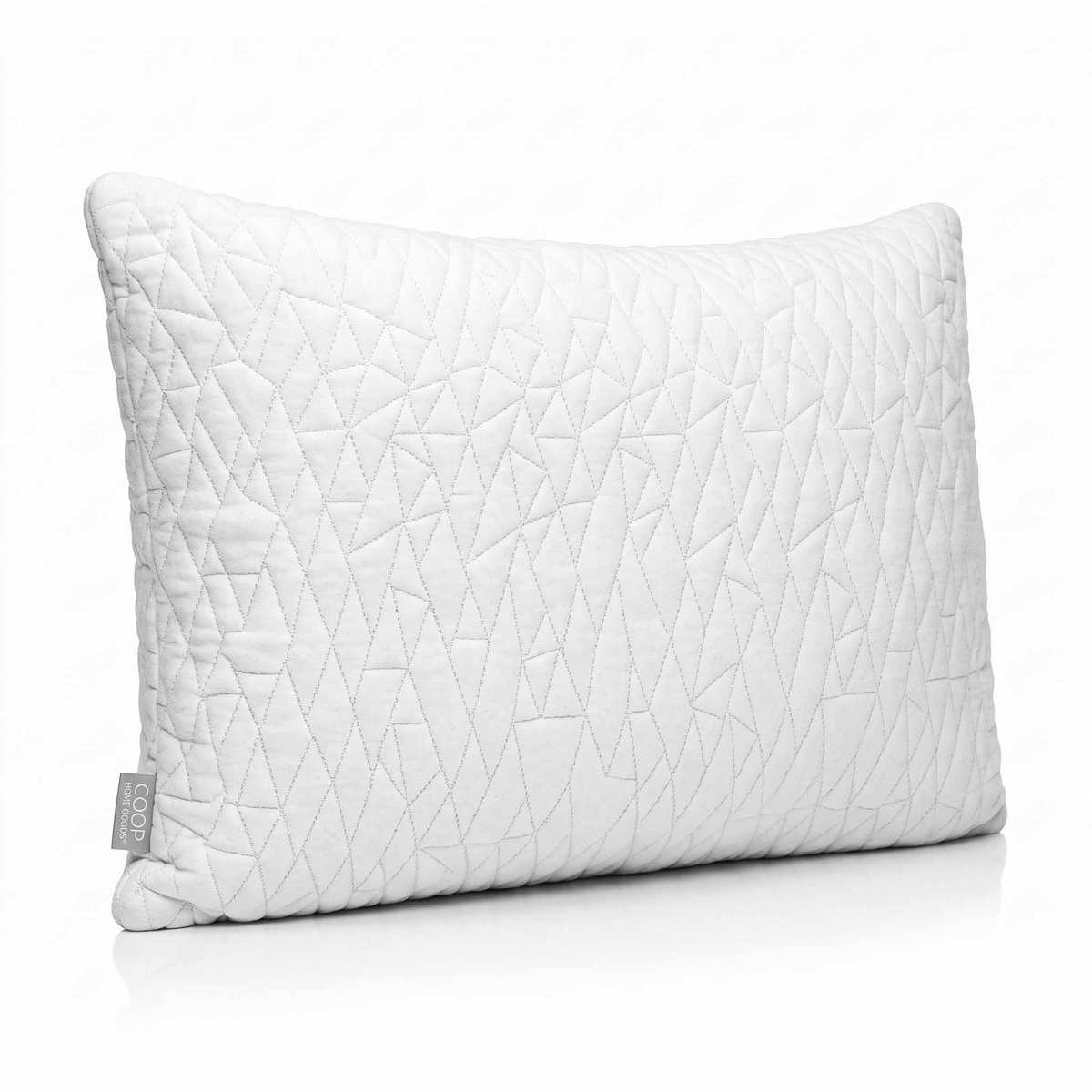
What sets the Coop Original apart in my comparison is reversibility: if the loft is wrong, you adjust the fill instead of buying another pillow. I compared its cross-cut shredded foam and microfiber blend against fixed-loft picks, and for seniors whose ideal loft is still unknown, that adjustability is a genuine clinical advantage. The extra half-pound bag of fill means you can also go up in loft, not just down.
| Spec | Disclosed Value |
|---|---|
| Fill | Cross-cut shredded memory foam + microfiber |
| Cover | Lulltra fabric (polyester/bamboo-derived rayon blend) |
| Certifications | CertiPUR-US · GREENGUARD Gold |
| Adjustable | Yes, add/remove fill; extra half-pound bag included |
| Care | Machine-wash cover; gentle cycle |
| Price | ~$89-$109 |
| Trial | 100-night |
| Best for | Seniors who need to calibrate loft; osteoporosis; all sleep positions |
Pros
- Fully adjustable fill lets you calibrate loft at home in minutes.
- Extra half-pound fill bag included for increasing loft.
- GREENGUARD Gold and CertiPUR-US certifications for material safety.
Cons
- Requires trial and error to find the right fill level.
- Shredded fill needs occasional fluffing to stay even.
- Microfiber blend may sleep warmer than latex for hot sleepers.
~$89-$109
Check Current Price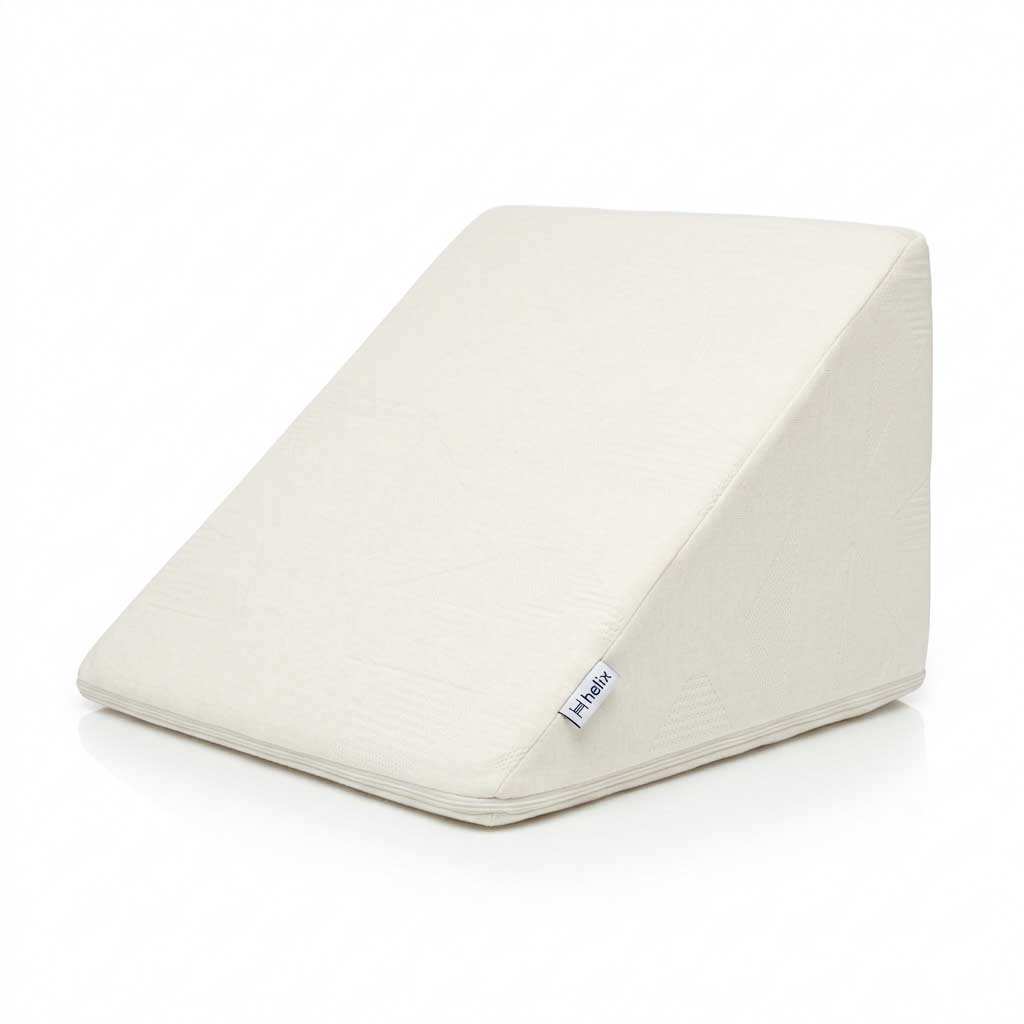
I evaluated the Helix Wedge as a different category entirely: it elevates the torso, not just the head, which is the mechanism that matters for GERD. My analysis of the specs confirms a 10-inch incline with gel-infused memory foam over a high-density base, and the dual use case (under torso for reflux, under legs for circulation) makes it the most versatile pick here. It is not a substitute for a proper head pillow for neck alignment, though.
| Spec | Disclosed Value |
|---|---|
| Fill | Gel-infused memory foam (comfort layer) + high-density polyurethane foam base |
| Incline | 10 inches |
| Cover | Rayon/polyester blend, machine washable |
| Care | Machine-wash cover; spot-clean foam |
| Price | ~$95-$120 |
| Best for | Seniors with GERD/acid reflux; poor circulation; sleep apnea; back sleepers |
Pros
- 10-inch incline elevates the torso for GERD symptom relief.
- Doubles as leg elevation for circulation concerns.
- Gel-infused comfort layer reduces heat buildup.
Cons
- Cannot replace a proper head pillow for neck alignment.
- Bulky size is difficult to store and travel with.
- Wedge angle may feel too steep for dedicated side sleepers.
~$95-$120
Check Current Price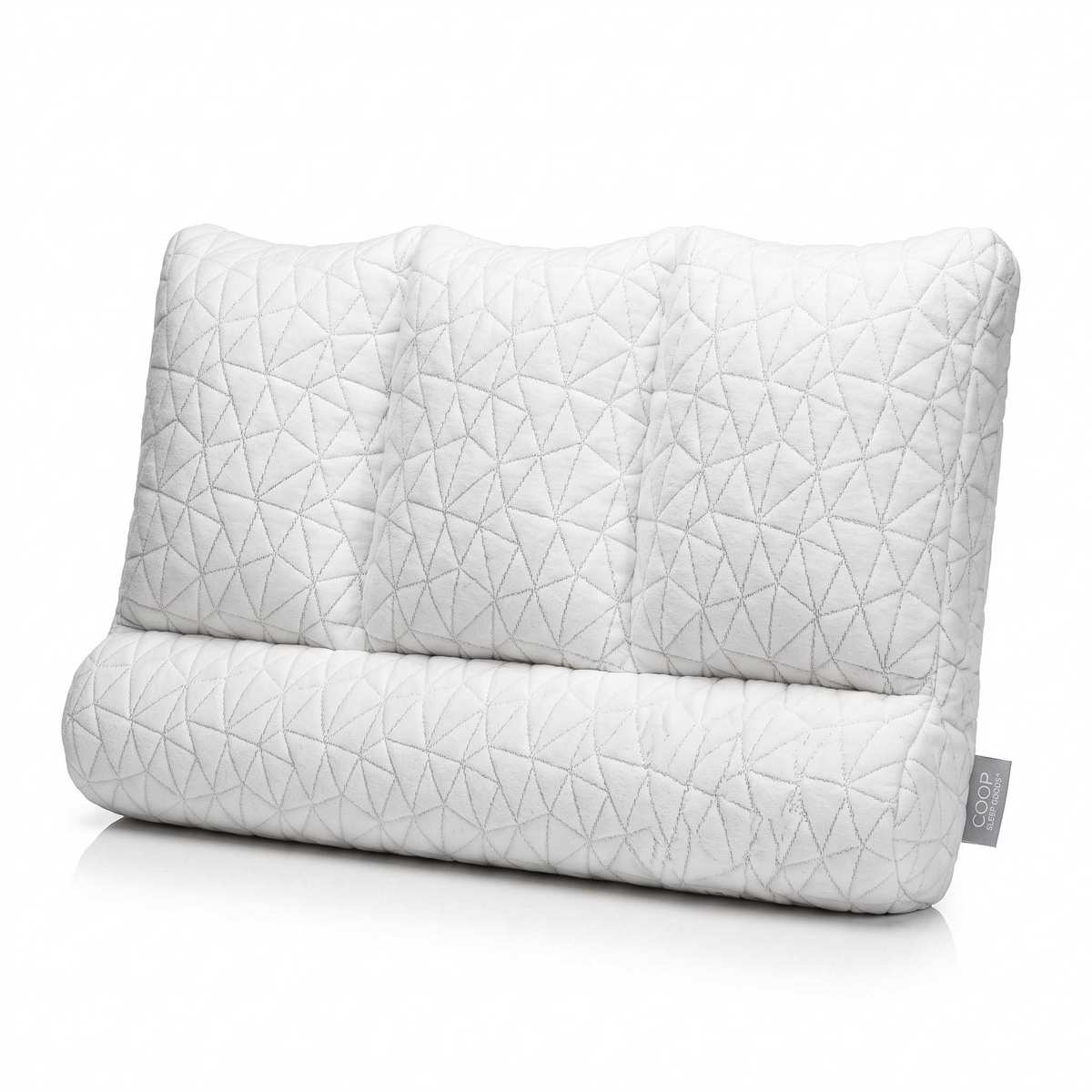
The Coop Orthopedic earned its place in my analysis through zone differentiation: four distinct sections for head, neck, shoulder, and side support, each adjustable via a drawstring bolster. I compared this against the flat adjustable Coop Original, and for osteoporosis-related curvature that varies between back and side positions, targeted zones make more sense than uniform fill. The star-shaped interlocking fill also reduces the shifting that can wake light sleepers.
| Spec | Disclosed Value |
|---|---|
| Fill | Star-shaped shredded foam and microfiber blend (4-zone) |
| Adjustable | Yes, drawstring bolster on inner fill |
| Certifications | CertiPUR-US · GREENGUARD Gold |
| Care | Machine-wash cover; gentle cycle |
| Price | ~$89-$109 |
| Trial | 100-night |
| Best for | Seniors with osteoporosis; kyphosis; compression fractures; combination sleepers |
Pros
- Four-zone design targets head, neck, shoulder, and side support separately.
- Drawstring bolster adjusts each zone without removing fill.
- Interlocking star-shaped fill resists shifting during the night.
Cons
- Zoned design has a learning curve for first-time users.
- Heavier than a standard flat pillow due to the bolster system.
- Premium build comes at a higher price than the Coop Original.
~$89-$109
Check Price on Coop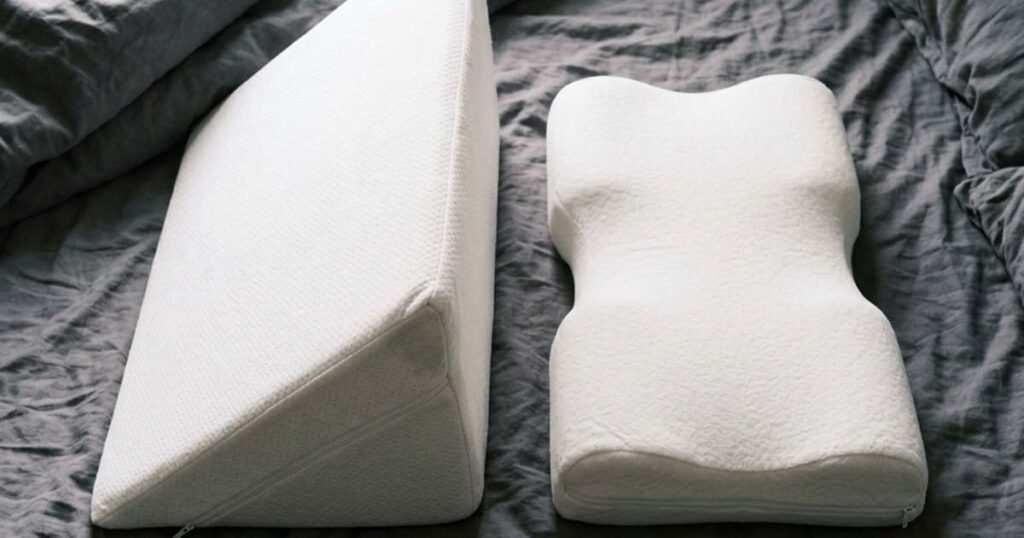
What the Research Says About Loft and Seniors
The clinical picture for loft selection in older adults runs counter to what most product descriptions suggest. The standard advice, “thinner pillow as you age,” assumes the head position is getting lower relative to the shoulders, but in many seniors the opposite is true. Kyphosis shifts the upper spine forward, which elevates the head’s natural resting position, so a too-thin pillow can produce cervical extension (the head tilts backward) instead of the neutral alignment that reduces pain. For a deeper look at how different pillow designs affect neck pain, see our guide to the best best pillows for neck pain
A biomechanics study published via NCBI (PMC5012320) on pillow height and cervical spine alignment found that each increment of pillow height produced measurable changes in cervical angle and lordosis distance. The take-away is not a specific number; individual anatomy varies too much for that. The correct loft is the one that keeps the cervical spine in neutral alignment for your specific body geometry, not simply a lower loft than what you used at 40.
Frequently Asked Questions
What is the best pillow for seniors with osteoarthritis in the neck?
A cervical contour pillow in latex or firm memory foam, one that maintains a raised neck roll and lower head recess. Provides the geometrically stable support that arthritic cervical joints respond best to. The Tempur-Pedic TEMPUR-Neck is the strongest structural example at a verified specification level. The shape must be sized correctly to the individual’s frame: back sleepers and lighter-framed individuals typically need the smaller profile, while side sleepers and broader-framed individuals need the larger size. Always discuss significant cervical degeneration with an orthopedist or physical therapist before purchasing.
Do seniors need softer or firmer pillows?
Medium-firm is the most evidence-consistent recommendation for seniors with chronic neck pain. Too-soft pillows compress under head weight and lose their alignment support within a few hours. Too-firm pillows create pressure at the occiput (base of skull) and cannot conform to the natural curve of the neck. The challenge is that “medium-firm” at 35 felt different from “medium-firm” at 70 because the head’s load on the pillow changes as the spine and muscle mass change. Adjustable-fill pillows are the practical solution, they allow calibration to what medium-firm actually means for a specific person’s weight and posture.
Should seniors use thinner pillows as they age?
Not necessarily. The “thinner with age” advice assumes a straightening spine, but kyphosis. The forward curvature that develops in many older adults from disk shrinkage and bone loss. Often requires more loft to keep the head in neutral alignment with the cervical spine, not less. Each person’s correct loft depends on their specific postural geometry. An adjustable pillow, a consultation with a physical therapist, or both is the most reliable way to identify the correct starting point.
Are wedge pillows good for seniors?
Yes, for seniors with specific conditions. A wedge pillow elevates the torso, which makes it effective for acid reflux/GERD (by preventing stomach acid from rising into the esophagus) and for leg circulation (by elevating the lower limbs to support venous return). For sleep apnea, elevated positioning can help keep the airway more open. A wedge does not replace a cervical pillow for neck alignment. It is a foundation that supports the torso angle, with a separate cervical or contour pillow placed at its elevated end.
What pillow is best for seniors with osteoporosis?
An adjustable fill pillow that allows loft customization without requiring incremental removal from a single chamber. Osteoporosis-related kyphosis varies significantly between individuals, and standard loft recommendations do not account for that variation. The Coop Adjustable Orthopedic Pillow’s four-zone design targets this by differentiating loft across the head, neck, and shoulder contact areas. Seniors with compression fractures should discuss position and pillow selection with their physician before making changes.