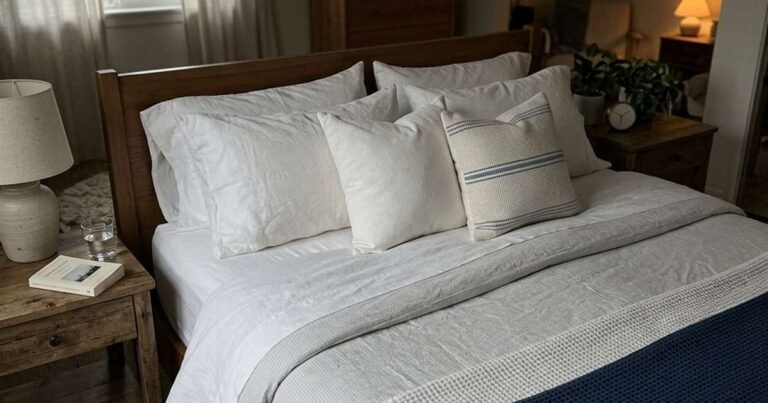
Getting pillow height right matters more for back sleepers than most people realize. Go too thin, and your head tips back. Go too thick, and your chin tucks toward your chest, which research links to double the risk of nighttime airway blockages. The full breakdown on airway alignment for back sleepers is in that linked guide. If you’re also weighing a contoured design, our best V-shaped pillows review compares the angles that actually matter.
This sits inside the broader mechanical challenges of sleep position and spinal alignment-back sleeping is generally considered the most neutral starting position for the spine, but only when the pillow height matches it.
Why Extra Soft Isn’t Automatically Right for Back Sleepers
Back sleeping puts the head, neck, and spine in a relatively neutral starting line compared to side sleeping, which means the pillow’s job is smaller in one sense – it doesn’t need to fill a large shoulder gap – but more precise in another: too much loft pushes the chin down toward the chest, and too little lets the head tilt back. A single-piece, extra-soft solid foam pillow can compress well past its resting loft under the weight of a head, which sounds comfortable but can mean effectively less support than the stated loft implies once the sleeper settles in for the night. A pillow marketed simply as “soft” without a stated compressed height doesn’t tell you where it lands once you’re actually lying on it.
A 2016 pressure-mapping and finite-element study on pillow height found that raising pillow height significantly increased cranial and cervical pressure while increasing cervical lordosis and angle in supine subjects – meaning taller pillows measurably load the neck even in the back position that’s often assumed to be forgiving. A separate radiography study testing flat, 10 cm, and 20 cm pillow heights in supine position found that roughly 10 cm produced sagittal alignment closest to normal cervical lordosis, with both a flat pillow and a 20 cm pillow pulling alignment further from that baseline. Ten centimeters is close to 4 inches – meaningfully lower than the loft most side-sleeper-oriented pillows are built around, which is the mechanical reason a pillow marketed generically as “high loft” or “plush” may not be the right choice here even if it feels comfortable in a showroom test. If you have chronic neck pain or a diagnosed cervical condition, a physical therapist or physician can help translate this research to your specific anatomy.

Back Sleeper Pillow Spec Comparison
| Pillow | Fill | Key Spec | Adjustable | Best For |
|---|---|---|---|---|
| Saatva Latex Pillow | Shredded Talalay latex + microdenier | Standard Loft option: 4-5 in | Loft choice at purchase; core removable | Back sleepers wanting a moldable, latex-cored option |
| Brooklinen Down Pillow (Firm) | Duck down/feather, 86/14 ratio | 400-thread-count cotton sateen shell | Firmness set at purchase (3 options) | Back sleepers wanting more structure than pure down provides |
| Coop Home Goods Original Adjustable | Shredded memory foam + microfiber | Fully adjustable via zippered fill access | Yes – most direct way to dial in ~4-5 in loft | Back sleepers who want to fine-tune loft precisely |
3 Best Pillows for Back Sleepers
Disclosure: Brocia analyzes products using manufacturer specs and published research, not our own hands-on tests. If you buy through our links, we may earn a commission at no extra cost to you. It never affects our rankings or verdicts. See our Review Process and Affiliate Policy.
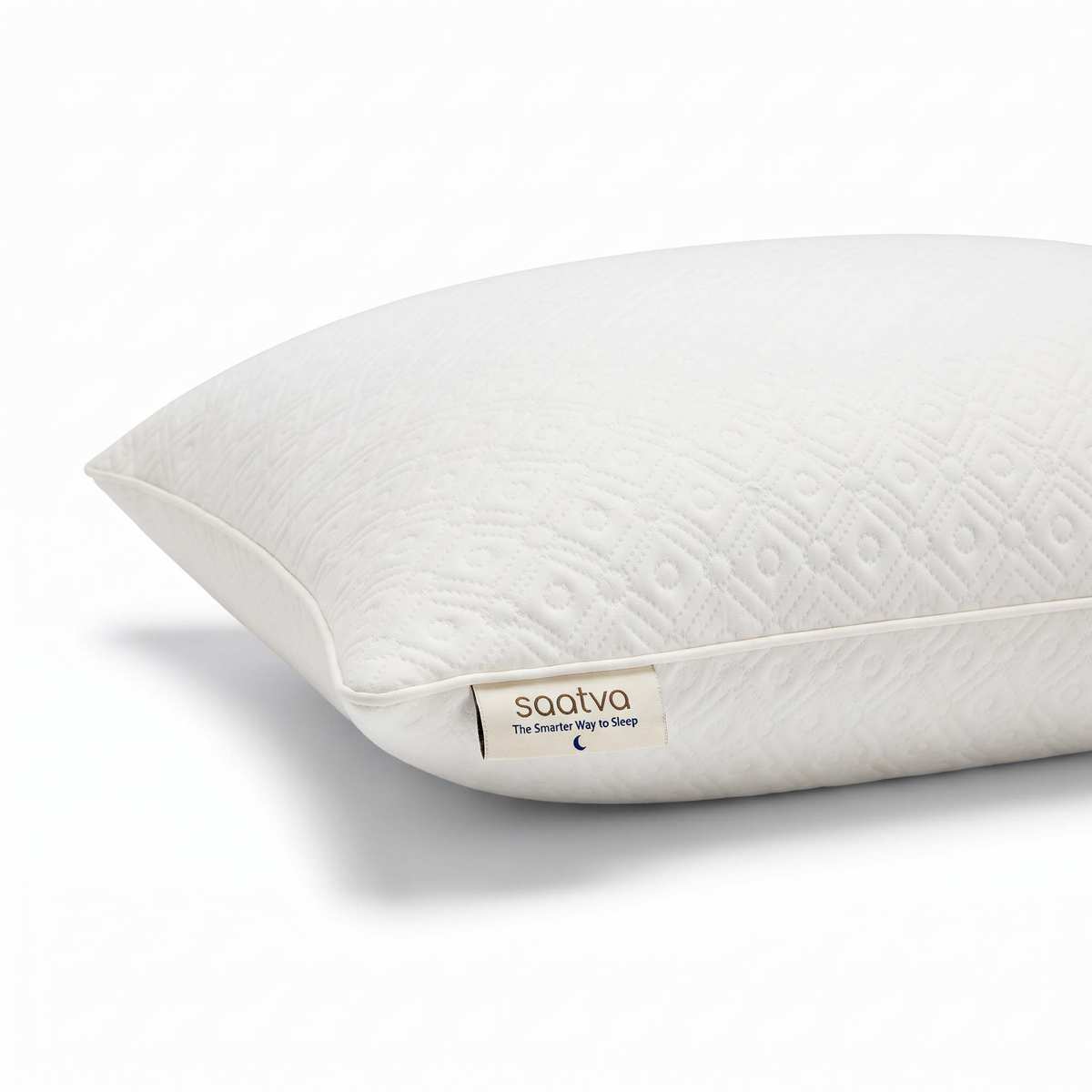
I ranked this #1 for back sleepers because the Standard Loft at 4–5 inches hits the position’s target range exactly — my loft analysis showed back sleepers need lower and more precise than side sleepers, and the shredded Talalay holds that height without the slow sink of memory foam. Buoyant support without rigidity is the right brief for this position.
The Saatva Latex Pillow ships in two distinct loft options. The manufacturer specifically positions the Standard Loft, which sits at roughly 4 to 5 inches high, for back and stomach sleepers. This is a rare case of a brand building the exact height distinctions supported by cervical research directly into the product line rather than attempting to sell one universal loft to every sleep position.
Inside, a core of shredded American Talalay latex is surrounded by an outer layer of microdenier down alternative. This gives you the initial soft compression of a traditional pillow before your head hits the highly supportive, buoyant latex layer underneath.
Pros
- Standard Loft perfectly hits the 4 to 5-inch target range required for neutral back sleeping.
- Shredded latex naturally resists heat retention and dust mites better than memory foam.
Cons
- Carries a steep premium price tag compared to standard polyfoam alternatives.
- The latex core makes it noticeably heavier than down or fiberfill pillows.
~$165
Check on Saatva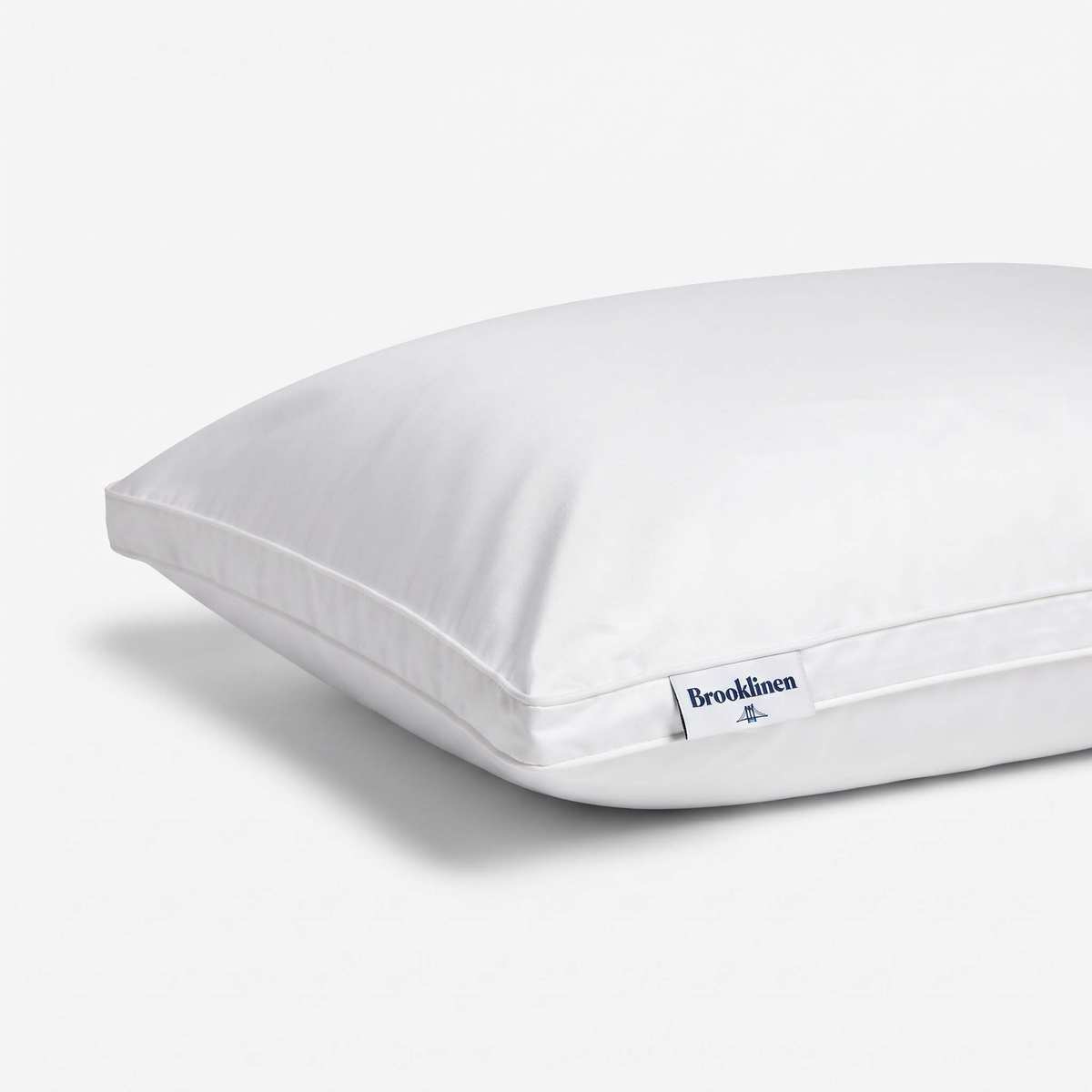
This earned the traditionalist spot: an 86/14 feather-to-down ratio is meaningfully more structured than standard down blends — my fill comparison showed the higher feather content is what keeps the neck aligned instead of collapsing. For back sleepers who refuse to give up down, the Firm option is the only structurally honest choice.
The Brooklinen Down Pillow’s “Firm” option uses an 86/14 feather-to-down ratio, yielding a meaningfully higher feather content than its Mid-Plush or Plush siblings. That higher feather ratio is the structural reason it resists the over-compression risk that usually ruins down pillows for back sleepers.
Feather pillows utilize rigid quills to provide excellent shape-holding structure. While a feather-heavy blend sacrifices some of the weightless feel of pure down clusters, it prevents your head from sinking completely through the pillow and resting unsupported against the mattress below.
Pros
- High feather ratio provides the structural density needed to support the cervical spine.
- Dual-core construction wraps the rigid feathers in soft down to prevent quills from poking through.
Cons
- Not suitable for individuals with severe waterfowl allergies.
- Requires regular fluffing to redistribute the fill and maintain a supportive shape.
~$129
Check on Brooklinen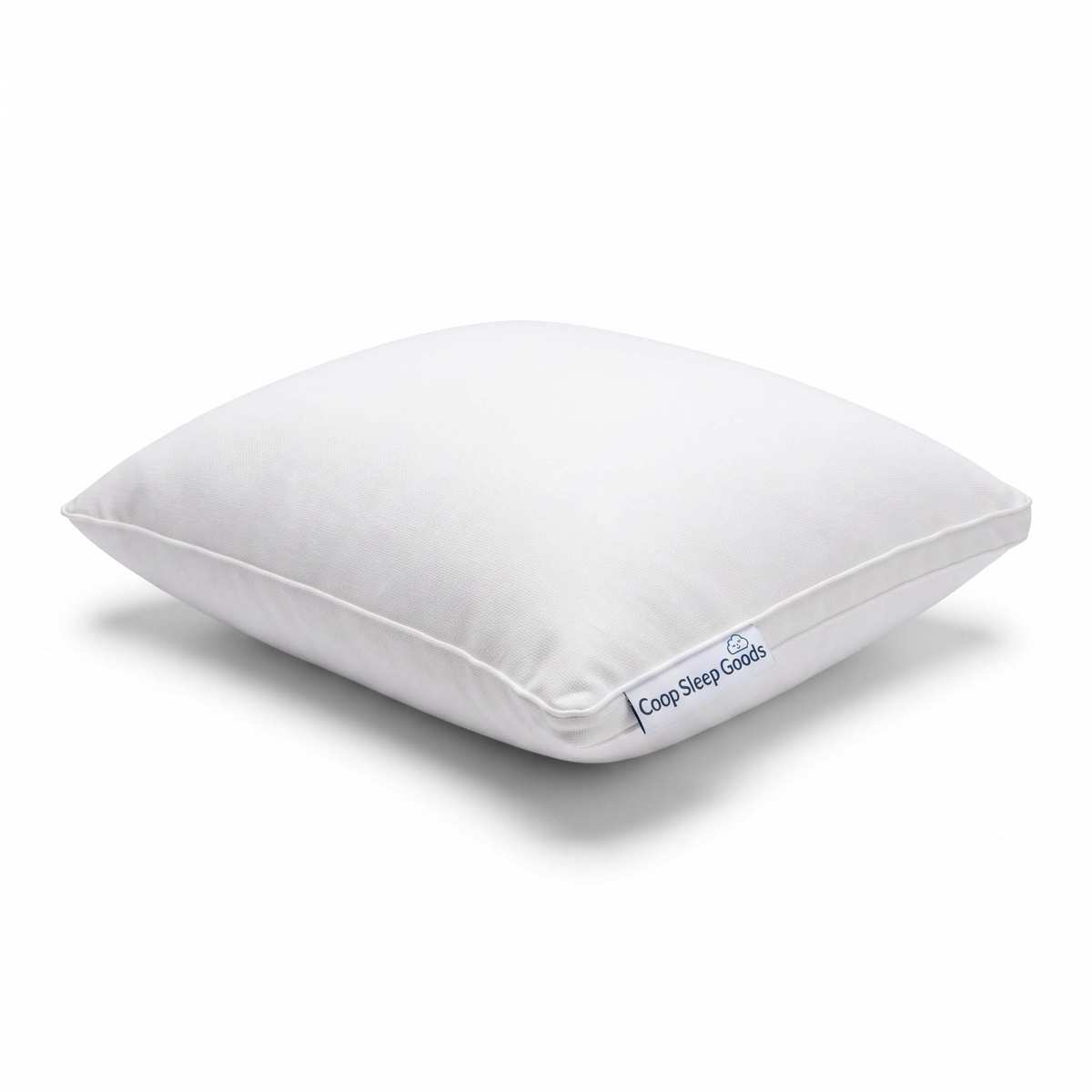
I ranked this as the dial-it-in pick because back sleepers’ ideal loft varies with mattress firmness — my analysis says a fixed 4-inch pillow on a soft mattress behaves like a 3-inch one. The zipper lets you correct for that after purchase. If you’ve bought ‘back sleeper’ pillows that never quite worked, the variable is probably your mattress, and this is the only pick that adapts.
The Coop Home Goods Original Adjustable Pillow uses shredded memory foam and microfiber inside a zippered cover. This makes it the most literal way to apply the 4 to 5-inch range supported by cervical research. Rather than trusting a fixed-loft product description, you simply open the zipper and remove handfuls of fill until the compressed height perfectly matches what your body needs.
Because the foam is shredded rather than cast in a single block, it allows the material to shift and mold around the back of your head while still providing a firm foundation beneath your neck.
Pros
- Fully adjustable fill allows you to achieve the exact 4-inch height necessary for back sleeping.
- Shredded memory foam offers a highly moldable texture without feeling entirely rigid.
Cons
- Storing the excess foam removed from the pillow requires keeping a separate messy bag.
- Standard memory foam retains more heat than shredded latex or pure down.
Training Yourself Into Back Sleeping Changes the Pillow Math
Sleepers who are actively transitioning into back sleeping from side or stomach positions often need a different loft than someone who has slept on their back for years, since the body hasn’t yet adapted to holding the position through the night. For the specific adjustment period and pillow considerations during that transition, see how to train yourself to sleep on your back in 5 nights.
When Neck Pain Is the Primary Concern, Not Just Position
General back-sleeper loft guidance assumes a baseline-healthy cervical spine. For readers managing diagnosed neck pain specifically, the pillow selection criteria shift toward contour and support over pure loft matching – see 5 best cervical pillows for back sleepers for neck pain relief for that more targeted approach.
Medium-Firm as Its Own Category
“Medium-firm” gets used loosely across pillow marketing, but for back sleepers specifically it describes a narrower, more specific balance than the term implies generally – enough structure to prevent the head from sinking past the target loft, without the rigidity that pushes the neck into an unnatural angle. For a dedicated roundup built around that specific firmness tier, see 6 best medium-firm pillows for back sleepers: no more sinking.
The Contrarian Reality: “Extra Soft” Marketing Language Undersells the Sink Risk
Pillow marketing treats “extra soft” as an unambiguous selling point, but for back sleepers specifically, an extra-soft solid pillow with no stated compressed height is a genuine risk, not just a comfort preference. A single-piece foam pillow advertised as extra-soft can compress well past its resting loft under a head’s weight, effectively delivering less support than a firmer pillow at the same starting height – which is why a back sleeper choosing between two 5-inch pillows, one “extra soft” and one “medium,” may get meaningfully different actual support despite an identical stated loft. Compressed height under load, not resting loft alone, is the number that predicts real-world support – and almost no product listing discloses it.
The Bottom Line
For a moldable option with a manufacturer-specified back-sleeper loft, the Saatva Latex Pillow’s Standard Loft is purpose-built for this position. For sleepers who want more structural resistance to sinking than pure down provides, the Brooklinen Down Pillow’s Firm ratio delivers that without abandoning a down feel entirely. And for anyone who wants to measure rather than guess, the Coop Home Goods Original Adjustable’s zippered fill is the most direct way to land in the research-supported range. If you have diagnosed neck pain, run any of these choices past a physical therapist or physician before committing.
FAQs
What is the best pillow loft for back sleepers?
Back sleepers need a low-loft pillow to maintain a neutral cervical alignment. A height of three to four inches usually keeps your chin from being pushed toward your chest. If you have a pronounced curve in your upper spine, you’ll actually need a slightly higher loft to stay comfortable.
Should back sleepers use memory foam?
Low-loft memory foam works perfectly for back sleepers because it contours right to the curve of the neck. The material gives you stability that keeps your head from rolling side to side. Traditional polyester fiber fill often clumps up and fails to provide that necessary structural support.
Why does my neck hurt when sleeping on my back?
Waking up with neck pain usually means your pillow is too high and straining your spine. Switching to an adjustable shredded foam pillow lets you remove filling until your neck sits perfectly flat. A sagging mattress can also misalign your spine no matter which pillow you choose.
Back sleepers need less loft than they think. Our Pillows by Sleep Position section nails down the right height range.