
Every night you sleep on a buckwheat pillow, roughly 2,500 to 3,000 compression events occur across the hull fill as your head weight redistributes through the pile. Each compression cycles the hull edges against neighboring hulls. The hulls of Fagopyrum esculentum are triangular, with multiple sharp edges that create inter-hull friction points. Under sustained, repeated compression, those edges develop hairline fractures . Micro-cracks that progressively erode the hull’s three-dimensional geometry. The hulls flatten from the edges inward, losing the distinct triangular profile that allows them to interlock and hold position.
Most owners never consciously notice this happening because it proceeds over months and years, not days. What they notice is the consequence: the pillow feels flatter, needs more frequent reshaping, and has lost some of the firmness it had when new. If you use a buckwheat pillow for neck pain management , as the Best Pillows for Neck Pain: What the Research Actually, that gradual loft loss undermines the very property that made the fill effective. The good news is that the casing of a quality buckwheat pillow can last indefinitely. Only the fill needs replacing, and the process is straightforward.
The Degradation Mechanism: What Actually Happens Inside the Fill
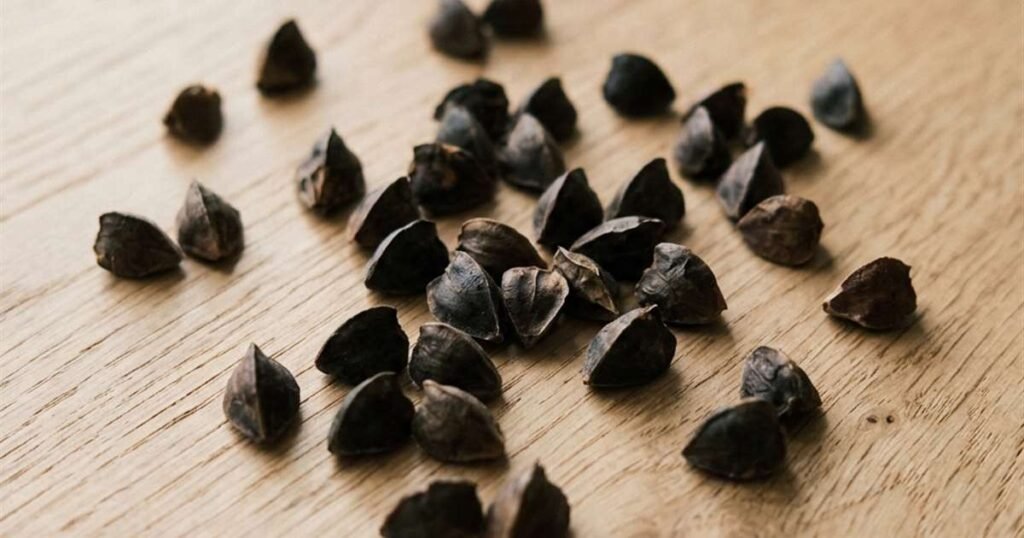
A fresh buckwheat hull is a hard, angular shell. The outer casing of the buckwheat seed (Fagopyrum esculentum), separated during milling. The hull’s three-dimensional geometry creates air gaps between neighboring hulls when packed together in a casing. Those air gaps are responsible for two of buckwheat’s primary performance properties: the interlocking stability that holds the pillow’s shape under head pressure, and the breathability that makes buckwheat cooler than foam.
When hulls are compressed repeatedly, two degradation pathways run in parallel:
Mechanical fracturing. Hull hardness is determined by lignin composition, specifically the ratio of guaiacyl (G) to syringyl (S) lignin in the hull wall. G-lignin dominant hulls are denser and more fracture-resistant; S-lignin dominant hulls are softer and develop hairline cracks earlier under repeated load. Most agricultural-grade buckwheat hulls used in commodity bedding are not screened by lignin type, which is why the same “buckwheat pillow” from different manufacturers can behave very differently over time. As hulls fracture at their edges, they generate fine dust and shed into smaller, flatter fragments that no longer interlock.
Volume loss. As the hull geometry flattens, the total volume of the fill decreases . Not because individual hulls disappear, but because flat fragments pack more densely than angular ones. The pillow gradually loses loft. The air gaps between hulls compress. The fill becomes denser, firmer, and less responsive to head pressure. The rustling sound changes character . Flattened hulls produce a denser, less airy sound than fresh ones.
How Long the Fill Actually Lasts
The casing and the fill have completely different lifespans, and conflating them is the source of most inflated buckwheat pillow lifespan claims.
The fill: roughly 3 to 5 years of nightly use before degradation is noticeable enough to affect support performance. Hullo, one of the largest US buckwheat pillow manufacturers, is direct about this on their own site: the ten-year claims common in the industry are overly optimistic for the fill. What changes at the 3-to-5-year mark is the interlocking geometry, not the structural integrity of every individual hull. Some hulls remain largely intact while others have fractured. The net result is a fill that has lost meaningful volume and redistributes less predictably under head weight.
Hull quality significantly affects where in that 3-to-5-year range you land. Hulls processed at lower temperatures (avoiding the structural changes that high-heat roasting causes), cleaned to remove groat residue, and sourced from fracture-resistant varieties will hold their geometry longer than commodity-grade hulls. Higher humidity accelerates degradation by encouraging microbial activity on any trace organic material in the fill, and by cycling the hull material through slight moisture-induced expansion and contraction.
The casing: indefinite with standard care. A quality organic cotton twill casing with a heavy-duty zipper does not degrade under normal use. The limiting factor is always the fill, not the case. This is the practical argument for buying a quality casing. You replace only the fill every few years, not the entire pillow. The same logic applies to adding a pillow protector on top, which keeps moisture and dust mites away from the casing itself and extends how long it stays usable.
| Component | Expected Lifespan | Replacement Cost |
|---|---|---|
| Buckwheat Hull Fill (Standard Use) | ~3–5 years | Cost of fill only; typically $20–$40 for a standard refill |
| Casing (Quality Cotton Twill) | Indefinite with standard care | Only needed if zipper or stitching fails |
| Full Pillow Replacement | N/A – only the fill degrades | Not required if casing remains intact |
The Full Care Schedule
Weekly
Wash the outer pillowcase or pillow protector. This is the first line of defense against sebum, sweat, and skin cell accumulation reaching the casing. A pillow protector between the decorative pillowcase and the buckwheat casing extends the interval between casing washes significantly.
Monthly
Wash the buckwheat casing. Remove all fill first , pour hulls into a clean, dry container before unzipping completely and turning the casing inside out. Wash on a gentle cycle in cold water with mild detergent. Air dry or tumble dry on low heat only. The casing must be completely dry before refilling , residual moisture transferred to the hulls can trigger microbial activity. Do not rush this step.
1 to 2 Times Per Year
Sun-air the hulls. On a dry, sunny day, spread the hulls in a thin, even layer on a clean flat sheet or baking tray in direct sunlight for 3 to 4 hours. Stir or turn them at the halfway point so all hull surfaces receive UV exposure. Bring them inside before evening humidity sets in. This step deodorizes the fill, inhibits microbial activity, and drives off residual moisture that accumulates from normal overnight use.
If outdoor sun-airing is not possible, a sunny south-facing windowsill in strong afternoon light is a functional substitute, though less effective than direct outdoor sun.
As Needed
Spot-clean the casing surface with a barely damp cloth for localized stains. Never submerge hulls in water. If hulls are accidentally saturated , a spilled drink, unexpected moisture exposure , spread them immediately in a thin layer in direct sunlight to dry. Hulls that remain wet for more than 24 to 48 hours can develop mold. If the hulls cannot be thoroughly dried within that window, replace them.
The Bug Question
This is the most common concern new buckwheat pillow owners raise, and the answer requires precision. Buckwheat hulls themselves provide no nutritional value to insects. The hull is an empty shell . No seed material, no starch, no protein that insects can metabolize. Properly processed hulls that have been vacuumed and cleaned to remove residual groat flour are not an insect food source.
The risk exists only at the margins: low-quality or poorly cleaned hulls may retain trace groat flour. In a hot, humid storage environment (optimal conditions for grain beetles are roughly 95°F and 70% relative humidity), that trace flour can support insect larvae. Industrial mills that maintain cool, dry storage eliminate this risk. A quality pillow manufacturer sourcing from a controlled-environment mill produces hulls that are not a practical infestation risk.
The practical prevention is the same as for all organic fill pillows: keep the pillow dry, store it in a ventilated area rather than a sealed bag, and air the hulls in sunlight annually. If you suspect infestation in an older pillow, spread the hulls on a flat surface and inspect them in bright light. Grain beetles are visible to the naked eye. If found, replace the fill , the casing can be washed and reused.
When to Refill: Four Checkpoints
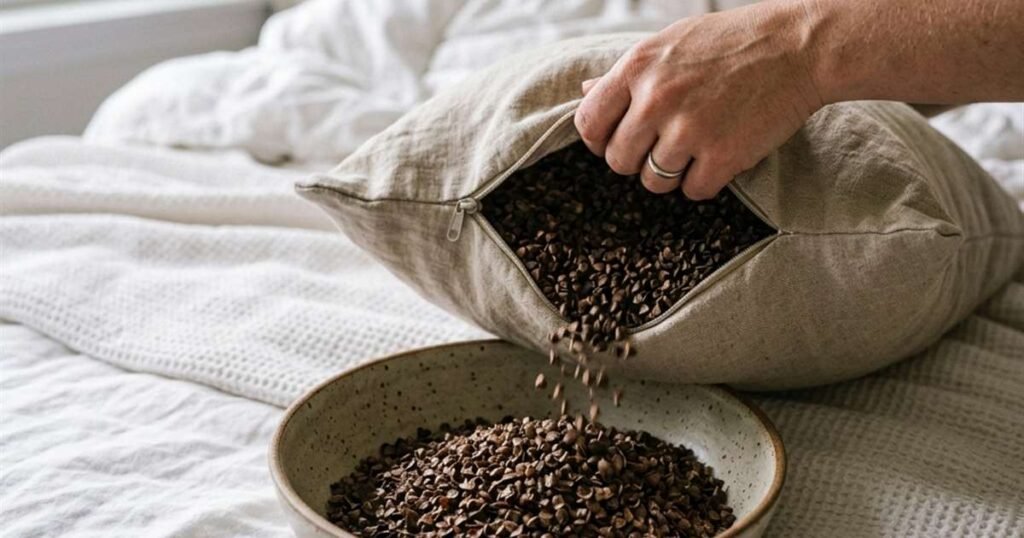
Checkpoint 1: Loft loss. The pillow sits noticeably flatter than it did when new, and cannot be reshaped to its original height by redistribution alone. If your target loft was 4 inches at purchase and the pillow now peaks at around 3 inches regardless of how the fill is redistributed, the hull volume has degraded enough to warrant refill.
Checkpoint 2: Sound change. Fresh buckwheat hulls produce a light, airy rustling. As hulls flatten and pack more densely, the sound shifts toward a heavier, duller quality. If you find yourself noticing that the pillow sounds fundamentally different from when it was new, the geometry has changed significantly.
Checkpoint 3: Shape instability. A well-filled buckwheat pillow holds the shape you press into it through a full night. If the fill now redistributes during sleep without being reshaped , drifting toward pillow edges, failing to maintain a consistent surface under head weight , the interlocking property of the hulls has degraded.
Checkpoint 4: Odor that sunning does not resolve. A persistent musty or earthy odor after two rounds of sunlight airing indicates microbial activity in the fill. Replace the hulls; the case can be salvaged.
Any single one of these checkpoints, if clear, warrants refill. Two or more simultaneously is a definitive replacement trigger.
The Contrarian Case Against the “Lasts a Lifetime” Claim
Every buckwheat pillow marketing page includes some version of “lasts for years” or “indefinite lifespan with proper care.” These claims are technically true of the casing, not the fill , and the distinction is rarely made clearly.
The fill degrades. That degradation is physical and unavoidable , it is the direct consequence of the same mechanical property that makes buckwheat effective for cervical support. You cannot have a fill that locks under head weight and resists compression drift without also having a fill that accumulates micro-fracture stress at hull edges under sustained load. The two are the same material property at different scales.
This is not a flaw in buckwheat as a fill material. The refillable design of quality buckwheat pillows is a genuine advantage over sealed-fill alternatives: a $50 refill at year four is more economical than a new $120 pillow. But the “no replacement needed” framing in some marketing misrepresents the fill’s actual behavior over a 3-to-5-year use cycle. For a broader look at how buckwheat’s compression stability compares to other natural fills like kapok and down, the fill comparison covers the mechanics across all three.
Frequently Asked Questions
Can buckwheat pillows get bugs?
Not from the hulls themselves, provided the fill is properly processed. Quality buckwheat hulls are the empty outer shells of the seed . No nutritional value for insects. The risk is low-quality hulls retaining trace groat flour from incomplete processing, which can support grain beetle larvae in hot, humid storage. Standard maintenance (dry storage, annual sun-airing) eliminates this risk in practice.
How often should you replace buckwheat hulls?
Roughly every 3 to 5 years of nightly use. The precise timing depends on hull quality, bedroom humidity, and how frequently the fill is sun-aired. Use the four checkpoints above rather than a fixed calendar date , loft loss and shape instability are better indicators than age alone.
Can you wash a buckwheat pillow with the hulls inside?
No. The hulls must be removed before washing the casing. Submerging hulls in water causes them to absorb moisture, soften, lose their three-dimensional shape, and potentially mold if not dried within 24 to 48 hours. Remove the fill, wash the empty casing on a cold gentle cycle, dry completely, then return the fill.
How do you refresh buckwheat hulls?
Spread them in a thin, even layer on a clean surface in direct sunlight for 3 to 4 hours, stirring at the halfway point. UV exposure deodorizes the fill and inhibits microbial activity. This is the primary maintenance step for the fill and should be done 1 to 2 times per year.
Do buckwheat hulls compress permanently?
Yes, gradually. Repeated head-weight compression cycles the hull edges against neighboring hulls, causing micro-fracturing over months and years. The hulls flatten incrementally, losing volume and interlocking geometry. This is not reversible . A compressed hull cannot be restored to its original shape. Sun-airing refreshes the fill hygienically but does not reverse mechanical degradation. Refilling with fresh hulls is the only correction.