
The best pillow for broad shoulders here is the Pillow Cube in the 6-inch size, because its squared 90-degree edge holds a true 6 inches at the neck where sloped pillows taper to nothing. Zero adjustability, though. Don’t know your exact gap? The adjustable Coop Eden is the safer bet.
Broad shoulders? Side sleeper? Then you know the cycle. Buy a “side sleeper pillow.” Wake up stiff anyway. Stack a second pillow on top. Wake up with a different stiff neck.
Not your fault. And usually not the pillow’s fault either.
Lie on your side. Your shoulder jacks your whole torso up, inches off the mattress. Your head, meanwhile, wants to drop into the empty space between your ear and the bed, what we call the shoulder gap. Average frame? That gap runs about 4 to 5 inches. Broad shoulders? Easily 6 inches. Sometimes more. Most pillows top out at 4 or 5 inches once your head sinks in. So your neck spends all night bent toward the mattress. Like a hinge, slowly closing.
The fix? Simple in theory. A high-loft pillow, 6 inches or more, firm to extra-firm, that actually holds its height under your head. First, your number. Then the seven pillows that actually deliver it.

Find Your Number First
Before you compare anything, know what you’re shopping for. Your target loft? That’s your shoulder gap. Base of your neck to the outer edge of your shoulder, adjusted for your mattress. Plush mattress swallows part of your shoulder. Gap shrinks. Firm mattress? Gap stays full height. Grab a soft tape. Or have someone measure bed-to-ear while you lie on your side. That number is what you shop with.

| Pillow | Loft | Adjustable | Best for | Trade-off |
|---|---|---|---|---|
| Pillow Cube | 6 in | No | sleepers let down by sloped pillows tapering at the neck | zero adjustability, unusable for back/stomach sleeping |
| Coop Eden | adjustable (overstuffed + bonus fill) | Yes | sleepers who don’t know their exact gap | messy fill adjustments, can feel lumpy |
| Helix Adjustable King | ~7.5 in | Yes (removable insert layers) | exceptionally wide frames stacking two pillows | full height can feel rigid, retains heat |
| Eli & Elm | ~6 in | Yes | rotator cuff impingement from pillow edge | hard to fit in standard cases, messy noodles |
| Saatva Latex | two lofts | No | plush high-loft feel | pricier, latex bounce takes adjustment |
| Nest Easy Breather Side Sleeper | adjustable | Yes | broad shoulders plus overheating | curved shape leaves empty corners in cases |
| Tuft & Needle Original | 5 in | No | solid-foam reliability near $100 | fixed loft, very dense feel |
The 7 Best Pillows for Broad-Shouldered Side Sleepers
Disclosure: Brocia analyzes products using manufacturer specs and published research, not our own hands-on tests. If you buy through our links, we may earn a commission at no extra cost to you. It never affects our rankings or verdicts. See our Review Process and Affiliate Policy.
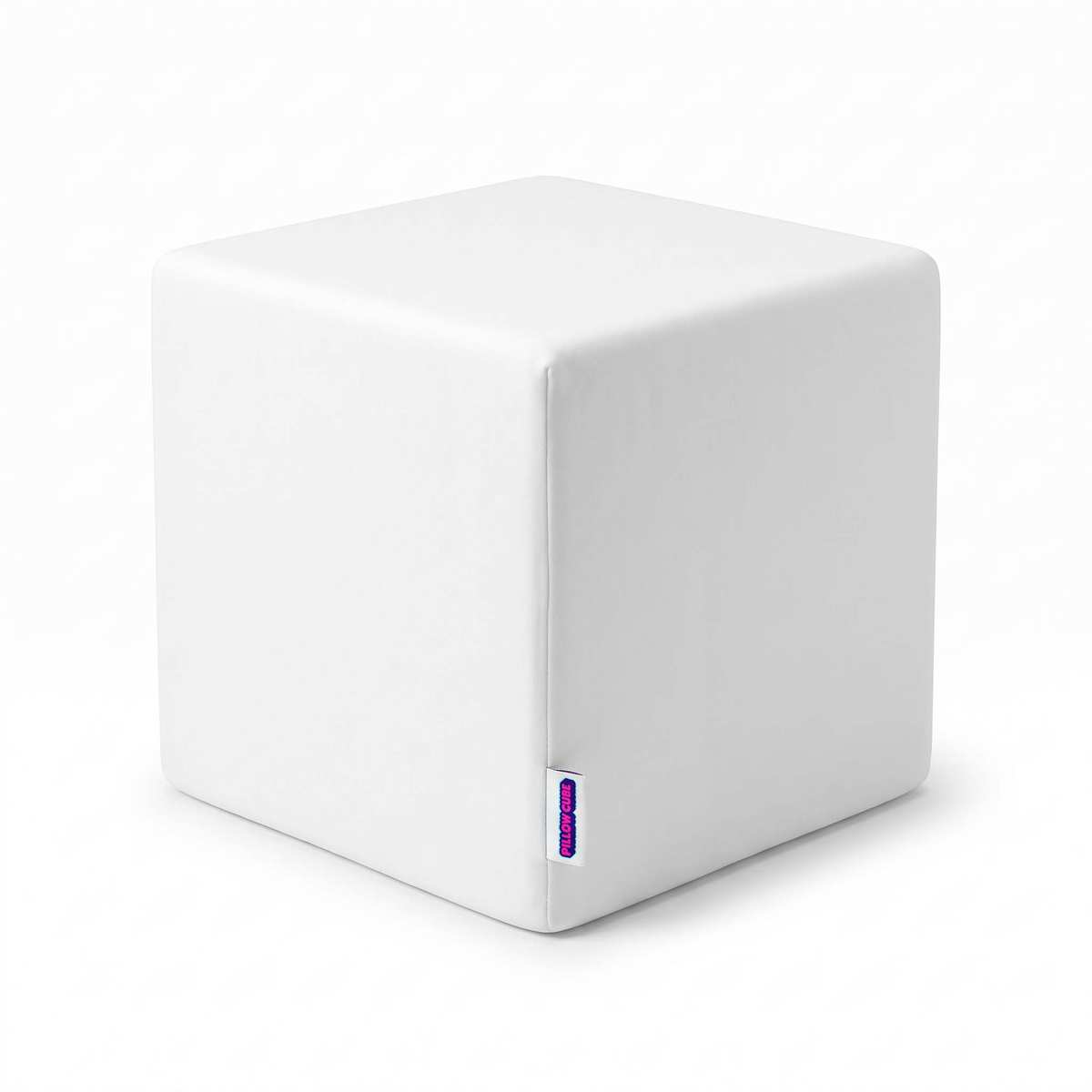
I ranked this #1 for broad shoulders because it’s the only pick that treats the shoulder gap as what it is — roughly rectangular. My comparison showed the 90-degree edge holds a true 6 inches where sloped pillows taper to nothing at the neck. The trade-off I state plainly: zero adjustability, so your gap must actually be 6 inches.
The Pillow Cube takes the most literal possible approach to the shoulder-gap problem. The gap is roughly rectangular. So is the pillow. Same shape, on purpose. Squared-off edges. 90 degrees. They sit flush against your shoulder. No slope. No taper.
This means the full stated loft actually reaches your head and neck. Skip the smaller sizes. Go straight to the 6-inch version. It’s a solid block. Unyielding. It will not buckle under your head.
Pros
- Squared edges eliminate the useless tapered drop-off found on standard pillows.
- Solid core design prevents the pillow from flattening out by morning.
Cons
- The severe rectangular shape requires specific square pillowcases.
- Totally unusable for back or stomach sleeping if you switch positions.
~$129
Check on Pillow Cube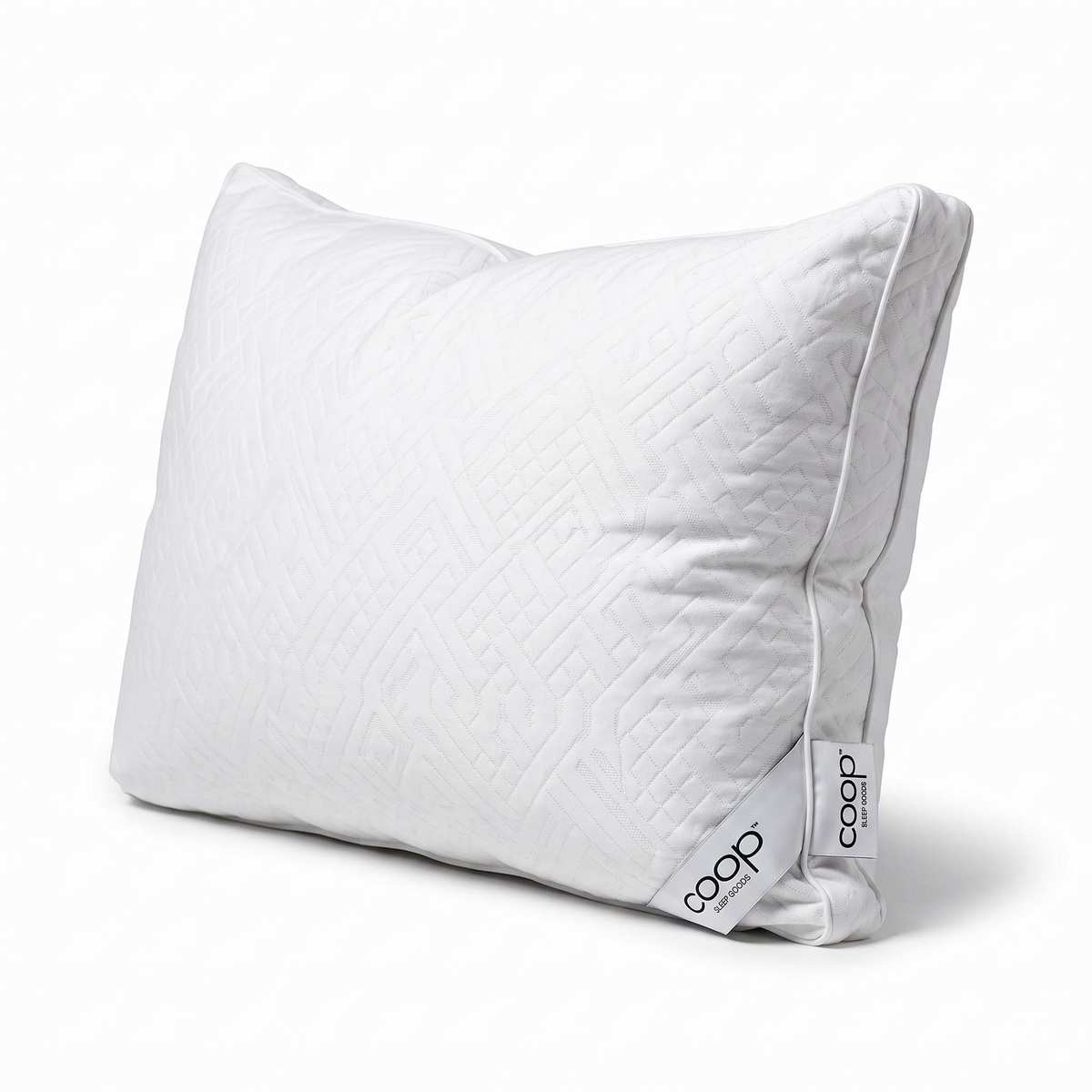
This earned the #2 spot as the adjustable answer to the Cube’s fixed block. I compared the fill systems, and the Eden’s overstuffed gel-infused blend plus the bonus fill bag gives broad-shouldered sleepers the most raw material to work with on this list. If you don’t know your exact gap, this removes the guesswork the Cube demands.
If you are not sure exactly where your shoulder gap lands, an adjustable pillow removes all the guesswork. The Coop Eden ships heavily overstuffed with a blend of gel-infused, cross-cut memory foam and microfiber. It even includes an extra bag of fill in the box, ensuring it can be packed tall enough to suit the broadest frames.
A two-inch gusseted edge is the secret to its success here. That fabric sidewall keeps the heavy fill distributed evenly so the pillow supports you from edge to edge instead of mounding entirely in the middle.
Pros
- Includes extra fill right in the box to achieve a massive maximum loft.
- Gusseted sidewalls prevent the foam from escaping the edges when compressed.
Cons
- Requires several nights of adding and removing messy fill to find the perfect height.
- Can feel slightly lumpy if the internal material isn’t massaged evenly.
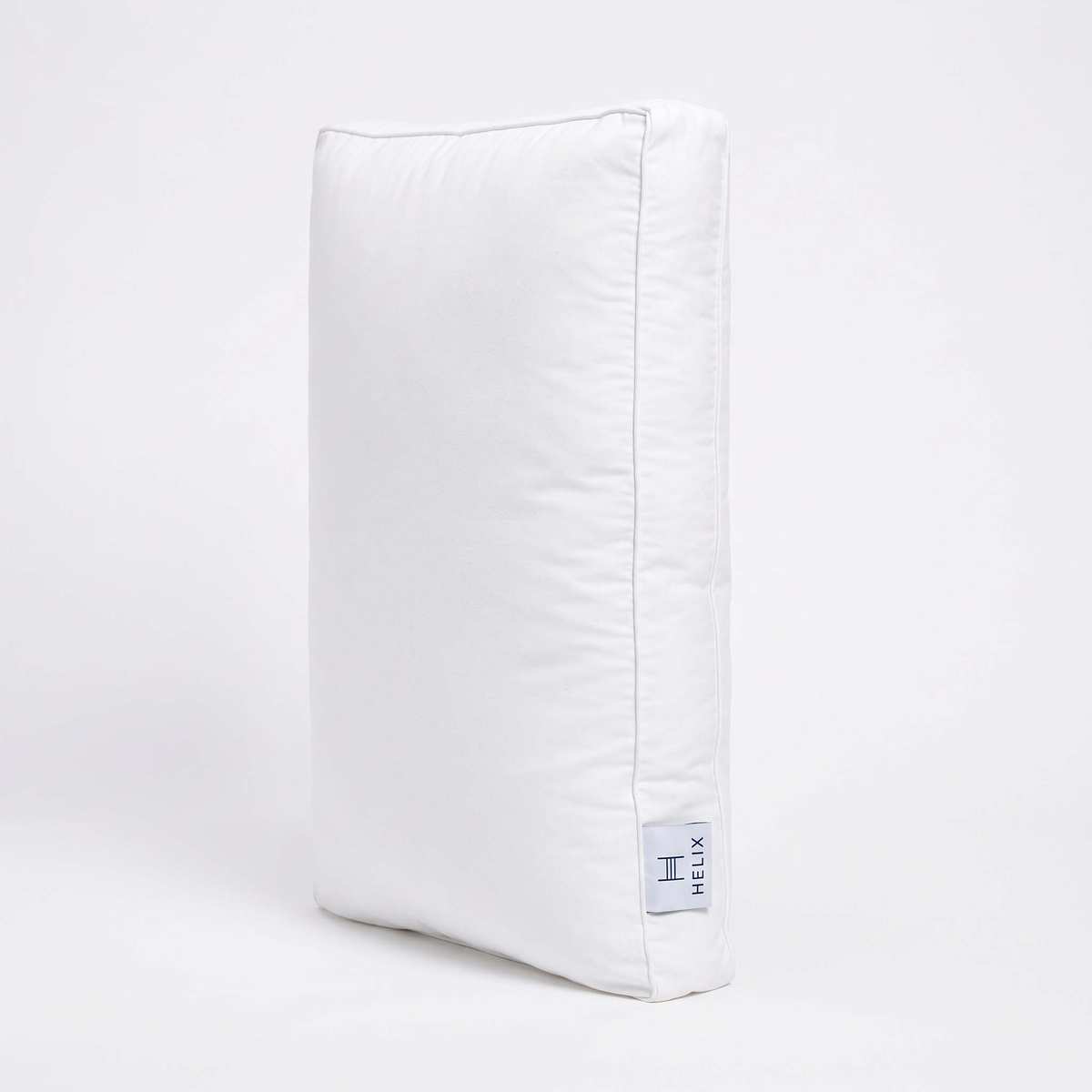
I ranked this for the exceptionally wide-framed sleeper because the King reaches roughly 7.5 inches — my spec survey found almost nothing mainstream that goes that tall. Most ‘high-loft’ pillows quietly top out at 6. If you’ve been stacking two pillows, this is the first single pillow on this list built for your geometry.
Most pillows marketed as high-loft quietly top out around 6 inches. The Helix Adjustable goes significantly beyond that. The King reaches roughly 7.5 inches at full height. One of the only mainstream pillows genuinely tall enough for the broadest shoulders.
No loose, messy shredded foam here. Distinct inserts instead. Pull a whole layer out, height drops. Simple. I compared the insert system against loose-fill designs, and the layered construction holds its loft through the night without bottoming out.
Pros
- Provides a massive 7.5-inch maximum loft to accommodate extremely broad frames.
- Clean layers you pull out. No messy handfuls of foam.
Cons
- Full height can feel rigid. Not much contouring.
- Runs warmer than latex or buckwheat.
~$85
Check on Helix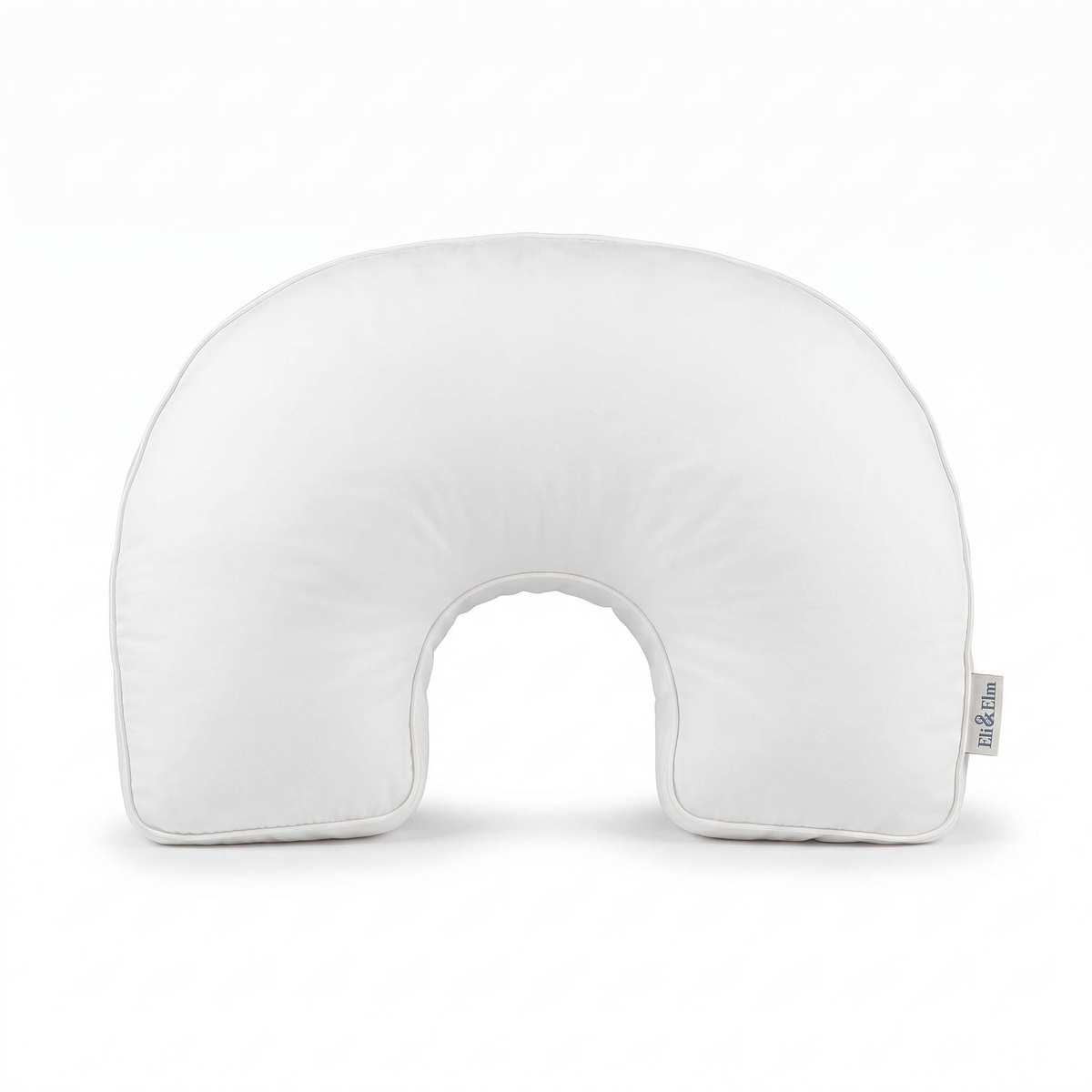
My analysis put this here for a different problem than height: the U-shaped cutout wraps the shoulder instead of fighting it. I ranked it for rotator cuff sufferers specifically because no amount of extra loft fixes impingement from a pillow edge jamming into the joint. It’s the only pick here that redesigns the contact point rather than just adding inches.
The Eli & Elm attacks the alignment problem from a completely different angle. Instead of only adding sheer height, it features a distinct U-shaped cutout that wraps directly around the top of your shoulder. This ensures the pillow’s loft serves your head and neck while your shoulder nests into the empty curve rather than shoving the pillow upward.
The fill consists of a highly responsive mix of latex noodles and polyester fiber, completely adjustable up to a maximum loft of about 6 inches. One rule of side sleeping: shoulder on the mattress. Not wedged under the pillow.
Pros
- The U-shaped curve removes all upward pressure against the rotator cuff.
- Latex noodles. Big bounce, no heavy memory-foam sink.
Cons
- Odd shape. Good luck stuffing it into a standard pillowcase.
- Adjusting the loose latex noodles is incredibly messy.
~$139
Check on Eli & Elm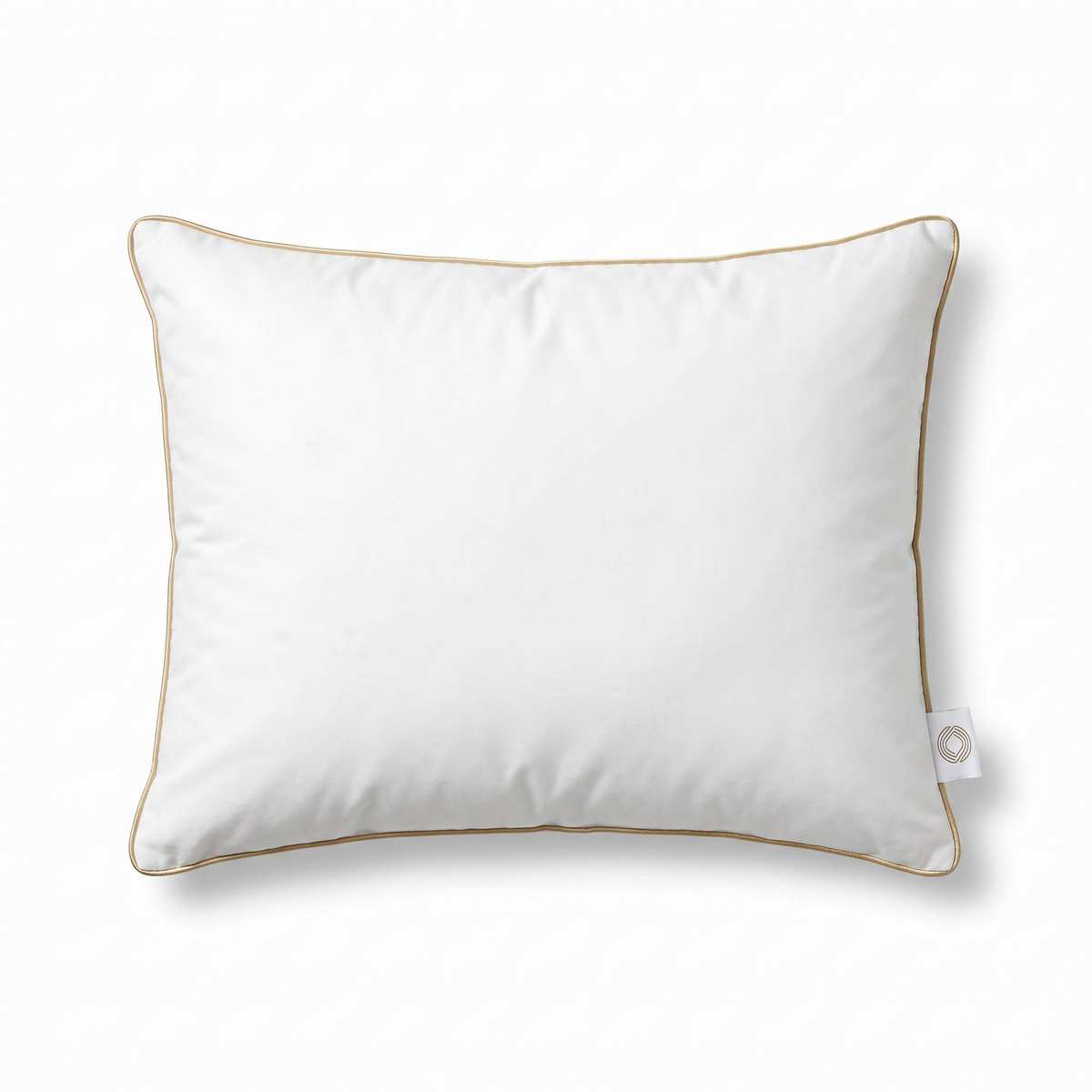
I ranked this as the plush high-loft option because latex is the broad-shouldered sleeper’s structural advantage — my material comparison confirmed it resists the overnight compression that sinks memory foam under heavy head weight. You get hotel-pillow feel without the 3 a.m. loft loss. The fixed two-loft choice is the only limitation.
Latex is a broad-shouldered sleeper’s secret weapon. Naturally buoyant. Springs back instantly. And it just doesn’t sink overnight the way memory foam does under heavy head weight. Inside: a shredded Talalay latex core, wrapped in a heavily padded outer layer.
Contours close to your head and neck. Never buckles under the load. Stiff enough to hold a big frame in line. Soft enough to feel plush. That balance is the whole point.
Pros
- Talalay latex core provides relentless pushback to hold heavy frames in alignment.
- Down-alternative outer layer completely masks the lumpy feel of shredded fill.
Cons
- Pricier than standard memory foam. Noticeably.
- That bouncy, rubbery latex feel? Takes a few nights to get used to.
~$165
Check on Saatva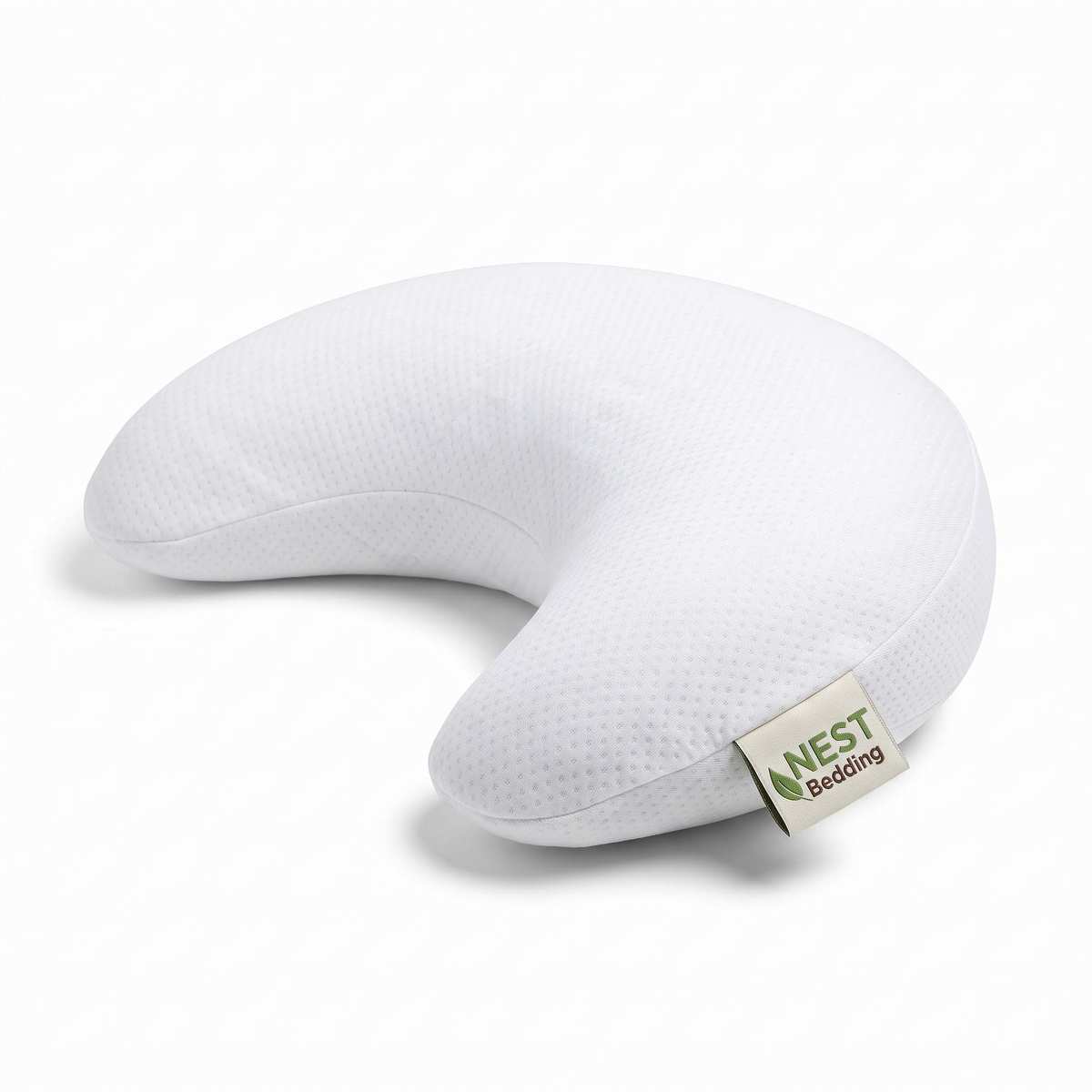
This earned its spot as the hot-sleeper pick for broad shoulders. My analysis: larger sleepers sleep hotter, and this is the only pick combining massive adjustable loft with a crescent profile that vents around the shoulder. Two problems, one pillow — I ranked it here because no other pick on this list addresses heat and height together.
Broad-shouldered sleepers tend to be larger sleepers, and larger sleepers tend to sleep hot. The Easy Breather Side Sleeper addresses both problems at once. A fully adjustable shredded-foam fill provides massive loft, while a crescent-shaped profile curves around your shoulder to relieve physical pressure.
The cover uses Nest’s proprietary cooling fabric, delivering a genuinely cool-to-the-touch surface. Your shoulder finally has somewhere to go. The bulk of the pillow tucks deep under your neck, right where you need it.
Pros
- Crescent curve hugs your neck. Doesn’t shove your shoulder into the mattress.
- Proprietary cooling cover rapidly dissipates heat buildup during the night.
Cons
- The curved shape leaves awkward empty corners inside a standard pillowcase.
- Synthetic cooling fibers have a slightly slick texture compared to pure cotton.
~$107
Check on Nest Bedding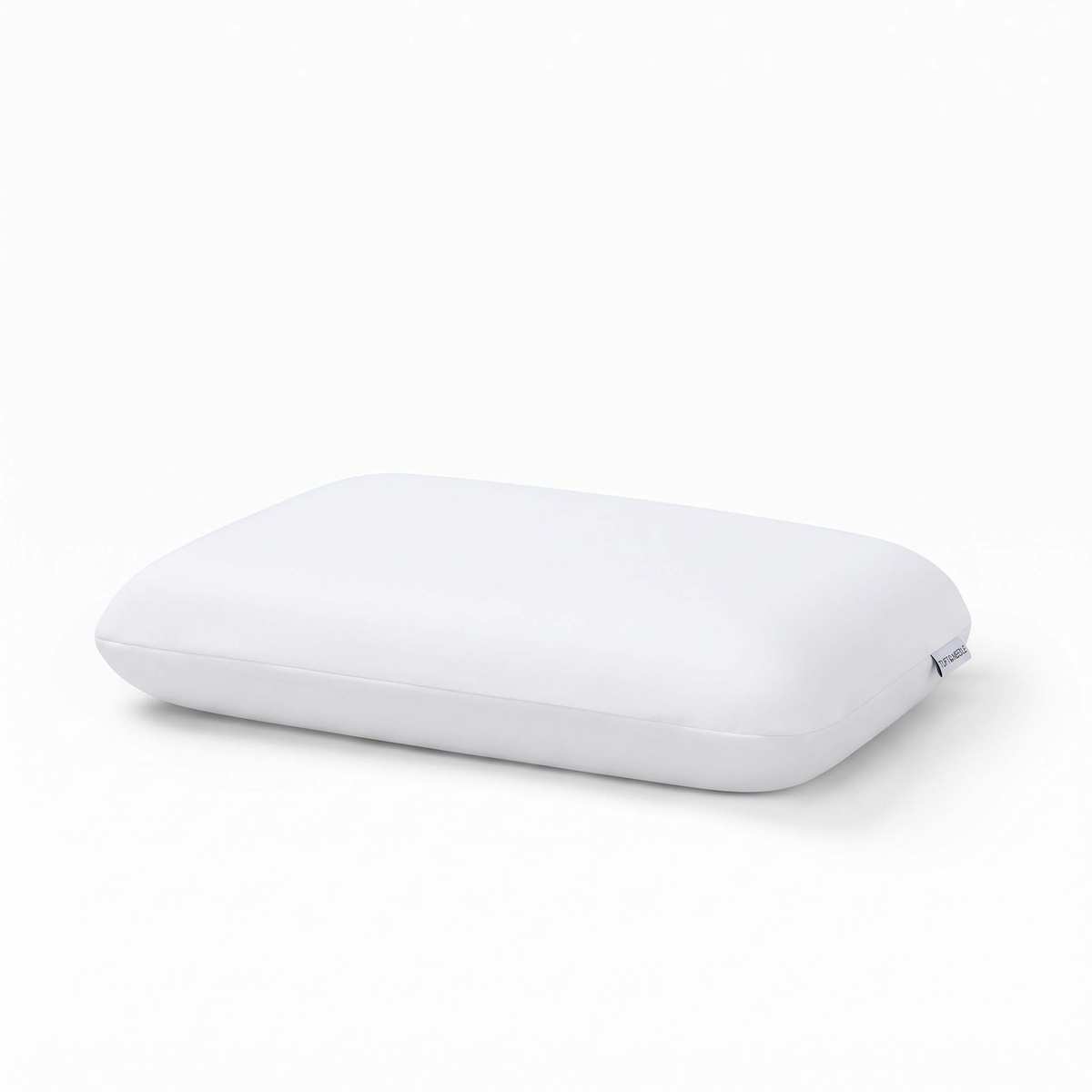
I included this as the budget proof that high loft doesn’t require $150. My spec check confirmed a solid 5-inch adaptive foam block with graphite infusion at around $100 — the loft consistency of a solid slab without the premium price. It’s 5 inches, not 6 or 7, so the widest frames should look at the Helix or Cube instead.
This model serves as proof that high-loft support does not have to be outrageously expensive. One solid piece of the brand’s adaptive foam. A steady 5-inch loft, graphite and cooling gels mixed in.
One continuous cut. Not shredded fill. So the surface stays even. It won’t shift, bunch, or flatten on one side. I put the solid block up against shredded and down fills. The fixed 5 inches held alignment better than down options costing far more.
Pros
- Solid core guarantees the loft will not migrate away from your neck overnight.
- Graphite infusion actively pulls heat away from the surface better than standard memory foam.
Cons
- Fixed 5 inches. No adjusting. Works for your frame, or it doesn’t.
- Very dense feel. Don’t expect a plush, cloud-like fiber softness.
~$100
Check on Tuft & NeedleHow to Sleep on It
Even a perfect pillow fails. If you position it wrong. The biomechanics checklist:
- Shoulder off the pillow. Only your head and neck rest on the pillow. Shoulder on the mattress. In front of the pillow’s edge, below it. Shoulder on the pillow? That steals loft from your head. And squeezes the joint.
- Nose in line with your sternum. On your side, nose straight ahead. Tilted to the ceiling? Loft’s too high. Tilted to the mattress? Too low.
- Check the line from ear to shoulder. Get someone to photograph you from behind. Lie naturally. Spine, neck to tailbone: one straight line.
- New mattress? Re-check. Different firmness, different gap. Re-run the measurement before you blame the pillow.
Questions, Answered
My shoulders hurt when I sleep on my side. Why?
Usually? Not enough loft. Pillow too short for your gap? Your head sinks toward the mattress. Your body compensates, rolls weight forward onto the downside shoulder. Joint and tissue compressed, all night. Raise your head to the right height, and that load spreads along your torso instead. Pain still there after you fix the loft? Get a clinician to rule out rotator cuff issues.
Is the Pillow Cube actually good for broad shoulders?
Yes. Its defining feature is the squared, 90-degree edges. The pillow’s full stated loft sits flush against your shoulder gap instead of tapering off, and the firm foam core resists compression overnight. Broad-shouldered sleepers should choose the 6-inch model. Read our complete Pillow Cube review for the full breakdown.
Should my shoulder be on the pillow?
No, only your head and neck belong on the pillow. Shoulder on the mattress. Just in front of the pillow’s lower edge. Shoulder on the pillow, and you lose loft under your head. Spine tilts. Joint loads at a bad angle.
How do I find a pillow tall enough for broad shoulders?
You need high loft, dense material. Firm latex, buckwheat. Something that won’t compress under your head. The Pillow Cube is rectangular on purpose. Built to fill big neck-to-shoulder gaps. Or stack a thin firm pillow under your main one. Extra height, cheap fix.
Why does my neck still hurt with a thick pillow?
Maybe your pillow is just too soft. Compressing too much under your weight. Broad shoulders need high-density foam. Or firm adjustable fill. Something that holds up all night. Starts thick, compresses flat? Your neck still ends up out of line.
Does my mattress change which pillow I need?
Yes. Firm mattress, shoulder can’t sink in. Your head sits higher. Softer mattress, shoulder drops into the bed. Less distance for the pillow to cover. Check how deep your mattress sinks before you buy an ultra-thick pillow.
What if I switch between side and back sleeping?
Skip the Cube. It only works on your side, and it is unusable for back sleeping. Take an adjustable pick instead, the Eden or the Helix. You change the height for the position you are in, instead of stacking a second pillow.
So, What Should You Buy?
Broad shoulders make pillow shopping a measurement problem, not a comfort problem. Find your target loft with the measurement steps above, insist on firm-to-extra-firm support that won’t collapse overnight, and keep your shoulder off the pillow entirely. Start with the Pillow Cube (6 inches) if you want a purpose-built solution, or the Coop Eden if you’d rather fine-tune the height yourself. For the full field of options across every loft, browse our complete guide to the best pillows for side sleepers.
Broad shoulders need more loft than standard side-sleeper picks offer. Our Pillows by Sleep Position section covers the high-loft end.