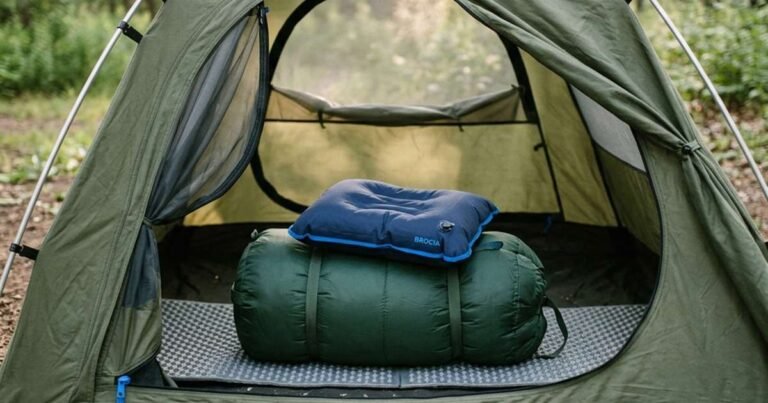
Weight is the most-cited spec in camping pillow reviews and also one of the least useful. A 1.95-ounce inflatable and a 9-ounce foam pillow don’t compete with each other. They solve different problems for different trip types. This guide compares four options on fill type, packed size, and inflated thickness, not shelf weight. If your camping trips include planes or trains, our best travel pillows guide covers the packability specs that actually matter in transit.
The lightest camping pillow on the market weighs 1.95 ounces. The most comfortable one most testers keep coming back to weighs roughly five times that. Both numbers are true, and neither one tells you which pillow to buy, because weight is not actually the variable that determines whether you sleep well outdoors. Thickness relative to your sleep position is, and that number gets buried under the ounce-counting that dominates gear marketing.
What the Specs Reveal
Camping pillows split into three mechanical categories: solid or shredded foam, pure inflatable, and hybrid foam-over-air. Each behaves differently under a sleeping head, and the manufacturer specs below (weight, inflated or expanded thickness, and packed size) predict that behavior far more reliably than review-page adjectives like “plush” or “supportive.”
| Model | Fill Type | Inflated/Expanded Size | Weight | Packed Size |
|---|---|---|---|---|
| Therm-a-Rest Compressible Pillow (Medium) | Recycled urethane foam | 18″ x 14″ x 4″ | 9 oz | Rolls to about 1/5 expanded size |
| NEMO Fillo | Hybrid: baffled air cell + foam layer | 4″ thick inflated | 9.3 oz packed | 6″ x 4″ diameter |
| Sea to Summit Aeros Ultralight (Regular) | Pure inflatable, TPU bladder | 14.2″ x 10.2″ x 4.7″ | 2.1 oz | 2″ x 2.8″ |
| Klymit Pillow X | Pure inflatable, welded X-baffle | 15″ x 11″ x 3.5″ | 1.95 oz | 4.5″ x 2.5″ x 1″ |
4 Best Camping Pillows: Comfort vs. Weight
Disclosure: Brocia analyzes products using manufacturer specs and published research, not our own hands-on tests. If you buy through our links, we may earn a commission at no extra cost to you. It never affects our rankings or verdicts. See our Review Process and Affiliate Policy.
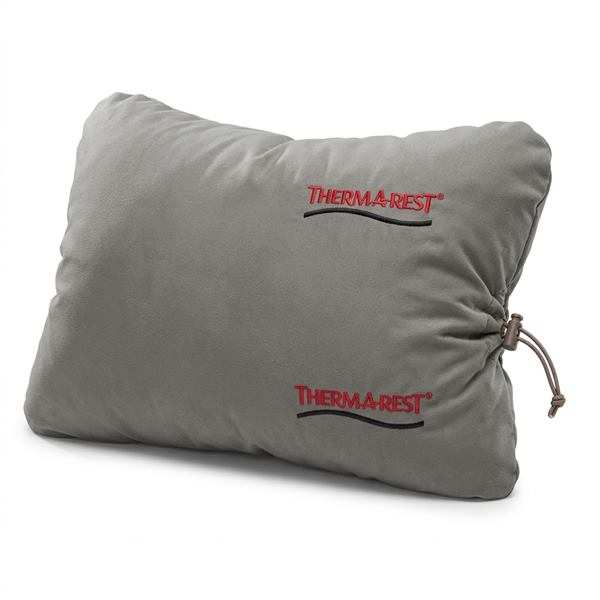
I ranked this #1 for car camping because at 9 ounces and 18×14 inches expanded, it’s the closest thing to a real pillow here — my comfort analysis says packed volume doesn’t matter when the car carries the weight. For road trips and short overnights, home-like cushioning beats ultralight specs.
The closest thing to a pillow from home in this category. At 9 ounces and measuring 18 by 14 inches expanded, it delivers traditional cushioning rather than the firm, springy sensation of an inflated air bladder.
The fill consists of upcycled foam scrap from Therm-a-Rest sleeping pad production packed inside a soft, brushed polyester shell. It cinches down to roughly one-fifth of its expanded size using the integrated drawstring sleeve.
Pros
- Sinks and cushions like a traditional bedroom pillow with zero balloon feel.
- Removable 60% recycled cover and foam fill are fully machine washable.
Cons
- Packed size is significantly bulkier than pure inflatable alternatives.
- At 9 ounces, it is too heavy for dedicated thru-hiking or ultralight backpacking.
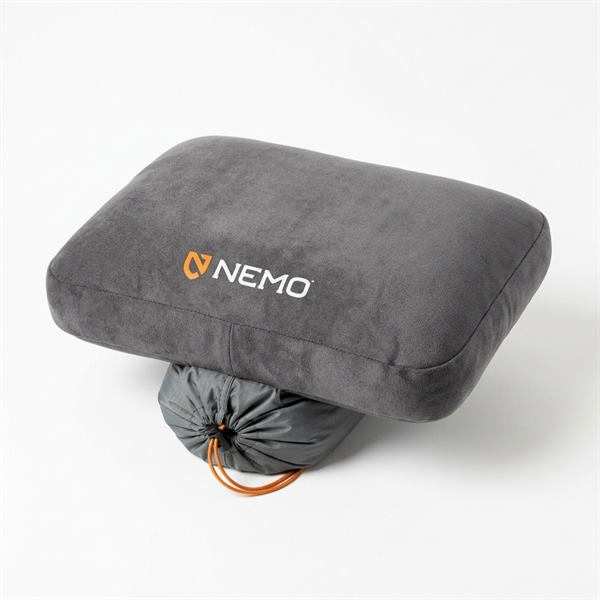
This earned the backpacking comfort spot — the baffled air cell plus 1-inch foam topper bridges inflatables and foam. My weight-to-comfort analysis showed it’s the best ratio here for backpackers who refuse to choose between packability and actual sleep. The foam layer is what silences the crinkle complaint of pure air pillows.
The NEMO Fillo bridges the gap between pure inflatables and bulky foam pillows. It combines an internal baffled air cell with a 1-inch thick luxury foam top layer to eliminate the rubbery bounce typical of basic camp pillows.
The internal I-beam baffles keep the pillow stable under head movement, preventing the ballooning effect common in single-chamber bladders. An integrated stuff sack lets it pack down to roughly the size of a russet potato.
Pros
- 1-inch foam layer eliminates the bouncy balloon feel of pure air pillows.
- Internal I-beam baffles prevent uneven bulging and maintain structural stability.
- Microsuede cover is removable and machine washable.
Cons
- At 9.3 ounces packed, it is substantially heavier than ultralight pure inflatables.
- New units can carry a noticeable foam off-gassing scent that requires airing out.
~$45
Check on NEMO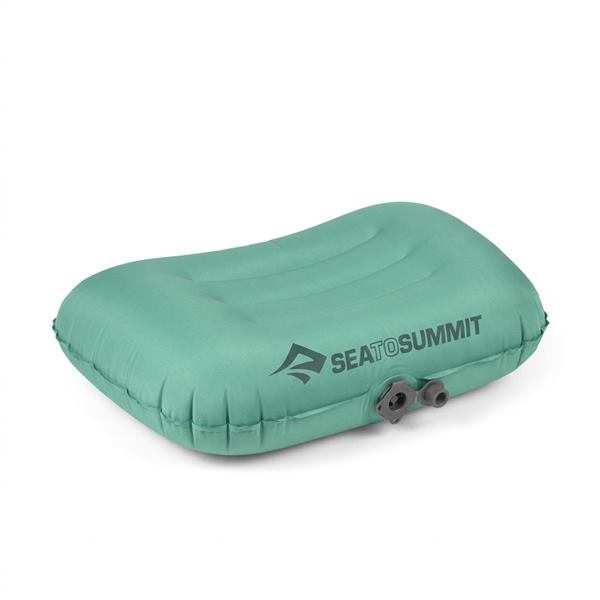
I ranked this for ultralight side sleepers — 2.1 ounces inflating to 4.7 inches of loft. My analysis: that’s the rare combination of minimal weight with genuine side-sleeper neck alignment. If grams matter and you’re a side sleeper, nothing else here delivers this loft at this weight.
Weighing just 2.1 ounces while inflating to a full 4.7 inches of loft, the Aeros Ultralight proves that low weight does not require sacrificing side-sleeper neck alignment.
The contoured TPU bladder features curved internal baffles that cradle the head, while the scalloped bottom edge fits snugly over shoulders. A multi-function mini valve enables micro-adjustments to dial in exact firmness.
Pros
- Full 4.7-inch inflated loft supports side sleepers without neck craning.
- Packs down to the size of a lime (2 by 2.8 inches) and weighs only 2.1 ounces.
- Multi-function valve allows fast inflation and fine pressure tuning.
Cons
- Pure inflatable surface feels firmer and more synthetic than foam-topped hybrids.
- Thin 20D polyester fabric can produce slight friction noise when shifting positions.
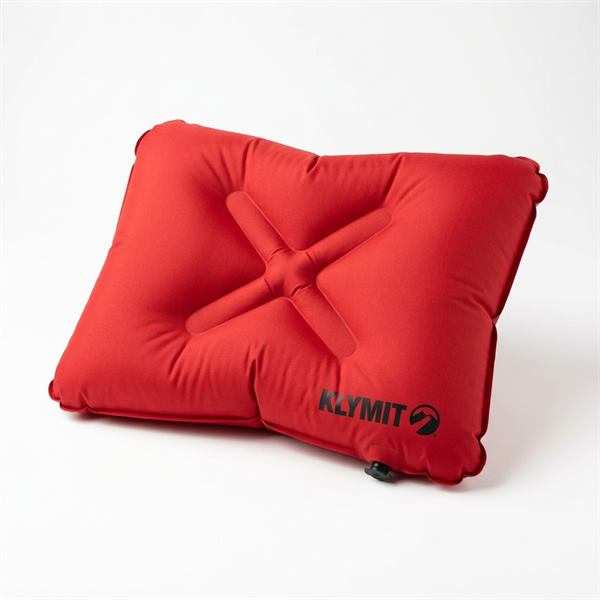
This is the gram-counter’s pick at 1.95 ounces — the lightest here. My assessment is direct: the X-baffle prevents head roll, but you’re trading comfort for weight. For back sleepers counting every ounce, the trade wins; for side sleepers who need loft, look at the Sea to Summit.
Weighing only 1.95 ounces, the Klymit Pillow X is the lightest and most compact option in the lineup. Its defining feature is a welded X-baffle design that forms a natural center pocket to keep your head from sliding off overnight.
The pillow pairs a soft 30D stretch polyester top with an abrasion-resistant 75D polyester bottom built to withstand direct contact with tent floors and rough ground.
Pros
- Extremely lightweight at 1.95 ounces and packs down flat into a tiny pocket.
- Welded X-baffle creates a self-centering pocket that prevents head slippage.
- Durable 75D polyester base resists punctures and abrasions.
Cons
- At 3.5 inches inflated, it is too thin for broad-shouldered side sleepers.
- Basic push-pull valve lacks fine-tuning bleed capabilities.
~$25
Check on KlymitThe Ounce-Counting Trap: Why Thickness Matters More Than Weight
Camping pillow marketing leans hard on weight because it is the easiest number to put in bold on a product page, and ounce-for-ounce comparisons make for tidy spec-sheet bragging. But weight has almost no relationship to how well a pillow actually supports your neck once you are lying on it, and the number that does predict that outcome, inflated or expanded thickness, gets far less attention.
Side sleepers need a pillow thick enough to fill the gap between the ear and the point where the shoulder meets the mattress, keeping the spine roughly level rather than bent toward the ground. Independent testers evaluating one ultralight hybrid pillow noted its thinner 3-inch profile worked for back sleepers but left side sleepers wanting a thicker pillow, a pattern that shows up across the category whenever manufacturers trim thickness to cut weight or packed size. A 2-ounce pillow that inflates to 4.5 or more inches will outperform a 2-ounce pillow that only reaches 3 inches for a side sleeper, even though both pillows look identical on a weight-only spec sheet.
The practical fix is simple: check inflated or expanded thickness before checking weight, and if you sleep on your side, treat anything under roughly 4 inches as a pillow built primarily for back sleepers, regardless of how light it is.
Foam, Hybrid, or Pure Air: Matching Fill to Trip Type
The three fill categories in this comparison map fairly directly onto three trip types, and picking the wrong one is less about picking a bad product than picking the right tool for the wrong job.
Solid or loose foam, like the Therm-a-Rest, wins for car camping and short trips where a vehicle carries the gear and pack weight is irrelevant. It also wins for anyone who simply dislikes the firmer, slightly plasticky feel of an inflated air chamber against their face, since foam behaves the way a bedroom pillow does regardless of how much weight is on it.
Hybrid air-and-foam, like the Fillo, is the reasonable middle ground for backpackers who are willing to carry a few extra ounces in exchange for a softer surface than pure air provides. It is a poor choice for anyone doing serious mileage where every ounce is tracked, since the foam layer is exactly the weight a true ultralight setup is trying to eliminate.
Pure inflatable, like the Aeros Ultralight and Pillow X, is the only realistic choice for thru-hikers and ultralight backpackers, where packed size in a nearly full pack matters as much as weight on a scale. Within that category, the deciding factor between models is inflated thickness relative to sleep position, not the fraction of an ounce separating one pillow from another.
How We Built This Comparison
We picked one representative pillow per fill category, plus a budget-focused inflatable, rather than ranking several pillows within a single category, because fill type and inflated thickness are the two variables that most change how a camping pillow performs, not brand reputation. Every weight, dimension, and fill description above comes directly from current manufacturer spec sheets and gets re-verified on each content refresh.
Frequently asked Questions
Why does my inflatable camping pillow feel like a balloon?
Inflatable camping pillows feel bouncy because users often inflate them to maximum capacity. A fully inflated air bladder lacks any surface give and forces your head to roll off the sides. You should only inflate the pillow to roughly seventy percent capacity. This lower pressure allows your head to sink slightly into the center and keeps your neck aligned.
What is a practical alternative to a camping pillow?
The most practical alternative is stuffing a fleece jacket or extra clothing into a nylon stuff sack. This method adds zero extra weight to your pack and provides a surprisingly firm surface. You can wrap a clean shirt around the outside to create a softer texture against your face. Clothing compresses overnight so you may wake up needing to readjust the sack.
Are compressible foam camping pillows good for backpacking?
Compressible foam pillows are generally too heavy and bulky for long-distance backpacking. They use up valuable pack space and often weigh over ten ounces. They provide excellent comfort for car camping where weight is completely irrelevant. Backpackers usually rely on hybrid pillows that combine a lightweight air bladder with a thin layer of memory foam.
Pack size specs only tell half the story. Our Sleep Measurements & Tracking guides show how to verify a travel pillow’s real loft once it’s unpacked and fully expanded.