
Medium firmness is the correct target for back sleepers. The consensus across clinical pillow research and sleep ergonomics guidance is consistent: the supine position requires a pillow that lets the head sink slightly into the surface for pressure distribution while resisting enough compression to maintain cervical lordosis, the natural inward curve of the neck, through the full night. Too soft and the head sinks past neutral, putting the chin toward the chest. Too firm and the head sits above neutral, compressing the posterior cervical structures.
The problem is not that back sleepers are choosing the wrong firmness. The problem is that most back sleepers are choosing the wrong variable. Shelf feel. How a pillow feels when you press your hand into it at 9am in a store. Bears little relationship to loft stability, which is what the pillow delivers at 3am under sustained head weight and body heat. A pillow that feels medium-firm in a showroom can compress to effectively soft after two hours of sleep, leaving the head unsupported for the rest of the night. That is where the morning stiffness comes from.
This article covers the full back sleeper pillow framework, which is detailed in the best pillows for back sleepers. For specific cervical support designs, the best cervical pillow for back sleepers covers contour-specific options. This guide focuses on the six medium-firm picks that hold their geometry under sustained load. And explains the mattress firmness interaction that determines which of the six is right for your specific setup.
If you experience persistent neck pain, radiating arm symptoms, or morning headaches that have not resolved with general pillow changes, consult a physiotherapist or physician before selecting a pillow from commercial guides alone.
Why Loft Stability Is the Variable That Matters
A 2021 systematic review published in Healthcare (PMC, PMID 34683013) identified approximately 7-10 cm as optimal pillow height for back sleeping to maintain cervical lordosis. That range, roughly 3-4 inches, is the target. But the research measures loft under a standardized load; it does not measure whether a given pillow holds that loft at hour one versus hour seven.
This is the gap that loft stability fills. A solid high-density memory foam or latex pillow at 4 inches of stated loft will deliver close to 4 inches of actual loft across the full night because the material does not progressively soften under sustained body heat and head weight. A soft shredded fill pillow at 4 inches stated loft may compress to 2.5 inches within the first hour, then continue to settle as the night progresses. By morning, the pillow has effectively changed firmness and loft while the sleeper was unaware.
The secondary variable is the pillow-mattress interaction. As National Geographic’s reporting on pillow science notes, a soft mattress allows the body to sink, placing the head closer to the mattress surface. Meaning less loft is needed from the pillow to maintain neutral alignment. A firm mattress keeps the body elevated, creating a larger gap between the head and the surface, which requires more loft from the pillow. A 2022 study published in Biology (MDPI) found that on a soft mattress compared to medium, head sinkage increased by 30.5 mm, with corresponding changes in cervical geometry. The recommendation from the authors: softer or thinner pillows when using softer mattresses to prevent over-elevation of the cervical spine.
The practical instruction is calibrated in the spec comparison table and the companion tool below.
The 6 Picks, Ranked by Loft Stability Under Sustained Load
I ranked these six by loft stability under sustained load, because that is the variable that decides whether a back sleeper wakes up supported or stiff.
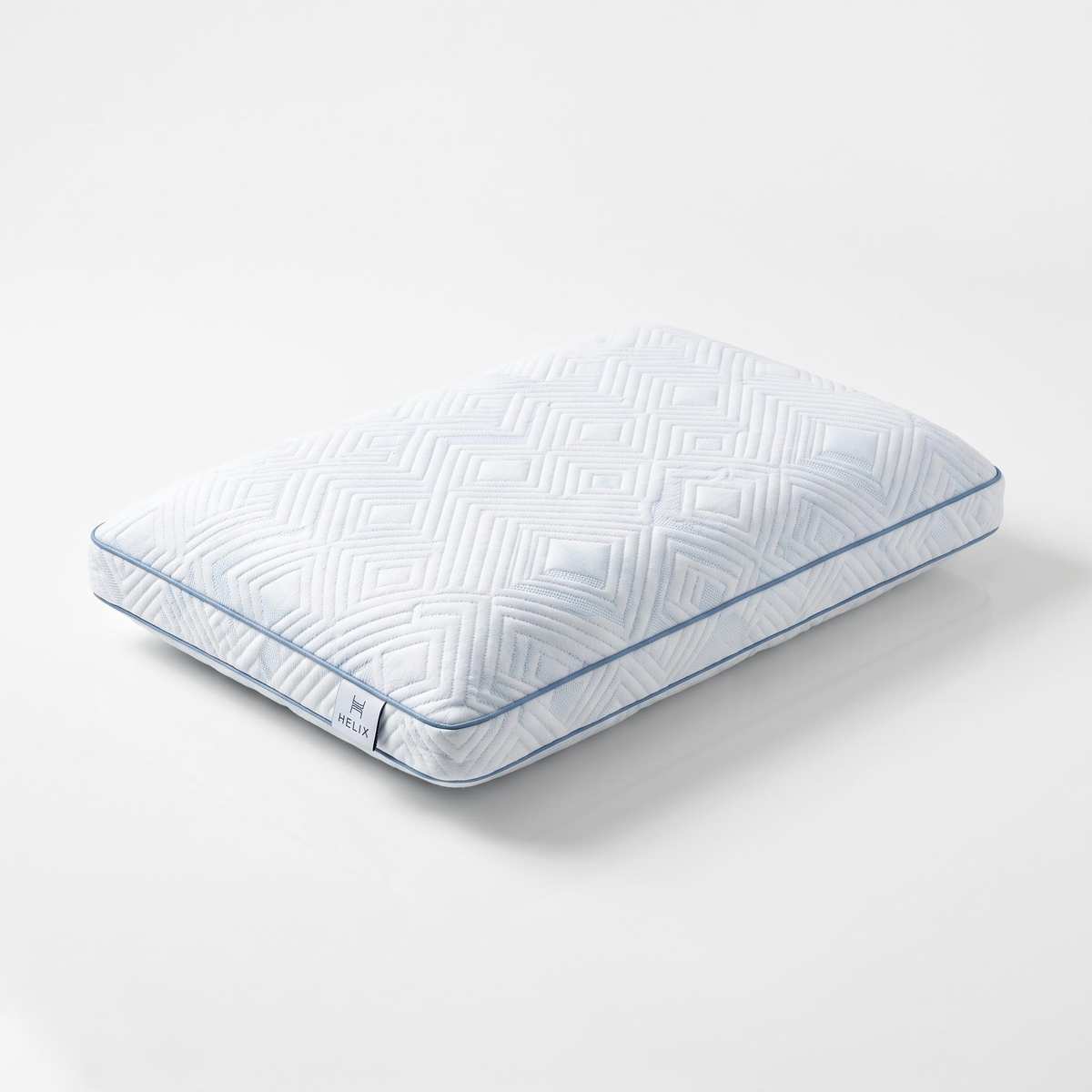
The Helix GlacioTex Low Loft (Back & Stomach Sleeper version) is a solid molded memory foam pillow, not shredded, not adjustable, not blended. The molded core maintains its 4.75-inch stated loft because there is no loose fill to redistribute or compress over the course of the night. For back sleepers, this is the highest available loft stability in the medium-firmness category. The GlacioTex cover uses phase-change material that Helix discloses as actively drawing heat away from the scalp surface, the strongest cooling claim in this roundup with a named mechanism rather than a generic “cooling” label.
| Spec | Detail |
|---|---|
| Stated loft | 4.75 in (Low Loft / Back & Stomach version) |
| Fill | Solid molded memory foam (not shredded) |
| Loft stability | High, solid foam does not redistribute overnight |
| Cooling | GlacioTex phase-change cover, active heat draw |
| Firmness | Medium |
| Cover | Removable, machine washable |
| Trial / Warranty | 100 nights / 1 year |
| Certification | CertiPUR-US |
Pros
- Solid molded foam maintains loft all night.
- GlacioTex phase-change cover for cooling.
- High loft stability for back sleepers.
Cons
- Combo sleepers may need more loft variation between positions.
- Molded core is fixed and cannot be adjusted.
Who should skip it: Combo sleepers who need the pillow to accommodate significant loft variation between positions. The molded core is fixed at 4.75 inches, it cannot be lowered for stomach sleeping or raised for deep side sleeping. The Helix GlacioTex Pillow is available direct from Helix Sleep.
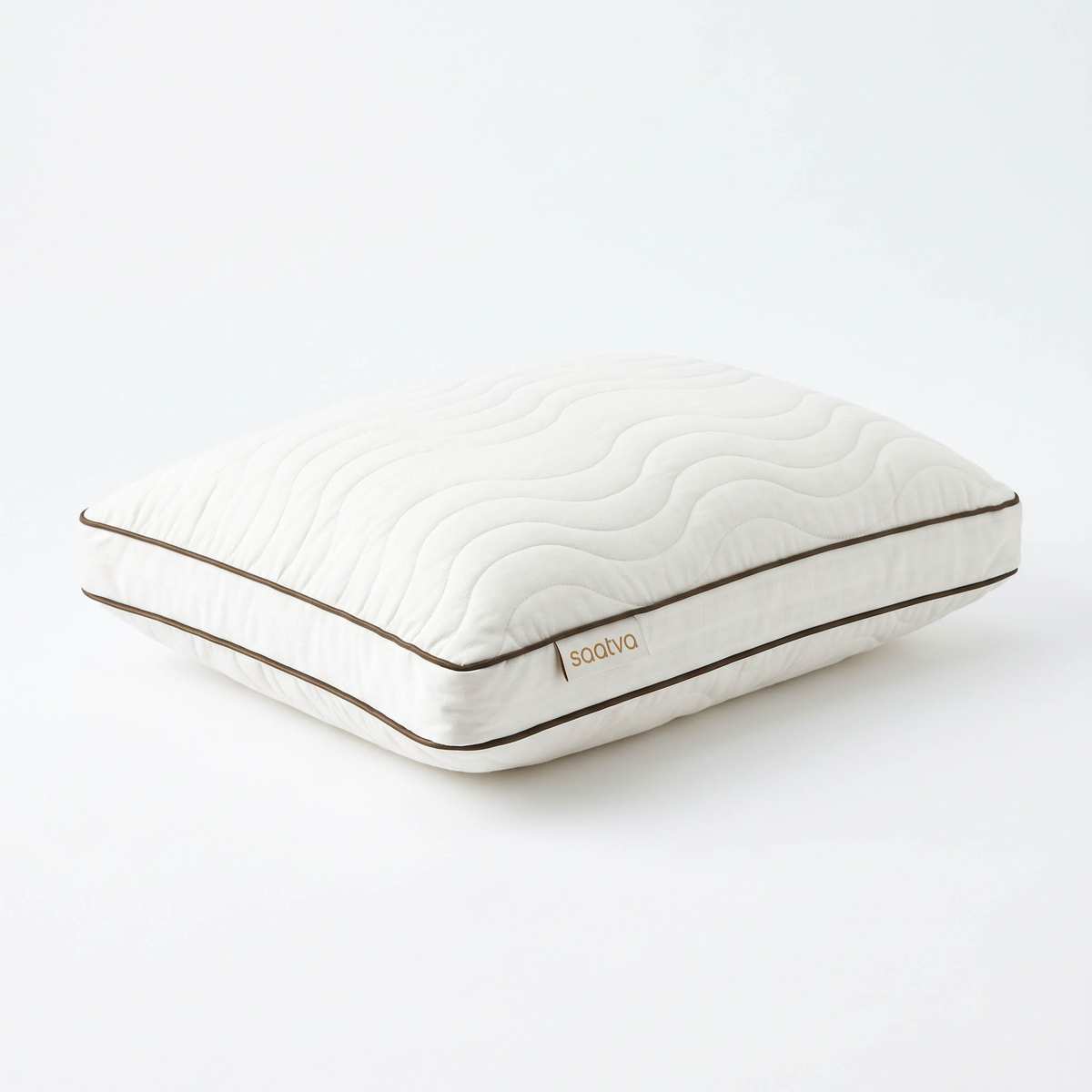
A 2020 randomized controlled trial published in PMC found ergonomic latex pillows improved craniovertebral angle by 4 degrees and increased cervical extensor muscle endurance by 91 seconds versus 14 seconds in the control group. Latex is the fill material with the strongest clinical evidence base for back-sleeper neck pain reduction. The Saatva Latex Pillow’s shredded natural latex core provides both the immediate rebound that solid latex delivers and the moldability that makes it more comfortable than a fixed-contour cervical pillow for those who shift slightly during the night. The outer down alternative layer adds a softer surface feel without compromising the latex core’s loft-holding properties.
| Spec | Detail |
|---|---|
| Stated loft (Standard) | 4-5 in |
| Fill | Shredded natural latex core + down alternative outer layer |
| Loft stability | High. Latex rebounds immediately, does not soften progressively |
| Cooling | Organic cotton cover, breathable construction |
| Firmness | Medium |
| Certifications | GOLS (latex), GOTS (cotton cover) |
| Trial | 45-day return |
Pros
- Strong clinical evidence for neck pain reduction.
- Shredded latex rebounds immediately.
- GOLS and GOTS certified materials.
Cons
- Hot sleepers who need active cooling technology may prefer a phase-change cover.
- Does not have the active cooling features of some PCM options.
Who should skip it: Hot sleepers who need active cooling technology. The Saatva Latex breathes well but does not have the phase-change cover that the Helix GlacioTex offers. The Saatva Latex Pillow Standard Loft is available direct from Saatva.
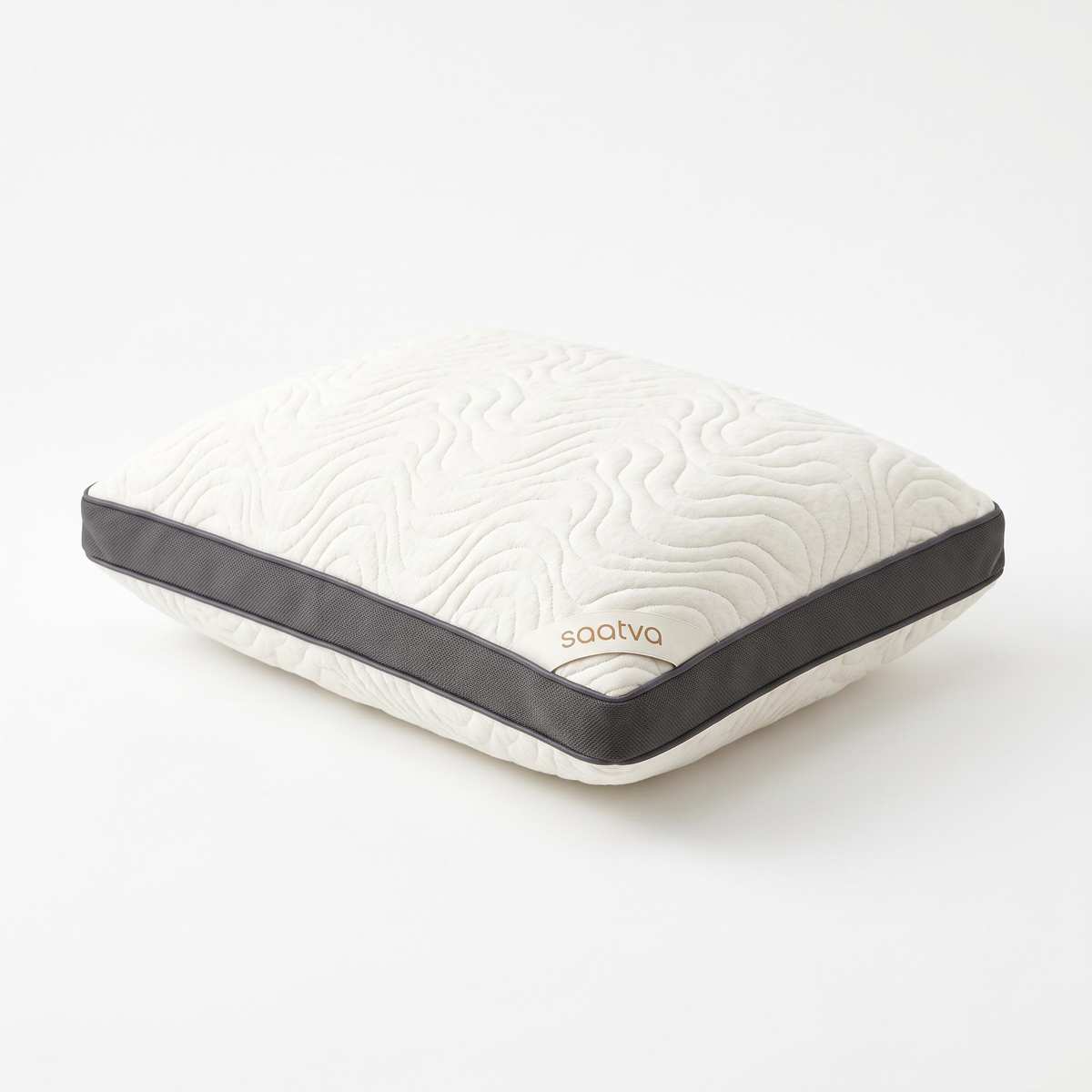
The Saatva Graphite is structurally similar to the Saatva Latex, shredded fill in a Standard Loft (4-5 inch) configuration, but substitutes graphite-infused memory foam for shredded latex as the primary fill component, with natural latex added to maintain loft stability over time. The graphite infusion draws heat away from the head surface via thermal conductivity rather than through surface phase-change material. For hot sleepers who prefer the slower contouring response of memory foam over latex’s immediate rebound, this is the equivalent performance option with the thermal management advantage.
| Spec | Detail |
|---|---|
| Stated loft (Standard) | 4-5 in |
| Fill | Shredded graphite-infused memory foam + natural latex |
| Loft stability | Good. Latex component prevents progressive compression |
| Cooling | Graphite thermal conductivity + organic cotton cover |
| Firmness | Medium |
| Certifications | CertiPUR-US (foam), GOTS (cotton cover) |
| Trial | 45-day return |
Pros
- Graphite infusion for heat management.
- Latex component prevents compression.
- Good loft stability with memory foam feel.
Cons
- Sleepers who have found all memory foam products retain too much heat regardless of infusion.
- Graphite reduces heat retention but does not eliminate it.
Who should skip it: Sleepers who have found all memory foam products retain too much heat regardless of infusion. The graphite reduces heat retention but does not eliminate it. The Saatva Graphite Memory Foam Pillow Standard Loft is available direct from Saatva.
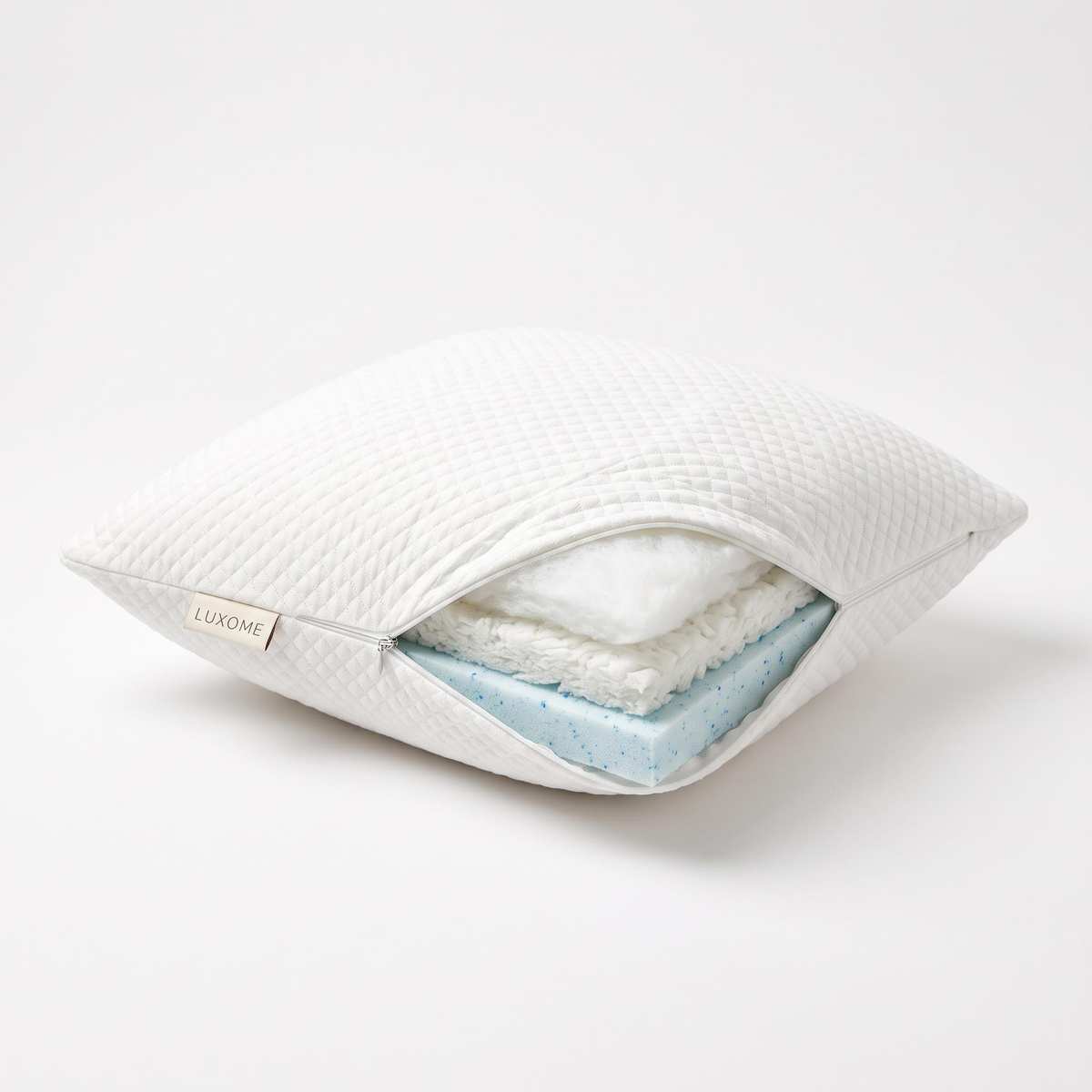
The LAYR’s three-insert system, soft (down alternative), medium (gel-infused shredded memory foam), firm (solid gel-infused memory foam pieces), provides a wider effective loft range than any other pillow in this list. For back sleeping, the medium insert alone or medium plus partial firm hits the 3-5 inch target. For side sleeping nights, adding the firm insert raises loft to accommodate the shoulder gap. The trade-off against solid-foam picks is that shredded and down-alternative fills have lower inherent loft stability than molded foam. The LAYR compensates by giving the user control to add fill back as the pillow settles. OEKO-TEX certification covers the full pillow including fill materials.
| Spec | Detail |
|---|---|
| Insert system | Soft (down alt) + Medium (shredded gel foam) + Firm (solid foam pieces) |
| Back-sleeping loft | 3-5 in (medium insert alone or medium + partial firm) |
| Loft stability | Moderate, shredded and fiber fills settle over time; user refills as needed |
| Cooling | Bamboo viscose cover |
| Firmness | Adjustable, medium-firm achieved with medium + partial firm configuration |
| Certifications | OEKO-TEX Standard 100 |
| Trial | 30 days return |
Pros
- Modular 3-insert system for customization.
- Wide effective loft range.
- OEKO-TEX Standard 100 certified.
Cons
- Back sleepers who want a set-and-forget solution without periodic fill management.
- Loft stability requires user attention over months of use as fills settle.
Who should skip it: Back sleepers who want a set-and-forget solution without periodic fill management. The LAYR’s loft stability requires user attention over months of use as fills settle. The Luxome LAYR Pillow is available direct from Luxome.
Best for: Back sleepers transitioning from standard down or down-alternative pillows, those who want adjustable fill with a softer hand feel.
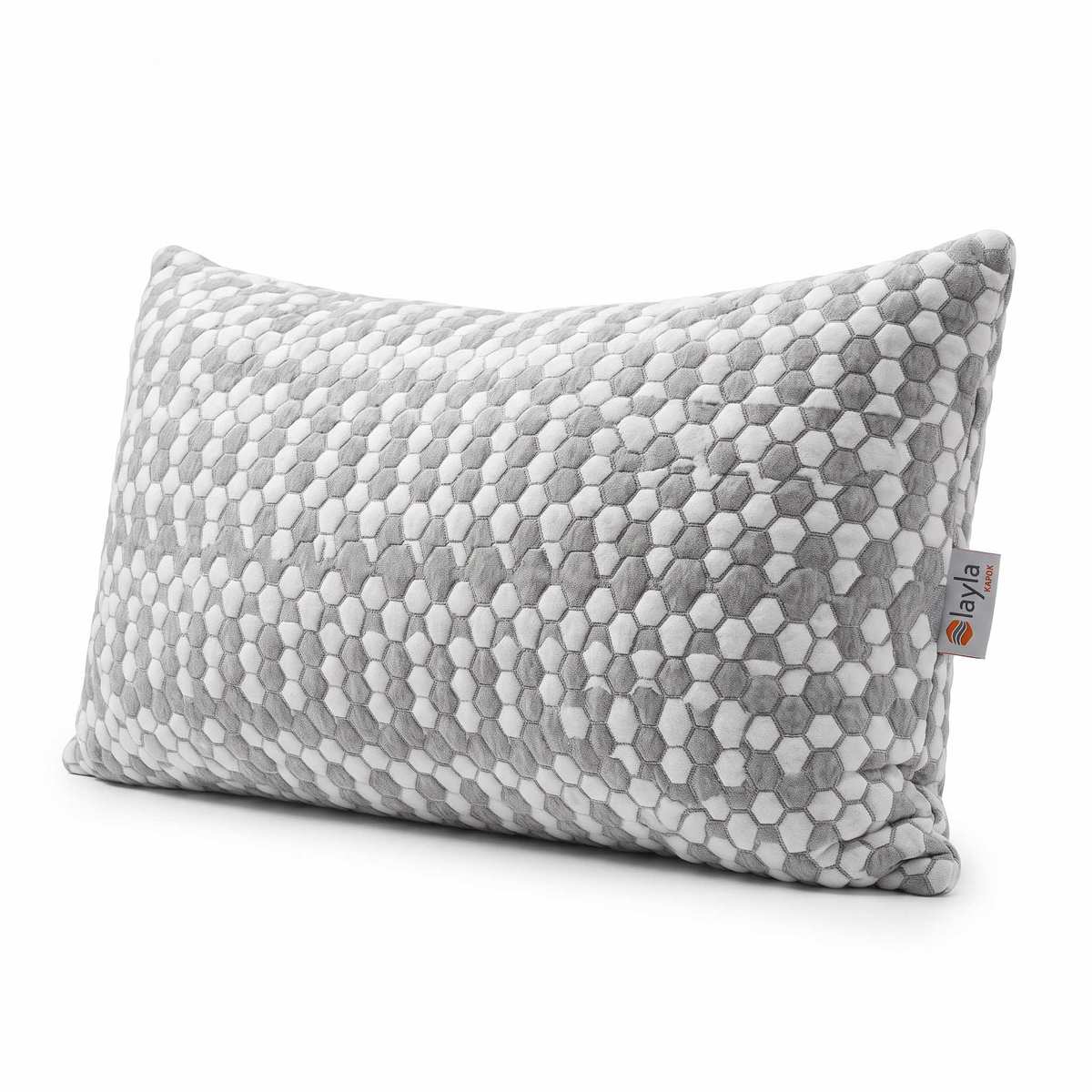
Kapok fiber, from the seed pods of the kapok tree, has a texture and loft similar to down but is plant-derived and CertiPUR-US certifiable when combined with memory foam. The Layla Kapok arrives with a stated 7-inch loft, which is appropriate for side sleeping but significantly too high for back sleeping. Back sleepers need to remove fill to reach the 3-4 inch functional range. The advantage of kapok over polyester down-alternative is that it maintains a softer, airier feel at lower loft than shredded memory foam alone. Useful for back sleepers who find low-loft shredded foam pillows too firm at the compressed height. The copper-infused cover provides moderate heat management.
| Spec | Detail |
|---|---|
| Stated loft (full) | 7 in (comes overstuffed) |
| Back-sleeping loft | 3-4 in after removing approximately 40-50% of fill |
| Fill | Shredded memory foam + kapok fiber |
| Loft stability | Moderate, kapok fiber settles faster than foam; periodic fluffing needed |
| Cooling | Copper-infused cover |
| Firmness | Medium-firm at back-sleeping fill level |
| Trial | 120 nights |
| Warranty | 5 years |
Pros
- Down-like feel with plant-based kapok.
- Adjustable fill for precise loft.
- Copper-infused cover for cooling.
Cons
- Arrives overfilled for back sleeping and needs fill removal to reach the right loft.
Who should skip it: Back sleepers who need a pillow that requires no fill management. The Layla Kapok requires an initial fill calibration session and periodic fluffing as the kapok settles. The Layla Kapok Pillow is available.
~$109
Check Price on Layla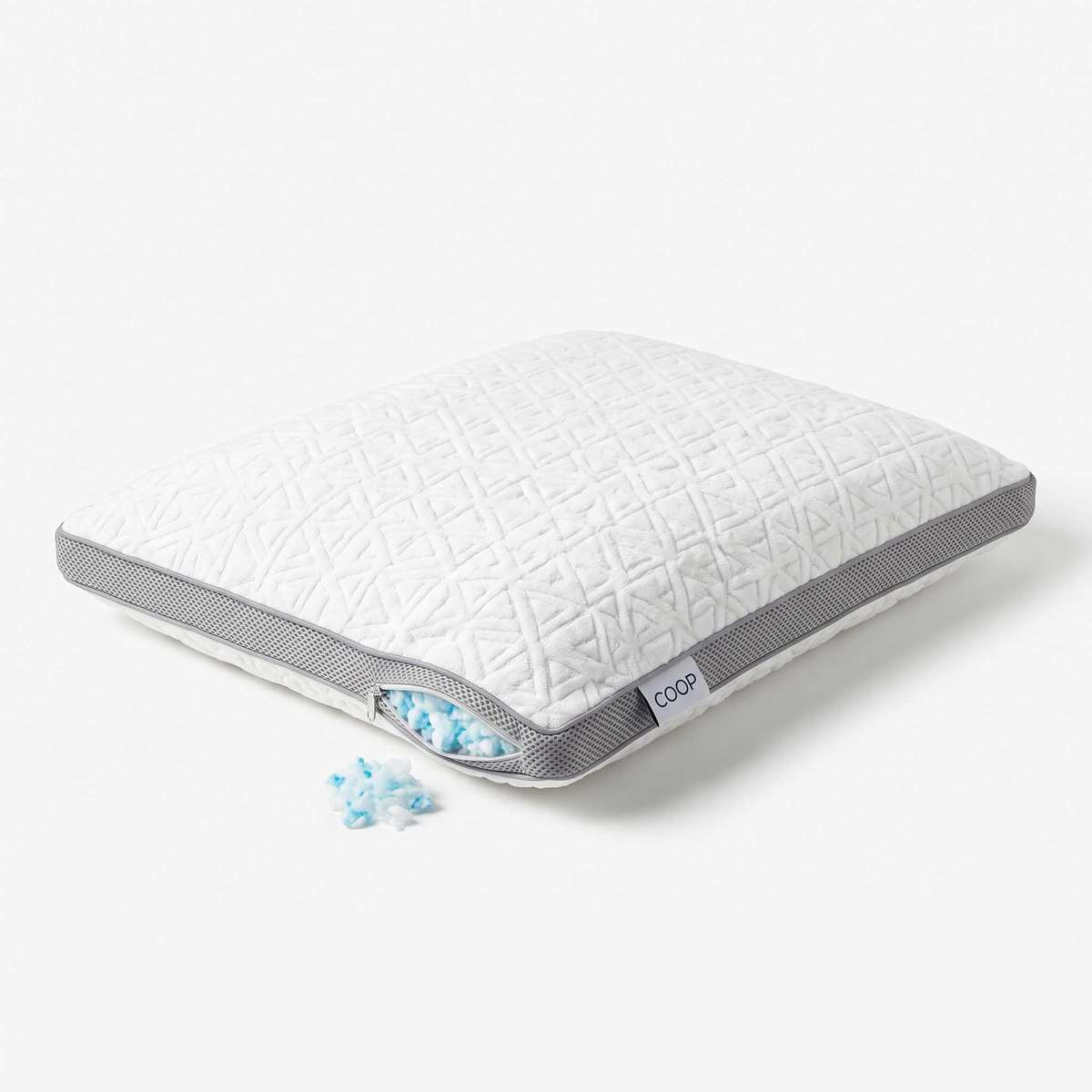
Best for: Back sleepers who also switch positions and want one pillow that covers both, first-time buyers of a quality pillow in this category.
The Coop Eden is not marketed specifically as a back-sleeper pillow and it does not have a fixed back-sleeper geometry. It earns its place here because back sleepers who remove roughly 40-50% of the shredded gel-infused memory foam and polyester microfiber fill reach a loft in the 3-4 inch range that serves back sleeping adequately. The GREENGUARD Gold certification. Which covers VOC off-gassing to child-safe levels. And the 100-night trial make it the lowest-risk entry into this category for someone uncertain whether a medium-firm adjustable pillow works for them. The limitation is the same as other shredded fills: the fill redistributes during the night, and the pillow’s loft stability is lower than solid or latex options.
| Spec | Detail |
|---|---|
| Back-sleeping loft | ~3-4 in (remove ~40-50% of fill) |
| Fill | Shredded gel-infused memory foam + polyester microfiber |
| Loft stability | Moderate, fill redistributes; lower stability than solid or latex |
| Cooling | Gel-infused foam + breathable Lulltra cover |
| Firmness | Medium-soft at back-sleeping fill level |
| Certifications | CertiPUR-US + GREENGUARD Gold |
| Trial | 100 nights |
| Warranty | 5 years |
Pros
- Fully adjustable fill for custom loft.
- Highly breathable construction.
- GREENGUARD Gold certified.
Cons
- Pure back sleepers with active neck pain may prefer a more structured, solid-core option.
- Requires fill adjustment to achieve optimal back-sleeper loft.
Who should skip it: Pure back sleepers with active neck pain who need a pillow with consistent geometry across the full night. The Coop Eden’s redistribution tendency makes it less appropriate as a therapeutic option than the Helix GlacioTex or Saatva Latex.
The Contrarian Point on Snoring
Every FAQ about back sleeper pillows raises snoring as a benefit of head elevation. The claim. That a pillow keeps the head elevated and helps reduce snoring, is partly accurate but often overstated for back sleeping specifically. As a 2024 systematic review in Journal of Personalized Medicine (MDPI) confirmed, head elevation of 30 degrees or more demonstrates meaningful reduction in upper airway obstruction. A standard back-sleeper pillow at 3-5 inches of loft provides roughly 15-20 degrees of elevation, which is well below that threshold for most adults. Back sleeping itself is the strongest positional driver of snoring because gravity pulls the tongue and soft palate backward regardless of pillow height. The pillow that “helps with snoring” from a back-sleeping position is not a standard bed pillow. It is a wedge pillow at a meaningfully steeper angle, or positional therapy that encourages side sleeping. A medium-firm back-sleeper pillow at 4 inches of loft is appropriate for cervical alignment. It is not a meaningful snoring intervention. My analysis found the snoring marketing around standard pillows overstated, which is why no pick in this guide is ranked on snoring.
Spec Comparison at a Glance
| Pillow | Stated Loft (Back) | Fill | Loft Stability | Cooling | Adjustable | Certifications |
|---|---|---|---|---|---|---|
| Helix GlacioTex Low Loft | 4.75 in | Solid molded foam | Highest | Phase-change cover | No | CertiPUR-US |
| Saatva Latex Standard | 4-5 in | Shredded latex + down alt | High | Organic cotton | Partial | GOLS + GOTS |
| Saatva Graphite Standard | 4-5 in | Shredded graphite foam + latex | Good | Graphite infusion | Partial | CertiPUR-US + GOTS |
| Luxome LAYR | 3-5 in (adjusted) | Modular inserts | Moderate | Bamboo cover | Full | OEKO-TEX |
| Layla Kapok | 3-4 in (adjusted) | Shredded foam + kapok | Moderate | Copper-infused cover | Yes | CertiPUR-US |
| Coop Eden | 3-4 in (adjusted) | Shredded foam + microfiber | Moderate | Gel-infused foam | Yes | CertiPUR-US + GREENGUARD Gold |
Frequently Asked Questions
Why do back sleepers need medium firmness rather than firm?
A firm pillow resists all compression, which means the head sits above the pillow’s surface rather than sinking slightly into it. In back sleeping, that rigid elevation pushes the cervical spine into anterior flexion (chin toward chest). Medium firmness allows controlled sinkage of roughly 0.5-1 inch, which distributes pressure across the occiput and keeps the cervical curve in a closer-to-neutral position.
Solid foam vs shredded foam, which holds shape better?
Solid foam, consistently. A solid molded core cannot redistribute during the night because it has no loose material to shift. Shredded fill provides more moldability but loses loft over hours as the pieces settle. For back sleepers whose primary concern is consistent overnight support, solid foam (like the Helix GlacioTex core) holds geometry across a full night better than any shredded fill option.
How does mattress firmness change the pillow I need?
A soft or plush mattress allows your torso to sink, which raises the relative position of your head and reduces the gap between the mattress surface and your neutral cervical position. This means you need a lower-loft pillow. Roughly 3-3.5 inches functional loft on a soft mattress versus 4-5 inches on a firm mattress. The 2022 Biology (MDPI) study found a 30.5 mm increase in head sinkage on soft versus medium mattresses, with corresponding cervical geometry changes. Using a pillow calibrated for a firm mattress on a soft mattress will push the head forward into flexion.
Can a pillow stop snoring for a back sleeper?
Not at standard bed-pillow elevations. Meaningful airway improvement from positional head elevation requires roughly 30 degrees or more. A standard pillow at 4 inches of loft provides approximately 15-20 degrees. For back sleepers whose snoring is positional, the evidence-supported intervention is side sleeping, not a different pillow.
Why do my pillows keep turning into flat pancakes after a few months?
Cheap poly-fill compresses rapidly under the weight of your head. A 2022 durability test found standard polyester fibers lose up to 40% of their loft within six months of use. Switch to shredded latex or dense memory foam to maintain structural integrity. Keep in mind that heavy sweaters will degrade any foam much faster.
What is the exact loft a back sleeper needs to prevent neck pain?
Most back sleepers need a loft between 4 and 5 inches to keep the cervical spine neutral. Anything higher forces your chin toward your chest and strains the neck muscles. A custom-fill pillow allows you to dial in that exact height. Just remember that a very plush mattress will require a slightly lower pillow to compensate for your body sinking.
Is shredded memory foam better than solid latex for adjusting pillow height?
Shredded memory foam gives you complete control over loft because you can manually add or remove handfuls of the fill. Solid latex forces you to adapt to its factory-set height. A Coop Home Goods shredded pillow lets you test quarter-inch changes easily. The trade-off is that shredded foam requires weekly fluffing to prevent clumping.