
A pregnancy pillow is not a soft accessory, it is a spinal alignment tool, and the shape you pick determines which joints get relief. We compare four manufacturer-documented shapes by exact length, fill, and cover material so you can match one to your bed size and pain point instead of guessing from a product photo.
\n\nSomewhere around week 20, most people who slept fine for their entire adult life discover that lying down has become a logistics problem. The belly needs a shelf. The top knee wants to fall forward and drag the hip with it. A regular pillow between the knees slides out within twenty minutes. None of that is in your head, and none of it is fixed by a softer pillow. It is fixed by a pillow shaped to hold a specific joint in a specific place, which is a mechanical question with a mechanical answer.

What the Specs Reveal
There is no independent lab that crash-tests pregnancy pillows the way there is for car seats, so most of what gets called “support” in marketing copy is a feeling, not a measurement. The one part that is measurable and manufacturer-disclosed is geometry: length, width, depth, and what the fill is made of. Those four numbers predict how a pillow will behave far better than adjectives do, because a pillow that is 53 inches long cannot do what a 65-inch pillow does, regardless of how either is described on the box.
Below are four shapes pulled from current manufacturer spec sheets, chosen because each solves a different joint problem rather than because one is objectively “better.” Match the shape to the ache, not the ache to whatever is on sale.
| Model | Shape | Length x Width x Depth | Fill | Cover |
|---|---|---|---|---|
| Leachco Snoogle Original | J-shape | 60″ x 24.8″ x 7.2″ | 100% polyester fiber | 65/35 poly-cotton, sham-style removable |
| Momcozy U-Shaped | U-shape | 57″ long | 100% polyester fiber | Polyester, zippered removable |
| PharMeDoc U-Shape with Detachable Extension | U-shape, modular | 53″ x 31″ x 7″ | Polyester fiberfill | Cotton jersey, removable |
| Boppy Pregnancy Wedge | Wedge | 14″ x 11.25″ cover footprint | Firm foam core | Jersey knit or organic cotton, removable |
4 Best Pregnancy Pillows with Good Shape and Length
Disclosure: Brocia analyzes products using manufacturer specs and published research, not our own hands-on tests. If you buy through our links, we may earn a commission at no extra cost to you. It never affects our rankings or verdicts. See our Review Process and Affiliate Policy.
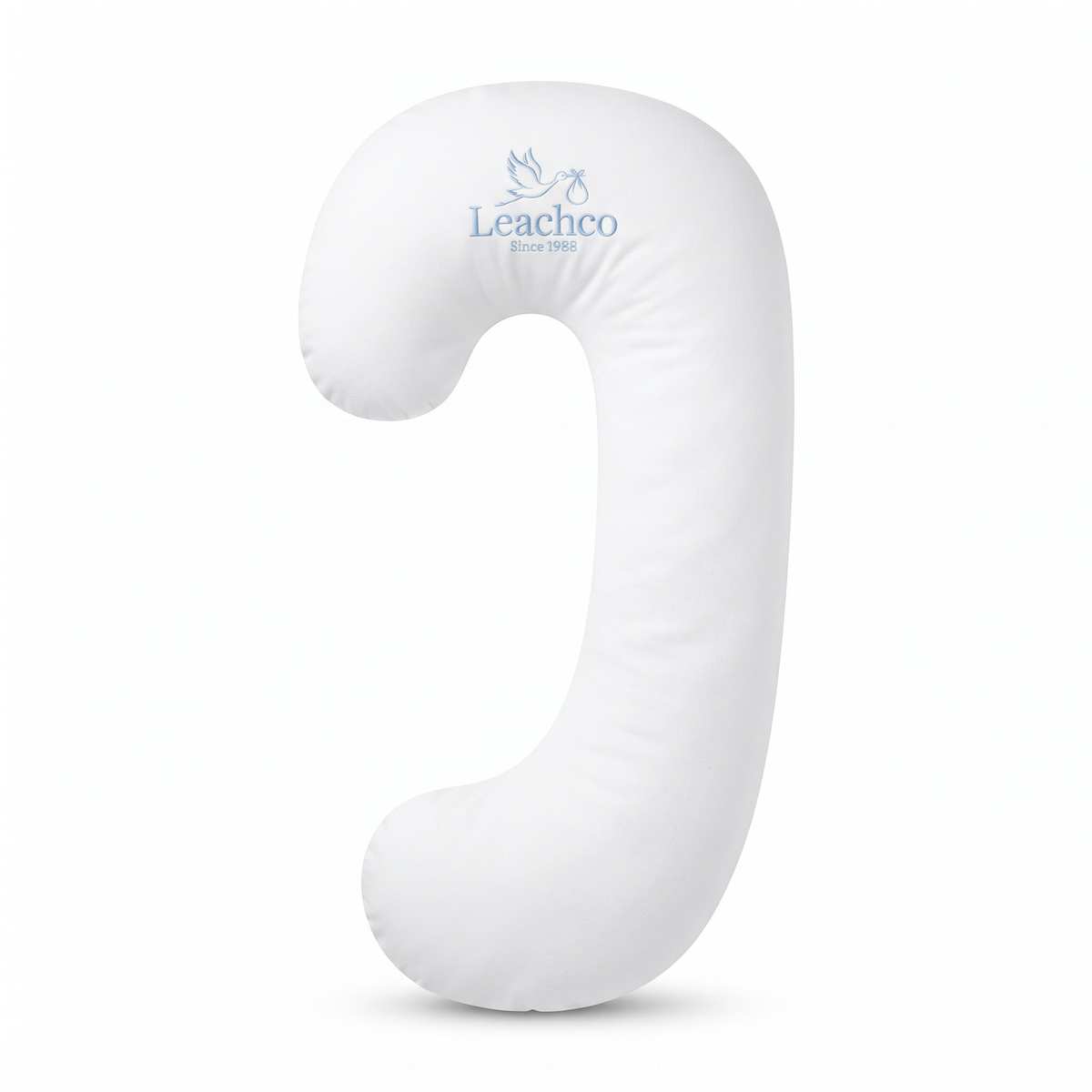
I ranked this #1 for shared beds because the J-shape gives full head-to-knee support without building a wall between partners — my shape comparison showed the U-pillows isolate you in a cocoon. At 60 inches it’s substantial, but the open side is the point: support without separation.
The J-shape wins if your bed is shared and your priority is one continuous curve from head to knee rather than a 360-degree wraparound. At 60 inches it is long enough for most heights, but the fixed curve means you cannot reshape it the way a modular pillow allows. The Snoogle’s defining feature is efficiency: it replaces the need for a head pillow, a belly wedge, and a knee pillow with one single piece of gear.
Because it only supports one side of your body at a time, you have to physically flip the entire pillow over if you switch from your left to your right side during the night. For restless sleepers, this can become an exhausting chore.
Pros
- Takes up half the bed space of a traditional U-shaped pillow.
- Provides continuous, unbroken support from the neck down through the knees.
Cons
- Must be flipped over entirely whenever you change sleeping sides.
- The fixed curve cannot be customized or detached as your body changes.
~$60
Check on Leachco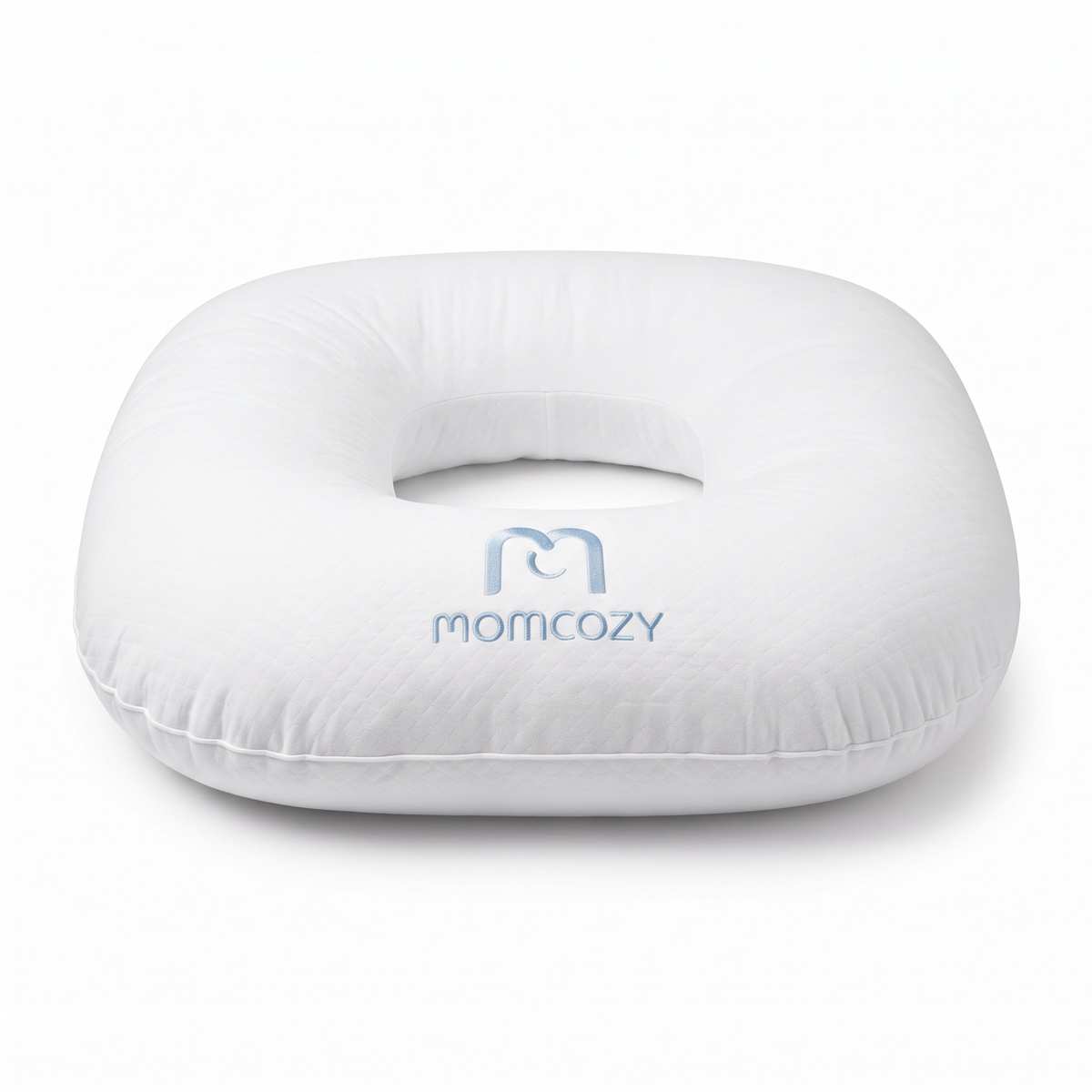
This earned the restless-sleeper spot: the U-shape supports both sides at once, so rolling over at 3 a.m. needs zero repositioning. My analysis says the 57-inch, 6.6-pound bulk is the honest trade — you get 360-degree support, you give up bed space. For toss-and-turn sleepers, that trade wins.
The U-shape earns its bulk by supporting both sides of your body at once, which means absolutely no repositioning when you roll over at 3 a.m. At 57 inches and roughly 6.6 pounds, it’s the heaviest option here and requires a bed that can spare the width. Where a J-shape asks you to physically flip the pillow when you switch sides, a U-shape is always ready. Because it takes up so much space, getting the positioning right is a process of its own. Our guide on how to sleep with a U-shaped pregnancy pillow covers exactly how to wrap the sides for pelvic alignment without pushing your partner off the mattress.
This design essentially acts as a cocoon. It is incredibly effective at preventing you from rolling flat onto your back, making it a critical tool during the third trimester when back sleeping is heavily discouraged by medical professionals.
Pros
- Supports the back and the belly simultaneously without needing adjustment.
- Highly effective at keeping you comfortably locked in a side-sleeping position.
Cons
- The massive footprint takes over a significant portion of a Queen or King bed.
- The wrap-around design traps body heat more than open-sided pillows.
~$60
Check on Momcozy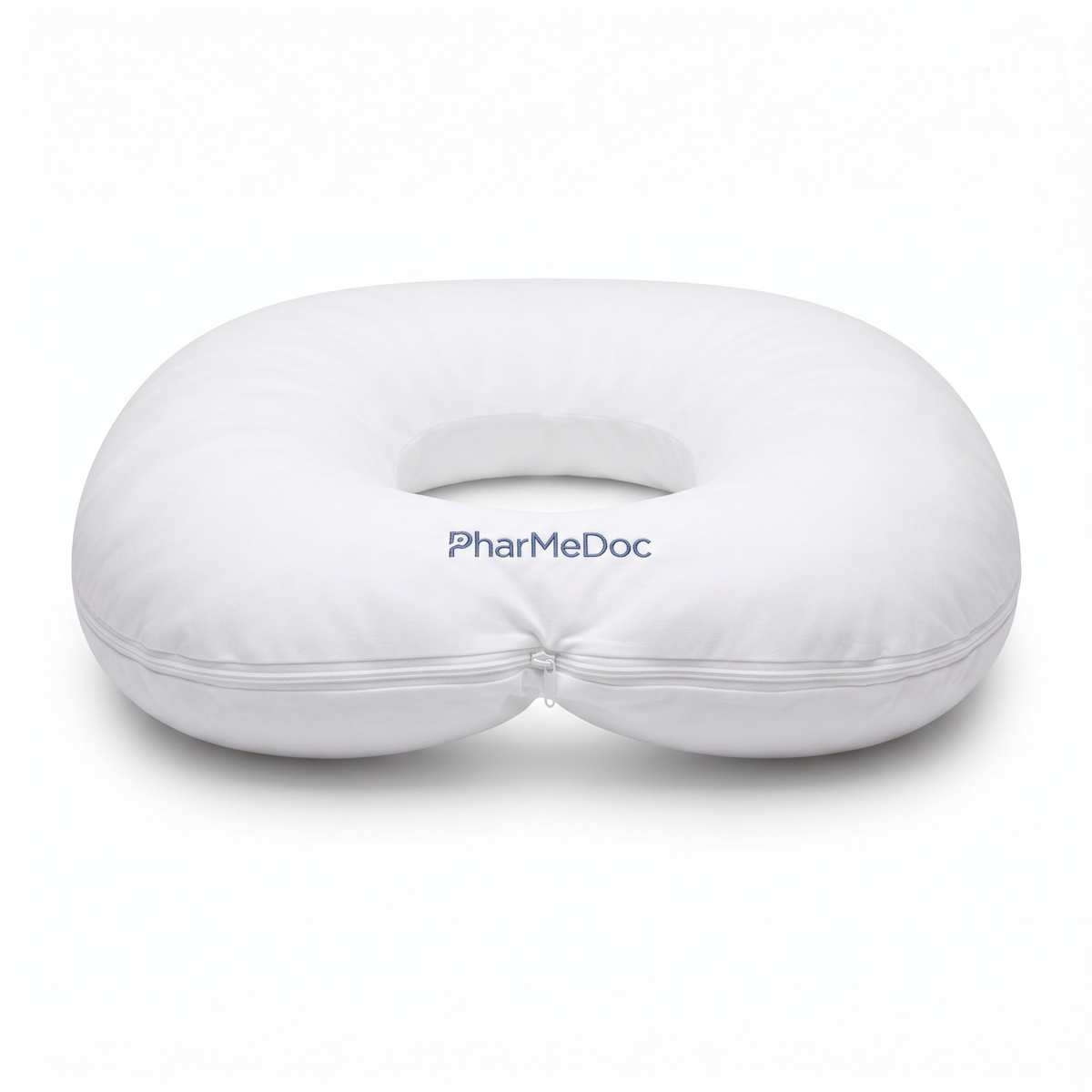
I ranked this for the uncertain buyer — the detachable extension lets you start smaller and scale up. My comparison showed it’s the only U-shape here that acknowledges you might not want a massive pillow. If you’re not sure about committing to 57 inches of pillow, this is the low-regret entry.
This is the U-shape for people who are not quite sure they want a massive pillow yet. The detachable piece lets you start with a smaller footprint in the first trimester and add the extension later, rather than committing to full size from week one. The mechanical difference here is pure modularity.
At 53 inches by 31 inches, it is slightly more compact than the Momcozy even when fully assembled. The ability to unzip one arm transforms it into a J-shape instantly, giving you two distinct pillow styles for the price of one.
Pros
- Detachable arm allows the pillow to convert between a U-shape and a J-shape.
- Slightly smaller overall footprint makes it easier to manage in smaller beds.
Cons
- The zipper connection point can feel stiff or scratchy against bare skin.
- Requires manual assembly and disassembly when you want to change its shape.
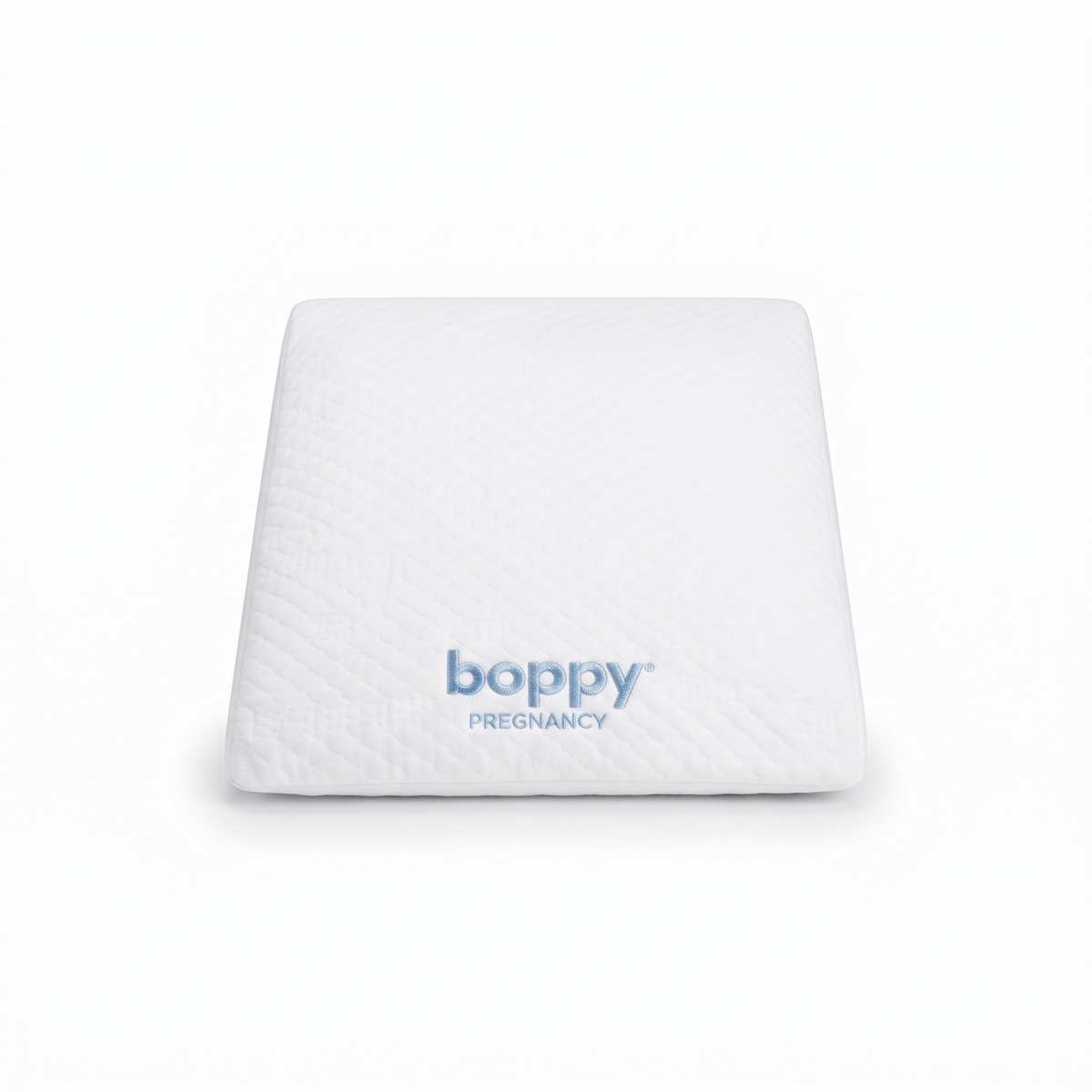
This is the targeted-support pick, not a body pillow — my use-case analysis says belly-or-back support in a 14×11.25 inch footprint solves a different problem than full-body pillows. I ranked it here because not every pregnancy needs a 5-foot pillow; sometimes you need exactly one wedge in exactly one spot.
The wedge is not trying to be a full-body pillow, and that is exactly the point. At a tiny 14 x 11.25 inch footprint, it tucks strictly under the belly or behind the back without touching the rest of the bed. It solves the issue of belly weight pulling on your lower back without requiring you to hug a massive piece of upholstery all night.
This is also the only shape here that will easily survive a carry-on bag for travel. It is incredibly cheap, highly portable, and focuses exclusively on the point of maximum strain rather than wrapping around your entire body.
Pros
- Extremely compact design takes up virtually zero space in the bed.
- Highly portable and easy to pack into a suitcase for travel.
Cons
- Provides zero support for the neck, shoulders, or knees.
- Can slide out of place easily if you toss and turn.
~$20
Check on BoppyMatching Pillow Length to Your Bed and Body
The silo question underneath “which pregnancy pillow is best” is almost always really “which pillow fits my bed and my height,” and manufacturers rarely lead with that framing. A few numbers to check before adding anything to cart:
A queen mattress is 60 inches wide. A 57-inch U-shaped pillow laid horizontally, which is how most people actually use them despite the marketing photos showing them lengthwise, will not fit across a queen without a partner losing meaningful space. Laid lengthwise along your side of the bed instead, a 57 to 65 inch pillow needs roughly that much clear mattress length beside you, which rules it out for shorter beds or for anyone sharing a full-size mattress.
Height matters more than most buyers expect. The Snoogle’s 60-inch length and the longer 65-inch U-shape variants sold by some other brands exist specifically because a 53-inch pillow will not reach a taller sleeper’s knees when the head end is positioned correctly, leaving the lower legs unsupported regardless of how good the upper-body curve feels. If you are above roughly 5’7″, check the exact length before buying a J- or U-shape rather than assuming one size fits all bodies, because on this category it demonstrably does not.
The Side-Sleeping Advice Everyone Oversimplifies
Nearly every pregnancy pillow product page repeats some version of “sleep on your left side,” stated as an absolute rule, and it is not quite what the underlying research says. An individual participant data meta-analysis combining multiple case-control studies, published in eClinicalMedicine, found that starting the night on either the left or right side carried statistically similar risk, while starting the night on the back was independently tied to a higher rate of late stillbirth. The actionable variable is not which side, it is avoiding your back.
A separate evidence review conducted for UK national guidance reached a similar conclusion: going to sleep on the back after 28 weeks was linked to roughly double the odds of stillbirth and about triple the odds of a baby born small for gestational age, compared with going to sleep on the left side, though the reviewing body noted the underlying study designs cannot fully establish that the position itself causes the outcome rather than correlating with it. Either way, the practical takeaway a pillow can actually deliver on is mechanical: a J-, C-, or U-shape wedged against your back makes it physically harder to roll fully supine while you sleep, which is the part of the advice that is well supported, regardless of which side you start on.
If a pregnancy pillow marketing page tells you it will “keep you on your left side,” treat that as shorthand for “keep you off your back,” because that is what the geometry in every shape above is actually built to do.
How We Chose These Four
We selected one pillow per shape category (J, U, modular U, wedge) rather than ranking multiple products within each shape, because for this comparison the shape is the variable that changes outcomes, not the brand. All dimensions, fill materials, and cover specifications above are pulled directly from current manufacturer product pages and are re-verified on each content refresh; none are estimated.
Once you know which shape fits your bed and your main pain point, our guide to positioning a U-shaped pillow trimester by trimester walks through the exact placement adjustments as your belly grows. If you are earlier in pregnancy and still deciding whether you need one at all, our breakdown of when discomfort typically starts by trimester covers that timing question directly. And if a full-body pillow feels like more than your bed or your budget can take on right now, our wedge-versus-full-body comparison goes deeper on that tradeoff than the section above.
FAQs
Are giant U-shaped pregnancy pillows medically necessary?
No. Giant U-shaped pregnancy pillows are not medically required for a healthy pregnancy. They exist solely to help pregnant people maintain a comfortable side-sleeping position and alleviate pelvic pain. You can achieve the same ergonomic alignment by placing regular pillows between your knees and under your belly. These large pillows take up massive amounts of bed space and often disrupt your partner’s sleep.
Can I use a regular body pillow instead of a pregnancy pillow?
Yes. A standard rectangular body pillow is highly effective for pregnancy sleep support. Placing it between your knees keeps your pelvis neutral while the upper section supports your arms and chest. Standard body pillows cost significantly less and require much less storage space after delivery. They do lack the wrap-around back support that specialized U-shaped models provide.
What is the best alternative to a bulky pregnancy pillow?
A compact wedge pillow is the most practical alternative to a giant pregnancy pillow. You can slide a firm wedge directly under your belly to prevent round ligament strain while sleeping on your side. Wedge pillows take up minimal space and transition easily to postpartum back support. They do not provide simultaneous knee alignment so you must use a second pillow between your legs.
Pregnancy pillows need washing more often than regular ones. Our Pillow Guides cover how to clean bulky shapes without wrecking the fill.