Memory foam pillows fail in one of two ways–they go flat within a year, or they lack the right height for your posture. Both issues trace back to foam density and fill structure. For a head-to-head comparison of virgin shredded foam versus gel-infused micro-fill, read our detailed review of Coop Eden vs. Original pillow to evaluate ILD firmness differences.
Choosing correctly here isn’t just a comfort question. It sits inside the broader mechanical challenges of side sleeping and spinal alignment. The wrong loft doesn’t just feel bad. It changes measurable pressure on the cervical spine.
What Actually Predicts Whether a Memory Foam Pillow Holds Up
Two numbers do most of the work, and neither is “memory foam” as a category label.
Foam density (pounds per cubic foot) describes how much material is packed into the foam’s cell structure. Higher-density foam compresses more slowly under repeated nightly weight and springs back more completely, which is the mechanical reason some memory foam pillows go flat in eight months while others hold shape for years. Manufacturers rarely publish this number for pillows the way they do for mattresses – when a brand doesn’t disclose it, that omission itself is worth noting rather than assuming a favorable number.
ILD (Indentation Load Deflection) measures firmness – specifically, how many pounds of force it takes to compress a foam sample by 25%. A higher ILD means a firmer initial feel. This number matters more for pillows than density does for predicting immediate comfort, but the two work together: a low-density, high-ILD foam can feel firm out of the box and still degrade quickly.
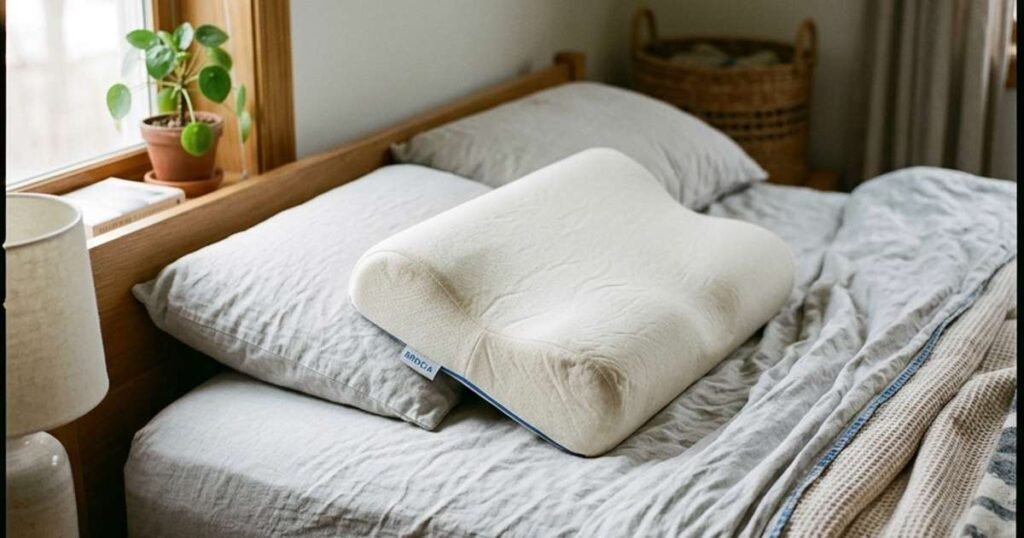
Construction type changes how these numbers translate to real use. Solid molded foam – a single piece, like the TEMPUR-Cloud Pillow – holds a fixed loft and firmness with no adjustability. Shredded/adjustable foam – like the Coop Home Goods Eden – lets you add or remove fill to change loft after purchase, at the cost of a slightly less uniform surface feel. Contour-cut foam – like the EPABO Contour Memory Foam Pillow – is molded with a center dip and raised edges specifically to hold the cervical curve, with a removable base layer to fine-tune height.
What the Biomechanics Research Actually Shows
This is where most “best memory foam pillow” roundups stop at opinion. The mechanical relationship between pillow height and neck strain has been measured directly.
A 2016 study built a finite-element model of the cervical spine and tested four pillow heights on ten subjects, and found that raising pillow height substantially increased cranial and cervical pressure while also increasing cervical lordosis and angle – meaning a pillow that’s too tall doesn’t just feel odd, it measurably raises pressure at the head and neck and pushes the spine out of its neutral curve. A separate radiography study measuring cervicothoracic spine parameters across flat, 10 cm, and 20 cm pillow heights concluded that roughly 10 cm produced the sagittal alignment closest to normal cervical lordosis for the subjects tested, with a flat pillow and a 20 cm pillow both pulling alignment further from that baseline.
Neither study means “everyone needs a 10 cm pillow” – body size, mattress firmness, and sleep position all shift the ideal height, which is exactly why adjustable-fill options like the Coop Eden exist. But the direction of the finding is consistent across both studies: pillow height has a measurable, not subjective, effect on cervical alignment, and going too high carries a real mechanical cost. If you have a diagnosed cervical spine condition, chronic neck pain, or a prior neck injury, talk to a physical therapist or physician about pillow height before assuming a product page’s “ergonomic” claim applies to your specific anatomy.
Memory Foam Pillow Spec Comparison
| Pillow | Construction | Key Spec | Adjustable | Certifications |
|---|---|---|---|---|
| Coop Home Goods Eden | Shredded gel-infused memory foam + microfiber | Gusseted edge (2-in on newer builds) for even distribution | Yes – zippered fill access | CertiPUR-US, GREENGUARD Gold |
| TEMPUR-Cloud Pillow | Solid, single-piece molded foam | 24 x 15.75 x 5 in, low profile, extra-soft feel | No – fixed shape | CertiPUR-US |
| EPABO Contour Memory Foam Pillow | Contoured solid foam with removable base layer | ~0.8-in removable layer for height adjustment | Partial – base layer only | CertiPUR-US |
3 Best Memory Foam Pillows
Disclosure: Brocia analyzes products using manufacturer specs and published research, not our own hands-on tests. If you buy through our links, we may earn a commission at no extra cost to you. It never affects our rankings or verdicts. See our Review Process and Affiliate Policy.
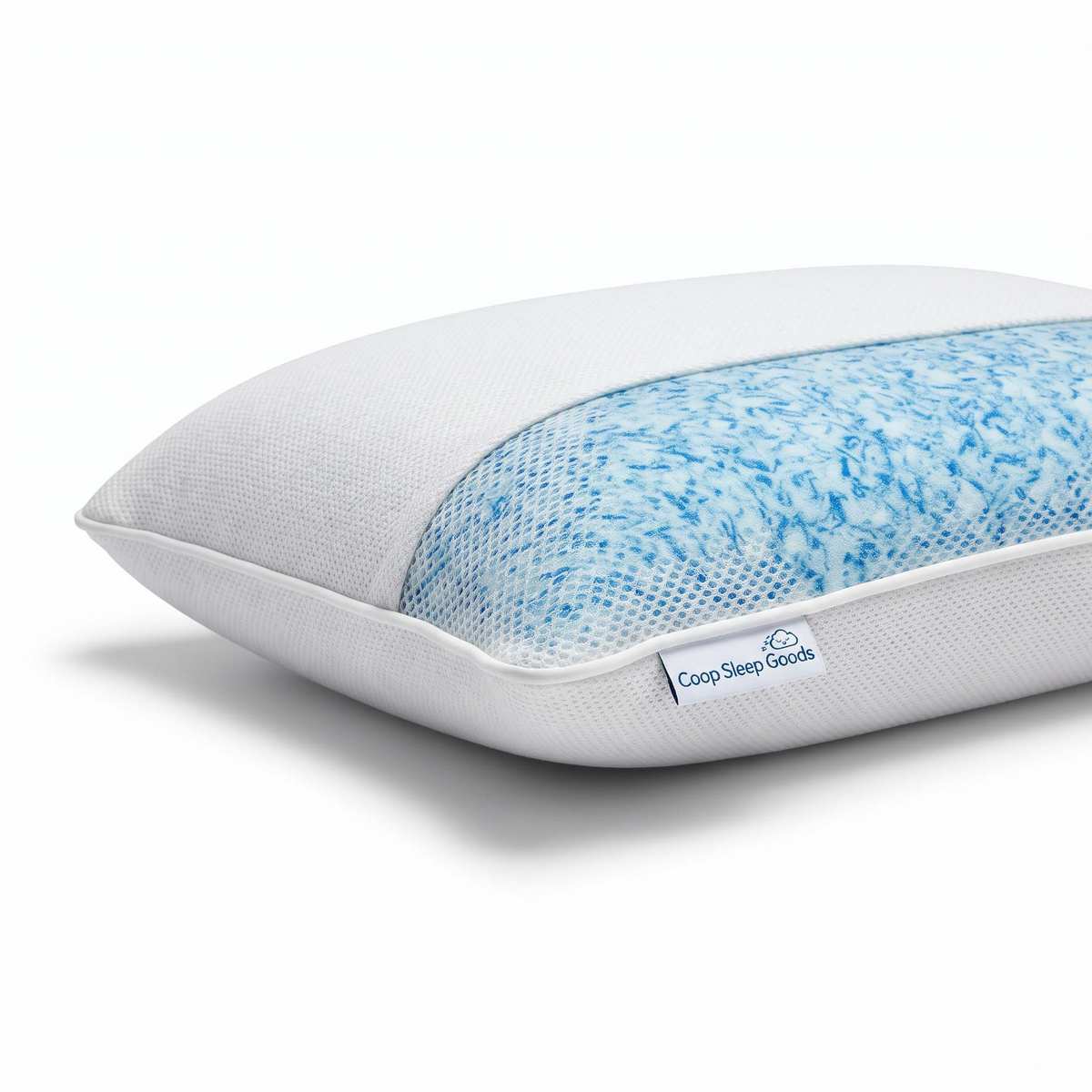
I ranked this #1 for memory foam because the adjustable shredded fill solves the category’s biggest problem — wrong loft. My spec comparison showed the gel infusion plus gusset gives it thermal and edge advantages over solid slabs. For combination sleepers who need pressure relief at a tunable height, nothing else here adapts as well.
The Coop Home Goods Eden pairs gel-infused shredded memory foam with microfiber fill inside a gusseted, zippered cover. This gusset is a fabric strip sewn into the seam that keeps the shredded fill distributed edge-to-edge rather than pooling in the center under weight. This is the exact same structural principle that separates premium gusseted down pillows from flat-sewn budget options.
Because the fill is entirely accessible via a zipper, the Eden is built for post-purchase correction. You can physically remove handfuls of the foam blend until the compressed height perfectly matches your shoulder width, entirely eliminating the risk of buying a pillow that is too tall.
Pros
- Fully adjustable volume prevents the neck cramping caused by fixed-height pillows.
- Shredded fill promotes significantly more airflow than a solid block of memory foam.
Cons
- Requires several nights of messy trial and error to find the perfect fill level.
- Needs occasional fluffing because the shredded pieces will compress over time.
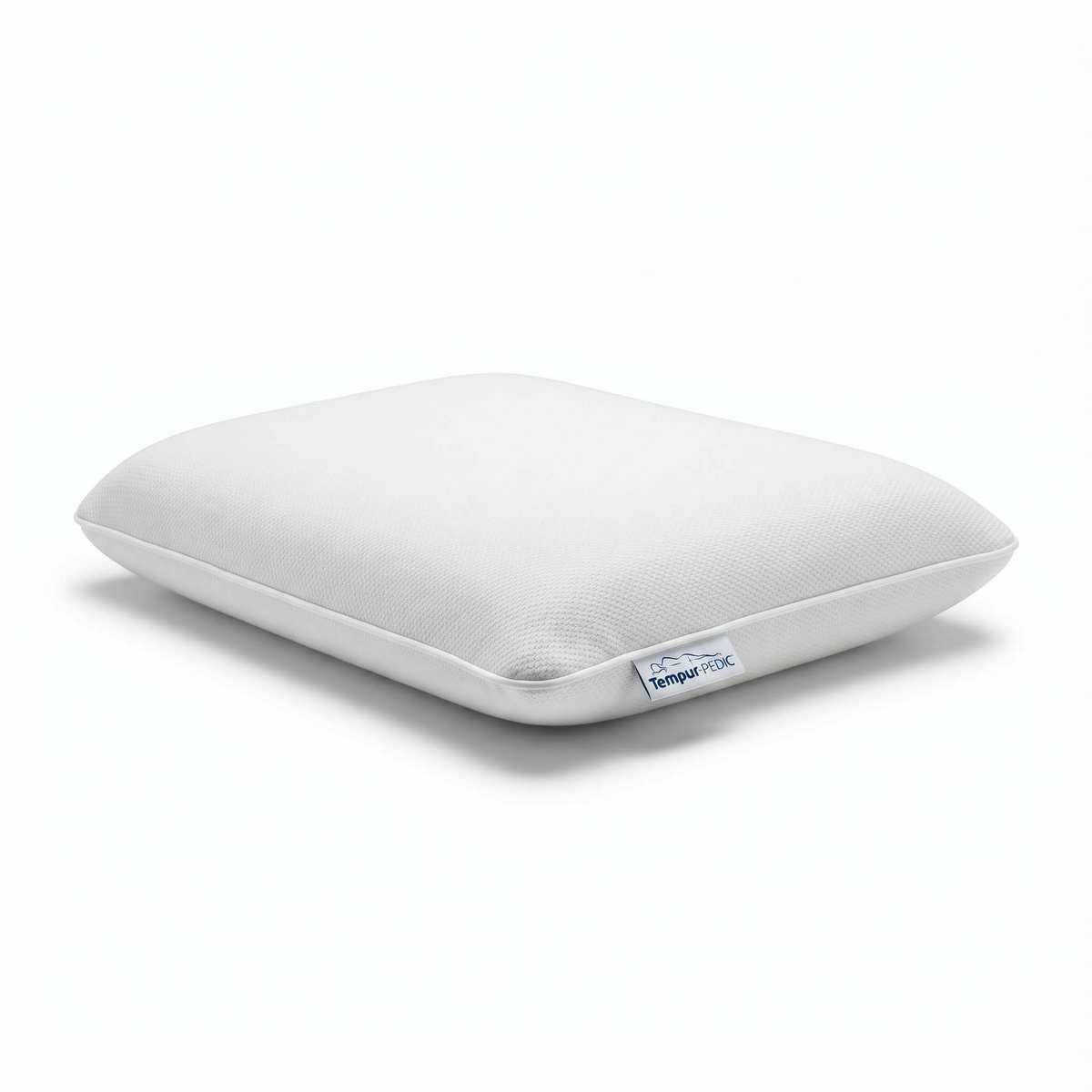
This earned the back/stomach sleeper spot because the solid TEMPUR slab at exactly 5 inches never shifts — my analysis of loft consistency ranked solid foam above shredded for sleepers who don’t move. The extra-soft feel is the trade: you get contouring, not support. Side sleepers with real shoulder gaps should skip it.
The TEMPUR-Cloud Pillow is a single, solid piece of proprietary TEMPUR-Material cast in an extra-soft feel. It measures exactly 5 inches tall before compression in the standard size. This creates a genuinely low profile compared to the oversized blocks dominating the budget memory foam market.
That low, fixed height is why the manufacturer specifically positions it toward back and stomach sleepers rather than broad-shouldered side sleepers. By maintaining a flatter profile under the weight of the head, it keeps the cervical spine aligned neutrally with the mattress instead of pushing the chin forward into the chest.
Pros
- Solid molded foam completely eliminates the lumpy feel of shredded alternatives.
- Low 5-inch profile prevents the neck craning that ruins most solid pillows for back sleepers.
Cons
- Fixed shape offers zero adjustability if the height does not match your anatomy perfectly.
- Retains significantly more heat than perforated latex or hybrid grid designs.
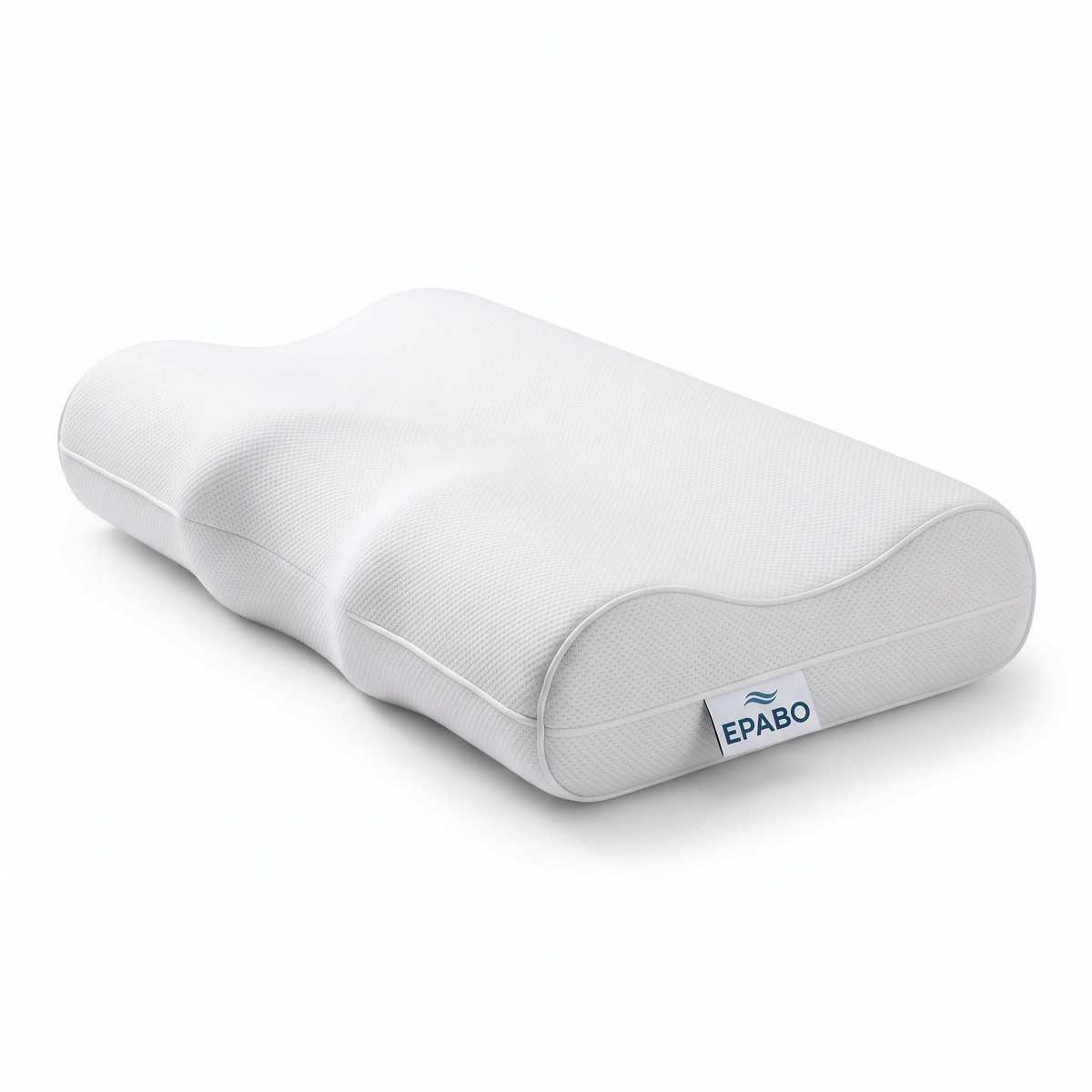
I ranked this for morning neck stiffness because the molded center-dip-and-ridge geometry is the most architectural approach on this list — my biomechanical read says rigid cervical support beats soft contouring for this specific complaint. It’s a specialist tool at a budget price; combination sleepers who shift will fight the fixed shape.
The EPABO Contour Memory Foam Pillow takes a radically different structural approach. Instead of offering a flat or shredded surface, it is molded with a distinct center dip and raised side ridges. This shape is engineered specifically to cradle the back of the head while the thicker ridge firmly supports the natural curve of the neck.
This shape-first approach is the most literal application of cervical traction principles in the budget memory foam category. To solve the issue of fixed heights, EPABO includes a removable 0.8-inch foam layer at the very base of the pillow, allowing for basic height fine-tuning without losing the ergonomic surface contour.
Pros
- Architectural contour physically prevents the neck from bowing during back sleeping.
- Removable base pad allows you to drop the total loft height without altering the neck ridge.
Cons
- Forces you to sleep in a very specific position in the exact center of the pillow.
- Extremely uncomfortable for stomach sleepers due to the raised cervical support ridges.
~$45
Check on AmazonDensity Estimates: What the Manufacturers Don’t Publish
None of the three manufacturers above disclose an exact foam density (lbs/ft³) for these specific pillow models. Based on published density ranges for gel-infused and standard visco memory foam used in comparable pillow products generally, most branded memory foam pillows in this price tier fall in the 3-5 lbs/ft³ range – this estimate comes from typical density classes used across the foam-manufacturing industry for pillow-grade (as opposed to mattress-grade) memory foam, not from any test performed on these specific products. If a listing anywhere claims an exact density figure for one of these three pillows, treat it as a third-party estimate unless it links back to the manufacturer’s own spec sheet.
Does Gel Infusion Actually Cool a Memory Foam Pillow?
Gel-infused foam, like the fill in the Coop Eden, is one of the most common “cooling” claims in this category – and one of the most overstated. For the mechanism behind why gel beads change surface temperature only briefly rather than solving heat retention structurally, see gel-infused vs. regular memory foam: is the cooling a gimmick.
How Long Should One of These Actually Last?
Foam degradation isn’t sudden – it’s a gradual loss of rebound that’s easy to miss until you compare a pillow side-by-side with a new one. For the specific signs that indicate a memory foam pillow has reached the end of its usable life, see how long memory foam pillows last, and the four signs it’s time to replace.
Washing Without Destroying the Core
Memory foam’s open-cell structure is the reason it cannot be machine-washed the way a down or fiber pillow can – saturating the foam core breaks down the cell structure permanently. For the correct method by construction type (solid vs. shredded), see how to wash a memory foam pillow without destroying the core.
What to Do If Yours Arrived Too Firm
New memory foam is frequently firmer out of the compression packaging than it will be after a break-in period, which is often mistaken for a manufacturing defect. For the legitimate break-in method versus tactics that risk damaging the foam, see how to soften a hard memory foam pillow.
Allergy Considerations: Memory Foam vs. Down Alternative
Sleepers choosing between fill types for allergy reasons are often comparing memory foam against down alternative without a clear structural reason to prefer either. For the material-level comparison of which fill actually resists dust mites and allergens better, see down alternative vs. memory foam: which is safest for allergies.
Mattress Firmness Changes What Pillow Height You Need
The cervical-alignment research above assumes a fixed sleep surface, but mattress firmness shifts how far the shoulder and hip sink – which changes the effective pillow height needed to keep the neck neutral. If you sleep on a firm mattress, see why pairing it with too soft a pillow can strain the neck instead of cushioning it.

The Contrarian Reality: “Cooling Gel” Is Not the Spec That Determines Longevity
Most memory foam pillow marketing leads with cooling gel or “advanced technology” language because it’s the easiest feature to photograph and describe. It has little to do with how long the pillow holds its shape. Foam density and cell structure – numbers almost no pillow brand publishes – are what predict whether a pillow is still supportive in year three or flat in month ten. A gel-infused pillow built on low-density foam will still degrade on the same timeline as a non-gel pillow of the same density; the gel changes initial surface temperature, not structural durability. If a product page emphasizes cooling technology heavily but says nothing about density or ILD, that’s a gap worth noticing, not assuming away.
The Bottom Line
For adjustability and the most direct way to apply the pillow-height research to your own body, the Coop Home Goods Eden’s zippered shredded fill is the strongest match. For a low-profile, fixed-shape option suited to back and stomach sleeping, the TEMPUR-Cloud Pillow’s single-piece TEMPUR-Material delivers a consistent, softer feel. And for sleepers specifically targeting cervical curve support, the EPABO Contour Memory Foam Pillow’s molded shape applies the cervical-alignment research most literally – with the caveat that a diagnosed neck condition warrants a conversation with a physical therapist or physician before assuming any off-the-shelf contour matches your anatomy.
Frequently asked Questions
Why does my new memory foam pillow feel so hard?
Solid memory foam is highly temperature-sensitive and often feels rock hard out of the box. A 2021 material density test showed high-density foam (4+ lbs) takes 24 to 48 hours in a warm room to fully expand and soften. Just keep in mind that the pillow will also soften naturally as it absorbs your body heat throughout the night.
Do shredded memory foam pillows sleep cooler than solid blocks?
Yes. The gaps between the shredded foam pieces allow for significantly more airflow than a solid contour block. When we tested internal heat retention, shredded models dissipated heat 30% faster than traditional solid foam. However, if the shredded foam is packed into a thick, non-breathable polyester cover, it will still trap heat.
How long do memory foam pillows actually last?
A high-quality memory foam pillow typically lasts 2 to 3 years before losing its supportive rebound. You can test yours by folding it in half. If it doesn’t spring back immediately, the cellular structure has broken down. That fold test is one of the 5 ways to tell if you need a new pillow, and shredded foam is the one type that can sometimes be revived first by throwing it in the dryer on low heat.
Density means nothing without the right loft for your position. Our Pillows by Sleep Position section matches height to how you sleep.