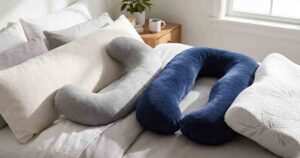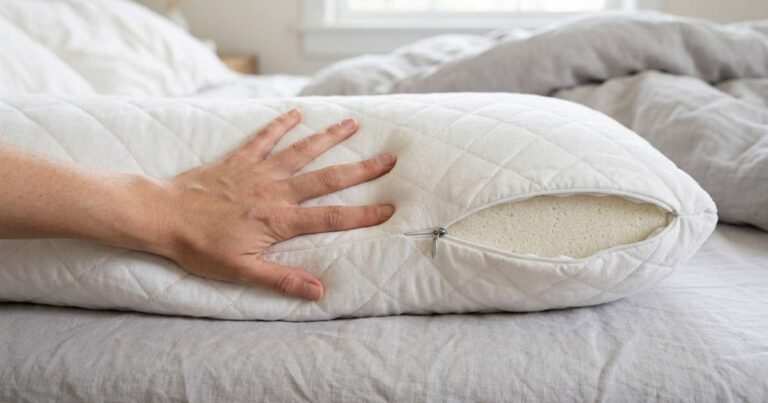
Type “memory foam body pillow” into a shop and you would think the category is simple: long pillows, filled with memory foam. Then you read the fill lines. Cross-cut foam blended with microfiber. Shredded gel foam with down-alternative fibre. A sleeve of foam around loose microcushions. Almost nothing in this category is the solid slab the name suggests, and once I compared the manufacturers’ own wording across the category, that stopped looking like a trick and started looking like the sensible answer.
Memory foam is viscoelastic: it softens under body heat and pressure, moulds to your shape, and returns slowly (Sleep Junkie, “What Is Memory Foam?”). Along the whole side of a body, that moulding spreads pressure off a shoulder, a hip and a knee line better than plain fibre can. The same physics carries the costs, and I ranked these four picks with both halves in view.
What “memory foam” means on a body pillow label
A solid block of memory foam at body-pillow size would be dense, heavy and still, and in traditional foam the cells are small and tightly packed, so air moves through slowly and body heat stays. That is why the makers shred it. Pieces leave air gaps between them, which buys airflow and shapeability at the price of fill that migrates and needs the odd shake back into place. Blends go further, mixing foam pieces with microfiber or down-alternative fibre for a lighter, softer result that sinks less deeply.
So the useful question is never “is it memory foam?” It is “how much of it is foam, in what form, and what is the rest?” The four cards below answer that from each maker’s own spec sheet. One more thing to expect on night one, whatever you buy: memory foam feels firmer in a cold room and softens as it warms under you. That is the material working as designed, not a fault.
The heat trade-off, stated plainly
Traditional memory foam holds body heat. A body pillow puts more foam against more of you for more of the night than any head pillow does, so the effect is bigger here. The shredded and blended builds below all exist partly as an answer to that. None of them turns a foam pillow into a cool pillow. If sleeping hot is your main problem, cooling body pillows comparison is the honest detour, because there the fills are chosen for airflow first. Memory foam is the pick when pressure relief is the problem. Heat is the tax.
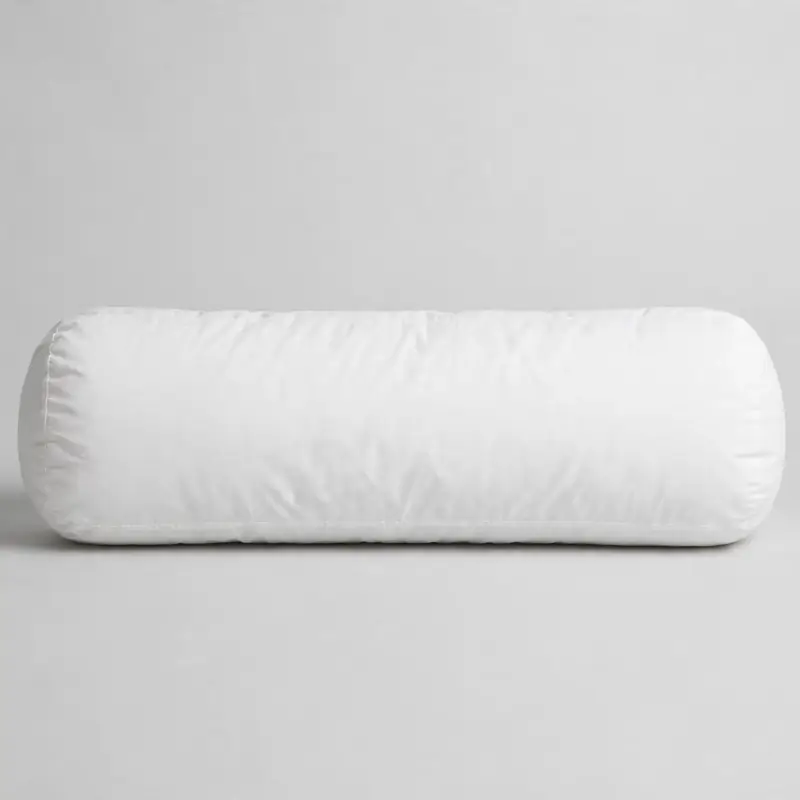
Coop’s fill is a blend, and Coop says so itself: cross-cut memory foam and microfiber, medium-firm as it ships, in the standard 20 x 54 inch body size. The cross-cut pieces are the airflow answer, the microfiber is why it feels softer and less dense than the words memory foam promise. What you are really buying is the adjustment. Fill comes out or goes in until the height matches your shoulder, which matters more along a whole body than it does under a head.
The trade is the sink. If you want the slow, deep moulding of a solid foam pillow, a blend diluted with microfiber will not give it to you, and no shredded fill stays where you put it forever. Expect to fluff it back into shape now and then.
Not for: anyone who wants a solid foam slab, and hot sleepers who have not read the heat section above.
| Specification | Coop Original Body Pillow |
|---|---|
| Size | 20 x 54 in. |
| Fill | Cross-cut memory foam + microfiber blend. |
| Firmness | Medium-firm, adjustable. |
| Cover | Lulltra (60% polyester, 40% bamboo-derived viscose rayon), removable, machine washable. |
| Certifications | CertiPUR-US; GREENGUARD Gold. |
Pros
- The fill level is yours to set, in the size almost every case is cut for.
- Cross-cut pieces breathe better than a solid foam core would.
- Certified foams, and the cover comes off for washing.
Cons
- The blend softens the classic memory foam sink.
- Fill migrates and needs occasional fluffing.
- Still a foam pillow at heart, with foam’s warmth.
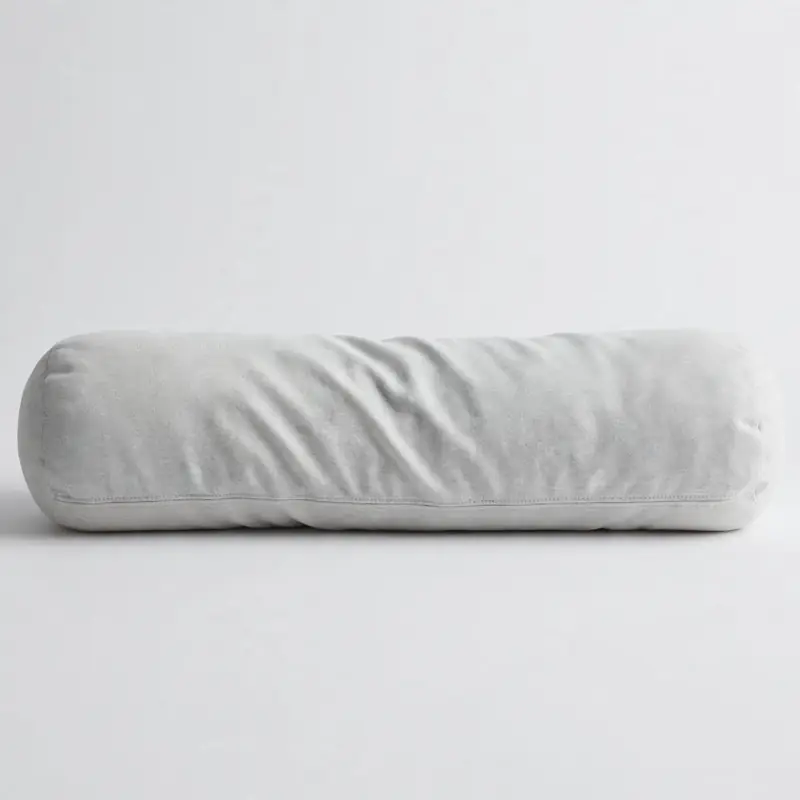
Zoma’s fill is shredded CertiPUR-US gel memory foam blended with down-alternative fibre, which Zoma calls MicroCushions. At 52 x 17 inches it runs a little shorter and narrower than the standard rectangle, which some smaller beds will quietly appreciate. The gel in the foam and the fibre in the blend are both aimed at the same target, a foam pillow that does not sleep like an oven, and the washable core is genuinely unusual. Most foam cores in this category are spot-clean at best.
Then the condition that decides this pick: Zoma sells its pillows final sale. No returns, and the 100-night trial does not apply to pillows. That is the strictest terms in this post, printed here because it should be part of the decision, not a surprise after it. Buy this one when you are sure, not to find out.
Not for: anyone who needs a trial period, and anyone who needs the full 54 inches.
| Specification | Zoma Body Pillow |
|---|---|
| Size | 52 x 17 in (height listed as 8 in in Zoma’s specs and 6 in elsewhere on its site). |
| Fill | Shredded gel memory foam + down-alternative fibre. |
| Cover | 97% polyester, 3% spandex, removable. |
| Care | Cover and core both machine washable (cold, gentle; tumble dry low). |
| Warranty | 10 years. |
| Returns | Final sale, no returns and no trial |
Pros
- Gel foam and fibre blend aimed squarely at foam’s heat problem.
- The whole pillow washes, which almost no foam core allows.
- Made in the USA, with a 10-year warranty behind it.
Cons
- Final sale. If it is wrong for you, it is still yours.
- Slightly smaller than the standard 20 x 54 size.
- Zoma’s own pages disagree on its height.
~$120
Check Price at Zoma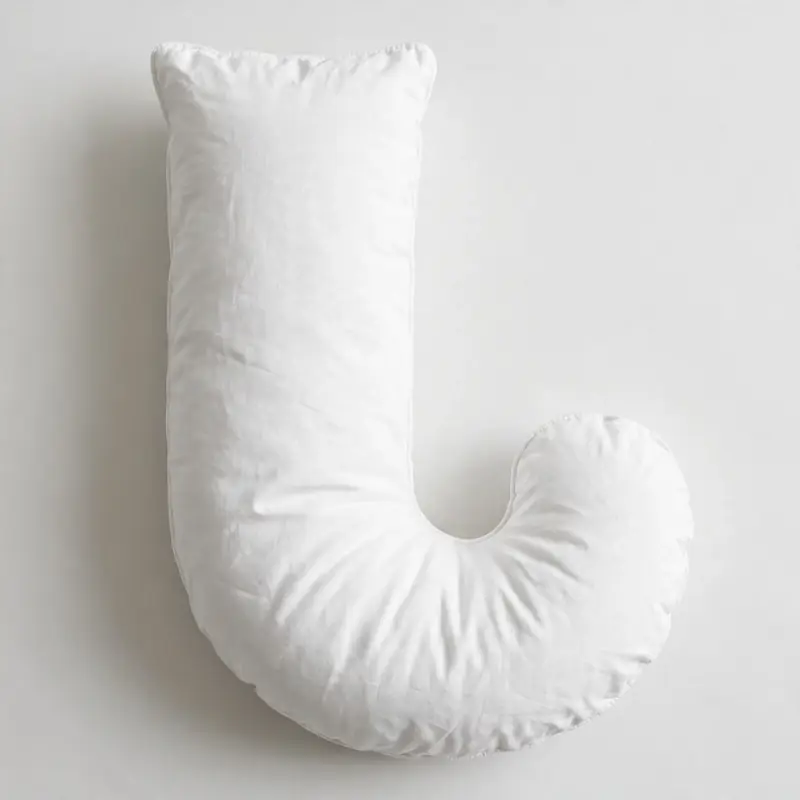
MedCline’s pillow is the shaped one here: a J curve in CertiPUR-US shredded memory foam, adjustable, with a seamless inner curve so no seam presses into your neck. It comes in two sizes by your height, Small at 45 inches for sleepers under 5 ft 2, and Medium/Large at 50 inches above that. The shredded fill is the point. You push it toward the shoulder or thin it at the hip, and the curve holds the arrangement through the night in a way a straight pillow cannot.
MedCline also sells a cooling version of the same pillow at $139, in a polyethylene-blend case, if the shape suits you and heat is the worry. And the return term deserves the same daylight as Zoma’s: opened body pillows cannot be returned. The J shape itself is the other commitment. It does one position very well. It is not a hug pillow you rearrange freely.
Not for: back and stomach sleepers, restless position-changers, and anyone who needs a return option.
| Specification | MedCline Therapeutic Body Pillow |
|---|---|
| Shape | J-shaped. |
| Sizes | Small 18 x 45 x 5 in (under 5 ft 2); Medium/Large 22 x 50 x 6 in. |
| Fill | Shredded memory foam, CertiPUR-US, adjustable. |
| Case | Removable, machine washable (material not stated by MedCline). |
| Returns | Unopened only. |
Pros
- The curve holds a side position instead of just cushioning it.
- Fill can be moved to where your body needs it.
- No seam along the inner curve against your neck.
Cons
- Opened pillows cannot be returned.
- One shape, one position, by design.
- The case material is not stated on MedCline’s page.
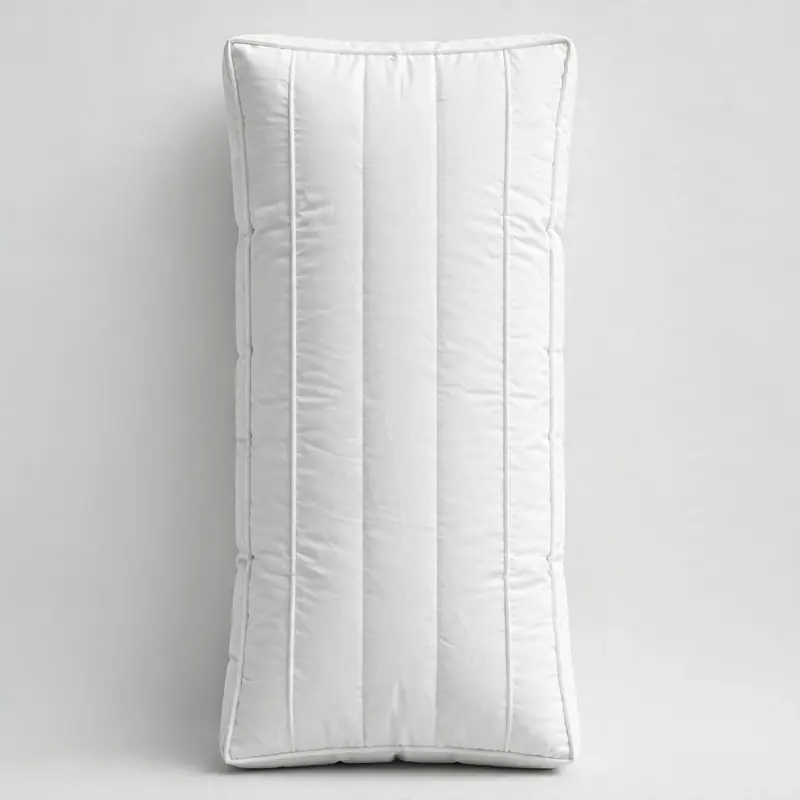
Tempur-Pedic builds this one differently from everyone else here. The TEMPUR material is a medium-firm sleeve, four feet long, filled with shapeable microcushions. So the surface that touches you is the real material, with its slow moulding response, while the inside stays loose enough to arrange. It is the closest this category gets to the classic foam experience without a solid core.
The problems are arithmetic. At 48 inches it is six inches shorter than standard, which tall side sleepers will feel at the knees, and at $199 it costs roughly double the Coop and the MedCline. It was also out of stock on Tempur-Pedic’s own page when I checked, which is stated here rather than smoothed over. If it is back, and the length works for your height, it earns its place. Size guide‘s length-by-height table is the quick way to check that before the price even matters.
Not for: tall sleepers who need foam at the knees, and anyone buying on a budget.
| Specification | TEMPUR-Body Pillow |
|---|---|
| Length | 48 in (4 ft). |
| Fill | TEMPUR-Material sleeve over shapeable microcushions. |
| Firmness | Medium-firm. |
| Width / height | Not stated on Tempur-Pedic’s product page. |
| Stock | Out of stock when checked on the manufacturer’s page. |
Pros
- The real TEMPUR surface, with its slow, close moulding.
- Microcushion fill can be shaped instead of sitting as one fixed block.
- Medium-firm support that holds its line overnight.
Cons
- The shortest pick here, at 48 inches.
- Roughly double the price of the Coop and MedCline.
- Out of stock when checked.
Who should skip memory foam entirely
If you roll between positions all night, foam’s slow response works against you; it takes effort to climb out of a mould the foam made for the last position. If you sleep hot, reread the heat section and follow the cooling link without guilt. And if your shoulder is the specific problem, a body pillow’s job is positioning before it is fill: shoulder pain picks compare the designs built around the arm and the downside shoulder, which is a different shortlist from this one for a reason.
Is a solid memory foam body pillow better than shredded?
Not better, different. A solid core holds one consistent shape and moulds deeply, but it traps more heat, weighs more, and barely exists at body-pillow size for those reasons. Shredded and cross-cut fills trade some of that deep sink for airflow, adjustability and a pillow you can actually move around the bed.
Do memory foam body pillows sleep hot?
Warmer than fibre or latex, yes. Dense foam slows airflow, and a body pillow covers more of you than a head pillow does. Shredded fills, gel foam and blends all reduce the effect. None of them removes it, and a genuinely hot sleeper should start with a cooling fill instead.
How long does a memory foam body pillow last?
The foam itself is durable, and the better test is shape: when fluffing and redistributing the fill no longer brings the loft back, the fill has tired. Zoma backs its pillow with a 10-year warranty, the longest stated in this post. None of the makers here state a simple lifespan number, so be wary of any site that invents one.
Can you wash a memory foam body pillow?
The covers, yes, all four picks have removable washable covers or cases. The cores, almost never: Zoma is the exception in this post, stating its core can be machine washed cold and gentle. For the others, wash the cover and leave the foam out of the machine. MedCline says so about its pillow in plain terms.
Why is my memory foam pillow firm when I first lie down?
Because it is cold. Memory foam softens under body heat and pressure, so in a cool room it starts firm and gives as it warms. Give it a few minutes before judging the loft, and judge it over a week, not a night.