
Feather pillow labeling is genuinely misleading. A product sold as “goose down and feather” can legally contain 80% down and only 20% feather, which performs nothing like a true all-feather fill. The feel, firmness, and price point are completely different. This guide compares four pillows on actual feather-to-down ratio, fill weight, and cover material so you know what you’re buying before you order. If you’ve already decided down is what you want, our best down pillows guide covers the fill power specs that matter most.
Feathers have a rigid center quill; down clusters don’t. That single structural difference is why a true feather pillow feels firmer and flatter under weight, sleeps cooler thanks to better airflow between the larger feather structures, and costs less, since feathers are a more abundant byproduct than down clusters. But a large share of pillows sold under “feather” branding are actually down-dominant blends, 80% down and 20% feather is a common ratio, which sleep more like a soft down pillow than a firm feather one. Checking the actual ratio, not just the word “feather” on the package, is the difference between getting what you expected and being surprised by how soft it feels.
What the Specs Reveal
The single most important number on any feather pillow listing is the feather-to-down ratio, followed by fill weight and thread count, though thread count above roughly 400 to 500 delivers diminishing real benefit and is one of the more commonly inflated numbers in bedding marketing generally. Below are four pillows spanning the real range of what gets sold under “feather.”
| Pillow | Fill Composition | Fill Weight | Cover | Firmness |
|---|---|---|---|---|
| Pacific Coast Feather Best | 100% duck feather, no down | Not published in oz; sold by density tier | 230 thread count brushed cotton | Medium |
| Pacific Coast Down Surround / DownAround | Inner: duck feather and down; Outer: minimum 75% goose down | Standard/Queen/King sizing, weight not published per size | 230 thread count cotton, Barrier Weave fabric | Medium to soft |
| Egyptian Bedding Premium Goose Down Pillow | 80% goose down / 20% goose feather | 45 oz (Queen/King) | 1200 thread count Egyptian cotton (claimed) | Soft to medium firm |
| Restful Nights by Pacific Coast | Down/feather blend, ratio varies by SKU | Not published | RDS and IDFB certified construction | Varies by SKU |
4 Best Feather Pillows
Disclosure: We independently research, analyze and spec-verify every product we recommend. If you make a purchase through our links, we may earn an affiliate commission at no extra cost to you. This financial support helps keep our testing independent. Read our full Review Process and Affiliate Policy.
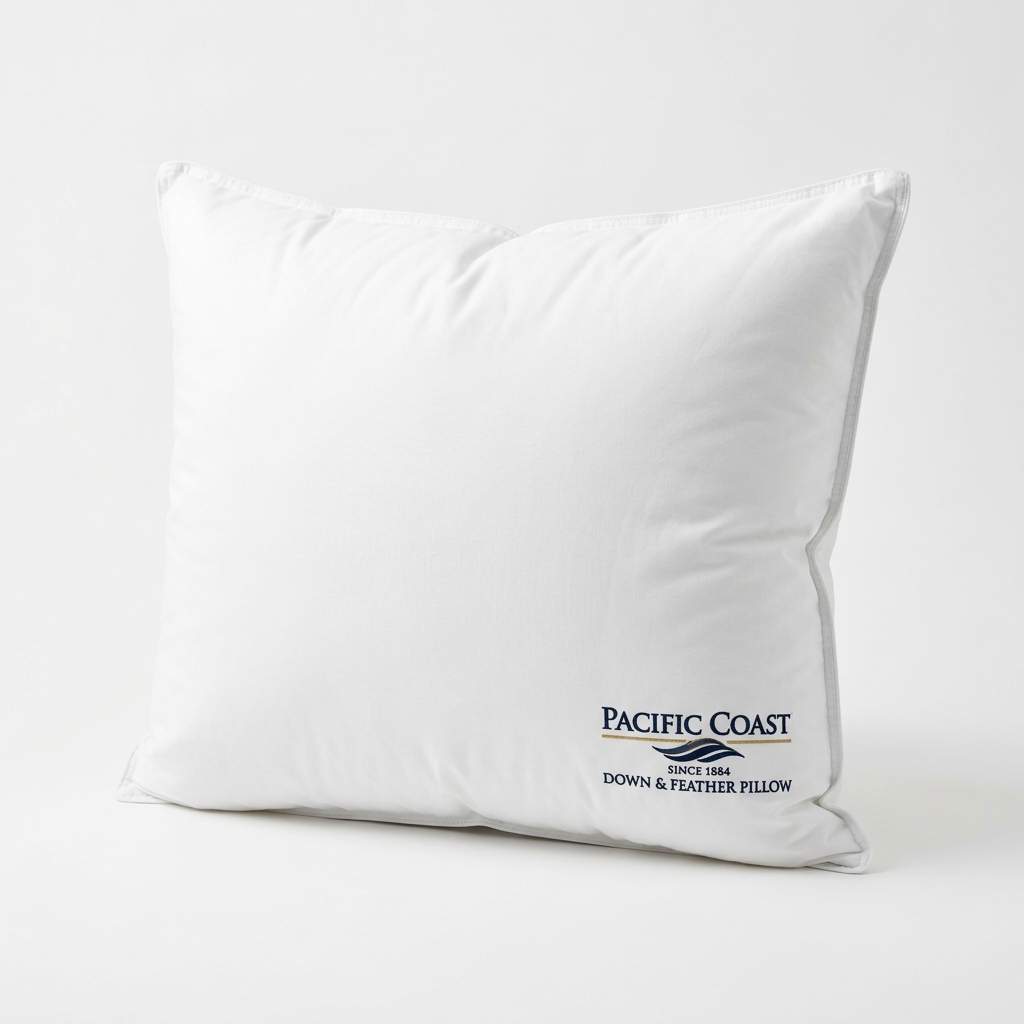
1. Pacific Coast Feather Best
Best for: Back and side sleepers who want consistent height without sinking deeply.
This is the only pillow in this comparison that is actually 100% feather with no down at all, which makes it the clearest example of what a true feather pillow feels like: firmer, flatter, and noticeably less expensive than any of the down-blend options.
Pacific Coast’s Resilia treatment processes the duck feathers specifically to reduce the quill poke-through that gives cheap feather pillows a reputation for jabbing sleepers. The 230 thread count brushed cotton shell adds a physical barrier layer on top of that treatment. The Hyperclean process washes and rinses the feathers up to eight times before filling, directly addressing the dust and allergen buildup that is a common complaint with less-processed feather fill.
- Holds a consistent shape and height under weight rather than compressing deeply.
- Hyperclean processing removes allergens, dust, and odors.
- Lacks the luxurious, airy softness associated with down blends.
- Noticeably firmer and flatter than a traditional hotel pillow.
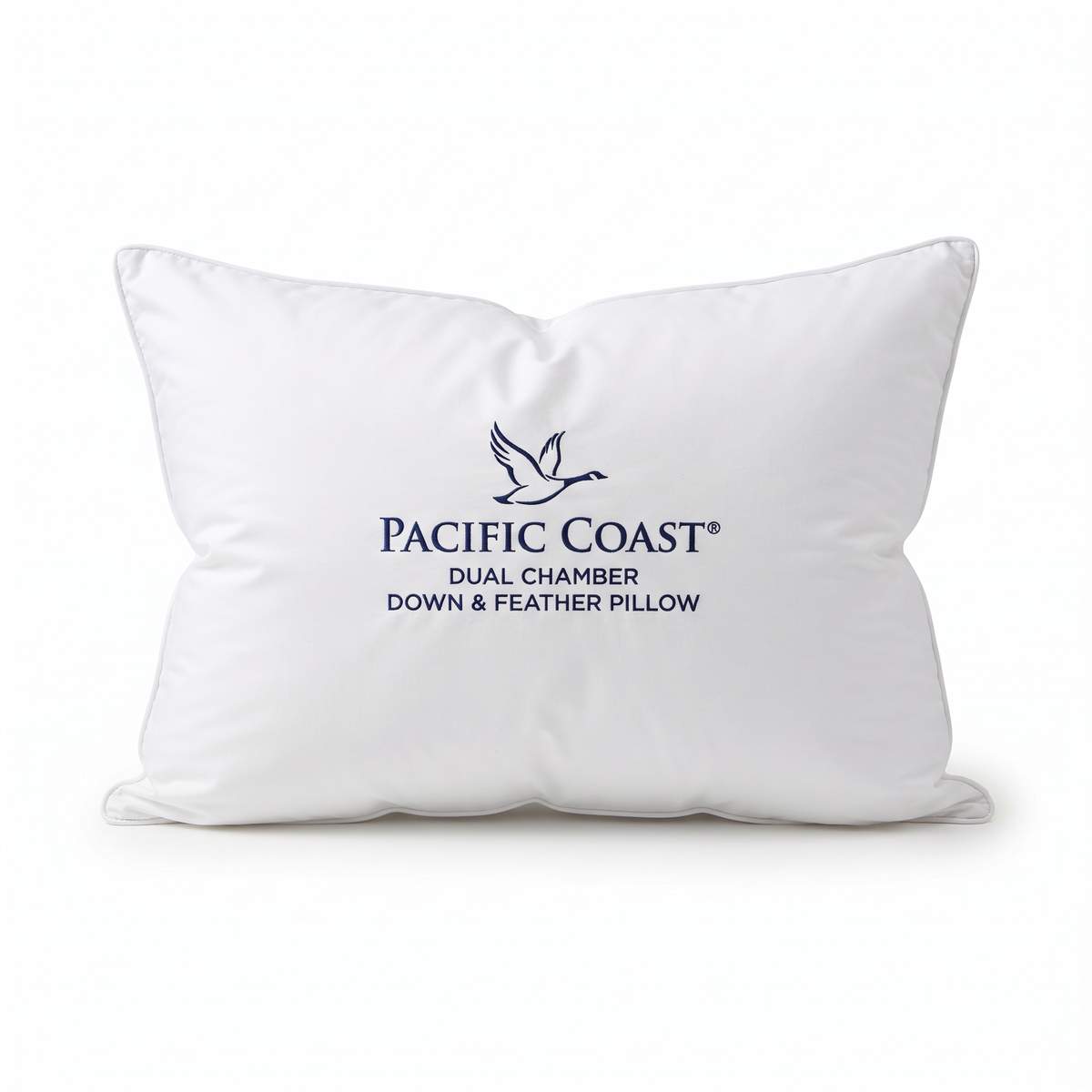
2. Pacific Coast Down Surround / DownAround
Best for: Sleepers wanting true hotel-style support from a feather core combined with immediate surface softness.
This uses a genuine hybrid construction rather than a simple blend. It relies on a firmer feather-and-down inner chamber for support, wrapped in an outer chamber that is at least 75% goose down for a soft surface layer. This dual-chamber design is exactly what most hotel-style feather and down pillows are built on.
That inner-outer separation is the mechanical reason this pillow can successfully market itself as both supportive and soft. The feather core does the structural work while the down shell does the surface-feel work, rather than trying to blend both properties into one uniform fill. The 230 thread count Barrier Weave cover is specifically engineered to be tight enough to contain both without leaking quills.
- Dual-chamber design provides the perfect balance of structure and plushness.
- Barrier Weave cover successfully prevents small down clusters from escaping.
- Requires frequent fluffing to maintain the outer down layer’s loft.
- More expensive than a single-chamber blended pillow.
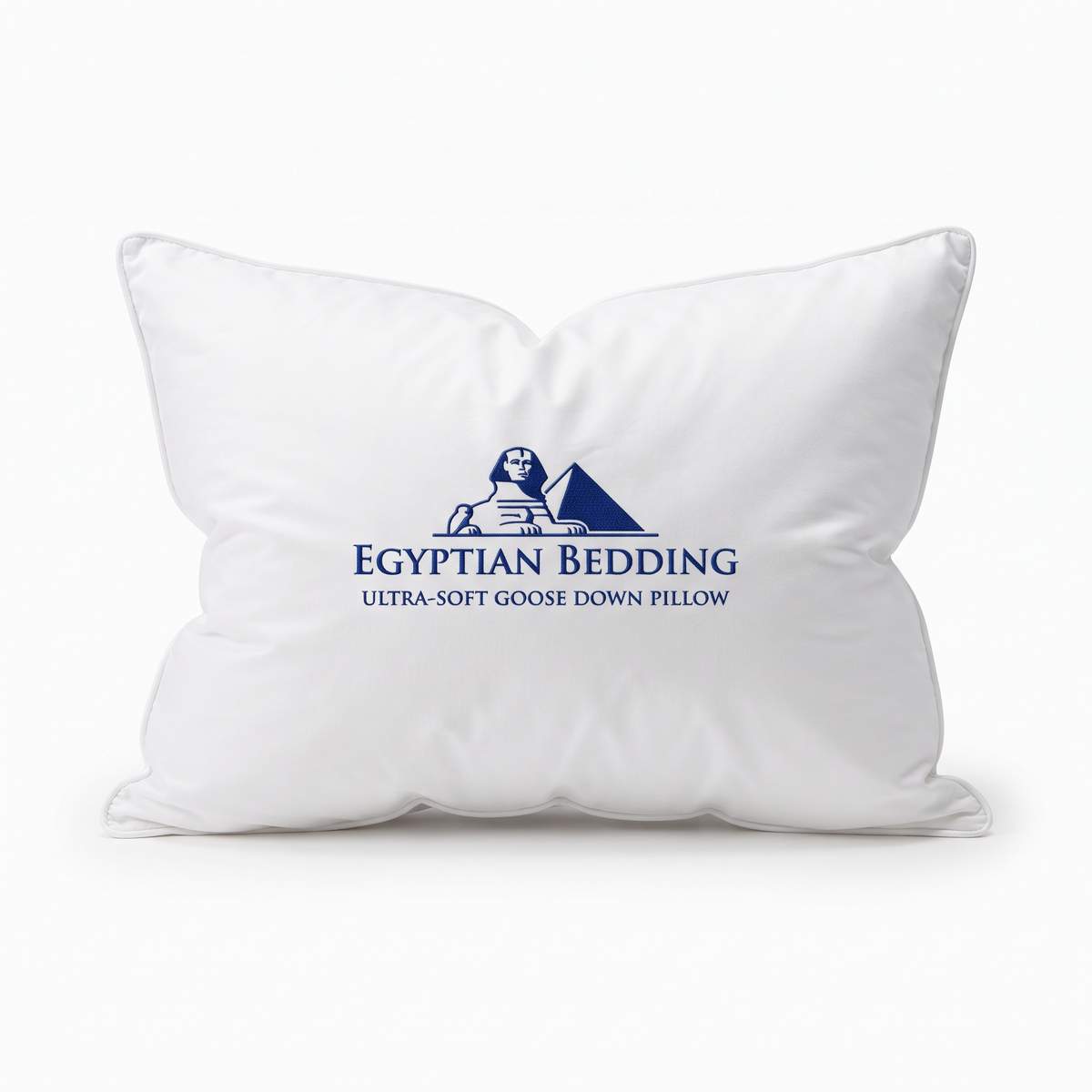
3. Egyptian Bedding Premium Goose Down Pillow
Best for: Sleepers looking for a highly compressible, down-dominant feel.
At 80% goose down and 20% feather, this is heavily down-dominant despite feather content being part of the label, meaning it will sleep considerably softer than either Pacific Coast option above. The 750 fill power and 45-ounce fill weight are real, verifiable specs that point to a highly plush, sinking experience.
However, the 1200 thread count claim on the cover is worth treating skeptically. Cotton thread count claims above roughly 400 to 500 generally require multi-ply yarn counted as multiple threads to reach the stated number, a common practice in budget import bedding that inflates the number without a proportional improvement in fabric quality.
- 80% down ratio provides a deeply luxurious, sinking sensation.
- 750 fill power is an exceptionally high loft metric for the price.
- Thread count claim is highly likely inflated using multi-ply counting.
- Does not provide the structural firmness of a true feather pillow.
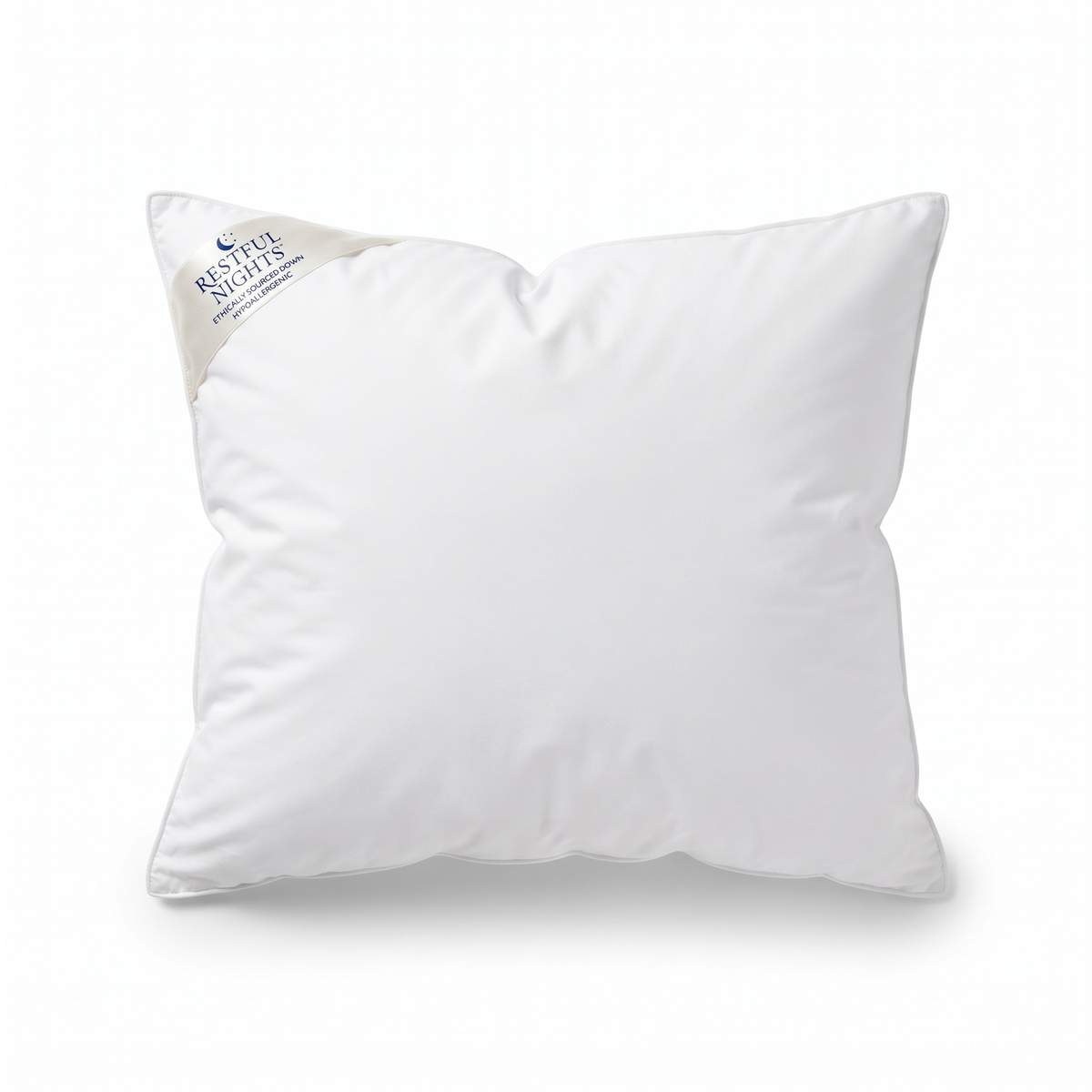
4. Restful Nights by Pacific Coast
Best for: Shoppers prioritizing verifiable ethical sourcing and fill purity over specific thread counts.
The certification story here is the primary differentiator rather than a specific published spec sheet. Every down-filled pillow in this line carries both Responsible Down Standard (RDS) and International Down and Feather Bureau (IDFB) certification, which strictly verify humane sourcing and fill purity respectively.
These are third-party certification programs with published, enforceable standards, giving a much more checkable basis for sourcing claims than a manufacturer’s own marketing copy. The tradeoff is that the exact fill weight and feather-to-down ratio vary by specific SKU within the line rather than being one fixed spec.
- Strict RDS and IDFB certifications guarantee humane and ethical sourcing.
- Provides a verifiable standard for fill purity over cheap imports.
- Fill ratios vary by SKU, making exact softness hard to pinpoint without checking the tag.
- Tends to be priced higher due to the strict certification processes.
The Number That Tells the Truth vs. the Number That Doesn’t
Two numbers show up on nearly every feather and down pillow listing, and only one of them reliably predicts how the pillow will feel. Fill weight, feather-to-down ratio, and fill power (for the down portion specifically) are physical measurements of what’s actually inside the pillow, verifiable by third-party testing and consistent with how the pillow performs. Thread count above the 400 to 500 range is a different kind of number: technically accurate in a narrow sense, but frequently achieved through yarn construction tricks that don’t translate into a meaningfully better fabric, and it says nothing at all about the fill itself.
A pillow advertising “1200 thread count” and “80% goose down” is really telling you one useful thing (the down ratio) and one number worth discounting (the thread count). When comparing feather pillows across brands, weight your attention accordingly: ratio and fill weight first, certification second, thread count last.
Sourcing Notes on This Comparison
We selected pillows spanning true 100% feather, hybrid dual-chamber, down-dominant blend, and certified-sourcing categories, rather than ranking several similarly blended pillows against each other, because the actual feather-to-down ratio is what most determines how a “feather pillow” performs, more than brand or price point alone. Every fill composition, weight, and certification claim above comes from current manufacturer listings and gets re-verified on each content refresh.
FAQs
Why do feather pillows go flat so quickly?
They lose loft because the quills compress under head weight. Cheaper pillows often contain a high percentage of heavy feathers rather than down, causing them to flatten into sinkholes during the night. Regular fluffing helps, but the best down pillows use high fill-power clusters that avoid this structural issue entirely.
What is the difference between feather and down pillows?
Down is the soft underbelly plumage without quills, while feathers form the outer protective layer. Down pillows cost significantly more and feel much softer. Feathers offer more structural support and cost less. Just keep in mind that cheaper feathers will eventually poke through the fabric over time.
How do I stop feathers from poking through my pillow?
You need to use a tightly woven pillowcase. Sateen weave covers are especially effective at blocking sharp quills from escaping the shell. A thick zippered pillow protector adds another barrier. If your pillow is already heavily shedding, no cover will completely stop the poking.