Talalay and Dunlop aren’t brand names or marketing terms – they’re two different manufacturing processes applied to the same raw material, and the process changes density, cell structure, and how the latex responds to your head. Dunlop is poured in one continuous step and cures with sediment settling toward the bottom, producing a denser, firmer, more budget-friendly material. For detailed density, ILD ratings, and GOLS organic certifications across top-rated models, explore our standalone spec breakdown of best Dunlop latex pillows alongside Talalay comparisons. Below, that difference explained against real pillow specs, plus a shredded-versus-solid construction question that matters as much as the latex type itself.
Talalay vs. Dunlop: A Manufacturing Difference, Not a Marketing One
Both start as sap tapped from Hevea rubber trees, whipped into a froth. From there, the two processes diverge in ways that show up directly in the finished pillow.
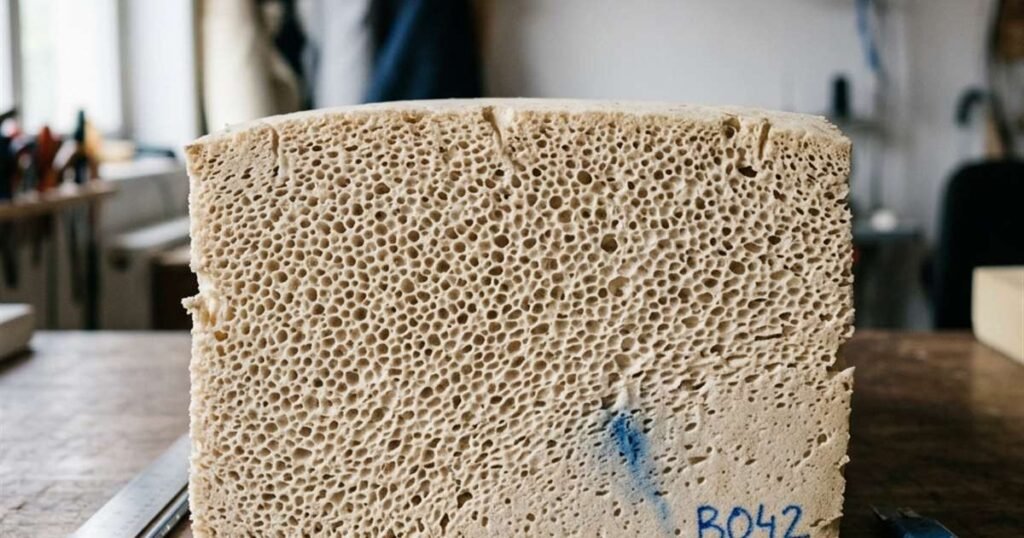
Dunlop pours the whipped latex into a mold in a single continuous step and bakes it. Because the mold fills all at once, denser rubber particles settle toward the bottom during the cure, which is the structural reason continuous-pour Dunlop pillows can feel slightly firmer at the base than at the top – and why Dunlop production is generally less energy- and process-intensive, making it the more budget-friendly and often more eco-efficient option of the two.
Talalay adds two extra steps: the mold is only partially filled, then vacuum-expanded to pull the latex evenly through the full mold, then flash-frozen before baking to lock in that even cell structure. The result is a lighter, more consistent-density foam with a springier, more responsive feel – and a higher price, since the process takes more time and equipment.
Neither process determines whether the latex is natural, synthetic, or organic – that’s a separate question about the raw material itself, not the manufacturing method. A pillow can be Dunlop and GOLS-certified organic, or Talalay and a natural/synthetic blend, so check the material sourcing and the process separately rather than assuming one implies the other.
This sits inside the broader material science behind pillow fills, and pairs closely with wool vs. latex pillows for anyone deciding between natural material categories rather than just latex sub-types.
Latex Pillow Spec Comparison
| Pillow | Latex Type | Key Spec | Cover | Certifications |
|---|---|---|---|---|
| Purple Harmony Pillow | Talalay core + GelFlex hex grid | 3 loft options: 5.5 in, 6.5 in, 7.5 in | Nylon/spandex | CertiPUR-US, CleanAir Gold |
| Brooklyn Bedding Talalay Latex Pillow | Solid Talalay (70% synthetic / 30% natural blend) | 2 loft options: 4 in (Low), 5 in (High) | Tencel/organic cotton | None disclosed |
| Avocado Molded Latex Pillow | Solid Dunlop, charcoal-infused | Queen: 4.75 in H, 3.6 lbs | GOTS organic cotton | GOTS (finished product), GREENGUARD Gold, OEKO-TEX |
3 Best Latex Pillows with Good Feels
Disclosure: We independently research, analyze and spec-verify every product we recommend. If you make a purchase through our links, we may earn an affiliate commission at no extra cost to you. This financial support helps keep our testing independent. Read our full Review Process and Affiliate Policy.
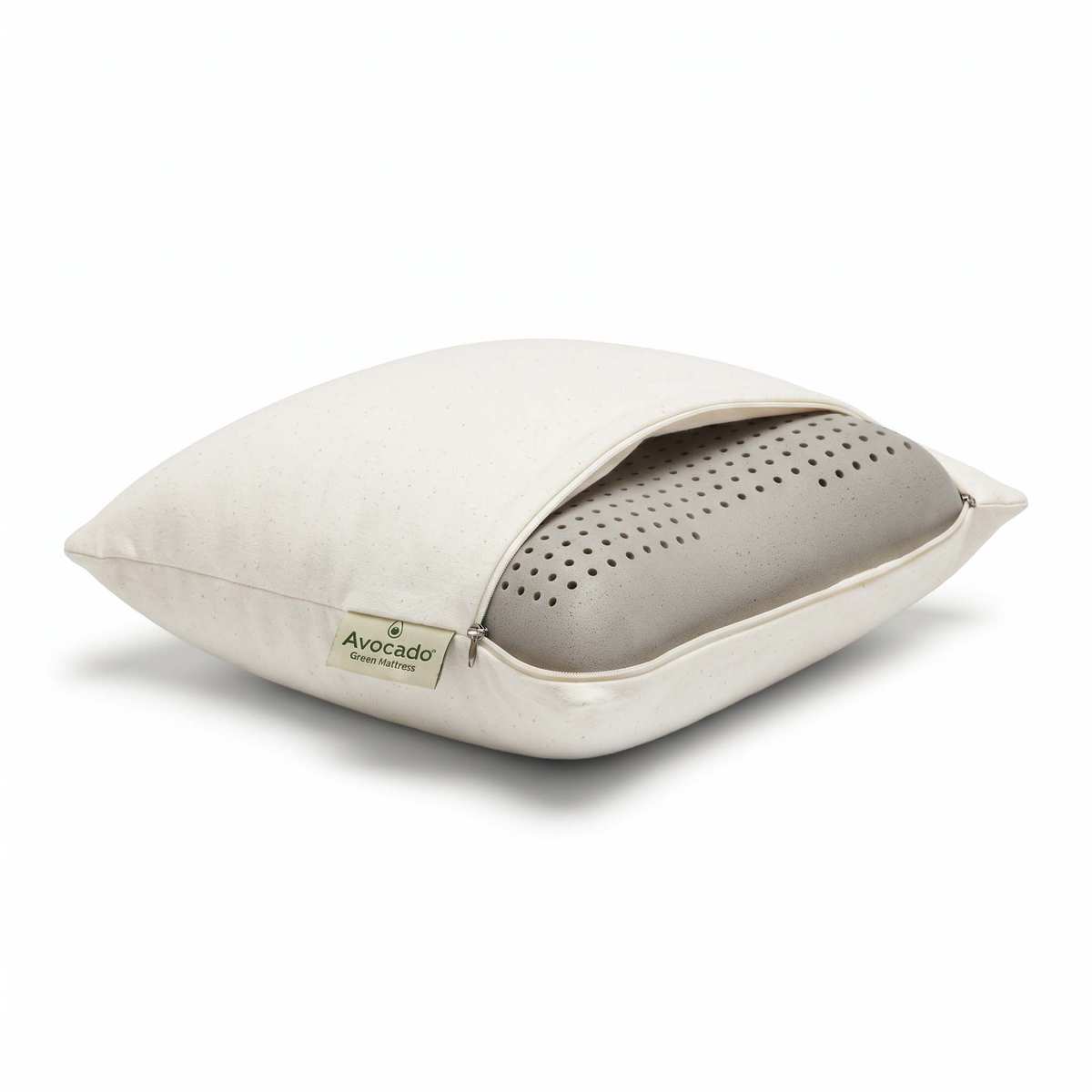
1. The Avocado Molded Latex Pillow
Best for: Back and side sleepers who want the heavy, dense, unyielding support that only traditional Dunlop latex provides.
The Avocado Molded Latex Pillow is a single-piece, charcoal-infused Dunlop core poured and steam-baked into a solid shape rather than shredded. This manufacturing method yields an incredibly dense block measuring 4.75 inches tall and weighing a massive 3.6 pounds in the queen size.
It carries GOTS certification at the finished-product level and is OEKO-TEX Standard 100 certified. The charcoal infusion is designed to manage moisture and temperature, though that addition means it does not carry GOLS certification at the raw material level like pure latex blocks do.
- Solid Dunlop provides rigid, bounce-back support that will never flatten out over the night.
- Charcoal infusion naturally pulls heat and humidity away from the sleep surface.
- The solid block is quite heavy and cannot be folded or bunched up.
- Too tall and firm for the vast majority of stomach sleepers.
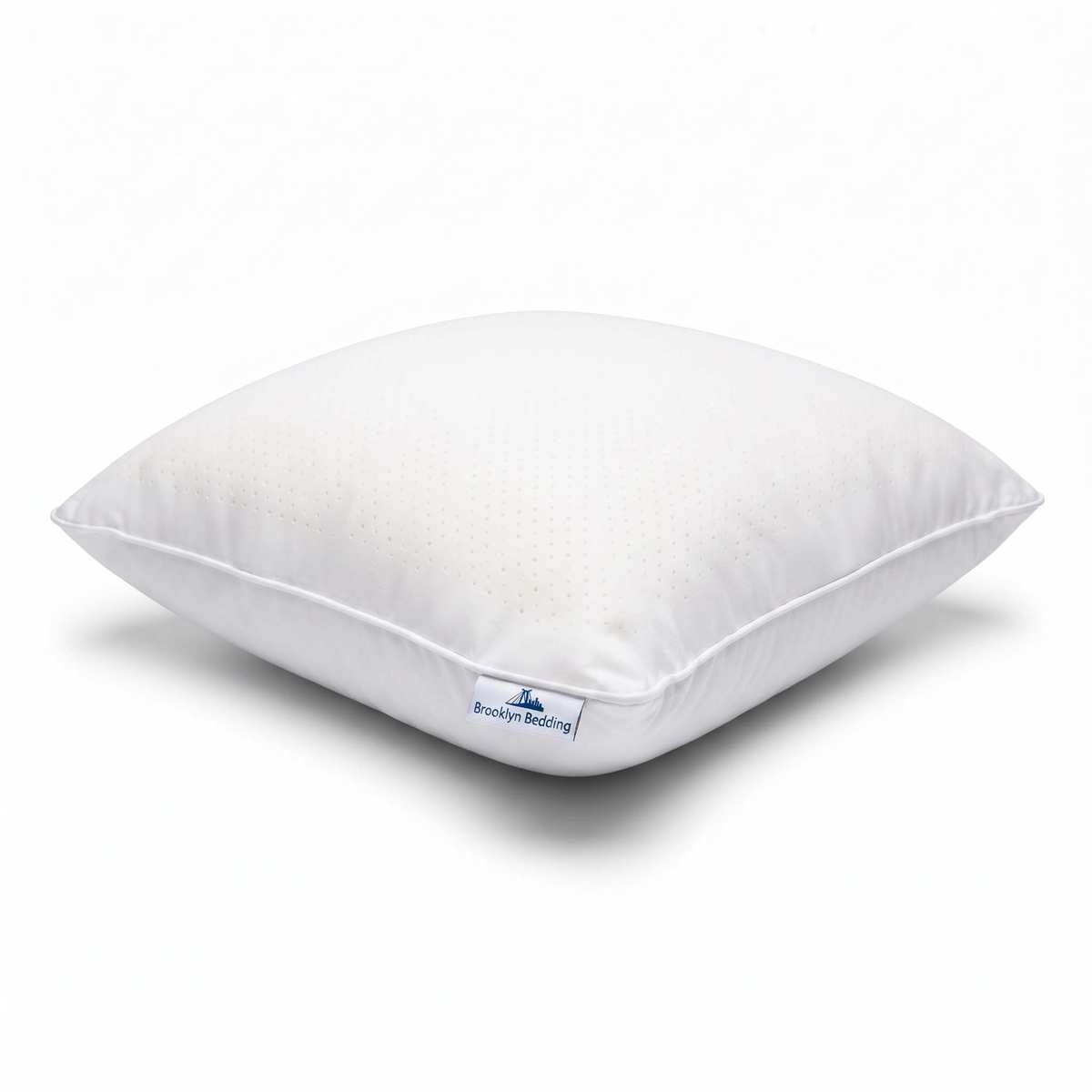
2. Brooklyn Bedding Talalay Latex Pillow
Best for: Shoppers who want the bouncy, cloud-like feel of the Talalay process at a more accessible price point than pure botanical latex.
The Brooklyn Bedding Talalay Latex Pillow offers a single-piece Talalay core in two specific loft options. Shoppers can choose a 4-inch height for back and stomach sleepers or a 5-inch height for side sleepers. This core is then wrapped in either a cooling Tencel or organic cotton cover.
One structural disclosure is worth flagging clearly for purists. Independent testing has found this core to be a 70% synthetic and 30% natural latex blend rather than 100% botanical Talalay. While this contradicts some of the “natural” branding, it successfully replicates the exact buoyant feel of pure Talalay at a lower cost.
- Provides the distinctive airy, weightless bounce unique to the Talalay manufacturing process.
- Two discrete loft options allow you to match the pillow height to your specific sleep position.
- Uses a primarily synthetic latex blend rather than 100% natural rubber tree sap.
- The solid block cannot be fluffed or molded around the neck like shredded fills.
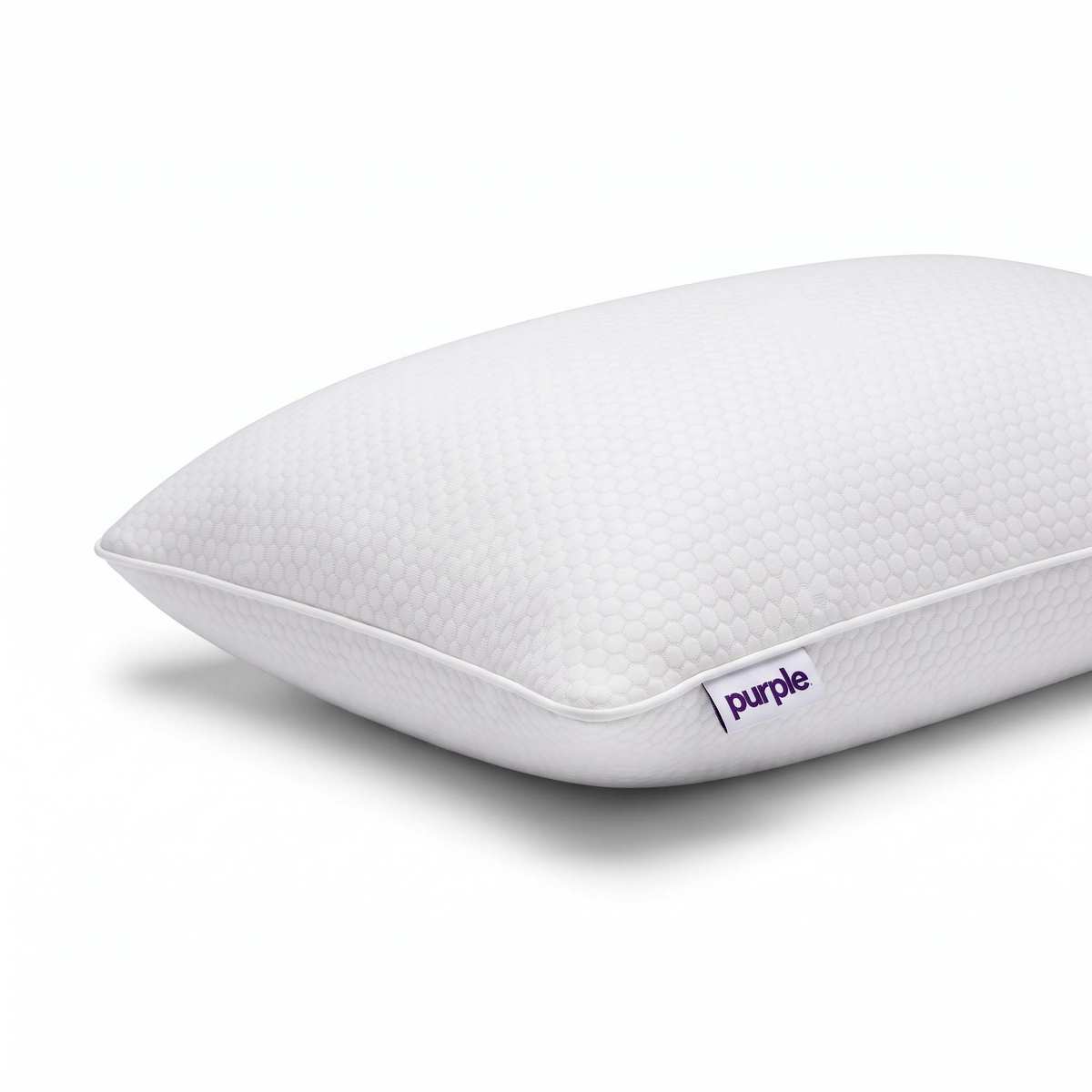
3. The Purple Harmony Pillow
Best for: Hot sleepers who love the bounce of Talalay latex but need maximum airflow directly under their skin.
The Purple Harmony Pillow takes a completely different structural approach to the category. It uses a firm Talalay latex core but wraps it entirely in the brand’s proprietary GelFlex hex grid. This perforated gel-like layer adds massive, visible air channels directly on top of the latex’s naturally open cell structure.
It is available in three distinct loft heights (5.5, 6.5, and 7.5 inches) and carries both CertiPUR-US and CleanAir Gold certifications. This hybrid construction combines the structural support of latex with the unparalleled breathability of an open polymer grid.
- The external gel grid creates best-in-class airflow for chronic hot sleepers.
- Three highly specific loft sizes ensure proper cervical alignment for any shoulder width.
- The rubbery texture of the outer grid feels strange to sleepers used to traditional cotton batting.
- Extremely heavy and difficult to maneuver during the night.
Shredded vs. Solid Latex: A Second Decision Layered on Top of Talalay vs. Dunlop
Beyond the Talalay-versus-Dunlop question, latex pillows also split into shredded and solid architectures, and that construction choice affects feel as much as the latex process does. A solid piece – like the Avocado Molded or Brooklyn Bedding pillows above – holds one fixed shape with no adjustability but delivers uniform, predictable support across the entire surface. Shredded latex, like the GOLS-certified latex-and-kapok blend used in Avocado’s adjustable Green Pillow, trades that uniformity for adjustability – you can add or remove fill to change loft, at the cost of a slightly less continuous surface feel. For the full mechanical comparison of which architecture suits which sleeper, see shredded vs. solid latex pillows: which architecture is best.
The Contrarian Reality: “100% Natural Latex” Claims Need Verification, Not Trust
Most latex pillow marketing leans on “natural,” “eco-friendly,” and “sustainable” language as if those terms are interchangeable with a specific, verifiable claim. They aren’t. A pillow can be marketed with natural-materials language while its actual core is a synthetic-natural blend. That’s not necessarily deceptive, since blended latex is a legitimate product, but it means the burden is on the shopper to check the actual percentage rather than take “natural” at face value. GOLS certification is the only claim that verifies a specific minimum percentage (95%+) of certified organic latex content. Everything short of that is a marketing description, not a verified spec. Our best organic pillows guide breaks down exactly which brands hold full GOLS paperwork versus which ones are borrowing the language.
The Bottom Line
For the firmest, most budget-conscious verified-organic option, the Avocado Molded Latex Pillow’s Dunlop core and GOTS certification deliver the most disclosed paper trail. For a lower-cost solid Talalay feel – with the caveat of its synthetic-blend core – the Brooklyn Bedding Talalay Latex Pillow is the most accessible entry point. And for the most cooling-focused hybrid construction, the Purple Harmony Pillow’s GelFlex grid over a Talalay core is worth the premium specifically for hot sleepers, less so for anyone shopping on latex material purity alone.