
A PCM pillow contains microencapsulated compounds that melt when they absorb your body heat and solidify when the temperature drops. Returning stored heat in the process. That bidirectional cycle is what separates PCM from every other cooling technology in bedding: it doesn’t just move heat in one direction, it buffers temperature in both.
The Physics Behind the Phase Change
Water freezing into ice and ice melting back into water is the most familiar phase change material in existence. The principle at work in your pillow is identical, just engineered to operate at skin temperature rather than 0°C.
Phase change materials used in bedding are almost always organic paraffin-based waxes or bio-based fatty acids, compounds specifically chosen for three properties: a transition temperature calibrated to human skin contact (roughly 26-35°C, per published materials science documentation for bedding PCMs), a high latent heat capacity that allows them to absorb significant thermal energy without a corresponding rise in their own temperature, and low toxicity that makes them safe in direct-contact applications.
The critical concept is latent heat. When a solid melts into a liquid, it absorbs energy from its surroundings without the material itself getting hotter. That absorbed energy is what removes heat from the skin surface. As the surrounding temperature drops. When you shift position, or as the room cools. The PCM re-solidifies, releasing the stored heat back. The cycle repeats continuously through the night.
Within the human comfort temperature range of roughly 20-30°C, published materials science research cited by ScienceDirect shows that some PCMs store five to fourteen times more heat per unit volume than conventional sensible-heat storage materials. That storage efficiency is what gives PCM its advantage over simple conductive cooling (gel) or passive airflow (open-cell foam).
How Microencapsulation Makes It Practical
Left uncontained, paraffin wax in liquid phase would behave exactly as you’d expect: it would spread and leak. Microencapsulation solves this. The PCM compound is enclosed in a polymer shell, typically at particle sizes of 1-100 microns, creating stable beads that hold the phase-change material regardless of whether it’s solid or liquid at any given moment.
A useful mental model: the polymer shell is the hard candy coating, the PCM compound is the center. The coating holds its form; the center can melt and re-solidify freely inside it without leaking, without making the pillow feel damp, and without losing efficacy across repeated thermal cycles.
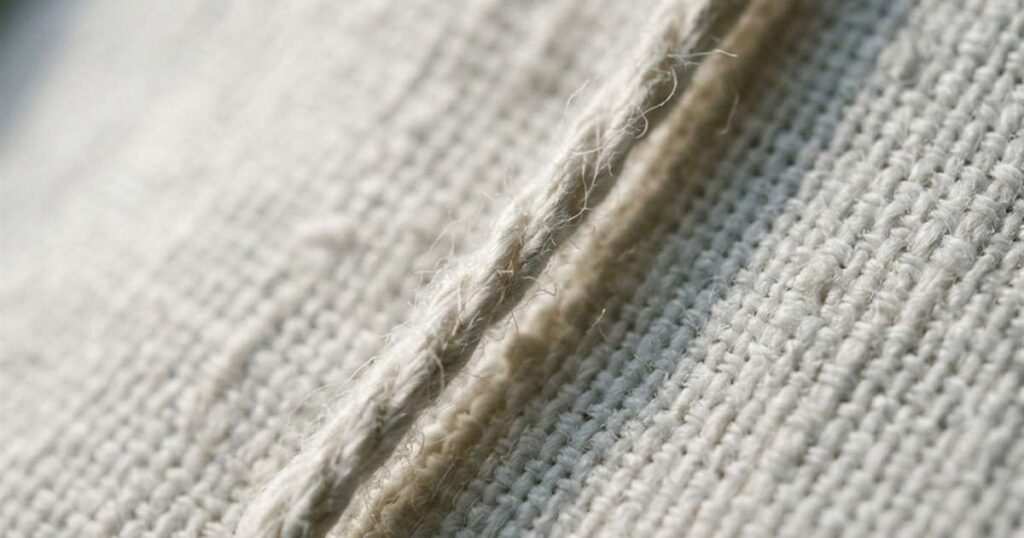
Those microcapsules are then applied to the pillow in one of two ways. In a cover application, the most common, the microcapsules are embedded in or coated onto the fabric of the pillow’s outer shell, which puts them in direct contact with the skin surface where the thermal exchange needs to happen. In a foam-infusion application, the microcapsules are blended into memory foam during manufacture. Patent literature for cooling pillow construction notes that foam-infused PCM is less effective than surface-applied PCM because the surrounding foam acts as a thermal insulator, reducing the rate of heat exchange between the PCM and the sleeper. Surface placement is the stronger design.
What It Feels Like (and What It Doesn’t)
Two questions come up consistently for anyone new to PCM bedding.
The first: does it feel wet? No. The microencapsulated beads contain the liquid phase entirely within their polymer shells. The pillow surface stays dry regardless of how many thermal cycles the PCM has completed. The moisture-free feel is a direct result of the encapsulation design, not a marketing claim. It’s the functional requirement that drove the development of microencapsulation in the first place.
The second: does it feel different from a regular pillow? Slightly. PCM-infused foam can feel marginally firmer at initial contact because the solid-phase beads add density before they absorb enough heat to begin transitioning. As the surface warms to body temperature, the feel relaxes. Sleepers who use PCM-coated covers over standard fills often notice only the cool-to-the-touch sensation at sleep onset, not any texture difference.
PCM vs. Gel: The Meaningful Difference
Gel cools by conduction. It transfers heat from the warmer object (your head) to the cooler one (the gel), spreading it across a wider area. When the gel reaches the same temperature as your skin, conduction slows and the cooling effect fades, typically within roughly 60-90 minutes for standard swirl gel, as covered in the previous article in this series.
PCM does something structurally different. The cooling it provides doesn’t come from a temperature difference between two objects. It comes from the energy consumed during the phase transition itself. The latent heat. That energy absorption occurs at a near-constant temperature (the material’s transition point), which means the PCM keeps pulling heat from the skin without needing to be cooler than the skin. It operates within a temperature range rather than a fixed gradient. The re-solidification cycle also means it resets: once the material cools below its transition temperature, the stored heat is released and the PCM is ready to absorb again.
That reset mechanism is the key practical difference. Quality PCMs calibrated correctly for sleep applications can deliver a temperature-buffering effect across a meaningful portion of the night. Whereas gel without a PCM component provides only a one-directional, time-limited transfer.
| Gel (conductive) | PCM (phase-change) | |
|---|---|---|
| Cooling mechanism | Heat transfer via temperature gradient | Latent heat absorption during phase transition |
| Cooling direction | One-way (hot to cool) | Bidirectional (absorb heat, release on cooldown) |
| Duration | ~60-90 min before equilibrium | Full thermal cycle; resets when material re-solidifies |
| Reset | Requires external cooling (room temp) | Resets naturally as ambient temperature drops |
| Feels wet? | No | No |
| Best for | Sleep-onset warmth | Sleep-onset and mid-cycle temperature buffering |
The Care Rule That Protects the Microcapsules
The microencapsulated structure is robust under normal use. Properly manufactured PCM microcapsules are engineered for mechanical durability and washing resistance. But the conditions that destroy them are predictable and avoidable.
Machine washing on an aggressive cycle introduces mechanical abrasion that can rupture the polymer shells over time. High heat from a dryer presents a different risk: if the heat is sufficient to melt the PCM compound inside a ruptured or weakened capsule, the liquid-phase material can migrate into the surrounding fabric and lose its contained, functional form. Once ruptured, the microcapsules cannot be repaired. The PCM still exists in the material but no longer performs its thermal function because the encapsulation that keeps it in place during phase transitions is gone.
The correct protocol for most PCM pillows with foam cores is spot cleaning with mild detergent for the foam itself, and air drying for any component that contains PCM. For PCM-coated covers or pillowcases, cold water on a gentle machine cycle is typically tolerable, but air drying remains the safest path, warm or hot dryer cycles risk accelerating capsule degradation over repeated washes. Always check the manufacturer’s specific care label, since the PCM load and encapsulation method vary between products.
When a PCM Pillow Makes Sense. And When It Doesn’t
PCM technology solves a specific problem: heat that builds up at the head-pillow interface during the first half of the night and disrupts sleep onset or early sleep cycles. For mild-to-moderate heat sensitivity, a well-constructed PCM pillow (cover-applied, not foam-embedded) is a legitimate, evidence-grounded option that improves on gel-only cooling without requiring a fill change.
It doesn’t solve every problem. For severe night sweating, where the thermal event wakes you at 2 a.m or 3 a.m, the limiting factor is the fill beneath the PCM layer. If that fill is dense memory foam, its insulating properties constrain how much heat the PCM can shed into the ambient air during the reset cycle. The PCM recharges more slowly in a poorly ventilated pillow, which reduces its effectiveness in the second half of the night. For that scenario, a structurally ventilated fill (shredded latex, buckwheat, or an open-grid construction) is a more reliable primary mechanism, with or without a PCM cover layer on top. For severe night sweats, fill ventilation matters more than the cooling layer above it.
Frequently Asked Questions
Why does my phase change material pillow only stay cold for 15 minutes?
Phase change materials are passive thermal sponges that absorb your body heat until they hit their maximum capacity. Once the microcapsules melt at their set temperature threshold of around 88 degrees, they stop absorbing heat completely. The cooling effect vanishes entirely at that point. If you want continuous cooling you must use an active system like the BedJet.
Do phase change covers work better on latex or memory foam?
Phase change fabrics perform much better when wrapped over naturally breathable latex. Latex allows the heat absorbed by the cover to disperse downward into the pillow core. Memory foam traps the heat directly beneath the cover and forces the phase change material to saturate much faster. A thick protective pillowcase will also block the cooling effect entirely.
Does washing a phase change material pillowcase ruin its cooling effect?
High heat easily destroys the microencapsulated polymers embedded in the fabric. You must wash phase change covers in cold water and strictly air dry them to preserve their thermal properties. Tests show a single cycle in a hot dryer can degrade the cooling capacity by half. Always check the specific care tag before washing.
How does a PCM pillow work?
The pillow contains microencapsulated compounds, typically paraffin-based waxes or bio-based fatty acids, that melt when they absorb your body heat and solidify when the surrounding temperature drops. Melting absorbs latent heat from the skin surface without the material itself getting hotter. Re-solidifying releases that stored heat back. The cycle repeats through the night, buffering the temperature at the pillow surface in both directions.
Is a PCM pillow safe?
Yes. Organic PCMs used in bedding, paraffin-based waxes and bio-based fatty acids, are non-toxic and chemically stable. They are microencapsulated in polymer shells that prevent any contact between the PCM compound and the sleeper. Products made with foam components use CertiPUR-US certification to confirm the foam meets independent standards for VOC emissions and chemical content.
Will a PCM pillow feel wet or damp?
No. The phase-change compound is sealed inside microscopic polymer capsules. When the PCM melts, the liquid stays contained within its shell. The pillow surface stays dry. The moisture-free feel is a structural feature of microencapsulation, not a variable.
How is a PCM pillow different from a gel pillow?
Gel cools via conduction, it transfers heat from your warmer skin to the cooler gel until both reach the same temperature, at which point the cooling stops. PCM absorbs heat through the energy of the phase transition itself (latent heat), which doesn’t require a temperature difference to keep working. PCM also releases stored heat as it re-solidifies, creating a bidirectional buffering effect that gel alone cannot replicate.
Can washing ruin a PCM pillow?
Aggressive mechanical washing or high-heat drying can degrade the polymer shells that contain the PCM compound. Once those shells rupture, the PCM can no longer maintain its contained form during phase transitions and loses its thermal function. Air drying is the safest approach for any component containing PCM. For most solid-foam PCM pillows, spot cleaning the foam and air drying the cover preserves the microencapsulation longest.