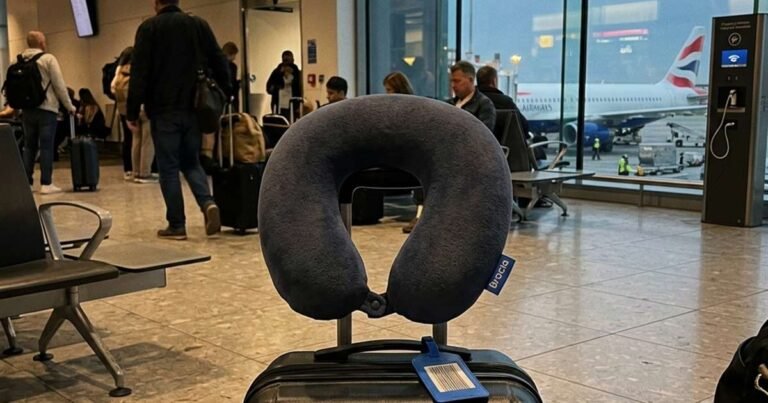
Every travel pillow solves one mechanical problem: your head drops forward or sideways the moment your neck muscles relax in an upright seat. A standard bed pillow can’t brace against a seatback, so it doesn’t help here. Three distinct construction approaches have emerged as real solutions. One uses a rigid internal brace worn like a collar. Another is a molded memory foam U-shape with headrest straps. The third is a notched wedge cut to sit flush against the seat. This guide compares one product from each category on actual structural specs. If you also sleep on your side at home, our best pillows for side sleepers covers the loft and firmness specs that carry into travel comfort.
Why Standard Neck Pillow Shapes Don’t Solve Seated Sleep
A bed pillow works because gravity pulls the head straight down into a horizontal surface. Seated sleep removes that horizontal surface entirely – the head has nowhere to rest except forward, onto the chest, or sideways, into a shoulder or a stranger’s shoulder on a flight. A travel pillow’s entire job is to intercept that fall before it happens, which is a structural bracing problem, not a softness problem. This is why some of the most effective travel pillows feel notably firmer or more rigid than a standard bed pillow would – rigidity is doing load-bearing work here that softness can’t.
The three constructions below solve that bracing problem through different mechanisms: a semi-rigid internal structure that resists collapse, a molded foam shape reinforced by external straps, and a cutaway shape that transfers support to the seatback itself rather than relying on the pillow alone.
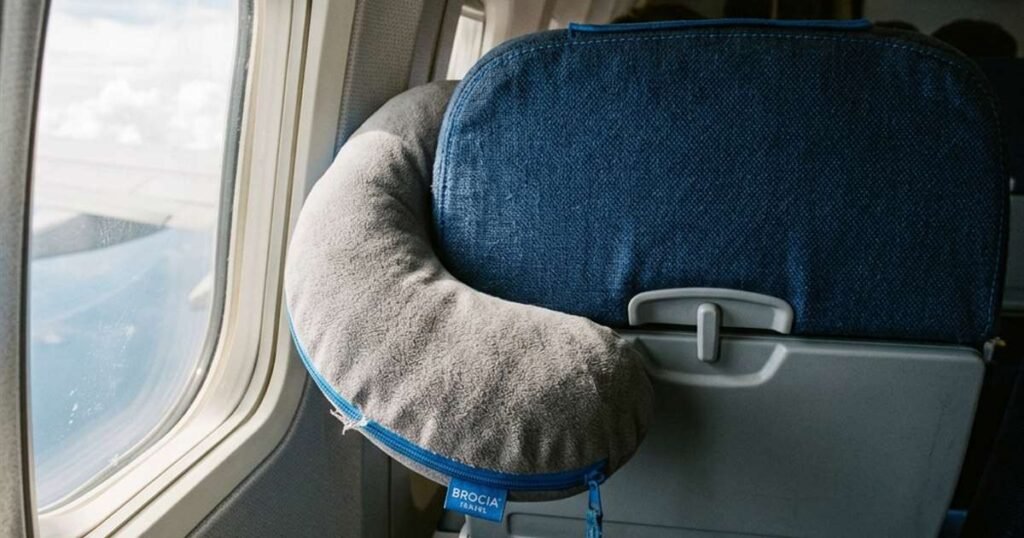
Travel Pillow Spec Comparison
| Pillow | Construction | Key Spec | Portability | Best For |
|---|---|---|---|---|
| Cabeau Evolution S3 | Molded memory foam U-shape + straps | Flattened back panel, adjustable front clasp, Velcro headrest straps | Compresses to about 1/3 size in included bag | Taller adults, longer necks, side-window leaners |
| Trtl Travel Pillow | Internal plastic brace + fleece wrap | One-sided rigid support, positionable front or side | Flat-packing, no bulky U-shape | Side sleepers who lean one direction consistently |
| Travelrest Nest | Notched memory foam wedge | Cutaway design lies flush against seatback; slip-resistant underside | Compact wedge profile | Travelers who recline straight back rather than to the side |
3 Best Travel Pillows that fixes Head-Drop Problem
Disclosure: We independently research, analyze and spec-verify every product we recommend. If you make a purchase through our links, we may earn an affiliate commission at no extra cost to you. This financial support helps keep our testing independent. Read our full Review Process and Affiliate Policy.
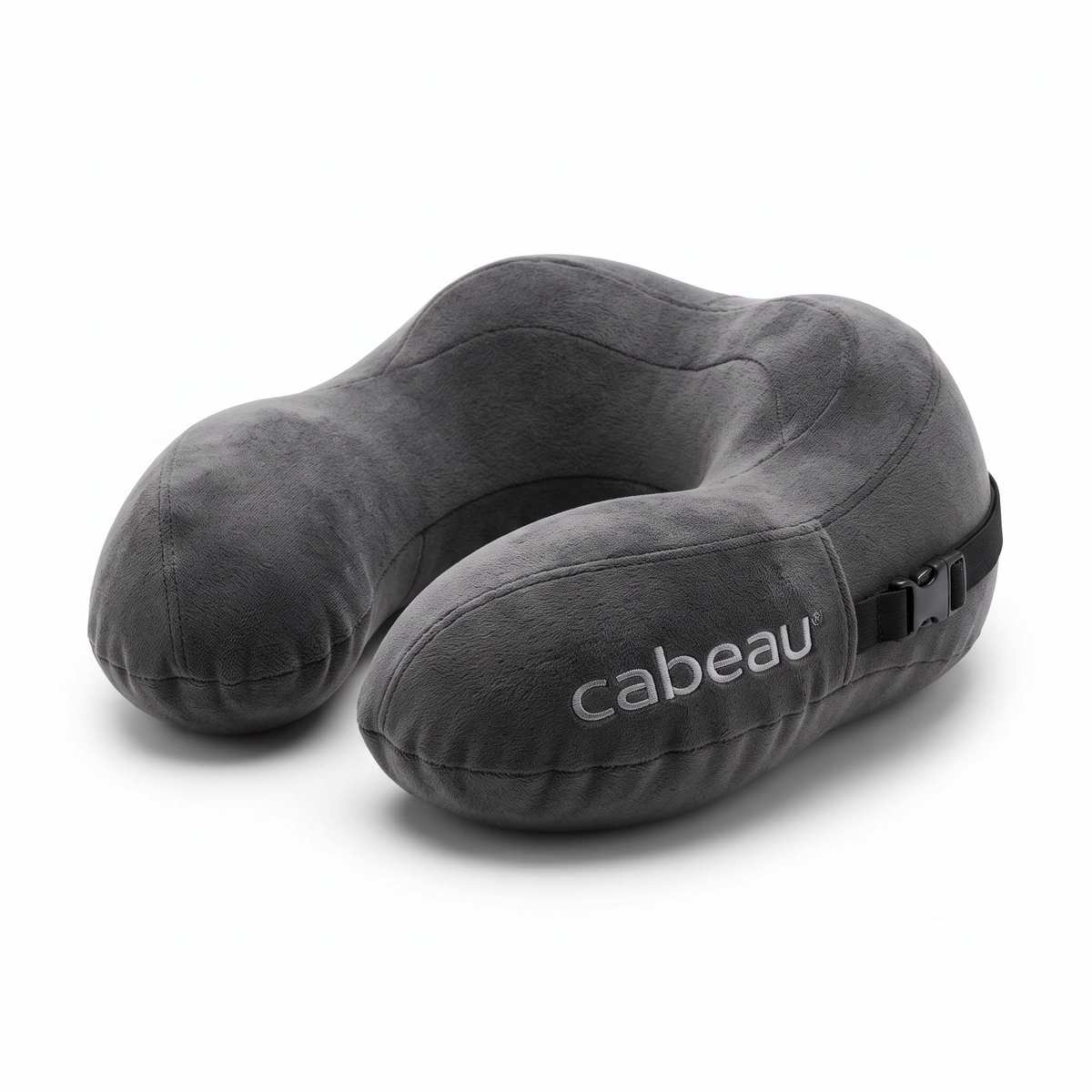
1. The Cabeau Evolution S3
Best for: Travelers who prefer a traditional U-shape but hate waking up because their head bobbed forward during turbulence.
The Cabeau Evolution S3 takes the conventional U-shaped memory foam collar and adds specific structural upgrades that most cheaper alternatives lack. Instead of a rounded tube, it features a flattened back panel that sits flush against an airplane seatback, preventing your neck from being pushed awkwardly forward.
The defining feature is the set of Velcro straps built into the rear of the pillow. These anchor the pillow directly to the headrest wings of your seat. This completely eliminates the head-bobbing effect by literally strapping your resting head to the seat structure.
- Seat straps physically prevent the head from falling forward while asleep.
- Flat rear profile maintains natural cervical alignment against rigid seats.
- Dense memory foam can trap body heat during long flights.
- Seat straps cannot be used if your specific airline seat lacks a winged headrest.
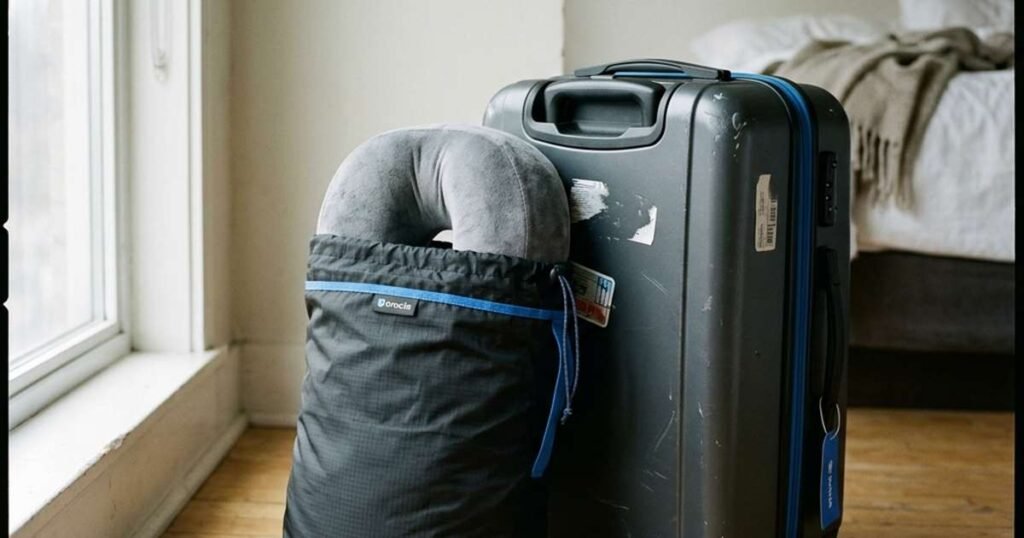
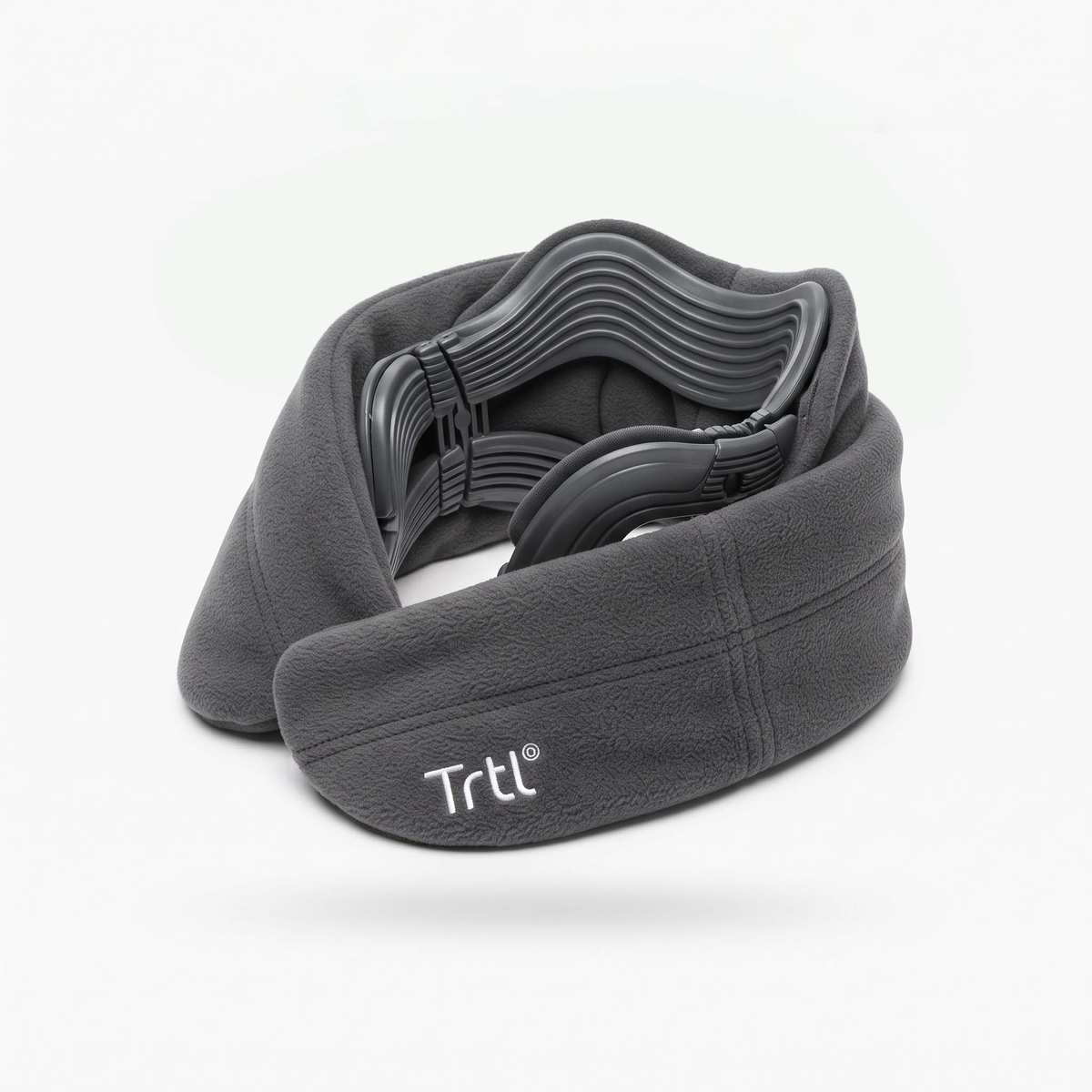
2. The Trtl Travel Pillow Plus
Best for: Minimalist packers and side-leaners who need rigid support without the bulk of a full foam ring.
The Trtl Travel Pillow abandons the traditional U-shape entirely in favor of a plastic internal support structure wrapped in soft, breathable fleece. You wear it like a scarf, positioning the rigid brace either right under your chin or to one side of the neck. This concentrates all the structural density exactly where your head naturally leans.
Because the Trtl relies on a thin plastic skeleton rather than thick foam to hold your head up, it packs down completely flat. That packability makes it popular outside of flights, too. The same space-saving logic applies to outdoor sleep gear, and our best camping pillows guide compares inflatable and foam options for trips where weight matters just as much. The “Plus” version of the Trtl specifically adds height adjustability, allowing users with longer or shorter necks to dial in the exact brace height needed to keep their spine straight.
- Provides firm skeletal support for side-leaning without requiring window access.
- Packs virtually flat, taking up a fraction of the space of molded foam pillows.
- Takes practice to wrap tightly enough to engage the plastic brace correctly.
- Can feel restrictive around the neck if you dislike wearing scarves.
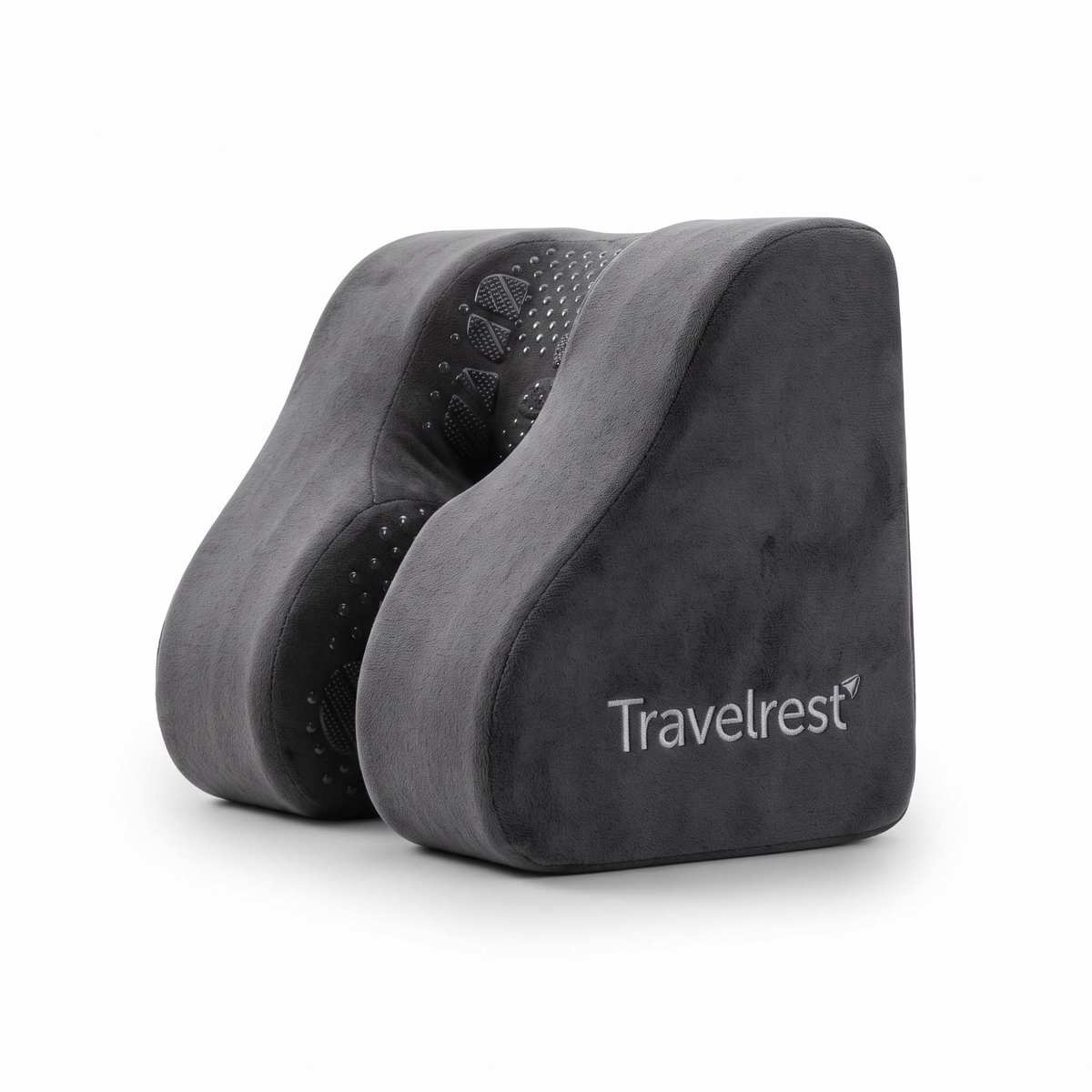
3. The Travelrest Nest
Best for: Passengers who prefer to recline straight back rather than leaning their head to the side.
The Travelrest Nest takes a completely different approach. Rather than wrapping around the neck like a collar, it functions as a molded foam wedge. A specific notch is cut from the back section, allowing the pillow to sit flush against a reclined seatback without pushing the cervical spine forward.
A second notch cradles the back of the head, letting it settle naturally into the memory foam. To combat the slipping that usually plagues flat seatbacks, slip-resistant rubber pads on the underside grip the leather or fabric of the airline seat, holding the wedge firmly in place while you rest straight back.
- Rear cutout prevents the head-forward posture caused by traditional U-shapes.
- Rubber backing nodes provide excellent friction against slick leather seats.
- Offers very little lateral support if your head naturally falls to the side.
- Can be difficult to pack into a small personal item due to the wedge bulk.
Beyond the Neck Pillow Shape: Hoodie-Style Alternatives
Not every seated-sleep solution takes the shape of a traditional neck pillow at all. Hoodie-style travel pillows integrate padding directly into a wearable garment rather than a standalone accessory, which changes the packing and layering calculation entirely. For the direct comparison of whether that approach outperforms a standard neck pillow, see hoodie travel pillows: are they better than standard neck pillows.
The Contrarian Reality: Softer Isn’t Better for This Specific Use Case
Standard pillow-shopping instinct says softer equals more comfortable, but that instinct actively works against travelers in this category. A travel pillow’s job is structural bracing against gravity in a seated position, not cushioning against a firm horizontal surface. This is why the most effective options in this comparison rely on rigid internal structure (Trtl), reinforced external strapping (Cabeau), or a shape that transfers load to the seatback itself (Travelrest), rather than pure fill softness. A plush, squishy travel pillow with no structural element will compress under the head’s weight the same way an overly soft bed pillow does for a back sleeper. It feels comfortable in a store test and provides meaningfully less support three hours into a flight.
The Bottom Line
For the most complete head and chin coverage with headrest anchoring, the Cabeau Evolution S3’s strap system and flattened back panel deliver the most structured support of the three. For side-leaners who want the smallest packed footprint, the Trtl Travel Pillow’s internal brace concentrates support exactly where most seated sleepers need it. And for travelers who recline straight back rather than to the side, the Travelrest Nest’s notched wedge solves a problem the other two constructions don’t directly address.