Smart pillow gets applied to three genuinely different technologies: AI-driven anti-snore airbag systems, sleep-tracking sensors, and silent vibrating alarms. The marketing language is the same across all three. The underlying claims are not. Some are independently verifiable. Others rely entirely on the manufacturer’s own data, with no third-party accuracy figures published. This guide checks three real products against what’s actually disclosed, including the specific sensor accuracy numbers worth asking for before trusting any AI-powered label. For the broader context on how tracking fits into sleep environment setup, our complete guide to sleep environment tools is a useful companion.
What “Smart” Actually Means Across Three Different Technologies
Anti-snore airbag pillows, sleep-tracking pillows, and vibrating alarm pillows share marketing language-AI, sensors, app-connected-but they measure and act on completely different things, and the strength of their evidence varies by category.
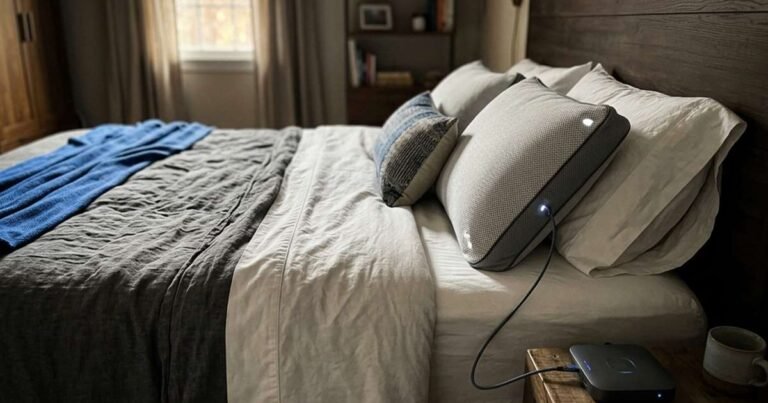
Anti-snore airbag systems use a microphone or bone-conduction sensor to detect snoring sounds, then inflate internal airbags to shift head position and open the airway. This category has the most third-party research behind it, since positional therapy for snoring and mild-to-moderate sleep apnea is an established, independently studied intervention-the pillow is essentially automating a positioning technique physicians already recommend, not inventing a new mechanism.
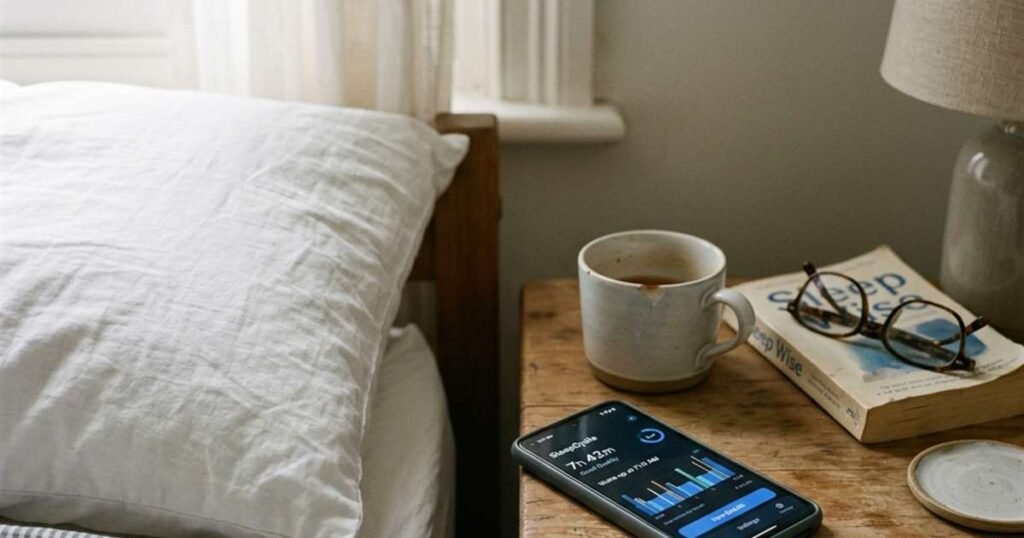
Sleep-tracking pillows use embedded accelerometers, microphones, or pressure sensors to estimate sleep stages, movement, and sometimes heart rate. This is the category where independent validation matters most and is least often disclosed-consumer sleep tracking accuracy, across pillow-based and wearable devices alike, has been found in clinical comparisons to fall meaningfully short of polysomnography (the lab-based gold standard), which is worth knowing before treating any tracking pillow’s data as diagnostic.
Vibrating alarm systems are the simplest category mechanically – a motor delivers physical vibration on a timer – and the claims here are the most directly verifiable, since “does it vibrate on schedule” doesn’t require trusting an AI model’s interpretation of anything.
Smart Pillow Spec Comparison
| Product | Category | Key Disclosed Spec | Certification | Price |
|---|---|---|---|---|
| Nitetronic A1 | Anti-snore airbag | 6 airbags, 6 head-position sensors, 99.2% claimed snore-recognition accuracy | Manufacturer-disclosed only | Premium tier |
| Motion Pillow (10Minds) | Anti-snore airbag + tracking | CertiPUR-US certified memory foam core, 4-7 airbags depending on version | CertiPUR-US | $399-699 |
| Bellman Vibio (under-pillow bed shaker) | Vibrating alarm | Bluetooth 5, adjustable vibration intensity, multiple alarms | N/A | Mid-range |
3 Best Smart Pillows with AI and Sensor Claims Are Actually Checkable
Disclosure: We independently research, analyze and spec-verify every product we recommend. If you make a purchase through our links, we may earn an affiliate commission at no extra cost to you. This financial support helps keep our testing independent. Read our full Review Process and Affiliate Policy.
1. Nitetronic A1 AI Anti-Snore Pillow
Best for: Back sleepers who snore loudly and need a mechanical intervention that automatically repositions their head without waking them up.
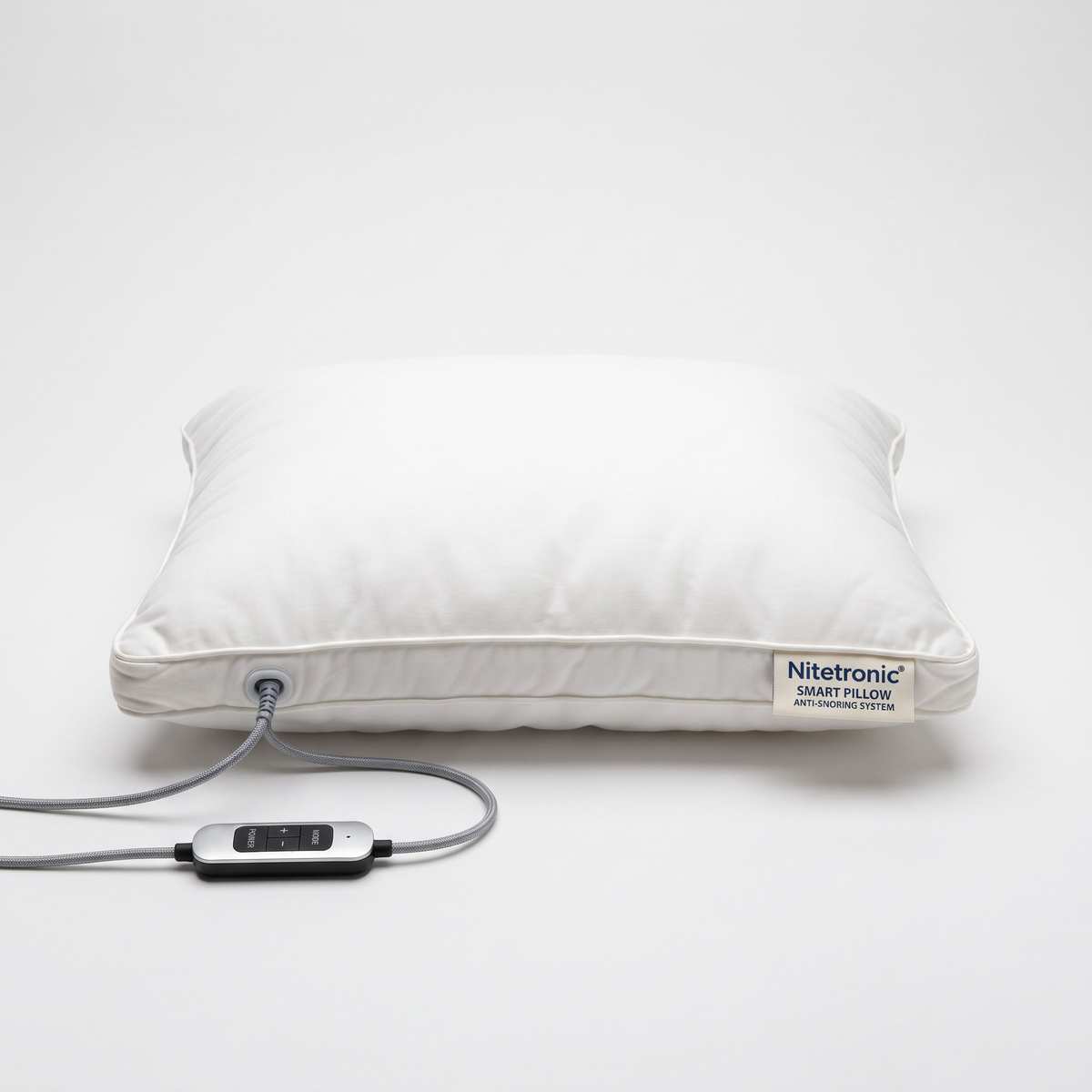
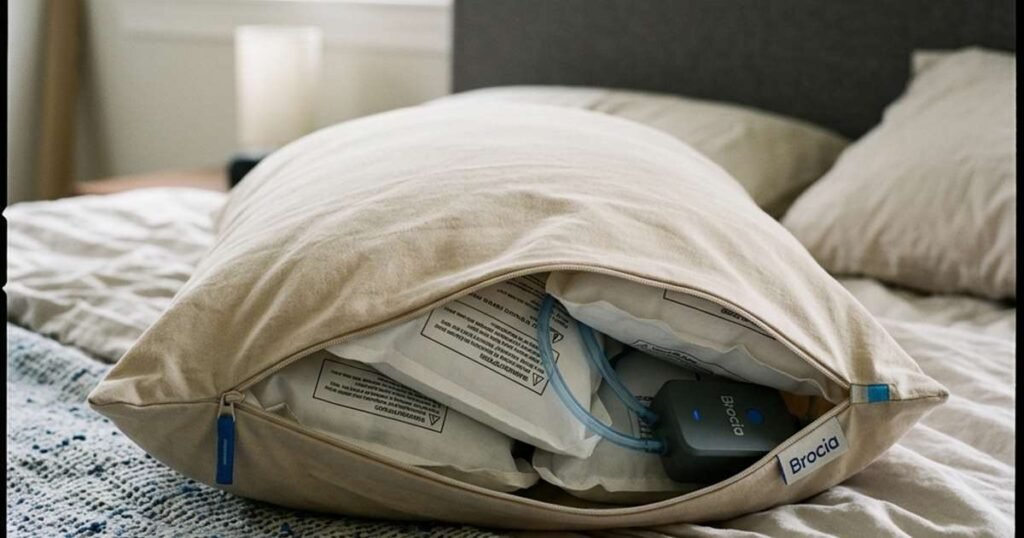
The Nitetronic A1 uses six independently sectioned airbags and six head-position sensors. When the pillow detects the sound vibrations of snoring, it gently inflates specific airbags to tilt the sleeper’s head to the side. This slight shift opens the airway and stops the snoring mechanically, regardless of where on the pillow the head has landed.
Rather than relying on vague marketing claims, the manufacturer discloses a highly specific 99.2% snore-recognition accuracy figure and an 82% breathing-anomaly detection rate. This makes it one of the few smart pillows that actually provides verifiable, mechanical intervention instead of just passive tracking data.
- Actively intervenes to stop snoring rather than just recording it.
- Multiple airbag chambers allow the pillow to target head positioning precisely.
- The internal mechanical components make it heavier and firmer than a standard memory foam pillow.
- Advanced app analytics require a paid premium subscription.
2. Motion Pillow (10Minds)
Best for: Data-driven sleepers who want comprehensive sleep tracking combined with an active anti-snoring airbag system.
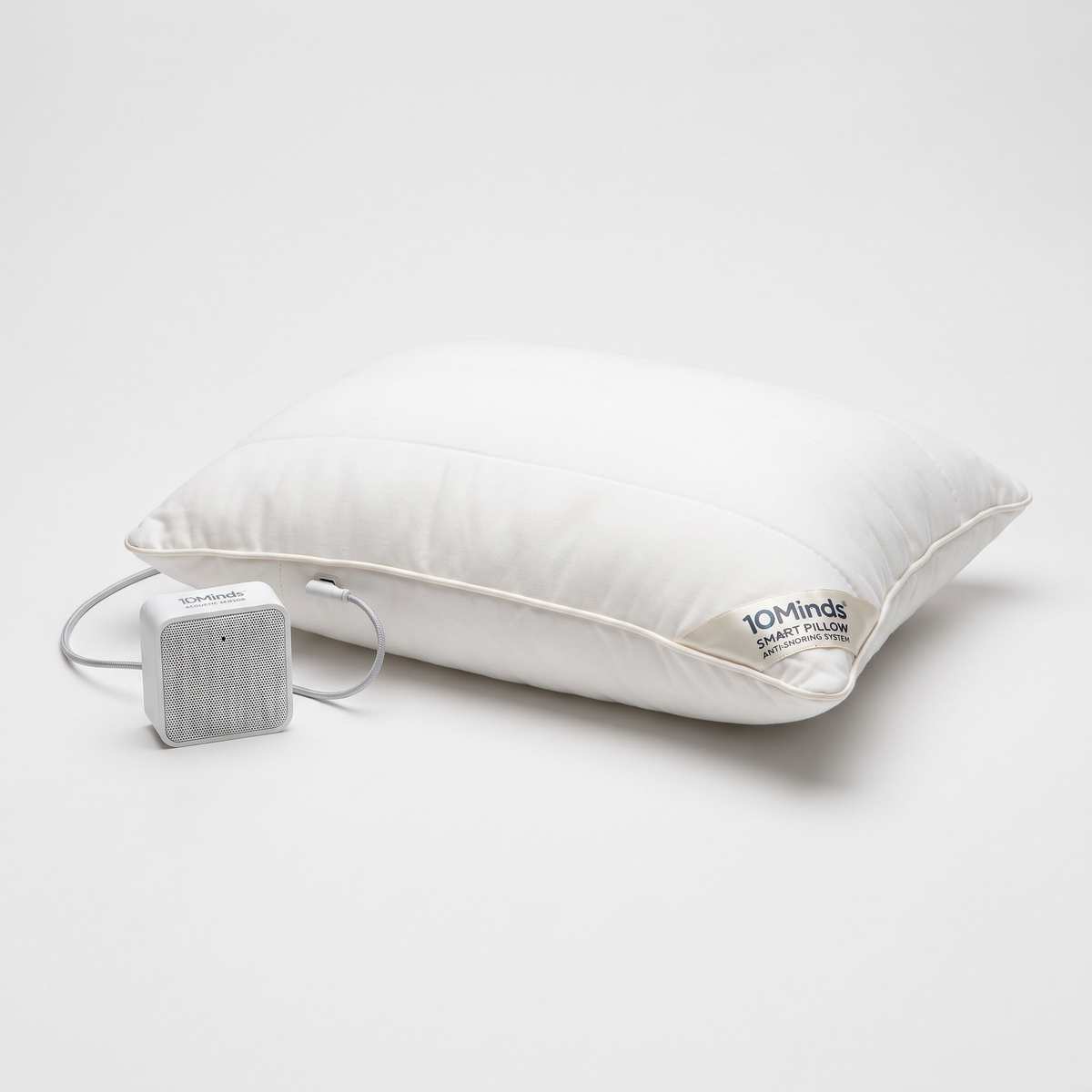
The Motion Pillow by 10Minds combines an external acoustic sensor box with a CertiPUR-US certified memory foam pillow core containing four to seven airbags, depending on the version. Like the Nitetronic, it inflates these bags to turn the sleeper’s head when it detects the distinct sound frequencies of snoring.
Where this model heavily differentiates itself is in its tracking software. It records snore volume, breathing patterns, and sleep stages, feeding everything into an app that generates a comprehensive sleep score. It is important to remember that consumer-grade sleep tracking still carries an accuracy gap when compared to clinical polysomnography, but the data remains highly useful for identifying broad nighttime trends.
- External sensor box keeps heavy electronics out of the pillow itself.
- Highly detailed app provides excellent historical data on snoring frequency.
- The external acoustic sensor box requires space on a bedside nightstand.
- Carries a massive premium price tag that frequently approaches $700 outside of sales events.
3. Bellman Vibio
Best for: Heavy sleepers, deaf or hard-of-hearing individuals, or partners on different wake schedules who need a silent, tactile alarm.
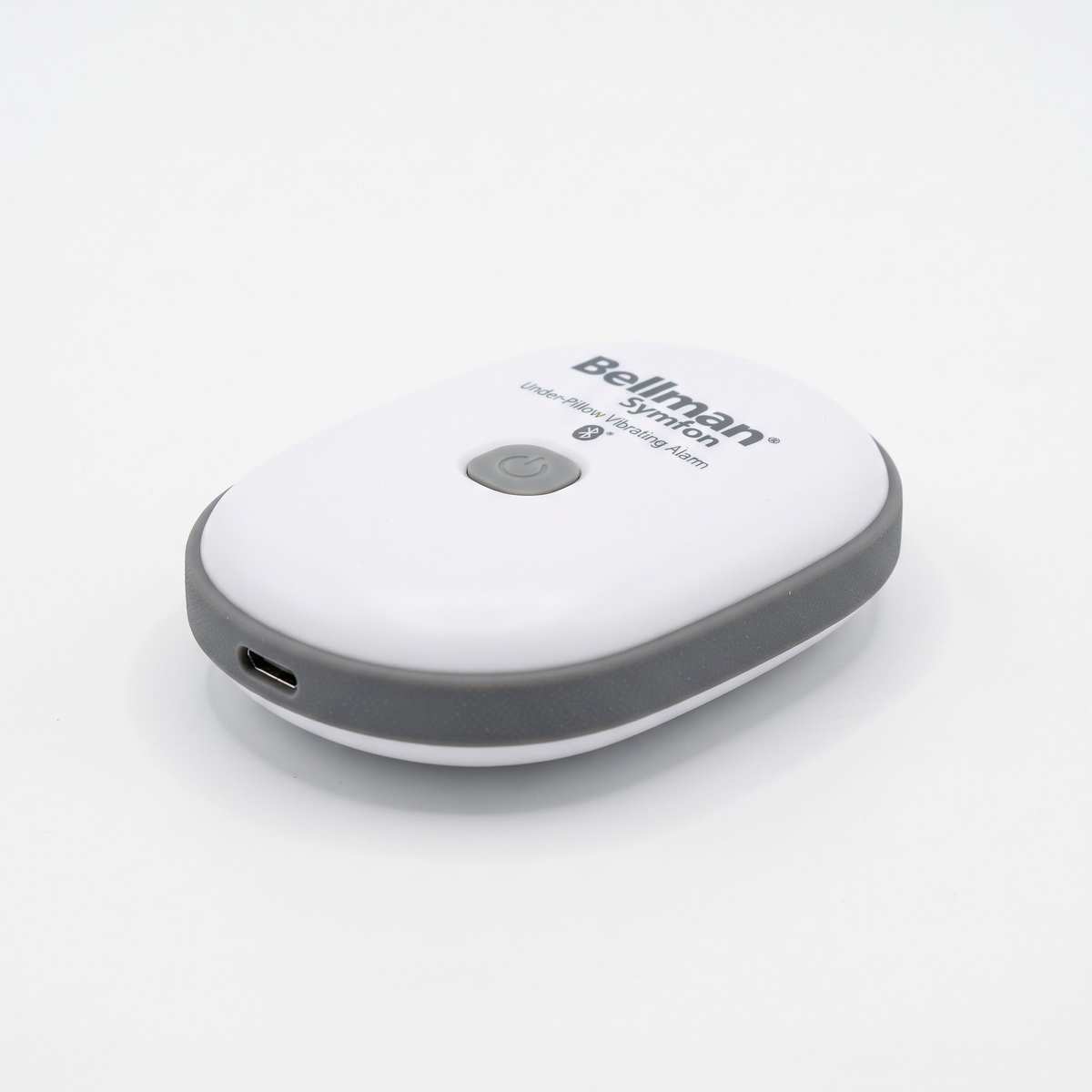
Compared to highly complex AI-driven tracking systems, vibration-alarm devices like the Bellman Vibio are mechanically simple and incredibly effective. This compact motor sits underneath your existing pillow rather than forcing you to sleep on hardware embedded inside an expensive new foam shell.
It connects to your smartphone via Bluetooth 5 to set scheduled alarms. When the time hits, it physically shakes the pillow at a highly adjustable intensity level to wake you up completely silently. This isolated tactile technology provides the most verifiable, foolproof claims in the entire smart sleep category.
- Allows you to keep your preferred existing pillow instead of switching to a smart foam model.
- Wakes up heavy sleepers without blasting an audio alarm that disturbs a partner.
- Does not track sleep stages or intervene to stop snoring.
- Requires regular recharging, introducing another device into your nightly routine.
The Contrarian Reality: “AI-Powered” is Doing more Marketing Work than Technical Work in Some of these Products
Every product in this comparison uses “AI” somewhere in its marketing, but the term covers meaningfully different levels of sophistication. An airbag system that distinguishes snoring sound patterns from ambient noise through trained audio classification is doing real, non-trivial signal processing. A sleep-tracking algorithm that outputs a proprietary “sleep score” from accelerometer data is applying a far simpler set of rules, often without disclosing the underlying formula – and research on consumer sleep tracking broadly suggests these scores should be treated skeptically as precise health metrics rather than general wellness feedback. The word “AI” on a product page doesn’t tell you which of these two situations you’re in; the specificity of the accuracy claim, and whether it’s independently checkable, is the better signal.
FAQs
Are smart pillows accurate for sleep tracking?
Smart pillows gather movement and sound data but struggle to match the accuracy of dedicated wearables. They give you detailed logs of your snoring without making you wear a device to bed. This raw data rarely explains the actual causes behind your poor sleep quality.
Do anti-snoring smart pillows actually work?
Pillows with inflatable air chambers can reduce snoring by gently moving your head when sound is detected. This mechanical adjustment opens your airway without fully waking you up. These consumer gadgets can’t replace a CPAP machine if you have diagnosed sleep apnea.
Is a smart pillow better than a sleep tracking ring?
A smart pillow completely eliminates the physical discomfort of wearing a tracking ring or watch all night. Established wearables use advanced optical sensors to track your heart rate much more accurately than a pillow sensor. Most users find that a simple phone app provides similar audio tracking for free.
Do smart pillows actually stop snoring?
Active smart pillows can reduce snoring by physically moving your head when their microphones detect noise. The Nitetronic A1 claims a 99.2% recognition accuracy. If tackling this issue is your main goal, click u0022Reduce my snoringu0022 in our interactive tool to see why we recommend a multi-airbag system over a single-zone model.
Are sleep tracking pillows more accurate than a smartwatch?
A smartwatch tracks movement and heart rate, while a smart pillow measures head pressure, position, and audio.
What is the best smart pillow for a silent alarm?
You do not need a complex AI pillow just to wake up silently. By selecting u0022Wake without noiseu0022 or u0022Lowest cost entryu0022 in our finder, you will see the Bellman Vibio. It uses a dedicated vibration mechanism that solves the problem directly without forcing you to pay for unused sensors. Hit u0022Copy resultu0022 if you want to save the recommendation.
The Bottom Line
For snoring specifically, the Nitetronic A1’s six-zone airbag coverage and disclosed accuracy figures make it the most specification-transparent option in that category, while the Motion Pillow pairs similar intervention with more developed sleep-data logging for those who want both. For sleepers whose only goal is a silent wake-up with no snoring or tracking claims to evaluate, the Bellman Vibio solves that single problem directly, at a lower price and with far less to independently verify in the first place.