
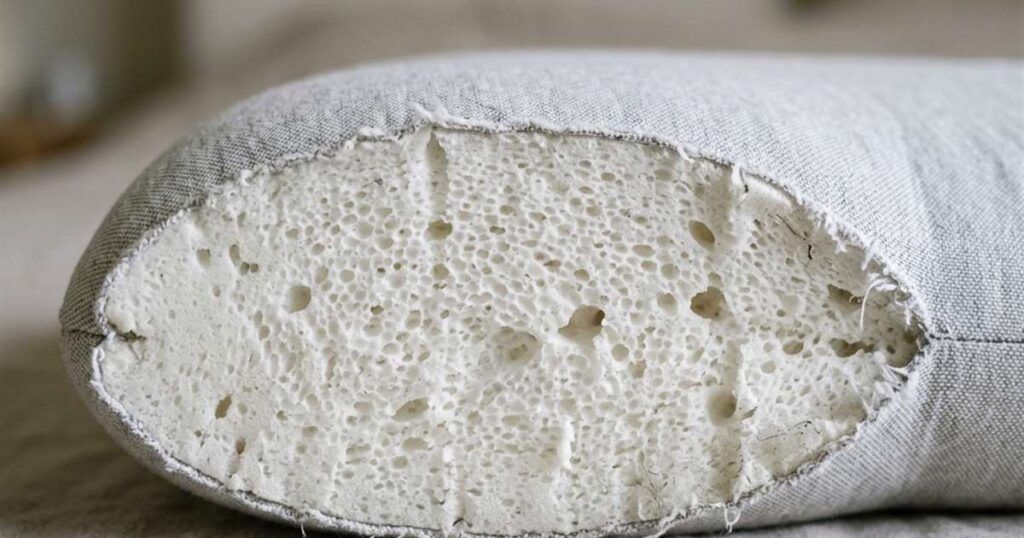
The single most common way people destroy a memory foam pillow is putting it in the washing machine. The agitation shears the open-cell foam structure, the same architecture responsible for pressure distribution, and high heat collapses it permanently. Neither damage is reversible. This guide covers the full-spectrum pillow care methods in the pillow care guide and focuses specifically on what memory foam actually tolerates, what it does not, and the step-by-step process that removes sweat, odor, and stains without shortening the pillow’s usable life.
Memory foam is polyurethane-based. Its characteristic feel comes from viscoelastic polymer chains that respond slowly to pressure and temperature. When those chains are subjected to mechanical agitation in water, they flex beyond their elastic limit and tear. Which is why a machine-washed memory foam pillow comes out lumpy, compressed in patches, or structurally hollow. No spin cycle setting prevents this; the problem is agitation, not speed.
What the Specs Reveal About Memory Foam and Water
Memory foam density, measured in pounds per cubic foot (lbs/ft³), determines how much abuse the structure can absorb before deforming. Consumer memory foam pillows typically fall in the 3-5 lbs/ft³ range. At that density, the foam is porous enough to absorb water readily but too dense to release it quickly. That combination creates two problems: slow drying invites mildew, and sustained saturation weakens the polymer matrix.
The ILD (Indentation Load Deflection) rating, the force required to compress foam 25% of its thickness, also degrades after water exposure if the foam is not dried fully. A pillow rated at 10-14 ILD (typical for memory foam) can feel noticeably softer in the compressed zones after improper washing.
That is the structural reality. Every step in the cleaning method below exists to work with those constraints, not ignore them.
The Myth Worth Naming Directly
Most articles in this category recommend putting memory foam pillows in the washing machine on a “delicate” cycle. The reasoning is intuitive, lower agitation, cooler water, shorter cycle, but it misunderstands the failure mode. The problem is not temperature or cycle length. It is mechanical agitation applied to a saturated open-cell matrix. Delicate cycles still agitate. The foam still tears. The fix is removing agitation entirely, which means hand washing and spot treating, nothing else.
How to Spot-Treat Memory Foam (For Localized Stains)
Spot treatment is the right approach for isolated yellow patches, small sweat stains, or surface discoloration. It uses the least water and carries the lowest drying risk.
What you need:
- Mild liquid detergent (fragrance-free preferred, as fragrances can linger in foam)
- Two clean white cloths or microfibre towels
- Cold water
- Baking soda (optional, for odor)
Steps:
- Remove the pillowcase and any cover. Set them aside to wash separately per their care labels.
- Mix a small amount of mild detergent, roughly half a teaspoon, with one cup of cold water. Do not use hot water; heat accelerates polymer breakdown in memory foam.
- Dip one cloth into the solution. Wring it until it is damp, not wet. Dab (do not rub) the stained area with light pressure. Rubbing spreads the stain and drives moisture deeper into the foam.
- Use the second cloth, dampened with clean cold water, to dab the area again and lift the detergent residue. Repeat this rinse step until no soapy residue remains. Detergent left in foam attracts new dirt faster.
- Press a dry towel firmly against the treated area for 30-60 seconds to absorb as much surface moisture as possible.
- Allow the pillow to air dry completely before replacing the cover. This typically takes 12-24 hours depending on ambient humidity. Do not use a hair dryer or place the pillow in direct sunlight for extended periods. Sustained heat above around 130-140°F degrades viscoelastic properties.
How to Hand-Wash a Memory Foam Pillow (Full Clean)
A full hand wash is appropriate when the pillow has absorbed significant sweat over several months, when spot treatment is not enough, or when the foam has developed a persistent odor. Do this no more than once every 3-4 months. More frequent washing accelerates cell structure fatigue.
What you need:
- Bathtub or large basin
- Mild liquid detergent
- Cold water
- Several dry towels
Steps:
- Fill the tub with enough cold water to submerge the pillow, typically a few inches of water, not a full bath. Cold water only.
- Add a small amount of mild detergent, roughly one teaspoon per full pillow. Avoid detergents with optical brighteners or fabric softeners; both leave residues that alter foam feel.
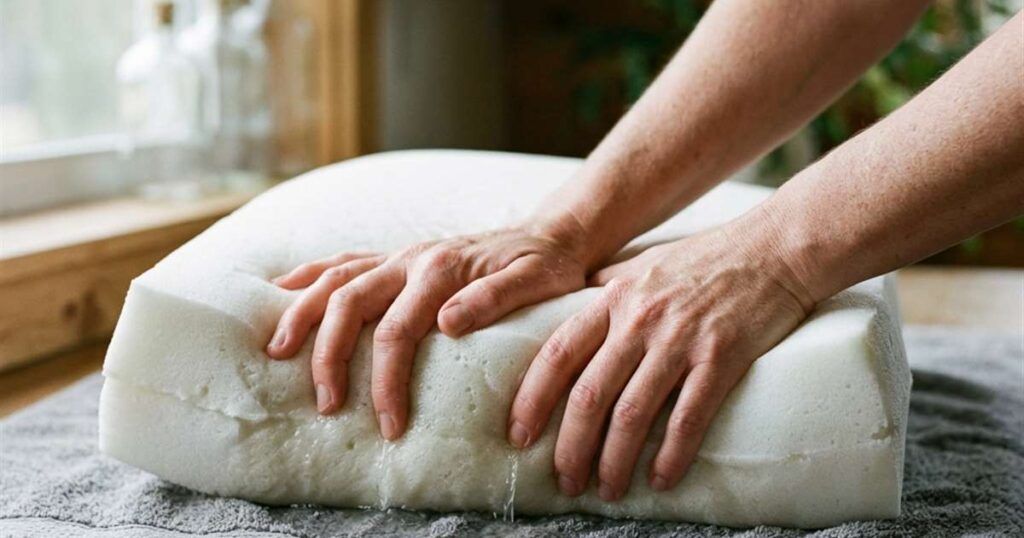
- Submerge the pillow and gently squeeze it, compress and release, compress and release, without twisting or wringing. This moves the soapy water through the foam without mechanical shearing. Work across the entire surface for 3-5 minutes.
- Drain the soapy water. Refill with clean cold water and repeat the gentle squeeze cycle to rinse. You will likely need 2-3 rinse cycles before the water runs clear and soap-free. Do not rush this, detergent residue in foam is one of the primary causes of recurring odor.
- Once rinsed, press the pillow gently between both hands to remove as much water as possible. Do not wring or twist. Lay it flat on several dry towels and roll the towels around the pillow, pressing firmly to absorb additional moisture.
- Transfer the pillow to a flat, ventilated surface, a drying rack works well, and allow it to air dry completely. This takes anywhere from 12 to 48 hours depending on pillow thickness and room humidity. Flip it every few hours to ensure even drying. The pillow must be completely dry, not just surface-dry, before use. Pressing the center: if it feels cool or dense, it is still wet inside.
Eliminating Odor Without Water
For pillows that smell but are not visibly stained. A common situation with memory foam that has absorbed months of ambient humidity and body heat. A dry deodorizing method avoids the drying risk entirely.
Sprinkle a light, even layer of baking soda across both surfaces of the pillow. Allow it to sit for 4-6 hours (longer for strong odors). Vacuum the baking soda off using an upholstery attachment on low suction. The baking soda absorbs odor compounds without introducing moisture. Repeat monthly as a maintenance step between full washes.
Drying: The Step Most People Get Wrong
Incomplete drying is the most common cause of memory foam pillow failure after washing. Mildew can begin developing inside foam within 24-48 hours if the interior stays damp. And because the exterior dries first, a pillow can feel ready while still being wet at its core.
There is no shortcut here that does not carry risk. Tumble drying on low heat can accelerate surface drying but risks uneven heat distribution and localized compression in higher-density zones. The safest method is consistent air drying on a flat ventilated surface, flipped regularly, for as long as the foam requires. If you use a dryer, use the lowest heat setting and check every 20 minutes. No dryer balls. They create the same localized impact stress as machine washing.
Washing Frequency and Maintenance Schedule
| Pillow type | Full wash frequency | Spot treat | Dry deodorize |
|---|---|---|---|
| Solid memory foam | Every 3–4 months | As needed | Monthly |
| Shredded memory foam | Every 2–3 months | As needed | Monthly |
| Gel-infused memory foam | Every 3–4 months | As needed | Monthly |
| Memory foam with phase-change cover | Cover only, every 1–2 months | Foam: spot-treat only | Monthly |
Covers and pillowcases wash per their own care labels, typically machine washable. For more on how washing frequency interacts with pillow replacement timing, the guide on how often to replace your pillow covers the data on foam lifespan in detail.
Frequently Asked Questions
Can you put a memory foam pillow in the washing machine?
No. Machine washing agitates the open-cell polymer matrix beyond its elastic limit, causing tearing and permanent compression. Use hand washing or spot treatment only.
How long does a memory foam pillow take to dry after washing?
Between 12 and 48 hours, depending on pillow thickness and ambient humidity. Press the center of the pillow before using it, if it feels cool or denser than usual, it is still wet inside.
How often should you wash a memory foam pillow?
A full hand wash every 3-4 months is sufficient for most users. Monthly dry deodorizing with baking soda handles odor between washes and reduces how often a full wash is needed.
Can you use a dryer on memory foam?
Only with extreme caution. If you use a dryer, select the lowest heat setting, check every 20 minutes, and avoid dryer balls. Air drying flat is the safer method and carries no heat-damage risk.
What detergent should you use on memory foam?
A mild, fragrance-free liquid detergent in very small quantities. Roughly a teaspoon for a full pillow. Avoid detergents with optical brighteners, fabric softeners, or strong fragrances, which leave residues that alter foam feel or attract new dirt.