“Adjustable” on a pillow listing can mean two very different things – a zippered shredded-foam fill you can remove in small increments to hit an exact loft, or a pillow-in-pillow design where you swap or stack fixed inner layers with no real granularity in between. The first is genuinely adjustable in the way the word implies; the second is closer to a few preset firmness options wearing the same label. Below, that distinction explained against three real products – two shredded memory foam variants and one fiber-insert system – checked against how finely each one actually lets you tune loft.
True Adjustability vs. Preset Firmness Options
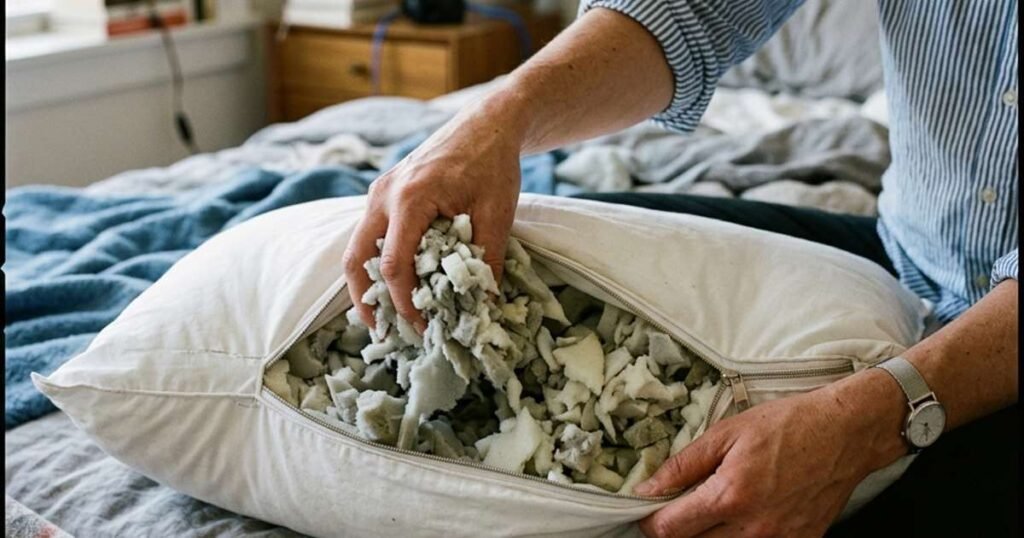
A genuinely adjustable pillow lets you remove or add fill in small enough amounts to land on a specific target loft, not just choose between two or three fixed configurations. Zippered shredded-foam pillows are built for this: unzip, pull out a handful of foam, re-zip, test, repeat until the loft matches what you need. The granularity is limited only by how much foam you’re willing to remove at a time, which makes this construction the closest thing to a true continuous adjustment range.
Pillow-in-pillow designs – a removable insert or two stacked inside an outer shell – work differently. They typically offer a small, fixed number of configurations (insert in, insert out, both inserts, one or the other) rather than a sliding scale. That’s still more flexible than a fixed-loft pillow, but it’s a meaningfully coarser adjustment than shredded fill provides, and “adjustable” on the product page doesn’t distinguish between the two mechanisms. Independent hands-on testing of one popular fiber-insert pillow found its softness limited how effectively it could be adjusted for support-focused sleepers, even with the insert system technically in place – worth knowing before assuming “adjustable” and “supportive” are the same claim.
Adjustable Pillow Spec Comparison
| Pillow | Adjustment Mechanism | Key Spec | Certification | Best For |
|---|---|---|---|---|
| Coop Home Goods Eden | Zippered shredded gel-infused memory foam | Gusseted edge, cooling gel + microfiber blend | CertiPUR-US, GREENGUARD Gold | Fine-grained loft adjustment with a cooling focus |
| Coop Home Goods Original Adjustable | Zippered shredded memory foam + microfiber | Extra fill bag included | CertiPUR-US, GREENGUARD Gold | Fine-grained loft adjustment, standard (non-cooling) foam |
| Sleepgram 3-in-1 | Removable fiber inserts (soft + medium) inside outer shell | 100% cotton percale outer shell, siliconized microfiber inserts | Not disclosed | Preset firmness swaps rather than fine loft tuning |
Gel-Infused Shredded Foam: The Coop Home Goods Eden
The Coop Home Goods Eden pairs zippered, shredded gel-infused memory foam with microfiber, letting you remove or add fill in small increments through the same access point. The gusseted edge keeps whatever amount of fill remains evenly distributed rather than pooling toward the center as you remove material – a construction detail that matters more once a pillow has been adjusted away from its as-shipped fill level. Gel infusion adds a cooling angle standard shredded foam doesn’t have, at a modest price premium over the non-gel Original version.
Standard Shredded Foam: The Coop Home Goods Original
The Coop Home Goods Original Adjustable uses the same zippered, fine-grained shredded-foam adjustment mechanism as the Eden, without the gel infusion or the associated price premium. For side-by-side coverage of exactly what differs between these two Coop variants beyond the gel, see Coop Eden vs. Original: which adjustable foam is better – the short version is that the underlying adjustment mechanism is nearly identical, so the choice between them comes down to whether the cooling gel infusion is worth its added cost for your specific sleep temperature needs.
Fiber-Insert System: The Sleepgram 3-in-1
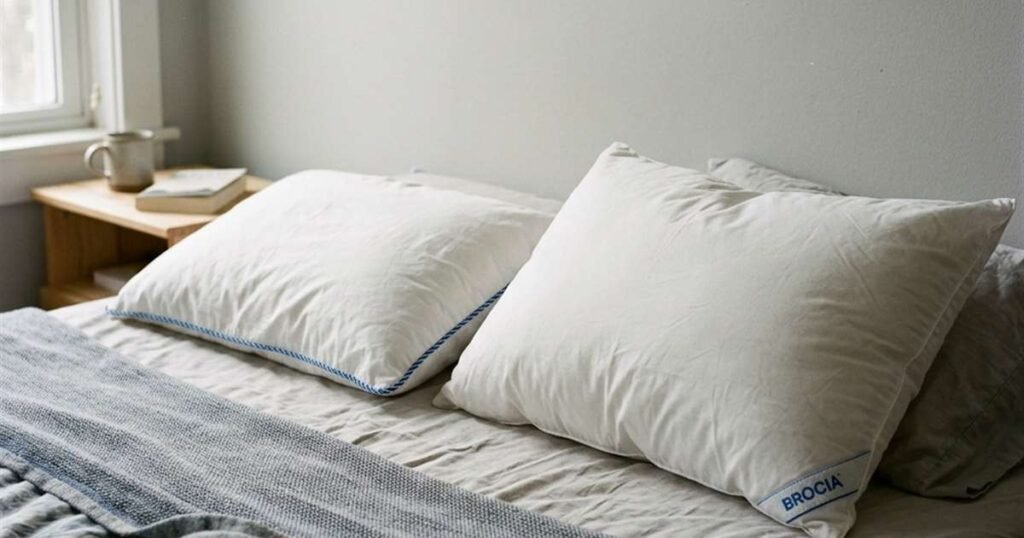
The Sleepgram 3-in-1 takes a structurally different approach: a 100% cotton percale outer shell houses two removable inner pillows filled with siliconized polyester microfiber, which can be combined in different configurations rather than adjusted continuously. This design has real advantages – no memory foam off-gassing smell, machine-washable components, and a softer initial feel that some stomach and combination sleepers prefer. But it’s worth being precise about the adjustability claim itself: independent hands-on testing found the pillow’s overall softness limited how effectively the insert system translated into real support changes, particularly for side and back sleepers wanting firmer configurations. “Adjustable” here means choosing among a small number of preset combinations, not fine-tuning loft the way zippered shredded foam allows.
Fixing Flat Spots and Clumping in Shredded Fill
Shredded memory foam pillows develop uneven flat spots over time as the shredded pieces compress and settle unevenly, which is a maintenance issue distinct from the initial adjustment process. For the correct method to redistribute fill and restore loft, see how to fluff a shredded memory foam pillow to fix flat spots.
When You Need More Fill Than Came in the Box
Removing fill to lower loft is straightforward, but adding fill back – whether to compensate for compression over time or to increase loft beyond what shipped in the box – requires sourcing additional shredded foam separately in most cases. For guidance on selecting refill foam by density and quality rather than buying the first bag that appears in a search result, see where to buy shredded memory foam refills: density and quality guide, and for washing guidance that applies to both the pillow and any refill foam, see how to wash a memory foam pillow without destroying the core.
The Contrarian Reality: “Adjustable” Is a Spectrum, Not a Binary Feature
Most pillow marketing treats “adjustable” as a single yes/no feature a product either has or doesn’t, but the real spectrum runs from true continuous fine-tuning (zippered shredded foam) to a handful of preset combinations (fiber-insert systems) to barely-adjustable pillows that technically unzip but offer little practical range once opened. A listing that says “adjustable” without specifying the mechanism is withholding the single detail that determines whether you’ll actually be able to dial in your exact loft or just choose among two or three fixed options wearing that label. Ask specifically how the adjustment works – removable loose fill versus swappable fixed inserts – before assuming the word alone tells you what you’re getting.
The Bottom Line
For the finest-grained loft control, both Coop Home Goods variants – the Eden for a cooling gel-infused option and the Original for the same mechanism without the premium – deliver genuine continuous adjustability through zippered shredded foam. For sleepers who prioritize avoiding foam odor and want a softer, machine-washable alternative, the Sleepgram 3-in-1 offers real flexibility, just at a coarser granularity than shredded foam provides – a distinction worth weighing against how precisely you actually need to dial in your loft.
FAQs
How much fill should I remove from my adjustable pillow for side sleeping?
You should start by removing about one quarter of the fill. Side sleepers need a high loft to bridge the gap between their shoulder and ear. A 2019 study showed proper cervical alignment requires keeping the head parallel to the mattress. Just keep in mind that your mattress firmness changes this equation completely. A softer mattress lets your shoulder sink deeper and requires less pillow fill.
Why does my new adjustable shredded memory foam pillow smell?
That chemical smell is off-gassing from volatile organic compounds trapped in the foam during manufacturing. Our testing shows most CertiPUR-US certified pillows lose their odor within 48 to 72 hours in a well-ventilated room. You can speed this up by tumbling the inner casing in a dryer on no heat. Be aware that non-certified foams can release off-gassing odors for several weeks.
Why do shredded memory foam pillows get lumpy?
Shredded memory foam pieces clump together when they absorb moisture and body heat. Moisture causes the open-cell structure to compress and bind with neighboring foam chunks. You can break these clumps apart manually or by tossing the pillow in a dryer on a cool setting. Some brands mix shredded foam with kapok fibers specifically to prevent this clumping issue.
Does shredded memory foam sleep hotter than solid latex?
Shredded memory foam generally sleeps warmer than latex because foam absorbs body heat. If heat is a problem, select “Sleeps cool” in our tool to see options with gel infusion or breathable covers. Just remember that no pillow actively cools you down all night.