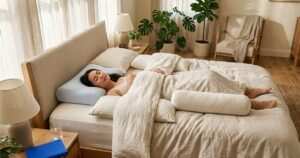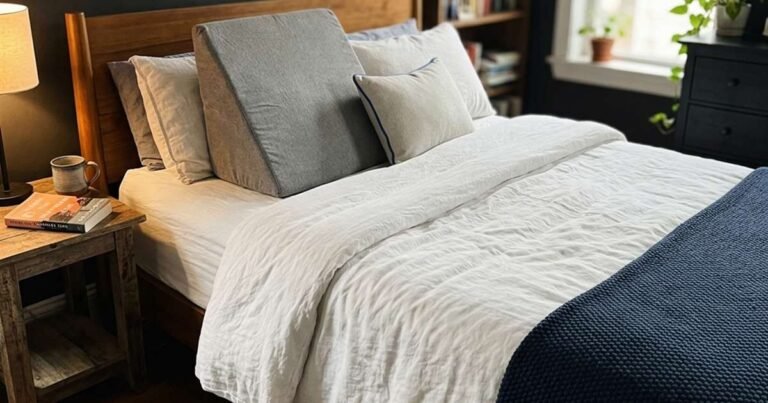
Doctors reach for wedge pillows in three situations: nocturnal acid reflux, snoring caused by sleep position, and recovery after surgery. Each use case has different elevation needs, and a wedge that works for reflux won’t necessarily work well after a procedure. If surgery recovery is your reason for being here, our best post-surgery pillows guide covers the specific incline geometry and pressure-relief specs you’ll actually need.
A note on scope: this guide covers general wedge pillow selection and elevation therapy evidence. If you suffer from severe nocturnal GERD or laryngopharyngeal reflux, read our clinical research summary on how a 30 to 45 degree wedge stops nighttime acid reflux before selecting your torso angle. Always consult your physician for personalized medical advice.
What the Reflux Research Actually Shows
Nighttime acid reflux is the wedge pillow use case with the most direct clinical study behind it. A controlled trial that elevated the head of the bed by a 20-centimeter block for six consecutive nights found that head-of-bed elevation reduced esophageal acid exposure and acid clearance time, with some relief from heartburn and sleep disturbance in patients with confirmed nocturnal reflux. That’s a real, measured physiological effect, not just a reported feeling of improvement.
At the same time, a systematic review of five controlled trials on head-of-bed elevation for GERD found that all five included trials carried a high risk of performance bias, and four also carried a high risk of selection bias – meaning the overall evidence base, while directionally consistent, isn’t as methodologically strong as the positive individual results might suggest on their own. This is worth stating plainly rather than glossing over: elevation therapy has real physiological grounding, but the certainty of that evidence is more modest than confident marketing claims from wedge pillow brands often imply. If you have diagnosed GERD, talk to your doctor about whether elevation therapy fits into your treatment plan alongside or instead of medication.
Wedge Pillow Spec Comparison
| Wedge | Use Case | Key Spec | Certification | Best For |
|---|---|---|---|---|
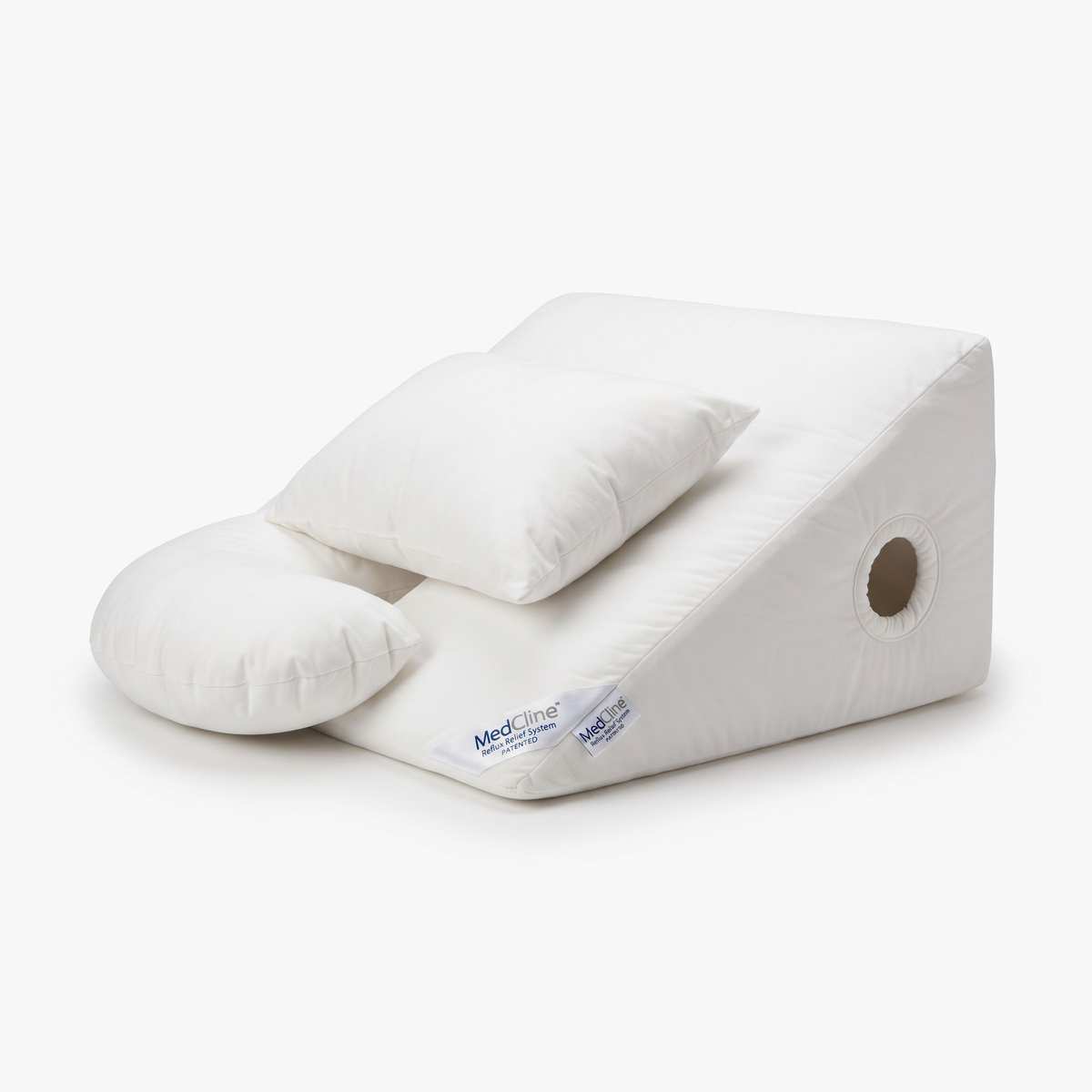
| MedCline Reflux Relief System | GERD / acid reflux | 15-20 deg incline, side-sleeping arm pocket, 3-piece system | CertiPUR-US | Confirmed nighttime GERD, side sleepers specifically |
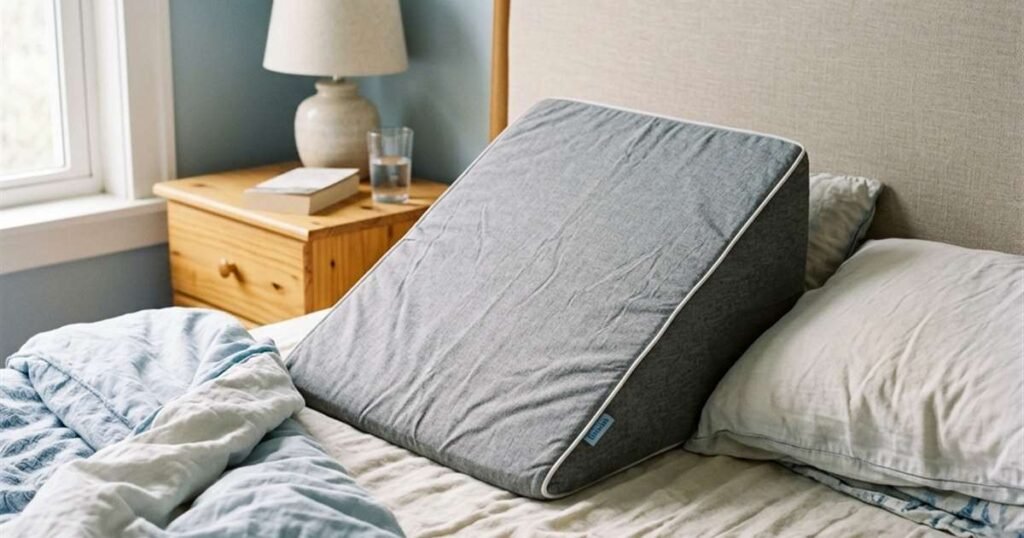
| Avana Bed Wedge | General incline (reflux, snoring, sinus) | 7-in rise, 1-in memory foam over urethane base | CertiPUR-US | Back or stomach sleepers wanting a single-piece wedge |
| Avana Kind Bed 4-Piece System | Post-surgery / modular positioning | Separate back rest, knee rest, headrest, and back cradle pieces | Not disclosed | Post-surgical positioning needs that change day to day |
3 Best Wedge Pillows with Good Support
Disclosure: We independently research, analyze and spec-verify every product we recommend. If you make a purchase through our links, we may earn an affiliate commission at no extra cost to you. This financial support helps keep our testing independent. Read our full Review Process and Affiliate Policy.
1. MedCline Reflux Relief System
Best for: Nighttime acid reflux and GERD sufferers who need to maintain a left-side sleeping position to prevent nocturnal acid exposure.
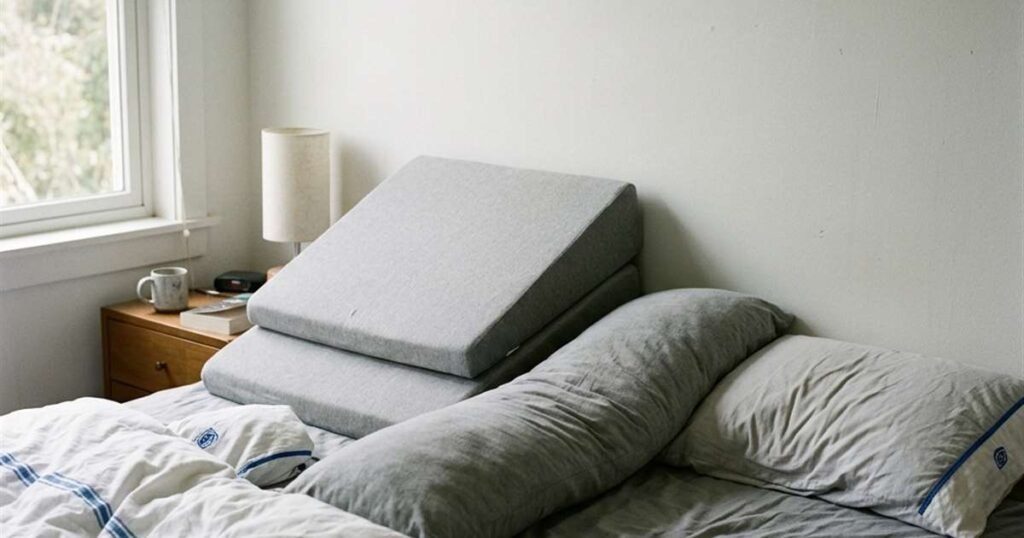
The MedCline Reflux Relief System is built specifically around established reflux research. It pairs a clinical 15 to 20-degree torso incline with an integrated body pillow and a patented arm pocket. This ensures the user stays comfortably positioned on their left side throughout the night, which medical studies show significantly reduces esophageal acid exposure compared to right-side or back sleeping.
This dual-component design directly addresses the biggest limitation of simple triangular wedges. On a plain incline, a person frequently slides down the pillow while unconscious, completely undoing the mechanical benefit of the elevation.
- Arm pocket prevents the sliding effect associated with standard wedges.
- Specifically engineered to maintain the gastroenterologist-recommended left-side sleeping position.
- Occupies roughly half of a queen-size mattress.
- Requires a short adjustment period to get used to the arm positioning.
2. Avana Bed Wedge
Best for: Shoppers who want a general elevation solution without the complexity or extreme footprint of a full body system.
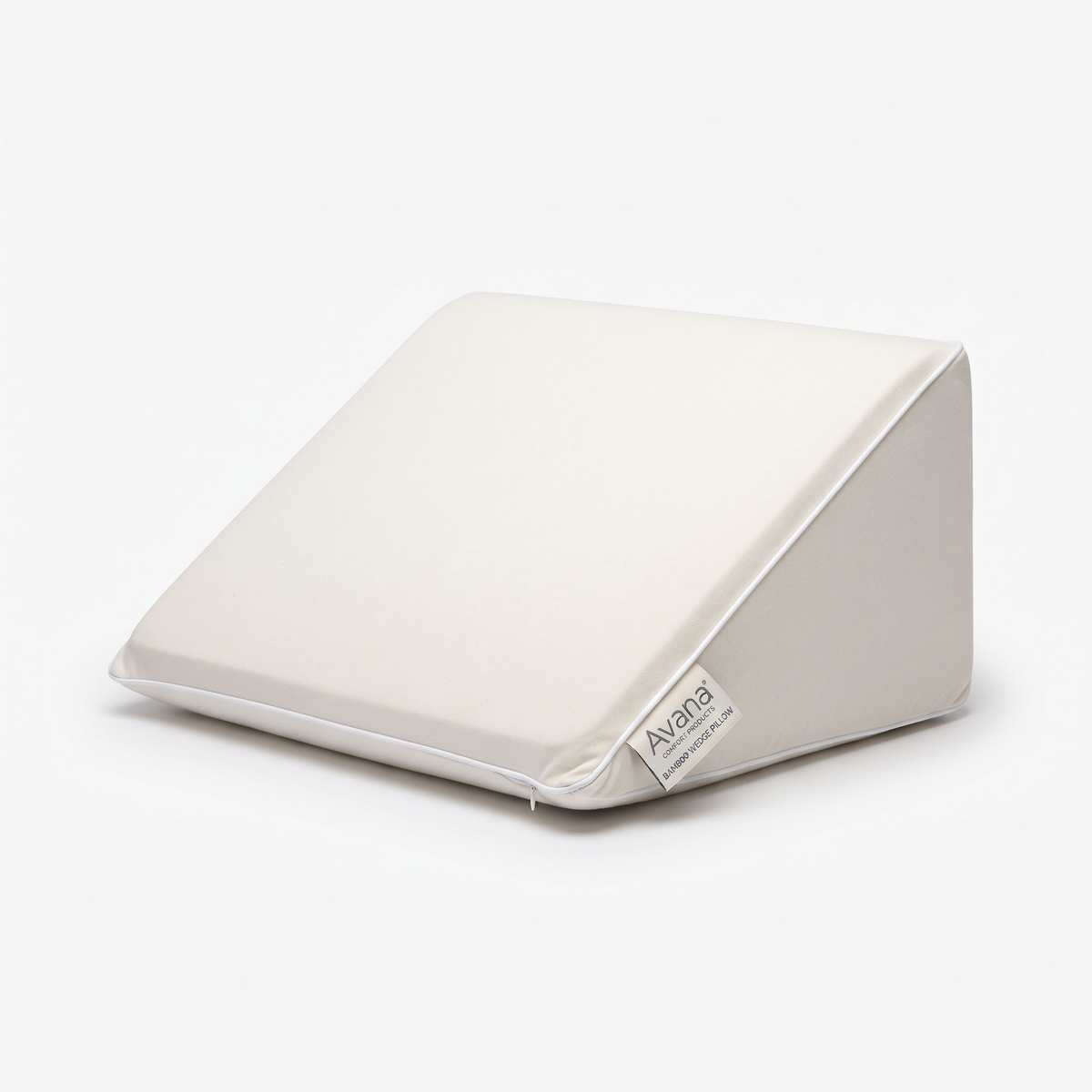
For general elevation needs without a highly specific diagnosis driving the choice, the Avana Bed Wedge’s simpler single-piece design is a fantastic starting point. It provides a sturdy, fixed incline using a polyurethane foam base topped with a layer of contouring memory foam.
Unlike complex modular sets, you can easily pull this wedge out of a closet for occasional bouts of heartburn, chest congestion, or simple reading in bed. It is highly practical, covered in a soft, breathable bamboo-rayon blend cover that zips off for machine washing.
- Simple, durable one-piece design is easy to set up and store.
- Memory foam top layer prevents the dense base foam from causing pressure points.
- Does not lock you in place, meaning you might slide down the incline overnight.
- Uncomfortable for strict side sleepers due to the lack of an arm pocket.
3. Avana Kind Bed 4-Piece System
Best for: Post-surgery recovery where comfortable sleeping angles and swelling locations change dynamically day by day.
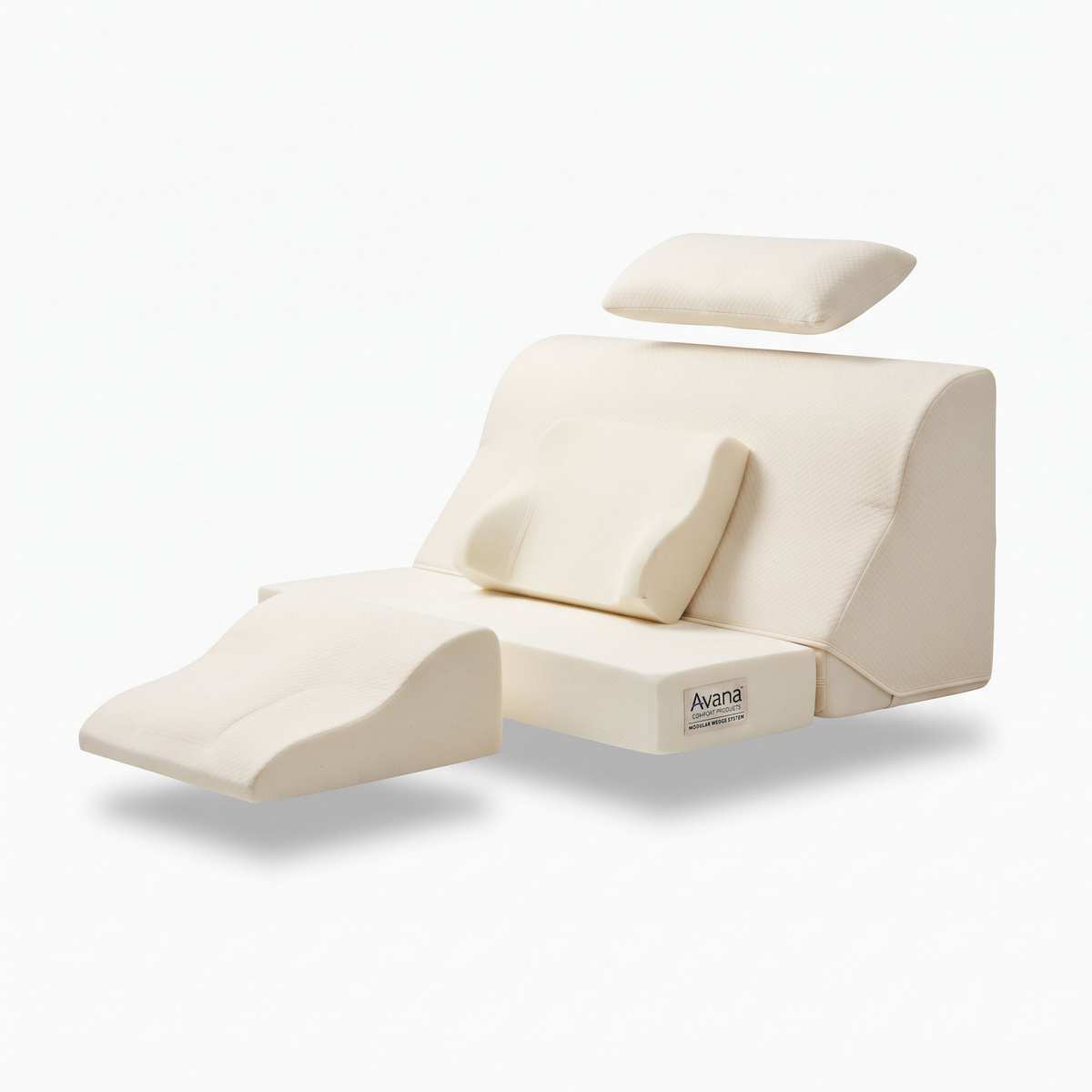
The Avana Kind Bed addresses post-surgical recovery with separate components: a backrest, knee rest, headrest, and back cradle. These pieces can be entirely reconfigured rather than committing you to one fixed wedge shape for your full recovery period.
This modular approach is a meaningfully different design philosophy from fixed-angle GERD systems. It recognizes that recovery positioning needs are inherently variable. You can raise your knees to take pressure off the lumbar spine, adjust the backrest angle, or use the cradle independently, making it the most versatile orthopedic system available.
- Four separate pieces allow for complete postural customization.
- Knee wedge actively prevents the lower back from bowing and eliminates nighttime sliding.
- Multiple loose pieces require constant readjustment to maintain the perfect setup.
- Very bulky to store once your surgical recovery is fully complete.
The Contrarian Reality: One Wedge Angle Doesn’t Serve Every Use Case Equally
Most wedge pillow marketing treats “elevation” as a single universal benefit that helps reflux, snoring, and surgical swelling equally at any incline. The research doesn’t support that assumption. The reflux studies above used specific tested elevations – roughly 20 centimeters, or about 15-20 degrees when built into a wedge shape – and a much lower or higher incline hasn’t been studied to the same degree for that specific outcome. A wedge marketed generically for “acid reflux, snoring, and post-surgery recovery” on one product page, at one fixed angle, is applying a single mechanical solution across three problems whose supporting research doesn’t necessarily transfer between them. Match the disclosed angle to your specific use case rather than assuming any wedge shape works equally well for all three.
Frequently asked Questions
Do wedge pillows cause back pain?
They can if they force your spine into an unnatural curve or if you slide down the incline overnight. If you need a wedge for medical reasons, try placing a standard pillow under your knees to prevent sliding. If you need a complete system rather than just a foam triangle, select u0022Post-surgery recoveryu0022 in our tool to see the four-piece Avana system, which supports both your back and knees.
What is the best wedge pillow for acid reflux?
Clinical studies suggest an incline of 15 to 20 degrees is optimal for reducing nocturnal reflux. Left-side sleeping also significantly helps. Click u0022Nighttime acid refluxu0022 in the interactive finder to see the MedCline system. We recommend it specifically because its arm pocket allows you to sleep on your left side without putting pressure on your shoulder.
How does the wedge pillow use case finder work?
Since you need different incline angles and shapes depending on your physical issue, the tool filters by your main diagnosis. Simply tap a button like u0022Snoring / positional apneau0022 or u0022General elevation, no diagnosisu0022 to see the specific wedge style that fits that requirement. You can then click u0022Copy resultu0022 to save the recommendation.
The Bottom Line
For diagnosed nighttime GERD specifically, the MedCline Reflux Relief System’s 15-20 degree incline and side-sleeping arm pocket most directly reflect what the reflux research actually tested. For general elevation needs without a specific diagnosis driving the choice, the Avana Bed Wedge’s simpler single-piece design is a reasonable starting point. And for post-surgical recovery where positioning needs will change over time, the Avana Kind Bed’s modular 4-piece system offers flexibility a fixed wedge shape can’t. Whatever you choose, if you have a diagnosed condition driving this decision, bring the specific product’s disclosed angle to your physician or surgeon rather than assuming general wedge pillow marketing applies to your situation.