Pillow accessories get sold with a lot of unverifiable claims stacked on top of real material differences, and the two are easy to confuse. Below is what pillowcases, protectors, throw pillow inserts, and novelty pillows actually change about your sleep or your decor, and what’s marketing language doing the heavy lifting instead.
What Everyone Gets Wrong About “Silk” Claims
Start with the accessory category most crowded with unverifiable claims: pillowcases marketed for skin and hair benefits. The confusion begins with two words used almost interchangeably in product listings that describe two completely different things. Silk is a fiber, harvested from silkworm cocoons. Satin is a weave structure, a way of interlacing threads that can be made from silk, polyester, nylon, or a blend, producing a smooth, glossy surface regardless of what fiber is underneath it. A “silk-feel” pillowcase made from 100% polyester satin weave is a real, legitimate product. It is not silk, and the fiber-level benefits attributed to silk specifically don’t transfer to it.
Even genuine silk carries claims that outrun the evidence. Sleep Foundation’s review of silk pillowcase benefits is direct about this: silk’s smoother surface does genuinely reduce the friction that causes sleep creases, a real, mechanical, and reasonably well-supported benefit. But the same source notes there’s no scientific evidence that silk’s amino acids transfer to skin on contact, and no clinical basis for claims of antimicrobial properties over cotton, since silk collects bacteria at rates comparable to any other fabric that isn’t washed regularly. The friction reduction is real. The skincare-in-a-pillowcase framing several brands lean on isn’t backed the way it’s marketed. If you want the full material breakdown, silk vs satin pillowcase covers this distinction in depth, and mulberry silk pillowcase benefits covers specifically what the highest grade of genuine silk does and doesn’t do.
Pillowcase Materials, What Actually Differs
While satin describes a smooth weave pattern that can use polyester, true silk is a natural protein fiber with unique moisture-wicking and friction-reducing properties. See our technical comparison of silk vs. satin pillowcases to determine which material matches your hair and skin requirements.
| Material | Feel | Moisture Behavior | Best For |
|---|---|---|---|
| Cotton (percale or sateen) | Crisp (percale) or silky-smooth (sateen) | Absorbent, can pull moisture from skin overnight | Everyday use, machine washable, widest price range |
| Silk (mulberry, genuine fiber) | Smooth, cool to the touch | Low absorbency, doesn’t wick oils and moisture from skin | Reduced facial friction, sensitive or acne-prone skin |
| Satin (polyester or blend weave) | Smooth, silk-like surface | Moderate; varies by underlying fiber | Budget alternative to genuine silk feel |
| Linen | Textured, breathable | Highly breathable, wicks moisture and heat effectively | Hot sleepers, warm climates |
| Bamboo-derived rayon (viscose, lyocell) | Soft, slightly cool | Good moisture-wicking, breathable | Hot sleepers wanting a softer hand-feel than linen |
| Flannel | Soft, textured, warm | Moderate, tends to trap oils over time | Cold-weather sleeping only |
Cotton’s absorbency is worth understanding on its own, since it cuts both ways. It’s what makes cotton the most practical everyday fabric, easy to wash, widely available, inexpensive, but that same absorbency is exactly why it can pull moisture from skin and hair overnight, the mechanism behind the friction and dryness some sleepers notice on cotton specifically. Silk and true satin weaves reduce that effect not through any special chemistry, but simply by not absorbing as readily and by presenting a smoother surface that a face or strand of hair glides across rather than catching on. That’s the entire mechanism. It’s a real, physical, unglamorous explanation for a category that gets marketed with a lot more mystique than the underlying material science actually contains.
One more widely repeated number worth retiring: thread count. It’s printed prominently on nearly every pillowcase listing as a quality signal, but thread count, the number of horizontal and vertical threads woven into one square inch, says almost nothing about how a pillowcase actually feels or performs once fiber type and weave are accounted for. A 400-thread-count percale cotton case and an 800-thread-count sateen case will feel completely different from each other, crisp versus silky, not because one number is higher, but because percale and sateen use different weave structures entirely. Manufacturers can also inflate thread count by counting multi-ply threads as separate threads, a practice that produces impressive-sounding numbers with no corresponding improvement in softness or durability. Fiber quality and weave type are what actually determine feel; thread count above roughly 300 to 400 is functionally a marketing number rather than a meaningful spec.
For hot sleepers specifically, the material choice above interacts directly with temperature regulation, which is worth a brief note here even though it gets a full dedicated treatment elsewhere: linen and bamboo-derived rayon both outperform standard cotton sateen for breathability, and a genuinely effective cooling pillowcase relies on the same moisture-wicking and airflow principles covered in this guide’s material table, not a separate, exotic technology. A cooling-marketed pillowcase over a non-breathable pillow core will still feel noticeably cooler at the surface than a standard cotton case, even though it can’t fix a pillow’s underlying heat retention on its own.
Caring for Each Material Correctly
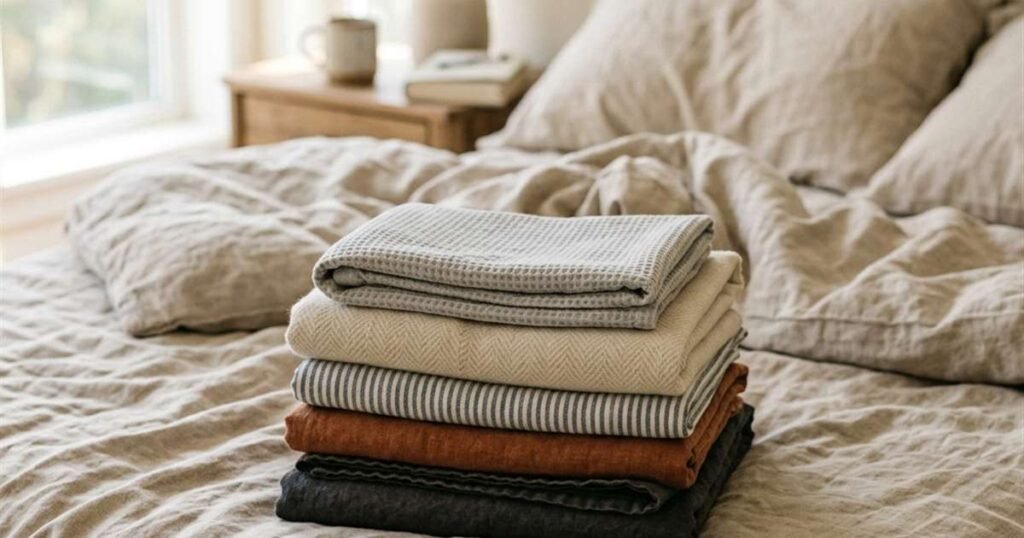
Getting the material choice right only pays off if the pillowcase is cared for in a way that doesn’t undo the benefit. Genuine silk generally needs cool water, a silk-safe or pH-neutral detergent, and air drying laid flat rather than hung, since heat from a dryer and standard detergents can both damage the protein fiber over time and strip away the smoothness that’s the entire reason to buy silk in the first place. Cotton and linen are the most forgiving of the group, tolerating warm machine washing and dryer heat without meaningful damage, which is part of why they remain the practical default for households washing bedding weekly. Satin weaves need to be checked by underlying fiber rather than treated as a single category: a polyester satin tolerates machine washing and moderate heat fine, while a silk-blend satin needs the gentler care genuine silk requires, regardless of what the word “satin” on the label might suggest about durability.
Bamboo-derived rayon and lyocell fall in between, generally machine washable on a gentle cycle in cool water, but prone to losing some of their characteristic softness if dried on high heat repeatedly over time. Whatever the material, the single habit that matters most across every fabric on this list is washing frequency itself: a pillowcase in weekly rotation, regardless of fiber, will outperform a premium material washed only occasionally, since the oils, sweat, and skin cells that cause friction, staining, and odor accumulate on any fabric surface without regular laundering.
Pillow Protectors, A Brief Overview
Pillow protectors deserve real depth given how directly they affect allergen exposure and pillow lifespan, more depth than fits inside a general accessories overview alongside decorative throw pillow inserts and novelty shapes. This section covers the basic category distinctions worth knowing before you shop; the fuller commercial comparison, waterproof against breathable, zippered against envelope closure, and how a protector changes comfort, lives in its own dedicated guide.
The core tradeoff across protector types comes down to barrier level versus breathability. A fully waterproof protector, typically a polyurethane membrane laminated to fabric, blocks liquid and allergens completely but can trap heat and feel noticeably different against a pillowcase than a woven-only barrier. A tightly woven, non-waterproof allergen barrier (the kind recommended for dust mite control) blocks particles down to a very small size without the plastic-membrane feel, at the cost of not stopping liquid spills. Closure style matters more than it sounds like it should: a zippered protector fully encases the pillow and stays in place through washing and repositioning, while an envelope-style protector is faster to put on and remove but can shift or partially expose the pillow over time.
Whichever type you choose, the mechanism behind why a protector matters at all is worth stating plainly, since it’s the same mechanism covered in our guide on why pillows turn yellow: sweat, oil, and skin cells reach the fill material directly on an unprotected pillow, where they oxidize and accumulate over years. A protector intercepts nearly all of that before it reaches the fill, which is a genuinely different, more effective intervention than washing the pillow more often after the fact, since it prevents the buildup rather than trying to remove it once it’s already there. For the complete comparison and specific product recommendations, the best pillow protectors covers all of this in the depth the topic deserves.
Throw Pillow Inserts: The Sizing Rule Most Guides Skip
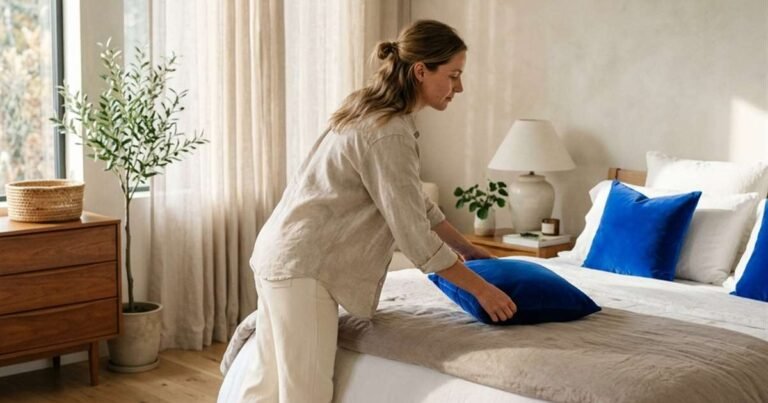
Decorative throw pillows are a cover-and-insert system, and the single most common mistake is buying an insert the same size as the cover rather than intentionally larger. A cover matched exactly to its insert’s stated dimensions looks saggy and underfilled once the fabric’s own seam allowance and any pattern shrinkage are accounted for. The standard rule across the decorative pillow industry is sizing the insert roughly 2 inches larger on each dimension than the cover, so an 18-by-18-inch cover gets a 20-by-20-inch insert, which fills the corners fully and gives the finished pillow a plump, structured look rather than a flat, deflated one. Extra-large covers, 24 inches and up, generally want a slightly bigger gap, closer to 3 inches, while small covers and lumbar shapes under 18 inches typically only need about 1 inch of extra insert size to avoid overstuffing a smaller shape.
This rule holds regardless of cover fabric, but it interacts with fill type in a way worth flagging before ordering. A down or down-alternative insert compresses more readily than a firm polyester insert, so the same 2-inch oversizing rule that produces a plump result with down can look slightly overstuffed with a denser poly fill, since poly fiberfill doesn’t compress into the corners the way down does. If a cover feels tight immediately out of the package with a poly insert at the standard oversizing ratio, sizing down slightly, closer to 1.5 inches of extra insert dimension rather than the full 2, usually resolves it without needing a different insert entirely.
Fill material inside the insert changes both feel and price independent of the cover fabric entirely. Down and feather blends compress into a soft, moldable shape and can be fluffed back into form, generally commanding the highest price, with higher down-to-feather ratios costing more and feeling softer but also less structured. A 50/50 down-to-feather blend, common in mid-range inserts, holds shape noticeably better than a 90/10 blend, since feathers have more structural quill to resist collapsing, at some cost to overall softness. Polyester fiberfill is the affordable, low-maintenance option, holding its shape reasonably well but not offering the same soft compressibility as down, and it’s the easiest to machine wash without special care. Down-alternative microfiber splits the difference, aiming for a down-like feel without the animal product or the price, though quality varies significantly by brand and fill density, with denser, higher-gram-weight fills holding shape closer to genuine down.
Care requirements differ meaningfully by fill type in a way that’s easy to overlook until an insert is already ruined. Down and feather inserts generally need professional cleaning or a careful, fully-dried hand wash, since incomplete drying traps moisture inside the plumes the same way it does in a down sleeping pillow. Polyester and most down-alternative inserts are machine washable and far more forgiving, which is worth weighing against the softer feel of genuine down if the pillows in question will see heavy daily use, on a sofa handled by kids or pets, versus occasional decorative styling on a bed that gets far less physical contact. For a complete rundown of choosing between these, throw pillow insert size guide covers the sizing math in more detail, and the best pillow inserts for throw pillows breaks down specific fill-type recommendations by use case.

Novelty and Fun-Shaped Pillows
Not every accessory in this category is about sleep function or skincare claims; a meaningful slice of the pillow market exists purely for personality and decor, and it’s worth treating as its own category with different standards. Novelty and food-shaped pillows, think oversized emoji, plush avocado halves, or realistic bread loaves, are judged on construction quality (does the shape hold up to regular handling, does the fabric pill or fade) rather than any of the material science covered above, since they’re rarely used as a primary sleeping pillow.
A few practical checks separate a novelty piece built to last from one that won’t survive a year of regular handling. Reinforced stitching at narrow points and corners matters more here than on a standard square throw pillow, since irregular shapes concentrate stress at their thinnest sections, the stem of a plush fruit, the tip of a star shape, the seams around an emoji’s features, exactly where cheap construction tends to fail first. Fabric choice also matters differently than it does for sleeping accessories: a plush, short-pile fabric resists pilling and matting from handling far better than a longer, fluffier pile, even though the longer pile often looks more appealing in a product photo. Fill density is the third check worth making before buying, since an underfilled novelty pillow loses its intended shape within weeks regardless of how well-constructed the seams are, while an overfilled one can stress the seams from the inside out.
If you’re shopping this category, focus on washable covers, secure seams at stress points, and fill density that holds the intended shape rather than flattening into an unrecognizable blob within a few weeks. Food shaped pillows and novelty pillows for adults both cover specific picks and what separates a well-made novelty piece from one that won’t survive a year on a couch.
Which Accessory Actually Solves Your Problem
These four categories get lumped together under “pillow accessories” in most retail navigation, but they solve genuinely different problems, and buying in the wrong order wastes money more often than people realize. If the actual issue is waking up with facial creases or hair frizz, the fix is a pillowcase material swap, not a new pillow or protector; the friction mechanism covered above is a surface-level, fabric-specific problem that a pillowcase alone addresses. If the issue is allergy symptoms, yellowing, or a pillow wearing out faster than expected, a protector is the higher-leverage purchase, since it intercepts the sweat, oil, and allergen buildup at the source rather than treating symptoms after the fact. If a couch or bed just looks flat and underdressed, that’s a throw pillow insert and cover problem specifically, not a pillowcase or protector issue at all, and the 2-inch sizing rule above is usually the single fix that makes the biggest visible difference. And if the goal is pure personality or gift-shopping rather than solving any functional problem, novelty pillows are their own category entirely, worth judging on construction and durability rather than any of the material logic that applies to sleeping pillows.
Stacking accessories rarely causes problems, a protector under a cooling pillowcase under a decorative sham is a completely normal, functional layering, but it’s worth knowing which layer is actually doing the work you’re trying to buy. A silk pillowcase over an unprotected, yellowing pillow will feel luxurious against your face while doing nothing to address the pillow’s actual hygiene or lifespan underneath it. Matching the accessory to the specific problem, rather than assuming any premium-marketed product in the category will fix an unrelated issue, is the difference between a purchase that actually changes something and one that just adds a nicer layer on top.
Budget allocation follows the same logic once the problem is correctly identified. A modest protector paired with an inexpensive cotton pillowcase, washed weekly, addresses hygiene and lifespan more effectively than a premium silk case over an unprotected pillow, even though the silk case costs several times more. Spending the larger share of an accessories budget on whichever category actually maps to the problem, rather than splitting it evenly across all four out of habit, is usually the difference between a bedroom that functions better and one that just looks like it should.
The pillowcase category has the most exaggerated marketing relative to its actual material science: real, useful friction and moisture differences exist between fibers, but most of the skincare-transformation language layered on top doesn’t hold up against the cited research. Protectors are a genuinely important, health-adjacent category that deserves its own deeper treatment rather than a paragraph inside a broader accessories roundup. Throw pillow inserts have one concrete, underreported rule, size up roughly 2 inches, that immediately fixes the most common complaint about how a decorative pillow looks once it’s finished. And novelty pillows are exactly what they look like: a construction-quality question, not a material-science one.
Treating these four categories as genuinely different questions, rather than one generic “pillow accessories” bucket, is the difference between buying based on a marketing claim and buying based on what the product actually does. The next time a listing leans on “silk,” “clinically proven,” or a bare thread-count number to justify its price, checking it against the actual mechanism, friction reduction, barrier function, fill density, construction quality, is the fastest way to tell whether that premium is buying something real or just buying the word.
FAQs
What is the difference between a pillow protector and an insert?
A pillow insert is the actual supportive pillow that goes inside a decorative cover. A pillow protector is a thin, zippered sleeve that goes over your sleeping pillow to block sweat and dust mites. You sleep on top of a protector but you display an insert on your couch.
Do waterproof pillow protectors make you sweat?
Cheap waterproof protectors trap significant body heat and cause night sweats. They rely on thick polyurethane backings that block all airflow through your pillow. Look for Tencel or cotton-blend protectors with microporous membranes. These allow air to circulate while still stopping liquid spills from reaching the foam.
How often should you replace a throw pillow insert?
You should replace synthetic throw pillow inserts every two to three years. Polyester fiberfill breaks down quickly under daily use and loses its structural volume. Down or feather inserts last up to ten years before requiring replacement. Always buy an insert two inches larger than your cover to prevent saggy corners.