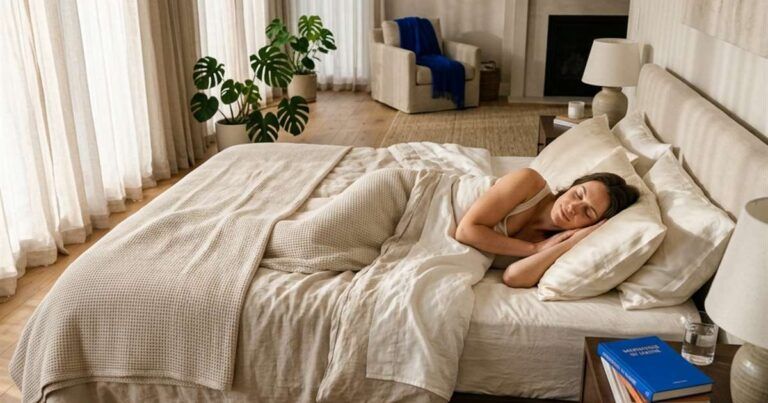
Spend ten minutes on any beauty forum and you will find two contradictory opinions on mulberry silk pillowcases: devotees who credit them with transforming their hair and skin, and skeptics who call the whole category overpriced marketing. Both camps are partially right. The benefits are structurally real. But most of the products sold as silk are polyester satin, and even genuine mulberry silk delivers nothing if the momme count is too low to maintain its surface integrity through repeated washing. Before understanding the full pillowcase category, it helps to know exactly what mulberry silk does and why the spec number on the label is the only thing that confirms you will actually get it.
The One Number That Decides Everything
Momme (pronounced “moh-mee”) is the weight measurement for silk, equivalent in purpose to thread count for cotton, except momme is a far more reliable quality signal. It measures how much a standard 100-yard, 45-inch-wide length of the fabric weighs in pounds. A 19-momme pillowcase weighs 19 pounds at those dimensions; a 22-momme case weighs 22. Higher momme means more silk fiber per square inch, a tighter weave, and a surface that holds its smoothness through washing cycles.
For pillowcases specifically, 19-22 momme is the functional range. Below 19, the weave becomes thin enough that the low-friction benefits erode quickly after a few washes. Most manufacturers and independent retailers converge on 22 momme as the standard for durability paired with softness, while 25 momme. The point where a case holds roughly 64% more silk than a 19-momme version. Provides additional staying power for heavy daily use. Anything labeled “silk” below 16 momme is not worth buying for skin or hair purposes; the fiber density simply cannot sustain the properties described below.
The grade matters too. Look for Grade 6A mulberry silk, which indicates the longest, most uniform fiber strands from Bombyx mori silkworms fed exclusively on mulberry leaves. Shorter, mixed-grade fibers produce a surface with more micro-variation, which means more friction. The opposite of what you are paying for.
Benefit 1: Lower Friction Against Skin During Sleep
This is the structural foundation of every other skin claim. Cotton pillowcase fibers have a rough microscopic surface that grips skin during movement. When you shift positions during sleep. Which happens dozens of times per night. Cotton creates drag and compression forces against facial skin. Over time, that repeated mechanical stress contributes to what dermatologists classify as sleep wrinkles, a distinct category from dynamic wrinkles caused by facial muscle movement.
A 2016 study published in the Journal of Cosmetic Dermatology found that compression forces from fabrics can distort collagen and elastic tissue over time, contributing to premature aging. Silk’s surface produces significantly less drag. TRI Princeton, an independent textile research institute, confirmed through standardized friction testing that silk has a lower friction coefficient against both hair and skin than cotton. For side and stomach sleepers. Who spend the night pressing their face against the pillow surface. That friction reduction is the most mechanically relevant property a pillowcase can have.
Silk does not reverse existing wrinkles. What it can do, used consistently alongside sun protection and moisturizer, is reduce one environmental contributor to their progression.
Benefit 2: Non-Absorbent Fiber Keeps Skincare Where It Belongs
Cotton is hydrophilic. It absorbs moisture from whatever contacts it, including the serums and creams you apply before bed. This is not a marketing claim. It is a basic property of cotton’s fiber structure. A cotton pillowcase wicks product off your face throughout the night, meaning your retinol or hyaluronic acid is doing less work on your skin than you assume.
Mulberry silk is far less absorbent. Its protein structure does not pull moisture away from skin at the same rate, so your overnight skincare stays on your face rather than transferring into the fabric. A 2018 study published in the Journal of Cosmetic Dermatology found that participants sleeping on silk pillowcases experienced improved skin hydration and reduced irritation compared to those on standard cotton bedding. The mechanism is consistent with what the fiber science predicts: less moisture extraction from the skin surface overnight.
This property has a caveat. Silk’s lower absorbency means it can also retain oils and product buildup if not washed regularly. Washing a mulberry silk pillowcase once per week, gently, in cold water on a delicate cycle with a mild detergent, then air-dried flat, keeps the surface clean and maintains the fiber’s performance.
Benefit 3: Reduced Hair Breakage and Cuticle Damage
Hair cuticles are directional. They have a scale-like outer structure that catches and snags on rough surfaces when pulled against the grain. Cotton creates that snag repeatedly across eight hours of sleep. The result, particularly for curly, fine, chemically treated, or color-processed hair, is cumulative mechanical damage: elevated breakage, split ends, and frizz from lifted cuticles.
TRI Princeton’s friction testing confirms silk has a lower friction force against hair than cotton does. Research from the International Journal of Trichology (2011) established that friction between hair and pillowcase material leads to increased breakage, tangling, and moisture loss. Mulberry Park Silks’ independent October 2025 lab testing found 34% less hair-damaging friction on their 22-momme silk versus standard cotton. The practical result: hair glides across the pillow surface rather than catching on it, which reduces the cumulative mechanical stress that causes breakage over time.
For people with fragile or high-porosity hair, this is the most immediately noticeable benefit. One or two weeks on a silk pillowcase typically produces visible reduction in morning frizz and tangles, not because anything has been added to the hair, but because the nightly damage source has been reduced.
Benefit 4: Hypoallergenic Surface Properties
Mulberry silk’s tightly woven filament structure gives it a denser, smoother surface than cotton. Cotton’s looser weave creates spaces where dust mites can accumulate and where skin cells are trapped, providing an environment where mites thrive. Silk’s smooth, tight filaments make it harder for mites and other allergens to settle.
Additionally, silk fibroin. The structural protein that makes up the core of the silk fiber. Contains 18 amino acids that give it natural resistance to mold, mildew, and some microbial accumulation. For people with sensitive skin, atopic dermatitis, or dust mite allergies, this surface characteristic is clinically relevant. A small study on atopic dermatitis found that participants wearing silk-based clothing for eight weeks showed reduced skin redness, swelling, and itching, with improvements continuing throughout the study period, as reported by GoodRx Health.
A silk pillowcase is not a treatment for eczema or allergic skin conditions. But it removes a source of irritation, rough friction and allergen-harboring fabric, that standard cotton introduces every night.
Benefit 5: Temperature Regulation Without Trapping Heat
Polyester satin, the material sold as a cheap silk alternative, traps heat. The synthetic fiber does not breathe, so it warms up with your body heat and stays warm, which disrupts sleep for anyone who runs hot. Mulberry silk is a natural protein fiber with genuine thermoregulatory properties. It dissipates body heat rather than retaining it, which helps maintain a more stable microclimate at the pillow surface.
This is not a dramatic effect in the way a phase-change material cooling pillow produces active cooling. It is a passive regulation. The fiber does not amplify your heat signature the way polyester does. For people who sweat at night or who cycle through hot and cool phases, a mulberry silk pillowcase performs consistently better than any synthetic alternative at keeping the surface temperature closer to neutral.
Benefit 6: Sericin Protein Provides a Secondary Skin Interaction
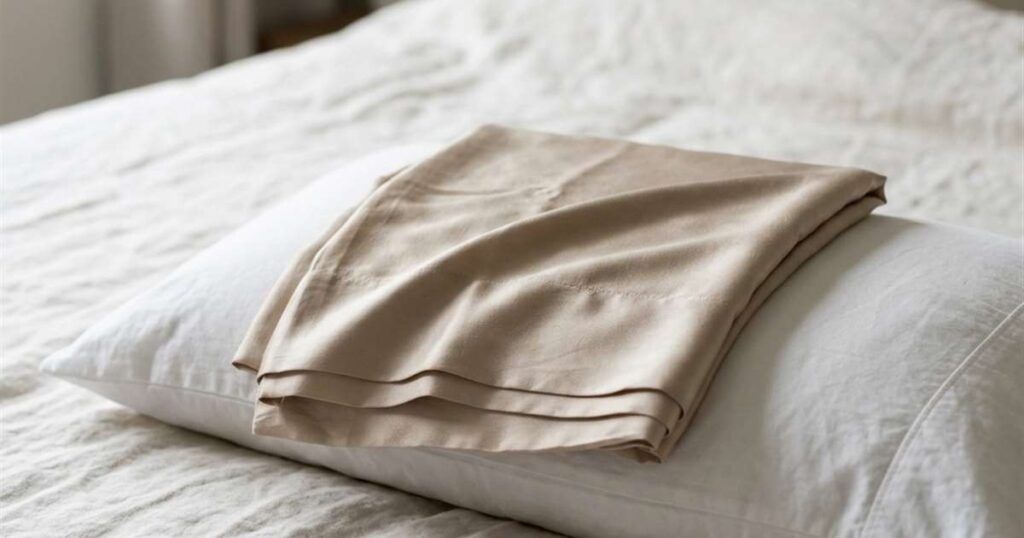
Mulberry silk fiber is composed of two proteins: fibroin, which forms the structural core, and sericin, which acts as a binding glue between filaments. During fabric processing, most sericin is removed in a step called degumming. Which is correct manufacturing practice, since sericin in raw silk can cause irritation in some users. What remains is a fibroin surface with a natural composition closer to human skin’s own protein structure than most synthetic fabrics.
Research published in PMC (NIH) confirms that sericin exhibits antioxidant and photoprotective activity, and that it influences collagen production in cell studies. A study from ACS Omega found that sericin consists of roughly 30% serine amino acid, which provides natural moisturization properties. These findings describe isolated sericin in controlled conditions, not a pillowcase surface in nightly use, the direct transfer to skin from a degummed silk fabric is minimal. The honest claim is that silk’s protein composition makes it inherently less reactive with skin than synthetic fibers, not that sleeping on it delivers active sericin treatment.
The Contrarian Case: What Silk Cannot Do
The biggest misrepresentation in silk pillowcase marketing is the wrinkle prevention claim presented as a near-cosmetic intervention. Silk reduces friction. It does not stimulate collagen, deliver retinol, or reverse photoaging. As Wikipedia’s dermatology-sourced entry on wrinkles notes, direct clinical evidence for silk pillowcases preventing wrinkle formation “remains limited and mostly observational or from small-scale studies.” The most that can be said, and it is still worth saying, is that consistently reducing mechanical compression and drag on facial skin overnight removes one category of controllable damage. For someone with an otherwise solid skincare routine, that is a legitimate marginal gain. Selling it as “anti-aging skincare” is not.
The second misrepresentation is the conflation of silk with satin. Most pillowcases marketed as silk, particularly anything priced below $30, are polyester satin. The satin weave produces a similarly smooth surface that does reduce friction compared to cotton, and for hair breakage alone, polyester satin at $15 delivers meaningful benefit. Where it falls short is breathability, moisture management, and allergen resistance. If your only goal is less morning frizz and you are on a budget, polyester satin at 19-momme equivalent weave density is a rational choice. If skin hydration, temperature regulation, and genuine hypoallergenic properties matter, polyester satin cannot replicate what the protein structure of genuine mulberry silk provides. For a full breakdown of those differences, the silk vs. satin pillowcase comparison covers the spec-level distinctions in detail.
What to Actually Buy
The label must say 100% mulberry silk, Grade 6A, 19-25 momme, with an OEKO-TEX Standard 100 certification. That certification confirms the fabric has been tested for harmful substances. Dyes, finishing chemicals, and treatments that would otherwise sit against your face every night.
Skip any listing that does not disclose the momme count. That omission almost always means the count is below 16, which is too thin for durable pillowcase use. Skip any listing claiming thread count as a quality metric for silk, thread count is a cotton measurement and is meaningless for silk evaluation. Momme is the only relevant number.
Care instructions are not optional. Hand wash or use a mesh bag on a delicate cycle in cold water, mild pH-neutral detergent, air dry flat. Heat and harsh detergent degrade silk fiber faster than any friction the pillowcase will encounter in use.
Frequently Asked Questions
Is a mulberry silk pillowcase actually worth the money?
A genuine mulberry silk pillowcase is worth the investment if you struggle with frizzy hair or delicate skin. The smooth fibers create significantly less friction than cotton, which reduces hair breakage and morning sleep lines. Look for a weight of 22 to 25 momme for the best balance of softness and durability. You must be prepared to hand wash the silk to prevent it from degrading.
What is the difference between a silk pillowcase and a satin one?
Silk is a natural protein fiber produced by silkworms, whereas satin is simply a weaving technique usually made from synthetic polyester. Genuine mulberry silk is highly breathable and naturally regulates temperature. Synthetic satin provides the same smooth surface for your hair but traps body heat against your skin. A satin case is a budget-friendly option if you only care about preventing hair frizz.
Does a silk pillowcase actually keep you cool at night?
A silk pillowcase does not actively cool you down, but it is highly breathable and naturally wicks away moisture. This prevents heat from getting trapped around your head and neck. It will feel noticeably cooler to the touch than a standard cotton case when you first lay down. Silk cannot fix a hot sleeping environment or a heat-retaining memory foam mattress.
Does mulberry silk pillowcase help with acne?
It can reduce two acne-contributing factors: friction from cotton that irritates active lesions, and the allergen-harboring surface cotton provides. Silk is not an acne treatment. Washing it weekly is mandatory. A dirty silk pillowcase accumulates oil and product residue just as cotton does.
What momme is best for a silk pillowcase?
For most people, 22 momme is the practical sweet spot, enough silk density to maintain surface integrity through regular washing, without the price premium of 25 momme. If you wash your pillowcase twice a week or more, 25 momme holds up better over time.
Is silk or satin better for hair?
For hair friction alone, high-quality polyester satin gets close to silk’s performance at a fraction of the cost. For skin hydration, breathability, and allergen resistance, genuine mulberry silk outperforms polyester satin meaningfully. The right answer depends on which benefits matter most to your specific situation.
How often should you wash a silk pillowcase?
Once per week for normal use. If you use heavy overnight skincare products or sweat significantly, twice per week keeps oil and product buildup from defeating the hypoallergenic and friction benefits.