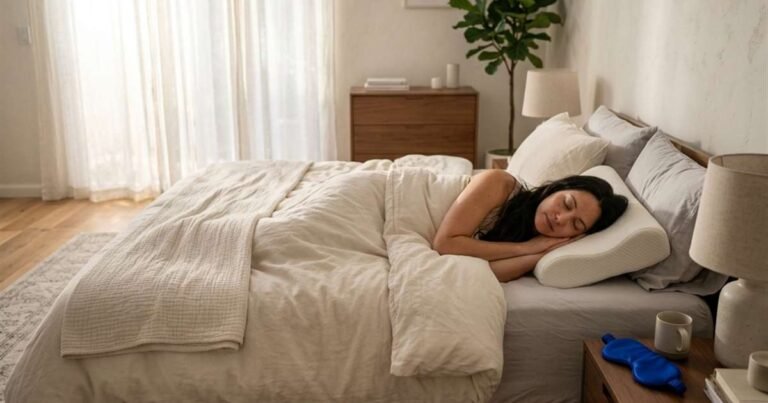
A standard pillow is 20×26 inches. A super standard is 20×28 inches. The difference is two inches of length. Both fit inside a standard pillowcase. Neither changes how high your head sits. That is determined by fill density and loft, not footprint. The super standard exists for one practical reason: two of them fit across a full-size mattress (54 inches wide) at exactly 56 inches, leaving only a marginal overhang, whereas two standard pillows at 52 inches total leave a visible 2-inch gap per side at the edges. That is the entire argument for the size, and most of the marketing language around it over-complicates it.
Full context on how all pillow sizes stack against mattress dimensions, the pillow size guide is the reference hub for this. If you are also comparing queen and king sizes, the queen vs king pillow breakdown covers the upper end of the size range with the same dimensional logic.
The Numbers
Every figure in this table comes from standard industry dimensions reflected by manufacturers including Pacific Coast Feather Company and Downlite, two of the primary producers of the super standard size.
| Size | Dimensions | Fits standard case (20 in × 26 in)? | Two pillows on a full bed (54 in wide)? |
|---|---|---|---|
| Standard | 20 in × 26 in | Yes (perfect fit) | Yes (52 in total, 1 in gap per side) |
| Super Standard | 20 in × 28 in | Yes (2 in of slack at open end) | Yes (56 in total, slight overhang) |
| Queen | 20 in × 30 in | Yes (snug tuck needed) | No (60 in total, 3 in overhang per side) |
| King | 20 in × 36 in | No (will not close) | No (72 in total, 9 in overhang per side) |
The super standard threads a narrow gap: longer than a standard for better bed coverage, short enough to still close a standard pillowcase. A queen pillow technically also fits a standard case with a snug tuck, but its 30-inch length leaves only 6 inches of pillowcase opening to fold and close. Tight enough that seam stress becomes a real concern over repeated washing. The super standard’s 2-inch slack is genuinely functional.
Where the Super Standard Actually Comes From
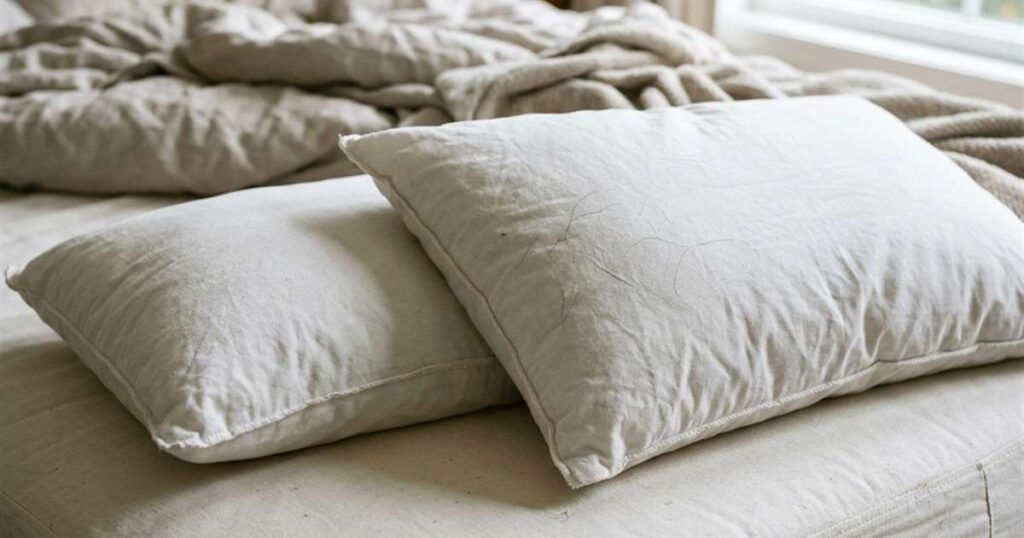
The super standard is not a consumer-driven innovation. It originated in the hospitality industry, where hotels operating full-size beds (54×75 inches) needed a pillow that covered the mattress width more completely than a standard pair without requiring king pillowcases. An added linen cost. Two super standards at 56 inches total cover a full mattress width closely enough that the bed looks proportioned when made. Hotels already stock standard pillowcases in bulk; a pillow that fits them while improving bed appearance is a logistics win.
Consumer bedding brands eventually picked up the size, but far fewer of them carry it than carry standard, queen, and king. Parachute’s published size guide does not list super standard as a standard offering. Most mass-market brands including Casper, Purple, and Tempur-Pedic do not produce it. The size is carried consistently by Pacific Coast, Downlite, and a handful of hotel-supply bedding brands.
This matters for buyers: if you commit to super standard pillows and then try to replace them, your options are narrower than they are for any other size in the category.
The “Active Sleeper” Marketing Claim
Bedding retailers frequently position the super standard as the right choice for “active sleepers”. People who move around frequently during the night and tend to push a pillow off the edge of a standard pillowcase. The framing implies that the extra 2 inches of pillow length prevent the pillow from escaping the case.
This claim does not hold up mechanically. A pillow migrates out of a pillowcase at the open end when fill shifts toward the closed end under head weight, and that shift is driven by fill type, case closure style (open-end vs. envelope), and how tightly the fill was originally packed. Adding 2 inches of pillow length does not prevent fill migration; a zippered pillowcase or a higher-density fill does.
The super standard’s actual advantage for active sleepers is different: 2 extra inches of pillow surface gives someone who sleeps closer to the outer edge of a pillow more material to stay on before their head drops off the end. Whether that 2-inch extension makes a meaningful difference depends entirely on how far from the closed end of the pillow you sleep. For most people, it does not. The head rests in the pillow’s center, not near the open end. For a subset of active sleepers who consistently drift lengthwise, it is a minor practical improvement.
Neither benefit justifies the narrower product selection and higher per-unit cost. The honest reason to buy a super standard is bed coverage on a full-size mattress, nothing else.
What Fits in a Standard Pillowcase
The pillowcase compatibility question is one of the most-searched aspects of this size. Here is the complete picture.
| Pillow size | Length inside 20 in × 26 in standard case | Fit quality |
|---|---|---|
| Standard (20 in × 26 in) | 26 in pillow in 26 in case | Yes (exact fit) |
| Super Standard (20 in × 28 in) | 28 in pillow in 26 in case | Yes (2 in tucks at open end, functional) |
| Queen (20 in × 30 in) | 30 in pillow in 26 in case | Moderate (4 in tucks, seam stress risk over time) |
| King (20 in × 36 in) | 36 in pillow in 26 in case | No (will not close without forcing) |
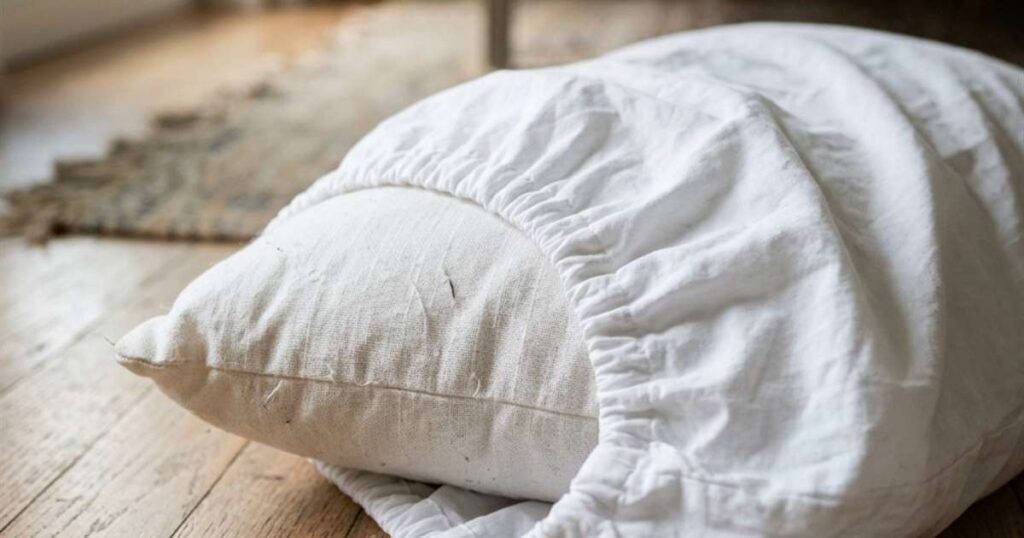
Two inches of tuck on a super standard works in practice. The open end of a standard pillowcase has roughly 2 to 3 inches of seam allowance before the material pulls taut. A super standard fits cleanly. A queen does not tear the case, but the tension is noticeable and repeated machine washing accelerates seam wear at the opening. If you already own standard pillowcases and are considering moving to super standard, your existing cases carry over without issue.
How Many Super Standard Pillows Fit on Each Bed Size
This is the practical buying question. Two pillows placed side by side in landscape orientation (both pointing the same direction, open ends outward):
| Bed size | Mattress width | Two standard (52 in) | Two super standard (56 in) | Two queen (60 in) |
|---|---|---|---|---|
| Twin | 38 in | No (14 in overhang total) | No (18 in overhang total) | No (22 in overhang total) |
| Full | 54 in | Yes (2 in short, 1 in gap per side) | Yes (2 in overhang, 1 in per side) | No (6 in overhang, 3 in per side) |
| Queen | 60 in | Yes (8 in short, looks fine) | Yes (4 in short, looks fine) | Yes (exact fit) |
| King | 76 in | Yes (used as two of three pillows) | Yes (common hotel configuration) | Yes (common hotel configuration) |
On a twin bed, no pair of standard-width pillows covers the mattress meaningfully, a single pillow is the practical choice regardless of length. On a full bed, the super standard is the cleanest fit. On a queen or king, standard and super standard both work and queen pillows are the more available choice.
The Pillow Size Finder built for the Dimensions cluster walks through this decision interactively. Get the free pillow size printable if you want to run your specific bed size, pillowcase inventory, and use case through the logic.
Availability and Where to Find Them
Most bedding retailers do not carry super standard pillows. The following brands produce the size consistently, based on current published product lines:
| Brand | Super standard available? | Notes |
|---|---|---|
| Pacific Coast Feather Co. | Yes | Primary producer, down and down-alternative |
| Downlite | Yes | Hotel-supply brand with consumer line |
| Standard Textile | Yes | Hospitality-focused, available direct |
| Casper | No | Standard, queen, king only |
| Purple | No | Standard, queen, king only |
| Tempur-Pedic | No | Standard, queen, king only |
| Parachute | No | Standard, queen, king only |
| Brooklinen | No | Standard, queen, king only |
If you are buying a super standard for the first time and want a specific fill type, latex, shredded memory foam, buckwheat, you will likely not find it. The size is produced almost exclusively in down and polyester fiberfill by hospitality-supply manufacturers. That is a real constraint.
Quick-Answer FAQ
What size is a super standard pillow?
20 inches wide by 28 inches long. Two inches longer than a standard (20×26 in) and two inches shorter than a queen (20×30 in).
Does a super standard pillow fit a standard pillowcase?
Yes. The extra 2 inches tucks at the open end without meaningful tension on the seam. Standard pillowcases fit super standard pillows cleanly.
Why would you buy a super standard pillow over a standard?
The strongest reason is bed coverage on a full-size mattress. Two super standards at 56 inches total cover a 54-inch mattress width more closely than two standards (52 inches) without the overhang problems of two queen pillows (60 inches total). For most buyers on queen or king beds, the size offers no practical advantage over a standard.
How many super standard pillows fit on a full bed?
Two. They total 56 inches lengthwise, slightly wider than the full mattress’s 54-inch span. About 1 inch of overhang per side. This is the size’s primary use case.
Do all brands make super standard pillows?
No. The super standard is a niche, hospitality-origin size. Pacific Coast Feather Company and Downlite are the primary producers. Most consumer brands, Casper, Purple, Tempur-Pedic, Parachute, Brooklinen, do not carry it.
What is the exact size difference between a standard and super standard pillow?
A super standard pillow is generally two to four inches longer than a traditional standard pillow. Standard pillows measure 20 by 26 inches, while super standard models typically measure 20 by 28 inches. This makes them nearly identical to a queen size pillow. You will appreciate the extra length if you tend to toss and turn frequently.
Do I need special pillowcases for a super standard pillow?
You do not necessarily need a specialized pillowcase for a super standard pillow. Most standard pillowcases are cut slightly large and will accommodate the extra two inches of length. You can also use a queen size pillowcase for a looser fit. Just keep in mind that a very rigid, high-loft super standard pillow might feel too firm if stuffed into a tight standard case.
Should a side sleeper buy a super standard pillow instead of a standard?
A super standard pillow is a great choice for side sleepers who shift positions often. The extra two inches of length give your head more surface area to move around without slipping off the edge. The height and loft are usually identical to the standard version. If you sleep perfectly still, you probably do not need the upgraded size.